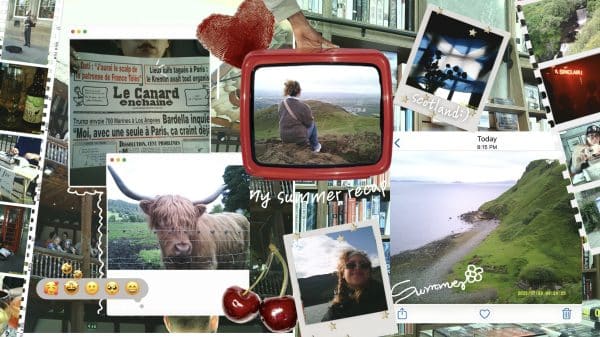
Every December, my feed starts to look the same. Colorful collages. Gold serif fonts. Candles burning next to printed affirmations. “Soft life.” “Abundance.” “Aligned.” Screenshots of Pinterest boards posted like declarations of intent. Vision boards have become the unofficial ceremony of the new year, replacing reflection with presentation.
I’ve made them before. Carefully curated images of the woman I wanted to be, the life I wanted to step into. The problem wasn’t the dreaming. It was the way the dreaming felt oddly detached from reality, like I was skipping ahead to the aesthetic of my future without checking whether I was actually prepared to live inside it.
Vision board culture encourages us to focus on what we want our lives to look like, often without interrogating what still weighs them down. Old habits. Unresolved relationships. Emotional patterns we swear we’ll outgrow by January 1. We take all of it, place it neatly in a new container, add a bow, and call it growth.
What we rarely ask is whether wanting something is the same as being ready for it. Or whether clarity requires more than vision and images taped to a poster board or arranged in a Notes app folder titled “2026.”
This year, the vision board didn’t feel inspiring. It felt premature.
When Aesthetics Replace Readiness
The problem with vision boards isn’t that they’re aspirational; it’s that they’ve become aesthetic stand-ins for work we’re avoiding. Somewhere between Canva templates and Pinterest affirmations, readiness got mistaken for desire. Wanting a life started to feel like preparing for it.
Vision board culture teaches us to focus on outcomes without interrogating capacity. We paste the apartment, the job title, the body, the relationship—but we rarely ask whether our habits, boundaries, or emotional patterns can sustain them. Abundance is visualized while we still operate from scarcity. Peace is imagined even as we cling to chaos because it’s familiar. The board looks new, but the baggage stays the same.
What’s missing is release. Vision boards are additive by nature: more money, more love, more success. But transformation is just as much about subtraction. What beliefs are you bringing with you? What coping mechanisms are you still relying on? Which version of yourself needs to be retired before the next one can exist?
Without naming what has to go, the future becomes crowded before it even arrives.

Aesthetics make this avoidance easy. A clean layout feels like clarity, and a soft color palette feels like healing. We confuse emotional progress with emotional presentation. But clarity isn’t simply found in polished collages. It’s internal. It shows up in uncomfortable decisions. It’s felt in restraint, not accumulation.
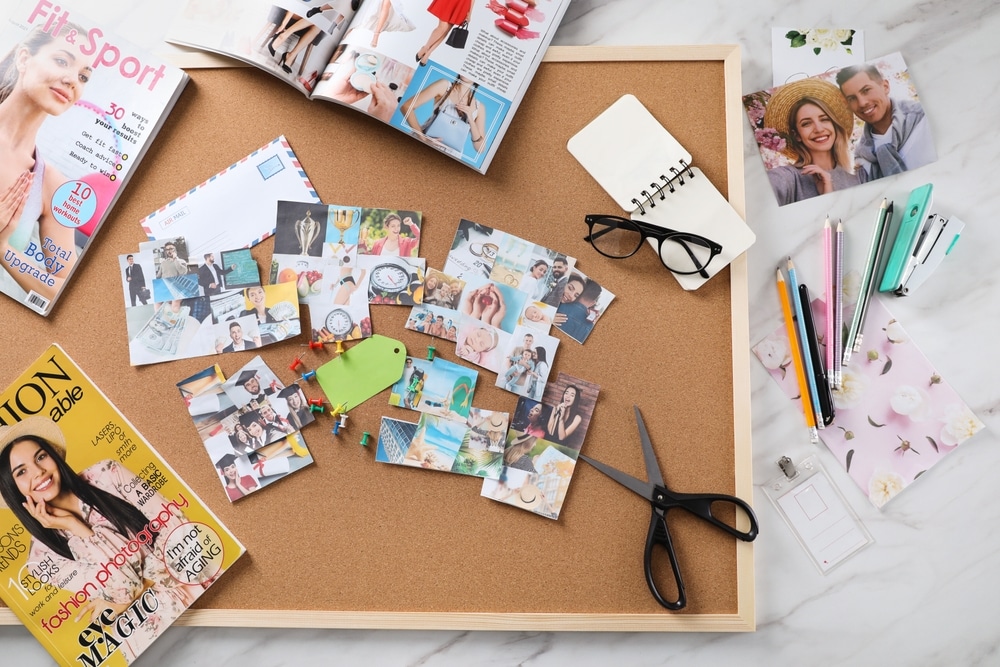
Readiness is quiet work. It doesn’t photograph well. It asks for honesty instead of optimism, inventory instead of inspiration. And that’s why it’s so often skipped. Vision boards let us perform becoming without actually becoming. They let us rehearse a life we haven’t made room for yet.
Until release is treated as seriously as desire, vision boards will continue to function less as tools for change and more as beautifully designed delays.
When the vision board started lying to me
I didn’t fall out with vision boards because they failed me. If anything, they worked a little too well, at least aesthetically. I knew how to curate desire. I knew which words sounded aligned, which images looked expansive, which futures photographed best. What I didn’t know how to do (and what I kept avoiding) was asking myself whether I was actually ready for the life I kept visualizing.
Every year, my boards got clearer. More specific. Better designed. And yet, the same patterns followed me across calendars: the same avoidance, the same emotional habits, the same relationships I swore I’d outgrown. I realized I wasn’t using the vision board to move forward; I was only using it to reassure myself that growth was happening somewhere offscreen. The board became proof of intention without requiring evidence of change.
What finally clicked was this: I was trying to arrive without ever departing. I wanted newness without release, and the vision board let me imagine a future self while protecting the present one from discomfort. It asked me what I wanted, but never what I was willing to leave behind. And without that second question, the first one was meaningless.
Clarity before imagery
Once I stopped obsessing over what I wanted my life to look like, I started asking a more uncomfortable question: What am I actually ready for? Not what I could romanticize. Not what photographed well. But what my nervous system, habits, and emotional capacity could sustain.
That’s where people misread manifestation. Somewhere along the way, it became synonymous with imagery—mood boards, screenshots, aspirational aesthetics—rather than clarity. But clarity is the part that asks you to be honest about your limits, your patterns, and your thresholds. It forces you to admit that wanting something doesn’t automatically mean you’re prepared to receive it.
An intention list doesn’t give you the dopamine hit of a vision board. It doesn’t sparkle, and it’s boring. What it does instead is name things plainly: what you’re done tolerating, what you’re prioritizing, what you’re willing to change. It asks for specificity over fantasy. Responsibility over vibes.
When manifestation is rooted in clarity, it becomes less about summoning a dream life and more about making space for a different way of being. You don’t visualize confidence; you decide what you’re no longer shrinking from. Love isn’t just a picture; you create it by refusing old patterns. Abundance isn’t simply manifested; you get honest about your relationship with money, rest, and self-worth.
Imagery can come later. Aesthetics can be built once the foundation is solid. But without clarity, manifestation is just decoration. Pretty, yes—but hollow. And no amount of cut-out dreams can carry a future you haven’t made room for yet.
Burn it, then build it
So here’s my challenge: don’t just make another vision board. Instead, make a list of what you’re ready to release and what you’re willing to bring into the new year. Call it an intention list, a “ready-for-it” list, or whatever you want. The point is, it’s a declaration of readiness, not a collage of aspiration.
Check in with yourself. Are you carrying old habits, doubts, or unresolved feelings into your next chapter? Name them. Let them go. Decide what you will actively do to create space for growth. The work isn’t glamorous, but it is real and necessary.
Then, when you look at that list every day, it won’t just be a reminder of what you want. It will be a reminder of what you’re doing, who you’re becoming, and what you’re ready for. Burn the pretty pictures if you have to, but keep the intention alive. That’s where change actually lives.
The point is simple: change doesn’t live on a wall. It lives in the questions you ask yourself and the things you’re willing to let go. A vision board can look inspiring, but it can’t do the work for you.
An intention list, on the other hand, demands honesty. It forces you to face old habits, doubts, and patterns—and to decide what you’re actually ready to bring into your life. Growth begins in the small, deliberate steps you take, not in the aesthetics you admire.
So burn the vision board, keep the list, and do the work. Show up for yourself. Because when you do, the next year won’t just be about what you dream. It’ll be about what you’ve made real.