Have you ever noticed that you’re lonelier than usual once fall begins? As the weather cools down, many find themselves isolated indoors and craving the company of a partner for the holidays. If this resonates with you, you might be a prime target for cuffing season—and you’re not alone.
Beginning in October and ending around or after Valentine’s Day, cuffing season is the time of year where singles seek relationships, often short-term, to get through the chilly temperatures with someone to keep them warm.
Though the term “cuffing” first appeared in Urban Dictionary in 2011, “cuffing” has roots in African American vernacular as a synonym for hooking up, bolstered by its use in the titular song “Cuffin’ Season” by rapper Fabolous (2013). The term also relates to the idea of handcuffs and “ball-and-chain” relationships, or being tied down to a romantic partner.
Whether it’s the increase in time spent indoors, rom-coms and the romanticization of relationships during the holidays, or plain winter blues, cuffing season offers an attractive solution to singleness in fall.
Is there any scientific basis for why cuffing season occurs?
In an article from the Famuan at Florida A&M, one psychology student shared her belief that cuffing season “has to do with biological, psychological and social factors that all work together.” A number of studies focused on the seasonal fluctuations of hormones and attraction to others support her claim.
One study from the University of Wrocław inspects the oscillation of male judgement of female facial and bodily attractiveness. With an age range of 16-53, 114 heterosexual men scored the attractiveness of women in the categories of “body shape, breast, and face.” Influenced by seasonal mood changes, an increase in men’s attraction to women (notably in terms of the female body, with no change in judgment of their facial attraction) was reported in the colder months; highest scores of female attractiveness were recorded in the winter, and lowest being in the summer.
Men’s increased romantic interest in women during this time is conceivably swayed by changes in testosterone levels, with peaks in fall and late winter. Based on such involuntary hormonal shifts throughout the year, individuals’ (or at least men’s) heightened attraction to others, desire for romance, and perhaps increased enthusiasm towards cuffing season do seem to have some scientific justification.
Another study examines the correlation between oxytocin (the “love hormone”) and social and romantic bonds in relationships. By surveying 129 heterosexual couples (258 individuals) and their self-reported day-to-day romantic interactions, a correlation was drawn between experienced/expressed love and gratitude and rises in oxytocin levels.

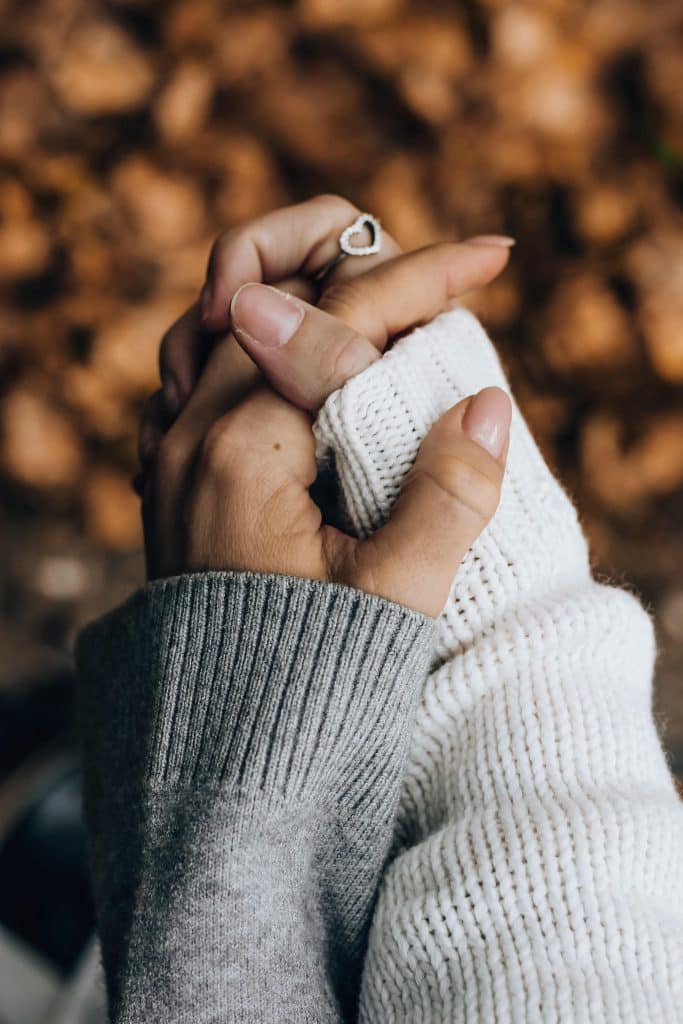
The positive psychological response couples experienced through rises in oxytocin levels “is uniquely implicated in promoting bonds between human adult romantic partners.”
Sooo… how does this promote cuffing season?
In relation to cuffing season, the increased romantic satisfaction in couples with higher oxytocin levels can help explain why some individuals are more likely to seek relationships in the colder months—colder weather can facilitate a need for body heat, which, when received in an intimate partner, fulfills desires for romantic love and gratitude.
A similar study on the hormone’s behavioral implications found that elevated oxytocin levels also affect individuals’ perception of strangers through facial recognition, with strangers’ trustworthiness and attractiveness receiving a boost from increased oxytocin.
Each factor discussed in the above studies indicates a way in which attraction and romantic desire are amplified during the colder months, rationalizing the magnification of cuffing season from hormonal and biological angles.
Combatting seasonal loneliness
One of the main perpetrators of mood shifts around cuffing season is seasonal affective disorder (SAD), which the Mayo Clinic defines as “a type of depression that’s related to changes in seasons.” With symptoms like low energy, low interest in activities, and changes in appetite, most cases of SAD occur in late fall or early winter, aligning with the trend of heightened attraction in colder months denoted in the previously detailed studies.
SAD can intensify feelings of loneliness or isolation, motivating individuals to start seasonal relationships—or get cuffed—around October and November when the disorder’s symptoms take effect.
The role of social expectations
While shifts in mood and hormone levels through fall and winter may affect our attraction to others and therefore our willingness to participate in cuffing season, social pressures also shape how we manage loneliness and romantic yearning.
For instance, Bumble and Hinge have both disclosed that October to early November is the ‘busiest time for messaging,” with Hinge remarking that “most downloads [occur] during October each fall.” With the digitizing of romance through such dating apps comes a social expectation for oftentimes casual intimate relationships.
Our environment and pop culture can also cultivate individuals’ desire to participate in cuffing season—from shows like Twilight and Gilmore Girls to the excitement of the holidays to the general coziness associated with this time of year, this season has been romanticized to a degree which undoubtedly influences how we approach our own romances.
Even the existence of the term “cuffing season” indicates that entering relationships in the fall is acknowledged in the public eye, if not expected.
To alleviate the winter blues, many individuals rely on sex-based, seasonal relationships in the fall and winter, supported by conspicuous rises in condom sales and sexual partnerships around the holidays. Such patterns highlight one issue with cuffing season (tied to the short-term nature of the relationships it facilitates): the formation of sex-based partnerships without meaningful connection.
Does Gen Z participate in cuffing season?
Though the term “cuffing season” was coined before Gen Z began to dominate online spaces with their own ridiculous lingo, do members of this younger generation still participate in the seasonal trend?
The short answer: yes.
As October ushered in spooky season and cuffing season, Eventbrite shared data denoting a dramatic swell in attendance of, and interest in, Halloween dating events: a 159% increase in attendance of Halloween dating events was noted, as was the 340% increase in web searches for “singles Halloween.”
However, as Gen Z enters the dating sphere and experiments with apps like Bumble, they are guided towards forming as many connections as possible—not meaningful romantic bonds.
To encourage user engagement, apps like Tinder “[gamify] dating by inviting users to focus on matching with as many people as possible.” This can encourage the cultivation of superficial romances just to avoid being alone during the holidays.
One dating app, Hily, shared data revealing Gen Z’s thoughts about cuffing season this year. From a pool of 6,685 Millennial and Gen Z Americans, 50% of Gen Z participants recognize that people rush into seasonal relationships once the weather cools down, “for comfort, not love.” In tandem, 65% said the fall and winter evoke a desire for intimacy, and 50% of young men (compared to 24% of young women) agreed that they’d stay in a relationship just for physical intimacy.
Social expectations & gender roles
Besides promoting surface-level, sex-based partnerships, cuffing season can also foster heteronormative gender roles that discourage more liberated romantic explorations.
One of the implications of cuffing season is, of course, getting “cuffed,” or metaphorically handcuffed to a romantic partner for the fall season.
A poll of 1,000 active users on Hinge found that men are 15% more likely to look for relationships in winter than any other season, compared to a mere 5% increase in women. Supported by men’s rise in testosterone levels, higher attraction of female partners, and higher likelihood than women to stay in relationships for intimacy in fall and winter, men are more likely to initiate seasonal relationships.
However, in straight relationships, being “cuffed” can take on a new meaning when initiated by a man; impressions of male ownership coupled with male authority to easily dispose of their female seasonal flings are elicited.
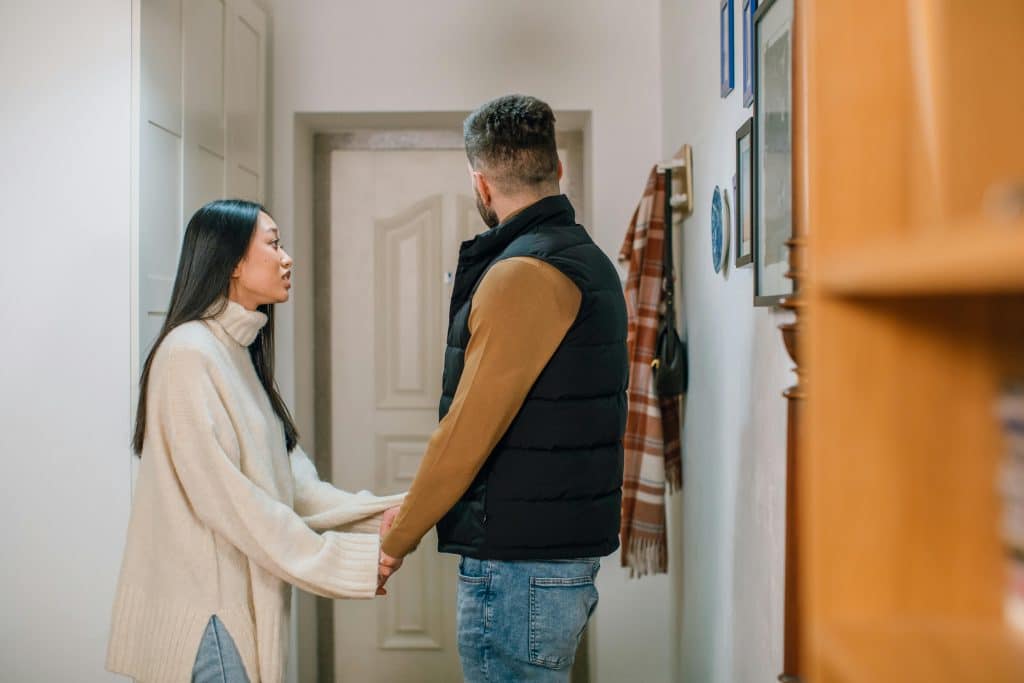
So do women have to wait around for a man to cuff them if they want a seasonal relationship? Are women even that interested in cuffing season when compared to the fervor of men?
And what if a woman isn’t interested in dating men? How might the heteronormative ideals surrounding cuffing season shape queer women’s experience with fall/winter partnerships, if they choose to participate at all?
Cold weather and queer couples
To get a sense of queer and lesbian women’s familiarity with, and navigation of, cuffing season, I asked some peers who identify with these labels about their experiences.

One, Jessica, voiced queer women’s common unfamiliarity, and lack of interaction, with cuffing season: “I’ve never heard of cuffing season, and none of my sapphic friends do it,” she remarked. However, others have rationalized sapphic deviation from these seasonal relationships through the differing needs of men and women, intersected with the different intimacy patterns of straight and queer couples.
I’d argue a more typical pattern for queer women is falling for long term friendships with deeper emotional intimacy. The sheer amount of codependent lesbians is quite striking. Cuffing during the cold months is probably a natural urge, but I think women are generally less susceptible to it given that physical affection in female friendships is more normalized, so the need to cuddle up romantically is less prevalent in women than men.
Barney, 19
Because sapphic romances are not confined to the gender roles of heteronormativity, there are more possibilities in how individual relationship dynamics can manifest.
This creates an environment for exploration and variation in each sapphic relationship, not dictated by straight relationship standards and the expectations therein. Still, others have noticed that sapphic dating styles don’t always align with straight dating culture or cuffing season.
I’ve personally never participated in cuffing season and don’t like the idea of reserving romantic interest to a certain time of the year, which is something I think other queer people can relate to. While I’ve seen some queer cuffing content on my social media feed, a lot of it seems to be rooted in desires for meaningful, long-term relationships.
Emily, 19
While some peers acknowledged cuffing season as a valid way to satisfy your cravings for intimacy in fall and winter, the general consensus illustrated a lack of sapphic interest in actually participating, themselves.
While this doesn’t invalidate queer women who do want to cuff this fall, it showcases the larger divergence between heterosexual and lesbian dating patterns.
Finding solace in singleness
Whether or not you decide to pursue a romance this cuffing season, remember that your partner should complement (not complete) you. While craving physical intimacy as the seasons change is far from unfounded, becoming dependent on that closeness—particularly during cuffing season when relationships can form and cease in a matter of months—threatens the pleasure to be found in other facets of the fall season.
If you do decide to cuff, ask yourself what you’re looking for and be clear in communicating those needs to others: Do you just want a fall fling to show off at holiday parties, or a more long-term companionship?
As cuffing season commences, be conscious of the numerous ways to pass the time this fall without relying on the deceptive warmth of a temporary lover’s embrace.