

Every birthday following my 19th, I’ve wondered, am I where I should be? Is my job good enough? Do I have enough friends? How happy is the average whatever-year-old?
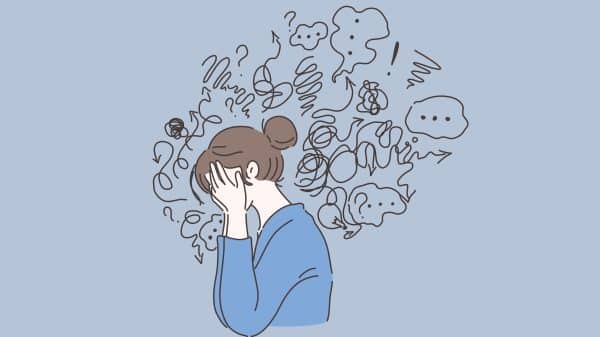
These questions have become more obsessive year after year to the point where I realised: I’m not just obsessed, I have OCD. I find myself spending hours watching those Tiktoks: ‘How old are you and how much do you have in savings?’ desperately searching for someone in a similar or worse position to me, so I can finally breathe out and say, Yes, I am keeping up.
But then the cycle repeats, and no matter how much I try to reassure myself, the anxiety doesn’t end.
If you’re also obsessing over these questions, seeking endless reassurance to ease your worries, and checking where you stand against other people constantly, then I’m afraid you might have OCD. And there is shockingly little guidance and research out there about it.
Why do we feel the need to compare so much?
Comparison has been built into us forever, from body image ideals to school grades. For most of us it’s always felt like we need to be as good as everyone else. And it’s easier than ever to measure yourself up to the rest of the world with everything documented on social media.
Your friends from high school have their jobs posted on Linkedin.
Their milestones posted on Instagram.
Their creative journeys get numbers on TikTok.

It feels impossible to escape. OCD officially stands for Obsessive Compulsive Disorder, but recently a new term has emerged: Obsessive Comparison Disorder, a specific form of OCD based around compulsions to constantly compare yourself.

When we have access to millions of people’s lives, our initial insecurity of “what if I’m not good enough?” has something really dangerous to latch onto: other peoples’ successes.
It’s an experience that a lot of people can relate to.
I’ve found that the start of an OCD can grow massively if you don’t try to manage it. What started for me as checking LinkedIn in a spare moment became finding the accounts of every single person I went to school with. Then, counting how many friends people were posting pictures with, watching what people buy in supermarkets to see if it’s similar to my basket or listening in on how much each person spent at the checkout in Tesco. I could turn absolutely anything into a way to compare myself.
Mark Wester speaks about his OCD struggles on his blog OvercomingOCD, sharing how he used social media to compare himself obsessively, describing it as:
Something that you just cannot stop thinking about or cannot stop doing.
He even goes on to say that, in his experience, when he finally reached a point where he felt successful, it only brought about other comparisons, feeling guilty for doing better than others.
So, when does the comparison end? Will you ever reach a point where you’re satisfied with your progress? From my experience with OCD, it’s not really about that. It’s not about reaching the best point in life or the goal you’re so worried you won’t meet, but breaking the obsession and feeling okay with where you’re at now.
How do I end the obsession?
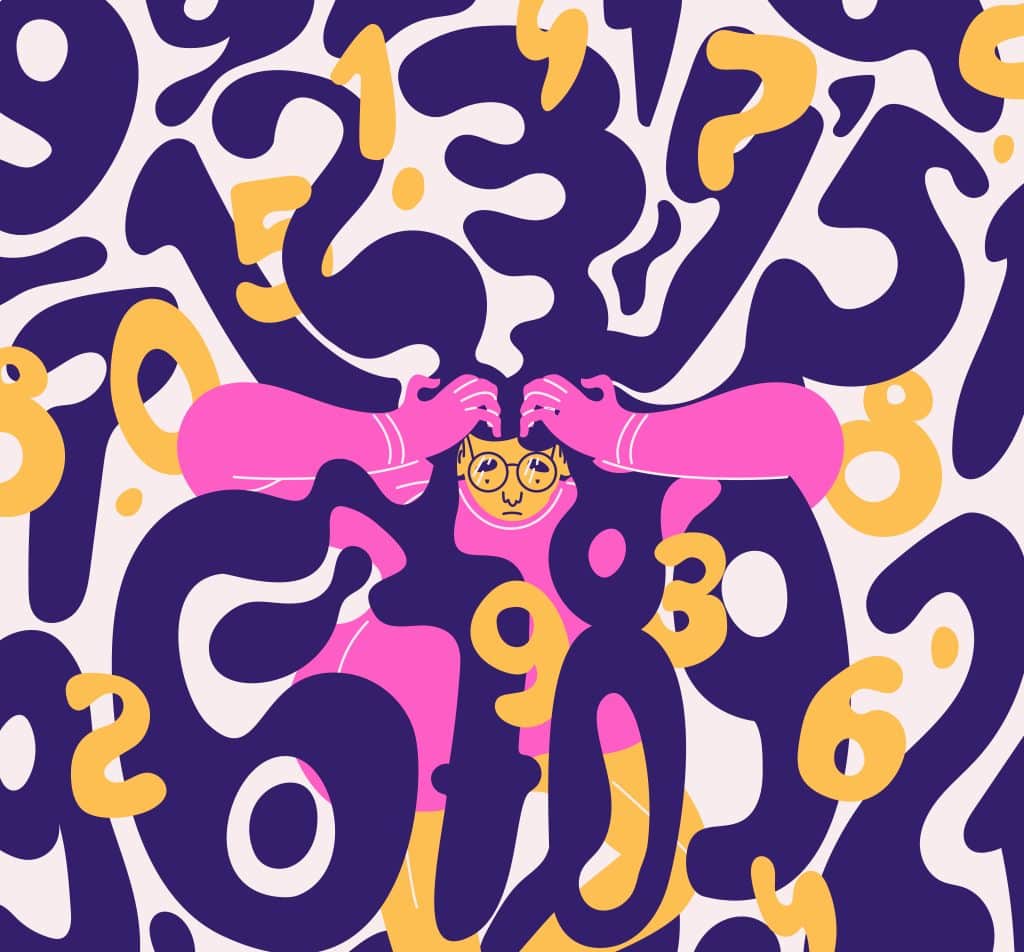
Here’s how OCD works, in a nutshell:
It starts with an anxious thought: Am I falling behind?
Next, OCD finds a way to manage the anxiety by convincing you that a compulsion will ease your worries: Checking social media for reassurance.
Then, it obsesses: No matter how much you check, it will never be enough and you’ll become more anxious trying to find the point where your worries will end.
The answer? Stop checking
Stop looking up what everyone else is doing. This completely fuels the obsession. The more you check, the more you want to check again. It’s going to be hard the first few times (or first hundred times), but you’ll learn to sit with the anxiety of not being reassured. Not knowing if you’re at the same point as someone else, and not needing to know.
I know that might sound impossible, but it’s not an all-at-once method. Take it slowly.
This will help manage that need to find an answer right here, right now. But it’s not going to solve the issue completely. Because, even if you’re not anxiously scrolling as much, the same scary, overwhelming thoughts are in your head.
We can preach about less screen-time until the cows come home, but realistically, everything is on our phones now, so even if you reduce the amount of comparison checking online, it’s not gonna be so easy to completely avoid seeing what people are putting out there. Instead we can reduce it as much as possible, and tackle that feeling you might get seeing people’s successes: why am I not good enough?
How to tackle the fear of not being enough
I’ve had five years of uni, and I’m yet to find a full-time job, I don’t know that many people where I live, and it’s a huge struggle for me to stay motivated. Everyone I went to school with has had two years to build up their lives out of education, and it’s both terrifying and addictive to stalk their social media. It’s like I’m searching and searching to find some sort of reassurance that I’m doing okay. That there’s someone out there in the same situation. But I never find it. I just get sucked into scrolling and scrolling in a sort of self-destructive horror.
So, what is ‘enough’ for you?
Is it once you’ve reached a specific goal? Once you’ve achieved something of equal measure to your peers? And what happens when you make it to that point?
Why are we in such a rush?
We’re in such a hurry to reach perfection. There’s a sort of existential dread that comes with it, like we’re thinking – if I don’t achieve my goals now, I never will.
But, that’s just a “what if,” you could make endless lists of what ifs and terrify yourself until you never leave the house again (which I’ve done before). So let’s focus on what’s happening now, instead of whatever will happen next.
I guess you have to ask yourself, what’s happening for you right now? What are the things you’ve done before that you’re proud of? What are the things you’re doing now that feel fulfilling? Even if it’s tiny things. Maybe you couldn’t cook before, and now you’re trying to. We’re gonna try to focus on your own successes, rather than the ones you think you should have under your belt.
Just try
Since leaving uni, comparison consumed me so much that I really lost the things that were important to me. I used to love making things, being carefree and having fun. Now, I measure the amount of friends I have, the amount of money I’m making, the amount of general life progress being made, and I’ve forgotten that these were never the things that made me happy. These were never my goals.
And so, to combat my fears, I bought a roll of felt.
Okay, stay with me here. I always loved doing crafts at uni. It’s what really brought me and my friends together, those days where we compiled all our materials and just made things together, feeding off each other’s creativity, our failed and successful attempts, our willingness to just try.
When we left uni, it felt like that all got left behind in favour of “real adult” behaviour. Everything I tried now had to lead to something. I had to write in order to get published, or make things in order to sell them. But is that really going to make you happy? Are these your goals, or the ones you think you should have?
Making new aims

Let’s think back to when you were happiest, and what you were doing at the time. Your new list of aims are going to be moulded around these ideas. For me, it was when I was trying things, just for the sake of trying.
So my list of aims are as follows:
- Start a creative writing group
- Make felt portraits
- Film a dance cover
- Make a really complex cosplay
- Join a board games group
And, for context, my old list of aims:
- Full-time job
- X amount in savings
- X amount published
Now, looking back at that old list, it sounds really depressing right? Like, maybe they’re practical, but there’s no way those things alone could make me happy. You are not everyone else. You have your own needs, interests, likes and desires. Why should your life look just like everyone else’s?
Get out of the spiral, and find the things that really matter to you. Not just what everyone else is doing. You’ll probably find that once you’re doing things that you find fulfilling, you’ll start to make the progress that you’ve been craving this whole time.
Success is just doing something you’re proud of. There’s no worldwide ranking of your achievements, no checklist of aims or a set timeline for making things happen. Who told you there was?