Apocalyptic fiction is far from a new concept, but the genre has been gaining undeniable popularity in recent decades. 2025 in particular has been a big year for apocalypse stories, and some pretty bleak ones at that. Here’s a look at the current state of the genre, where it comes from, and its cultural significance in our turbulent age.
This article contains spoilers for: The Dead Don’t Die (2019), Bugonia (2025), and “No, I’m Not a Human” (2025).
If you’re a fan of stories that fall into genres like science fiction (Mad Max), horror (28 Days Later), survival (The Last of Us, The Walking Dead), political commentary (Don’t Look Up), or even romantic comedy (Warm Bodies), you’ve likely come across an apocalyptic setting before. You know what constitutes an end-of-the-world story: constant danger, cities in ruin, the collapse of society as we know it, or the impending threat thereof.
But why do we have so many stories like this, anyway? And how did we get to a place where telling tales about the end is common?
Where did “the apocalypse” come from?
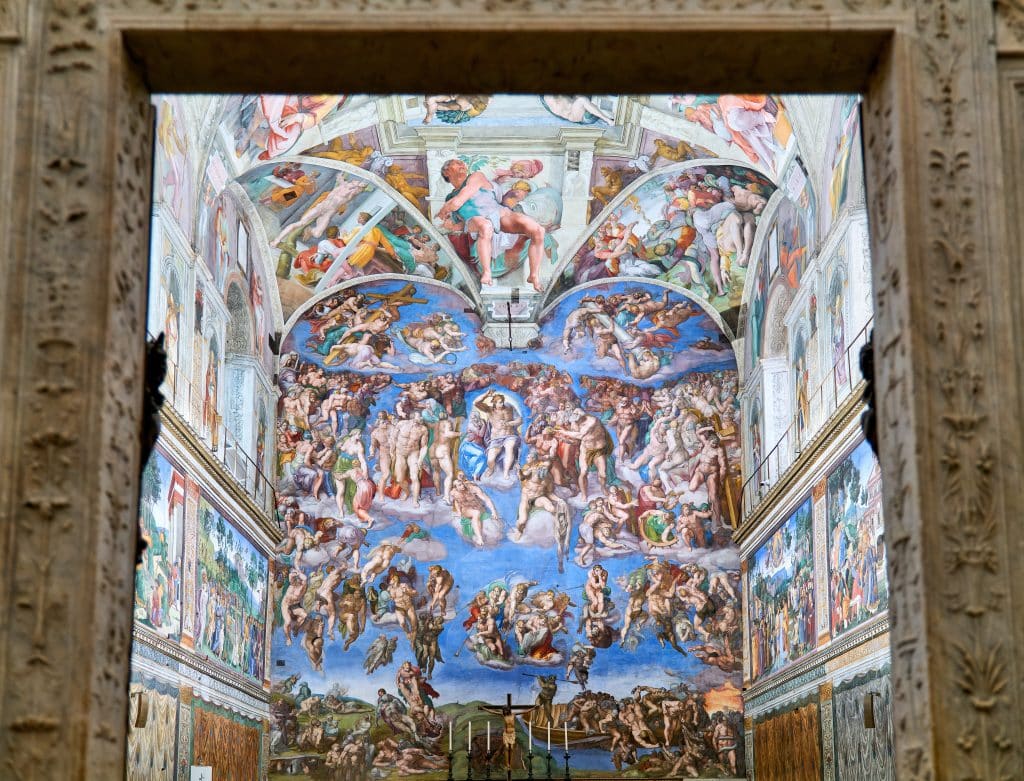
The concept of “the apocalypse” as a possible setting for a fictional story comes from science fiction first and foremost. However, the idea of the end of the world itself is way older than that. Several religions have similar concepts. For example, Judgement Day in Christianity, Pralaya in Hinduism, or Ragnarok in Norse mythology.
But apocalypse fiction as we know it likely started with Jean-Baptiste Cousin de Grainville’s 1805 novel Le Dernier Homme. And shortly after, Mary Shelley’s similarly named independent novel, The Last Man (1826). Both of these nineteenth-century stories take place at the end of the world and explore the collapse of human society.
In the 20th century, apocalypse stories became a staple of the sci-fi genre. A large surge of these films were released in the 1990s, and the trend continued into the 2000s.
Even if you don’t consider yourself a sci-fi or apocalypse fiction fan, you’ve probably heard of properties like Armageddon (1998), Independence Day (1996), or World War Z (2013).

Apocalypse stories in the 2020s
While the 2010s was arguably the biggest decade by numbers for apocalypse movies, the 2020s has seen some very intriguing releases with unique and timely premises.
It’s no surprise that a decade that began with rumors of World War III and a real-life global pandemic would renew audiences’ interest in the idea of the end of the world.
The Doomsday Clock is closer to midnight than it’s ever been before, and everywhere on earth, people are worried about a variety of threats, from politics to war to climate change. Let’s look at the state of apocalypse media in 2025 and see what we can learn from these stories.
The Dead Don’t Die: A zombie resurrection
The Dead Don’t Die was first released all the way back in 2019. However, despite its incredible cast, it didn’t get a lot of love initially.
This deadpan horror film starring Bill Murray and Adam Driver follows a plot you might have seen before — corpses begin to re-animate and attack the living. It’s a classic zombie apocalypse setup, but The Dead Don’t Die is no ordinary zombie movie.
This one is rife with social commentary, which may be why it wasn’t a hit when it first came out. The symbolism of zombies who moan about coffee and wi-fi instead of brains does seem a bit heavy-handed. However, the surreal comedy and unexpected fourth wall breaks of The Dead Don’t Die make it clear that this movie isn’t just a vehicle for simple messages like “phones are bad.” It’s far cleverer than that.
The film is slow and philosophical, lacking a lot of the typical action-survival sequences that make other zombie movies thrilling. One of the most iconic parts of The Dead Don’t Die is Ronnie (Adam Driver) and his repeated assertion that “This is all gonna end badly.”
And indeed, the movie does end badly, with the world overrun by zombies. In one of the final scenes, Ronnie reveals that the reason he knew this would happen is, of course, because he read the film’s script. It’s a weird story for sure.
Ever since its addition to Netflix in December 2024, The Dead Don’t Die has made several appearences in the platform’s top ten. As of 2025, it’s been successfully raised from the dead. Initially considered a flop, this movie is now trendy, timely, and introspective in all the right places. Maybe because accepting horrific events with sarcastic calmness feels all too relatable these days.
Bugonia: A world beyond hope
Bugonia, released on October 24th, 2025, is an experience like no other. To even call it an apocalypse film is a major spoiler, so you’ve been warned. It only gets more spoiler-y from here.
For the majority of its runtime, Bugonia follows the twisted story of Teddy and Don, two cousins who imprison a CEO in their basement because they believe her to be an alien.
Initially, it seems to be a complex psychological thriller about the danger of conspiracy theories and internet echo chambers. However in the final few minutes of Bugonia, it’s revealed that the CEO (played by Emma Stone) was actually an alien all along.
Freeing herself from her captors, she tells her fellow Andromedans to destroy humanity, as the species is beyond hope.
While every person on earth ends up dying, all other plants and animals survive, effectively renewing the planet’s ecosystems. Bugonia was based on a 2003 Korean film aptly titled Save the Green Planet!
Its plot twist might be shocking and absurd, but there’s something strangely beautiful in the film’s final, quiet moments of reflection. Like The Dead Don’t Die, it’s a story without hope (for humanity, at least). Still, there’s something cathartic in its destructive conclusion.
No, I’m Not a Human: A bleak descent into darkness
“No, I’m Not a Human” released on September 15th and immediately took the gaming world by storm.
The Steam game, which combines 3D assets with a classic “point-and-click” style, asks the player to identify “visitors” — creatures that look human, but aren’t. You must let people into your house to build safety in numbers during a horrific apocalypse. But if you let visitors in, the danger will increase for you and your guests.
Unlike the other apocalypse stories I’ve discussed here, “No, I’m Not a Human” has multiple endings. Still, all of these conclusions are bleakly melancholic at best and extremely gory at worst.
The game is a fascinating exercise in futility, asking the player to use arbitrary signs to identify threatening individuals. The government in “No, I’m Not a Human” is equally as ominous as the visitors, demanding that citizens choose who gets to live and who must die according to circumstantial signs like white teeth or dirty fingernails.
Though the game’s story is far-fetched, it offers a solid critique of real-world prejudices.
Why are these stories popular now?
A constant across these total-apocalypse stories is the responsibility of humanity in its own destruction. The zombies, the aliens, and the visitors are only ever a small part of the danger. The greed and prejudice of humanity is always what seals the deal in the end.
Apocalypse stories have come a long way from 1996’s Independence Day, in which the world unites together in order to defeat an alien threat. In fact, while the apocalypse movies of the 90s were largely inspirational stories of survival, there are now a great deal more narratives about failure.
So do we want the world to end?
Not exactly. Or at least, not entirely. Modern life is stressful and constant, so there definitely is some escapist draw to destructive settings. At least you won’t have to worry about the job market at the end of the world (an Instagram animation by @the.life.of.daisy.chain comedically illustrates this exact premise).
Apocalypse films (or tv shows, or video games) can offer the same catharsis as horror movies. There’s a reason the two genres so often overlap. When we allow ourselves to see how awful things can get, the present moment doesn’t seem so bad anymore. And by showing us the worst possible outcomes, perhaps these stories will inspire us to change our own lifestyles and political systems in order to avoid the same fate. Well, we can hope.
At the very least, apocalypse stories always provide interesting character studies and portraits of life on earth. In the words of Professor Sheila Winborne, “[These] films highlight some of the best and some of the worst truths about what it means to be human.”