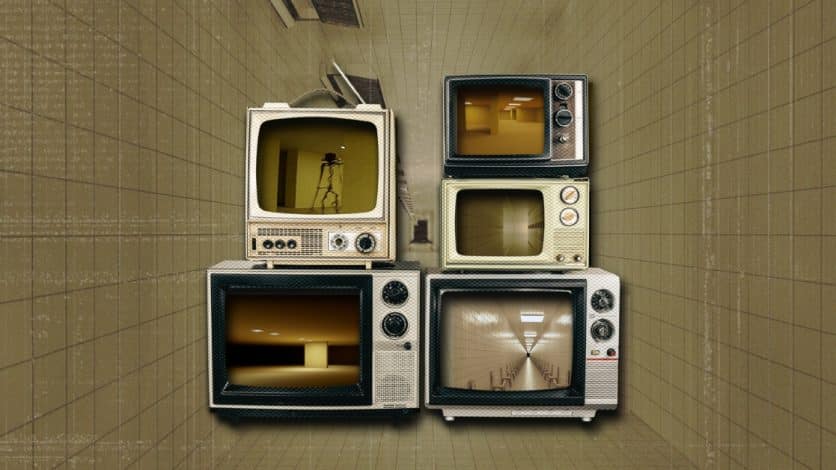
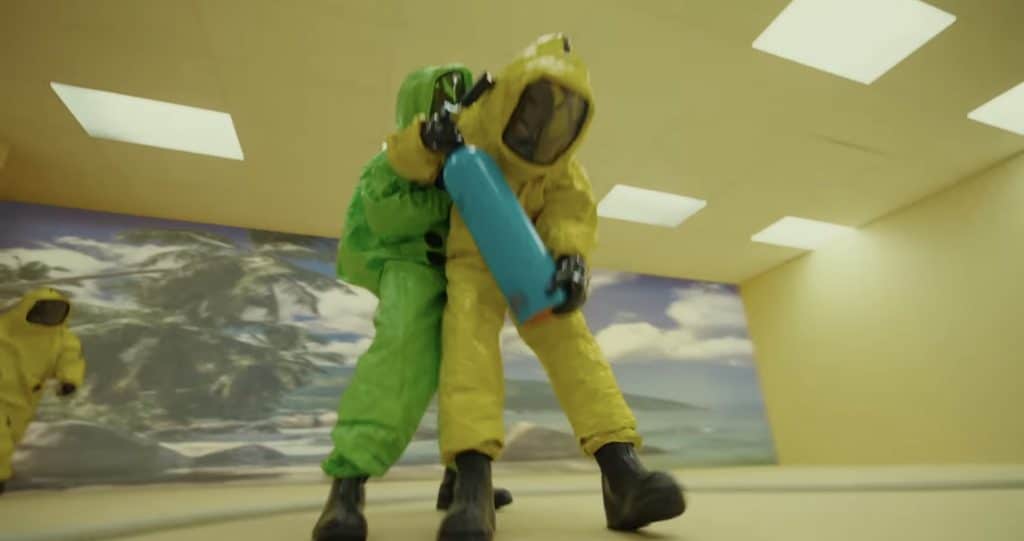
If you’re anything like me and spent most of your internet experience as a child looking for the next scariest thing that would keep you up at night, then you know a thing or two about creepypastas. And the trailer for The Backrooms got you excited.
Creepypastas are the horror form of “copypastas,” reposted stories copied and pasted to be shared across multiple forums, emails, etc. These shared stories become popular in online communities and inspire collaborative works that build on the lore of the original post. The Backrooms is one of many examples of these stories now re-emerging into mainstream media. With plenty of reimaginings of the original post and the recently announced release of The Backrooms trailer, the concept has once again become popularized.
In celebration of this film’s release, I’m here to share with you the origins of The Backrooms and why it became so popular. As someone who grew up with this story and many other terrifying tales, I’ve noticed that internet horror doesn’t have the same appeal it used to. There is still great content out there, don’t get me wrong; it just doesn’t hit the same. Later, I will explore why. So come close as we prepare to navigate through The Backrooms.
The Backrooms Origins
To initiate our entry, we start at the beginning. Luiz H.C., writer for The Bloody Disgusting Editorials, details this origin story in a post that explains what The Backrooms are and where they came from.
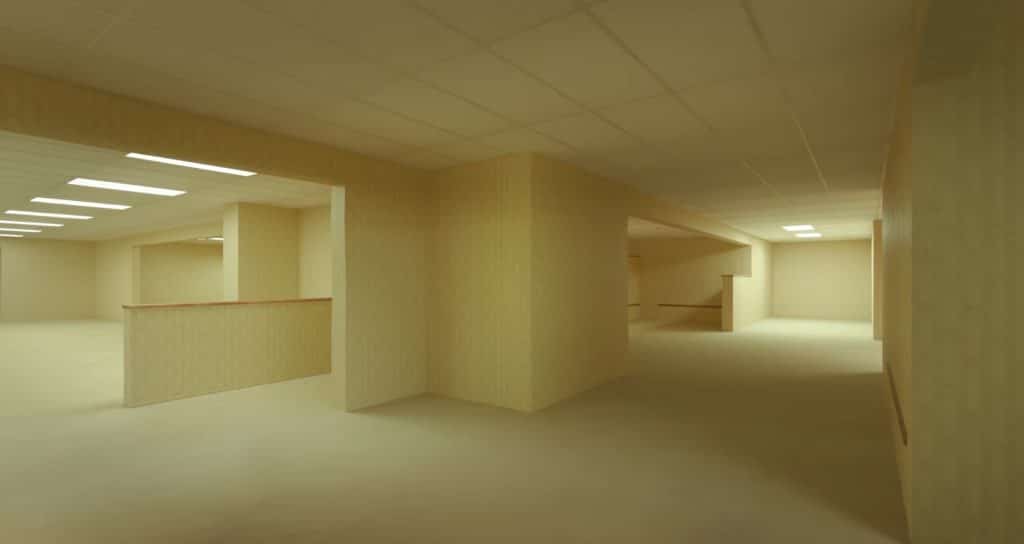
2011 Original Image
In 2011, a single photograph was uploaded. It’s bizarre wallpaper and “seemingly never-ending hallways” inspired a series of imaginative responses from users. This photograph was taken in a HobbyTown store under renovation. Its eerie vibe felt familiar, but was so out of place and wrong. Imagine entering an empty Target, devoid of other people, product shelves, or cash registers. Add in dark lighting that impacts your visibility, and you are left with a similar feeling.
That is what this image did so well. It popularized what would come to be known as liminal horror. Liminal horror is a subgenre of horror that focuses on the discomfort of being in empty transitional (liminal) spaces. I think of it as the lack of something that becomes scarier than the presence of something. It is the constant state of waiting for something to happen; that dreadful feeling of perceiving familiar spaces as wrong because they are empty. Many of us shared this experience during the COVID-19 pandemic as we entered grocery stores.
2019 Skyrocket
The image would trend again in 2019 when a 4chan user responded to its repost in a thread of similar images. Luiz H.C credits this as the beginning of Backrooms lore:
“If you’re not careful and you noclip out of reality in the wrong areas, you’ll end up in the Backrooms, where it’s nothing but the stink of old moist carpet, the madness of mono-yellow, the endless background noise of fluorescent lights at maximum hum-buzz, and approximately six hundred million square miles of randomly segmented empty rooms to be trapped in.
God save you if you hear something wandering around nearby, because it sure as hell has heard you.”
Other users would go on to add various levels to Backrooms lore and create photoshopped images of various monsters in these spaces.

2022 Short Film
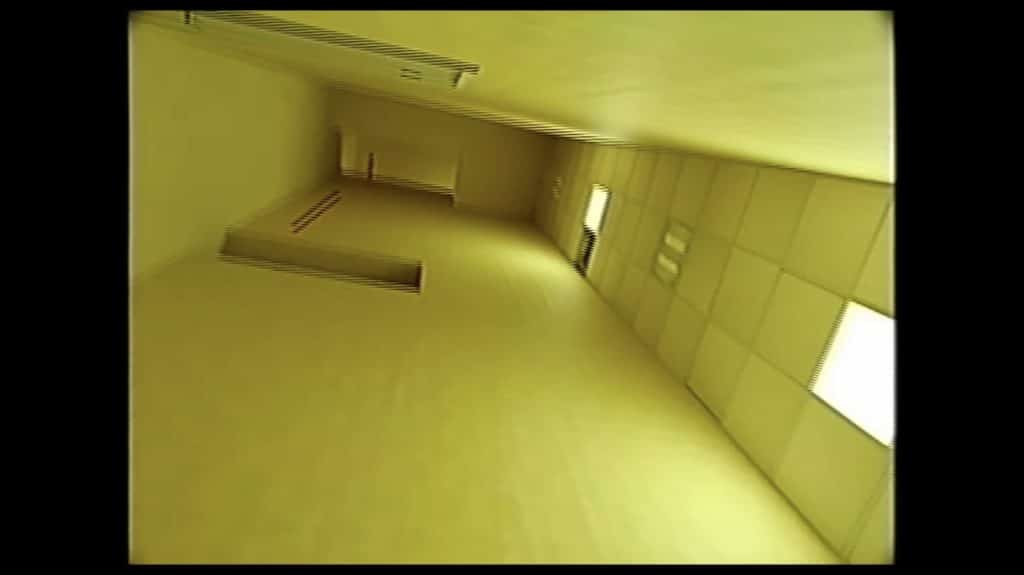
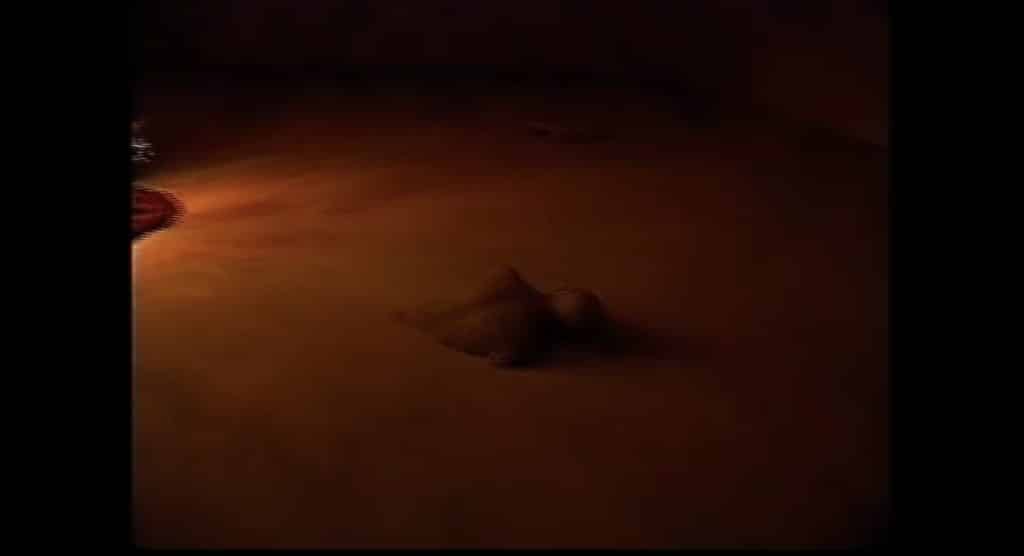
Early in 2022, Kane Parsons was in high school when he uploaded his first entry to the series, titled “The Backrooms (Found Footage)”. In this short, Parsons plays a young indie filmmaker in 1991. While filming, he falls into this unusual space (resembling the original image). The filmmaker navigates the eerie space. While exploring, a creature composed of wires and other unknown materials stalks him.
The short would go viral, encouraging Parsons to add to the series, where he introduced the Async Research Institute. The group would attempt to study the Backrooms, but would face many challenges. This series would also inspire a multitude of games and fan films and would even inspire a later episode of the American Horror Stories anthology series.
A24’s Pitch for The Backrooms
It is unclear when A24 approached Parsons about adapting his series into a feature film. What we do know is that Parsons agreed, but aimed to finish high school before starting the project.
On March 31st, 2026, they would release the official trailer for The Backrooms.
The film comes out on May 29. It stars Chiwetel Ejiofor, Renate Reinsve, Mark Duplass, Finn Bennett, and Lukita Maxwell. Kane Parsons will direct the film, meaning we can expect to see his creation in all its glory.
Interpretations
While researching The Backrooms and its lore, I came across an article by Shira Chess, an author for The MIT Press Reader, titled, “‘Backrooms’ and the Rise of the Institutional Gothic.”
While discussing the same origins of the lore we just did, she suggests the rise of liminality aesthetics shows us the “resonance of a new media genre altogether,” which she calls the Institutional Gothic.
“Like the traditional Gothic, the Institutional Gothic involves uncanny spaces, malevolent forces, and overwhelming discomfort related to spatiality and power. But where the traditional Gothic is dark and looming with ornate architecture, the Institutional Gothic occurs in winding or otherwise empty office spaces, consumed by machine-made mundanity and the unforgiving gaze of noisy overhead fluorescent lighting.”
Chess argues that this Gothic genre shifts from supernatural fear to something more familiar, such as the fear or discomfort of being isolated or trapped by your job. In terms of The Backrooms, she states that the Institutional Gothic is embedded throughout – from the never-ending hallways, to the mono-yellow that seemingly takes over the entirety of the scene, to the subtext of “corporate and government experimental woo-woo.”
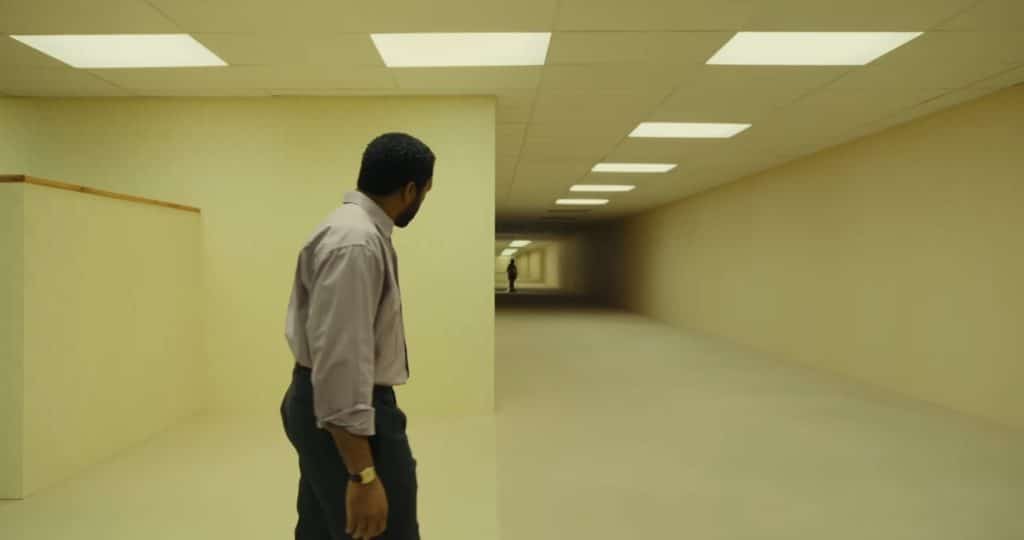
The Backrooms is set in the ‘80s and ‘90s. She identifies with the time of great prosperity for the American Middle Class. This point of hers is important, as most of the “levels” are located in consumer areas (e.g., pools, empty work spaces, empty shops, etc.). These levels are explored with great caution, first by the viewer and later by the Async. Chess closes her article, wondering whether this will shape how future generations view spaces like these, especially as companies become reliant on AI.
Why we crave internet horror
As I mentioned before, current internet horror does not hit the same as previous internet horror. When we look into how Backrooms lore originated, we see that it was mostly built on user collaboration and creativity. A user would share art or an idea for a story, and others would build on it until it became something bigger. Not only is The Backrooms a great example of this, but so is Five Nights at Freddy’s or Slenderman. Whether the concept started as a game or as a single photograph shared on the Internet, people grew interested. They continued the story, which is why these things remain so popular among younger people.
So, why doesn’t it feel the same?
The biggest issue is that when something becomes popular, the main focus of producing the next thing is to imitate what made the last thing so good. Think of how platforms like Roblox try to recreate that feeling so much so that it becomes overdone and is no longer special or unique. Most of this content has been watered down so much that once creators realize that children are interested in it. Then, when trying to market these games for children, the original core themes are lost.
By no means am I saying that all of the creepypastas we grew up with were well-written or had these profound meanings, but the initial fear we felt reading this type of content is unfortunately not apparent in newer content. I’ve seen this in my younger siblings. Most of the content they engage with is “brainrot”, with no narrative or creative elements taking place. It’s entertainment to keep them stimulated for longer periods. That raw feeling of wondering if what you were reading actually happened is replaced with not having to think at all.
Where something like Five Nights at Freddy’s has upheld some of its original lore, The Backrooms has been diluted to a space where it is only about escaping the monster. The horror of the original Backrooms felt more like a commentary on how paranoia-inducing and uncanny liminal spaces felt. The scariest feature was one’s own imagination. With Parsons’ addition of the wire-monster, I felt it lost some of the psychological horror, but I appreciated what it did well. Not only was his short film effective in scaring audiences, but it also attracted so much attention that it inspired people to continue building on the lore. Newer games or adaptations of the lore, I feel, completely lose this tension and instead focus on chase sequences.
The original fear of falling out of the “real world” and having no way out is lost. If there is a deeper meaning, like Chess is implying, then it is completely overlooked.
We crave Internet Horror just like we crave other types of horror. It give us a sense of what is currently taking place in society. It gives us a space to process our feelings and have conversations that don’t feel possible offline. There is definitely a space for the younger generation’s horror to explore these themes, but it’s much harder to reach an audience that isn’t learning to think about them.