


With the release of Marty Supreme, director Josh Safdie perfected a certain style of filmmaking present in his previous projects, crafted by him and his brother, Benny. In their previous films, Good Time and Uncut Gems, there’s a sense of dread mixed with anxiety that runs throughout each film. Whether it’s Robert Patterson running away from the cops through the alleys of New York or Adam Sandler making backdoor bets with money he doesn’t have, both are what I consider the film equivalent of watching a car crash in slow motion. It’s tough to watch, but you can’t look away.
These types of movies always perplexed me. It’s not quite the same thrill you get from watching a horror movie, nor does it really fit into the thriller category. It’s something I would call “neurotic” filmmaking, where a movie is designed to stress you out as much as possible. But why do we gravitate towards this type of story? And what makes Marty Supreme stand out from the rest of the films that have released so far?
When you look at the influences behind this film, it becomes clear why Marty Supreme is unique in this sub-genre. It builds on elements perfected in other movies and combines them masterfully. Two movies I consider to be seminal in this genre have perhaps served as the stepping stones for Marty Supreme‘s success: the criminally underrated After Hours (1986) by Martin Scorsese and Sidney Lumet’s classic “heist” film, Dog Day Afternoon (1975).
The importance of pacing
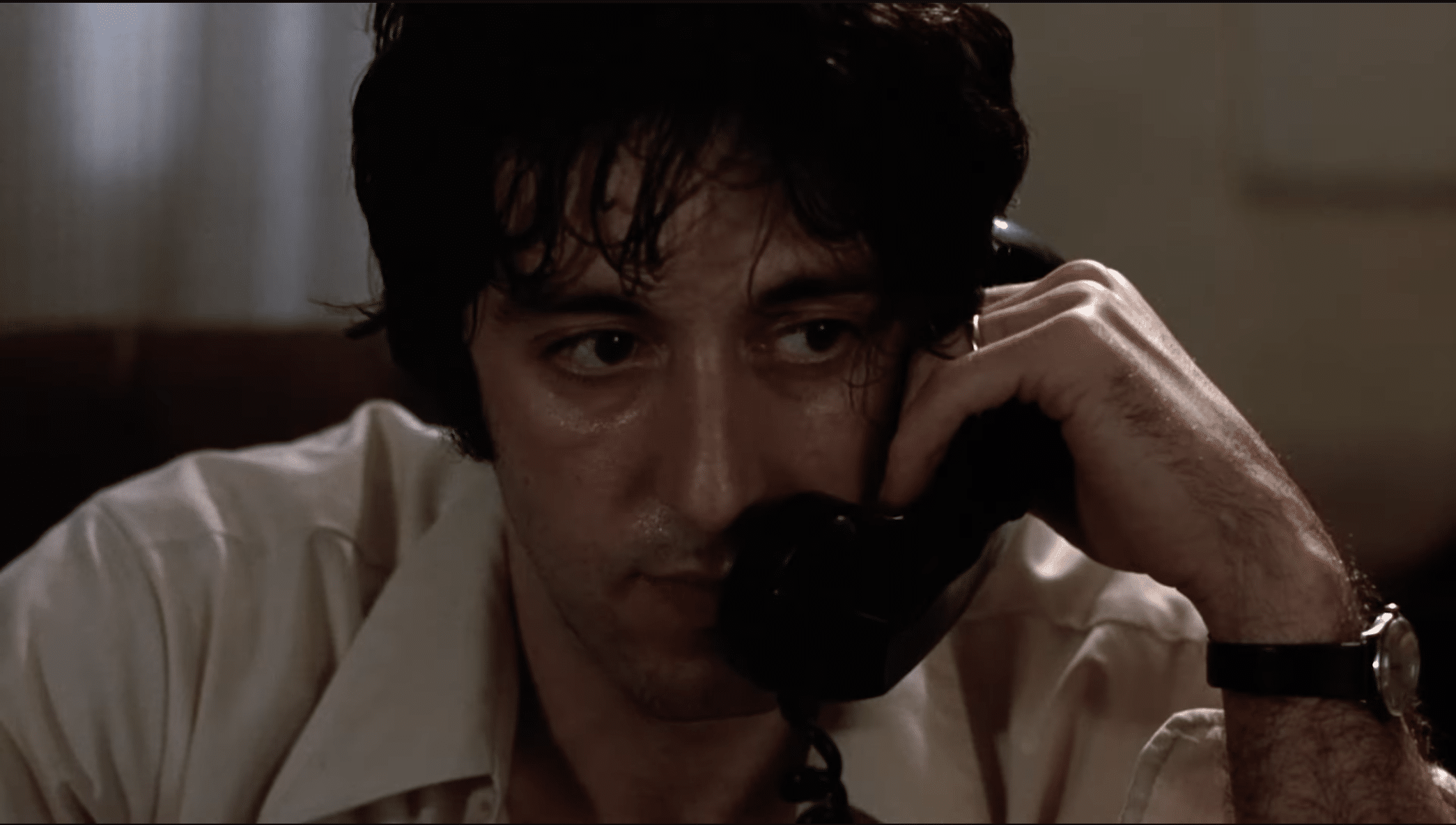
While these certainly aren’t the first “neurotic cinema” films ever made, I think they were a huge influence on future filmmakers who would go on to perfect it. A good example of this is seen in Dog Day Afternoon (1975), which is about two amateur criminals who turn a simple robbery into a media fiasco.
From the jump, it’s clear that Dog Day Afternoon is a tightly-packed powder keg of a movie. Within twenty minutes, Sonny and Sal, both played by Godfather alums Al Pacino and John Cazale, begin their poorly planned robbery and get caught in a standoff with the police. From then on, the film moves at a breakneck pace, which is greatly attributed to Pacino’s performance. His manic body movements, coupled with his general aura of neuroticism, really bring his character to life. It’s one of those movies that feels shorter than it actually is.
Each scene has an ebb and flow to it that helps ground the film while keeping it moving forward. For every scene of Pacino yelling “Attica!” to an applauding crowd of onlookers, there’s also long sections just dedicated to quiet conversations. It manages to walk a fine line between stress-induced action and introspective character development.
This is a crucial tenet of neurotic cinema. If every scene felt stressful, then it would start to lose its punch pretty quickly. Restrained moments are important so that the characters (and audience) can take time to really process the situation they’re in. And once they do, they can see how screwed they truly are.
Complex protagonists
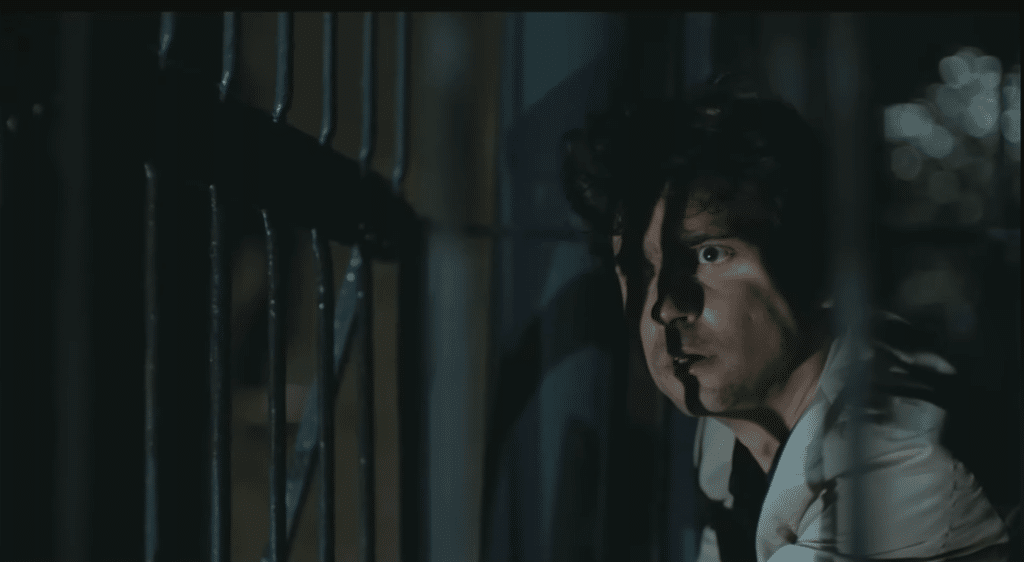
Paul Hackett in Scorsese’s After Hours (1985) is a flawed guy. While not as deplorable as some of Scorsese’s other protagonists, he’s not exactly endearing to us. In the film, Griffin Dunne plays Paul, a word processor who meets a nice girl at a cafe after work. After a failed hook-up, Paul finds himself running through a hellish version of New York City. Punks, art thieves, and swingers rule the streets as Paul desperately tries to get home.

If Dog Day Afternoon is a speeding car that occasionally stops for gas, then After Hours is a train that gradually gains momentum until it crashes off a bridge. It starts slow, but very quickly goes off the rails in a fun and chaotic way. As the movie goes on, Paul finds himself in increasingly tense situations that begin to wear him down. The somewhat cool-headed Paul we see at the beginning soon transforms into a high-strung lunatic by the end. It’s hard to name another film that evokes the saying “nothing good happens after 2 am.”
Part of what makes the film great is the fact that we feel sympathetic towards Paul at the beginning, but once we see the cracks in his character, we want to see him get his comeuppance. That constant shift between rooting for or against him causes us to feel more emotionally invested. This is another key component of neurotic cinema. More often than not, it’s about watching a flawed protagonist that we hate to love but love to watch.
Sound and cinematography
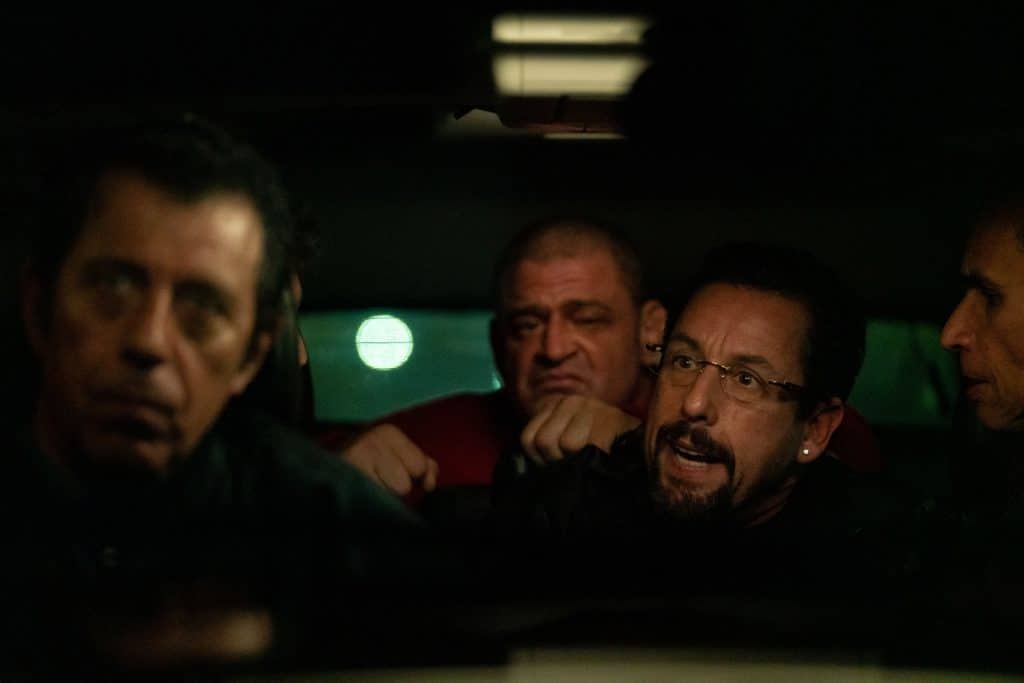
Speaking of flawed protagonists, there is probably no better example than Howard Ratner from Uncut Gems (2019). Despite coming out seven years ago, it has cemented itself as the modern blueprint for neurotic cinema. Adam Sandler stars as Howard, a silver-tongued jeweler in New York with a crippling gambling addiction. He spends most of the movie either trying to pay off his debts or spiraling deeper into them.
Uncut Gems achieves in creating a nerve-racking atmosphere through an often-overlooked aspect of filmmaking: sound design. Like the great Robert Altman, the Safdie brothers use a unique blend of overlapping dialogue and diegetic sounds to create a chaotic soundscape. The actors don’t wait for each other to say their lines. They talk over each other or even juggle multiple conversations at once, which makes us feel overstimulated when watching. It’s similar to what The Bear does in many of its cooking scenes. It combines a cacophony of sounds that can make it hard for us to follow while making us feel uneasy.
A great example of this is when Howard goes to a club to meet someone. Very often in film and TV, when two people are talking at a loud nightclub or something similar, they turn down the music and noise in post so the audience can follow the conversation. In Uncut Gems, however, this doesn’t happen. The bass blares, crowds cheer and sing loudly, and Howard has to scream to cut through the noise. This frenetic feeling also applies through the camera movement in every scene, which is thanks to their amazing cinematographer, Darius Khondji.
The directors of Uncut Gems often film shots from a distance to avoid encumbering the actors with a large camera rig in their faces. Because of that, it feels very documentary-esque, almost as if this is a real event playing out before us. The camera shakes and follows the characters throughout the scene as if we’re watching them from afar. It invokes a sense of voyeurism as we follow them through large groups, crowded sideways, and tight spaces. It makes you feel oddly claustrophobic as well, despite the distance between Howard for most of the runtime.
How it all culminates in Marty Supreme

In Marty Supreme, there’s a sense of desperation that radiates from Timothée Chalamet’s character, Marty Mauser. Considered one of the best table tennis players at the time, he is someone who can beat almost anyone at the game. However, after a devastating loss in the world championship to Koto Endo, a deaf Japanese national, he fights tooth and nail to secure a rematch by any means necessary. He manipulates his closest friends, family, and business partners in order to get what he wants, which is just the thrill of beating Endo. To Marty, there is nothing else in life worth his time. He couldn’t care less about the money. The feeling of winning is more important to him. He’s also a Machiavellian schemer who gets caught up in his own ego half the time.
Every action he takes in the film is done purely to get close to his goal of just playing Endo one last time. He gets banned from the Table Tennis Association, ruins a potentially lucrative relationship between himself and Milton Rockwell (a billionaire who made his money off ballpoint pens), and even pushes the mother of his illegitimate child to her limits.
Similar to Sonny from Dog Day Afternoon, you get the sense that he’s someone who’s at the end of his rope. While exuding an air of confidence throughout the film, it’s clear to us and Marty himself that he’s got nothing outside of table tennis. The rematch he’s been fighting tooth and nail for isn’t just because he wants to prove himself to everyone; it’s also because he knows it’s the last time he’ll ever play professionally.
A lot of that doomed desperation comes through in Chalamet’s acting. It’s probably my favorite performance of the year so far. He manages to do so much with every aspect of his performance. From his body language to his delivery, it all adds up in making Marty feel like a fleshed-out character.
Josh Safdie also seemed to take lessons he learned from previous projects and expanded on them in Marty Supreme. Every great aspect from Uncut Gems, from its sound design to its cinematography, is given a bigger scope in this one. The camera flies around the space fluidly, and the shots are considerably more complex. It’s reminiscent of a classic epic from the golden age of Hollywood, which I’m sure is intentional. The core idea of the film is about a kid following his dreams, so it only makes sense for the production design to match that grandiose vibe. The sound design is also quite a step up, with the soundtrack playing a big part in making the film feel tense. Like a ping pong ball, it bounces around each scene in a mesmerizing way.
So what draws people to neurotic filmmaking?
There are a lot of reasons why people seem to love Marty Supreme. But why? Is it because of the incredible performances by Timothée Chalamet and, shockingly enough, Kevin O’Leary? Or is it due to the captivating cinematography? While I don’t doubt that Mr. Wonderful had a part in the film’s success, I think it comes down to something more intangible. It’s not one specific thing, but rather, a sum of all its parts.
The film pulses with a certain energy that’s unlike the previously mentioned films. While Dog Day Afternoon, After Hours, and Uncut Gems follow flawed protagonists in stressful situations, Marty Supreme has an introspective side that really separates it from the rest. Although Marty proves himself to be a terrible person time and time again, it’s hard not to root for him. Despite his selfish actions and cocky demeanor, Marty is just a kid who wants to be great. He’s not necessarily someone we find ourselves emphasizing with, but is instead someone we understand.
I believe that’s the main draw to these types of movies. It’s watching people we see ourselves in, however ugly it may be. While we probably wouldn’t make the decisions they make for themselves, we understand their choices and their desires. Who doesn’t want to win like Howard? If you needed money for your partner’s surgery, wouldn’t you try everything to get it for them? Barring the extreme actions, we feel for Sonny risking everything for love. Even something as simple as just trying to get home after a long night is a feeling we relate to. Mix in some moments that trigger our schadenfreude, and it’s a recipe for success.
Neurotic cinema isn’t just about making the viewer feel like they’re trapped in a nightmare. Many other types of movies can do that better. It’s about tapping into something more universal: a motive that’s simple on the surface but hard to achieve without putting in everything you’ve got.