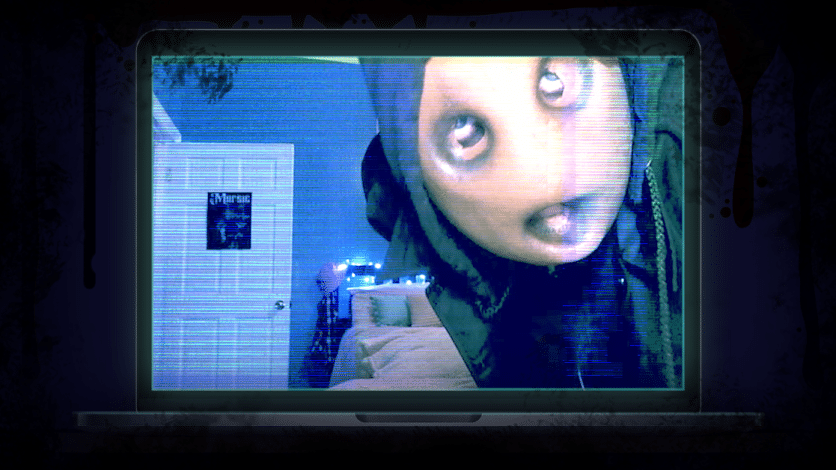
When does fiction masquerading as reality stop being safe to watch and instead starts to feel achingly real? Stuart Ortiz’s Strange Harvest doesn’t just flirt with that line—it stares directly at it, smirks, and dares us to cross. The latest addition to the ever-expanding catalog of horror mockumentaries, Strange Harvest weaponizes the grammar of true-crime television to such a degree that, at times, you forget you’re watching fiction at all. It’s an unnerving reflection of our collective fascination with murder, mystery, and the macabre, but it also pushes us to ask a harder question: why are we so eager to consume these stories in the first place?
As detectives Joe Kirby (Peter Zizzo) and Alexis Taylor (Terri Apple) recount the crimes of Mr. Shiny (Jessee J. Clarkson)—a serial killer whose ritualistic, occult-tinged murders span decades—you don’t simply observe the horrors. You begin to feel complicit in them. The mockumentary format blurs the line between “found footage” and “late-night crime special,” and the effect is chilling. Ortiz doesn’t just show us a killer—he mirrors back our own obsession with killers, daring us to question whether the horror is in the story or in our appetite for it.
The allure of the faux-documentary
Ortiz revels in mockumentary form, and he knows every trick. Police interviews filmed in dimly lit warehouses. Grainy surveillance footage that feels smuggled out of some evidence locker. Chilling 911 calls that drop us into moments of panic. Blurred crime-scene photos shown just long enough for our minds to fill in the rest. Strange Harvest constructs a tapestry so drearily realistic it becomes easy to forget we’re watching something staged.
The genius of the format lies in its duality. Mockumentaries offer both distance and immediacy—simultaneously telling you “this isn’t real” while presenting it with the exact texture of reality. Strange Harvest leans fully into this paradox. The “interviews” with detectives Kirby and Taylor, played with satirically serious conviction, echo the overly earnest talking heads of true-crime specials. Their commentary provides exposition, but it also underscores the grim absurdity of treating something so violent as routine storytelling.
And that’s the brilliance of Ortiz’s approach. He doesn’t glamorize the killer, nor does he mock the format. Instead, he leans into the aesthetic of procedural storytelling until it becomes claustrophobic. What might normally feel comforting—a detective walking you through the facts, a news anchor piecing the story together—suddenly becomes suffocating. The familiarity is what traps us.
True crime has become our cultural guilty pleasure. Whether through podcasts dissecting unsolved cases or docuseries dramatizing real-world killers, the appetite has never been stronger. Ortiz doesn’t just acknowledge that obsession—he exploits it. He forces us to experience the horror not in spite of our voyeurism, but because of it.
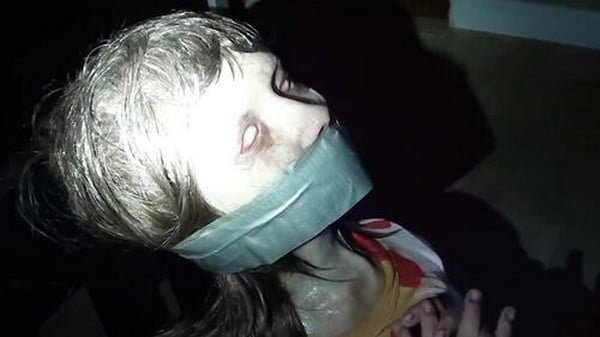
Please be advised that THE FOLLOWING CONTENTS CONTAIN SPOILERS! Keep reading at your own discretion.
Mr. Shiny: Ritual, symbolism, and the graphic body
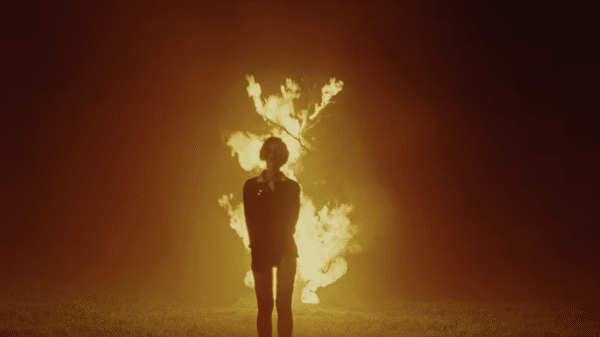
At the heart of the film is Mr. Shiny, a killer so disturbing that he threatens to collapse the boundary between character and myth. He isn’t framed as a typical slasher villain with predictable “signature” kills. His crimes are ritualistic, extreme, and drenched in occult symbolism. Each murder becomes less of an act of violence and more of a grotesque ceremony.
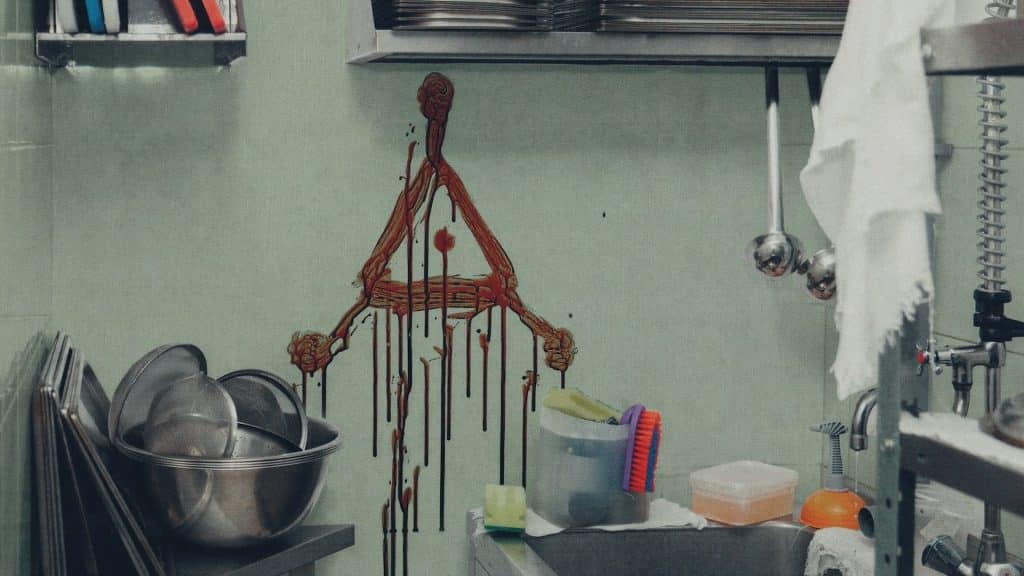
The opening scene wastes no time. A family tied to a dining-room table, blood buckets at their feet marked “going, going, gone,” eyes rolling back, and a triangular symbol painted in blood overhead. It’s a massacre staged with such grotesque specificity that the image lingers long after the scene cuts away. From there, the killings only escalate.

We watch as detectives piece together decades of brutality:
- A man in a swimming pool, slowly drained of life by leeches as wounds form a triangular sigil.
- A victim with their heart surgically removed, the chest cavity displayed with clinical detachment.
- A child slaughtered on a live webcam, a crime that feels uncomfortably attuned to our digital anxieties.
- A body strung to a children’s swing set, organs removed through a meticulous procedure of the back.
Every crime is marked by the same triangular symbol in blood—a signature that transforms brutality into ritual. The repetition turns Mr. Shiny into something more than human: a myth stitched together by symbols, bodies, and whispers.
The film doesn’t shy away from gore, but it also doesn’t let gore be the only spectacle. It uses the grotesque not to titillate, but to disturb. Still, it’s worth noting that not all the effects land. Certain bodies appear over-edited or slightly artificial, pulling the viewer out of immersion. It’s a rare stumble, but in a film that prides itself on realism, even minor inconsistencies stand out.
Mockumentary format as psychological weapon
Where Strange Harvest truly thrives is in how it manipulates us. We know we’re watching a film, but the fidelity to true-crime form destabilizes that certainty. Ortiz understands that horror isn’t just about what we see, but how we process it. By packaging ritualistic killings in the familiar language of newsreels, interviews, and procedural narration, he makes us ask: what if this really happened?
That question lingers because the format doesn’t give us room to escape. Found footage usually relies on chaos—shaky cameras, screams in the dark. Mockumentaries, by contrast, lean on calm authority. The detectives and anchors deliver their lines with matter-of-fact gravity, as though the horrors are just another case file. The calmness is what unnerves us. The film says: This is not extraordinary, this is ordinary.
The occult elements—triangular sigils, whispered lore of Mr. Shiny’s possible return—never tip into absurdity. Instead, they heighten the psychological dread. They suggest a mythology behind the killer without spelling it out, and that ambiguity is precisely what makes it believable.
Violence, voyeurism, and us
Part of what makes Strange Harvest so effective is its refusal to let the audience off the hook. Horror is always voyeuristic, but mockumentary horror makes that voyeurism explicit. When detectives show us crime-scene photos, we lean in. When a victim’s final moments play out on a webcam, we don’t look away. Ortiz forces us to confront the fact that we are watching because we want to see.
This tension ties directly into our cultural obsession with true crime. We tell ourselves that we watch because we want justice, or because we’re fascinated by psychology, or because we want to feel safe by understanding evil. But the truth is murkier. True crime scratches an itch for spectacle—the same itch that slasher films satisfy, only dressed in the veneer of reality. Strange Harvest cuts into that contradiction.
By presenting brutality in the shape of true crime, the film exposes how easily horror and journalism can overlap. It makes us wonder whether the boundary between entertainment and exploitation is thinner than we’d like to admit.
Pacing, form, and immersion
At 94 minutes, the film is taut, rarely dragging. There are occasional pacing lags, especially in segments that linger too long on exposition, but these pauses also mimic the rhythm of actual documentaries. That slight drag feels almost intentional, a way of forcing us into the monotonous grind of casework before plunging us back into violence.
The realism is both its greatest strength and its heaviest weight. By the time we reach the final act, we aren’t just unsettled by what Mr. Shiny does—we’re unsettled by how normal the whole structure feels. The interviews, the diagrams, the grainy footage—they all begin to feel like echoes of something we’ve seen before. And that’s the point. Ortiz knows we’ve consumed this kind of media countless times. He wants us to see the horror in that repetition.
Final verdict: Horror that ferries itself home
Strange Harvest doesn’t pander. It avoids cheap thrills and jump scares, choosing instead to build its dread through form, detail, and a suffocating sense of plausibility. When the credits roll, the silence lingers. The film, like its title, reaps what it sowed in our unease. The post-credits whisper—that Mr. Shiny may return in 800 years—feels less like a tease and more like a curse, as though the story doesn’t end with the film but simply waits for us in the dark.
Ortiz has crafted a horror experience that isn’t just about a killer or a set of murders. It’s about us—our appetite for the gruesome, our complicity in turning tragedy into entertainment, and our inability to look away. That is the true harvest the film collects: not just bodies, but our attention, our unease, and perhaps our guilt.
So, when does fiction masquerading as reality stop being safe? Strange Harvest answers: the moment you realize you’ve been watching not a film, but a mirror.