

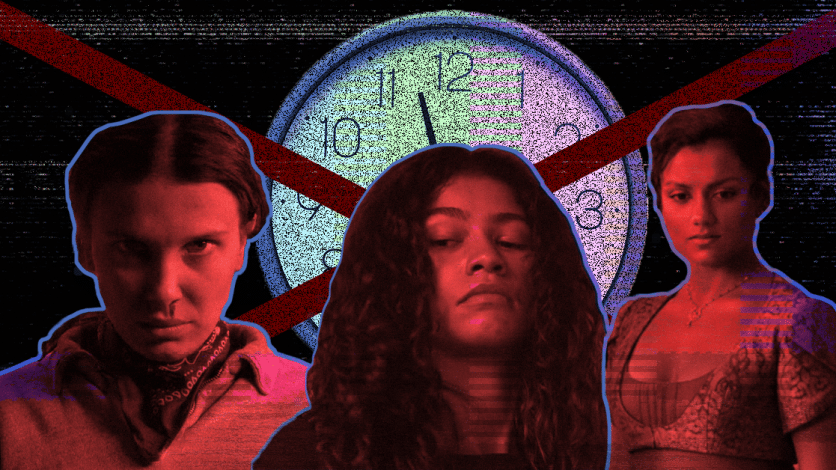
Remember when a TV show would keep you company week after week, year after year? In the 2000s, network hits like The O.C. or The Vampire Diaries delivered 22+ episode seasons that ran from fall to spring, creating a routine in viewers’ lives. These days, you’re lucky to get eight episodes of a streaming series before it vanishes into a two- to three-year hiatus.
Not so long ago, television seasons were long. Many beloved shows from the past, such as the sitcom Friends and dramas like Lost, routinely ran 20 to 25 episodes per season. A new episode would roll out each week for about half the year. This gave audiences drawn-out storylines, fun stand-alone episodes, and even the occasional crossover event. So why are today’s most popular series, such as Stranger Things or the latest Marvel or Star Wars spin-off on Disney+, only offering about 6 to 10 episodes per season?
The new eight-episode normal

Much of this shift in episode numbers is because of the change in viewing habits and market strategies. As TV shifted from cable to streaming, audiences got used to tightly knit, limited narratives that are ideal for short-term binge-watching. Streaming platforms popularized the binge release by dropping an entire season at once so fans could devour it in one go.
In this new situation, 22+ episodes started to seem excessive. Viewers now often prefer a continuous movie-like storyline without any “filler” episodes. Importantly, an 8-10 episode season is easier to consume in a short time frame. In the words of one critic, Keith Price, “It’s easier for people to commit to a series because they know where the endpoint is. Sadly, I feel that it’s that same instant gratification that fuels the reduction in content we see in shows today.”
There are financial reasons, too. Unlike network TV, streamers are not chasing weekly ad revenue by keeping a show on air as long as possible. Netflix or Prime Video only need a show to generate enough buzz (and new subscriptions) to justify its existence. Once a series has become popular enough, there’s less to lose when producing a dozen more episodes. Naturally, shorter episode seasons help keep costs down and can be concentrated into a better product. However, as quality continues to improve, demand also increases. Audiences want more episodes. They are not considering how much more money production will have to spend. They want more, and they want it fast.
Quality vs. quantity

Short seasons can feel compressed—which sounds great, until you remember how much fun filler can be. Those so-called filler episodes from older TV shows often contain invaluable character moments and world-building. When you had 20+ episodes to play with, a series could take detours, develop side characters, or just let the story breathe. Now, with only eight episodes (sometimes even fewer) to tell an entire story, every scene must serve towards the main plot. Now there’s precious little room for the kind of quirky subplots or slow-burn character development that would make people so interested in the story.
The Vampire Diaries: A case study
Consider a show like The Vampire Diaries, the 2009 fantasy drama that ran for eight seasons and produced two spin-off shows. In its prime, The Vampire Diaries delivered 22 episodes almost every season. Each year had a supernatural main plot, whether it was a new villain or a looming mystical threat. The show always made room for character-driven side plots that did not always support the main storyline. These moments allowed viewers to connect with Elena, Stefan, and Damon outside of all the high-stakes cliffhangers. Audiences connected with the high school dances, small-town dramas, and complicated friendships. By the end of a 22-episode season, audiences felt deeply embedded in Mystic Falls and genuinely attached to its characters.
Now imagine The Vampire Diaries made for today’s streaming landscape: an eight-episode season laser-focused on a single villain arc, stripped of its digressions and slower episodes. The pacing might be tighter and more cinematic, but it’s hard to imagine viewers forming the same emotional attachment to its characters without the so-called “filler” episodes that made the show so loved. What once looked excessive now feels essential and is proof that time spent with characters matters as much as the story’s endgame.

Binge, wait, and fade away
bring back old euphoria visuals this season is giving cheap indie film pic.twitter.com/5994N8I1TL
— llopƃƃᴉɔ (@ciggdoll) January 14, 2026
The other big downside of the eight-episode era? The wait between seasons has become excruciating. Back in the network TV days, a hit show would premiere in September, run through May, and return with a new season the next fall. You could rely on that routine; even a summer break was just a few months of anticipation.
Today, with shorter seasons and more cinematic production cycles, that timetable has gone out the window. It’s now common for audiences to wait well over a year, sometimes more, between seasons of a show. The worst new addition to releasing strategies is showing you an episode a week for a mere eight episodes, or released in parts, months apart from each other. And while we’re waiting, our enthusiasm often cools.
HBO’s Euphoria last released a season in 2022, and they recently announced their next season for April 2026. Fans have been waiting four years for the next season. Netflix’s Bridgerton announced the newest season in two parts in 2026: January 29 and February 26. Not only have fans been waiting since 2024 for a new season, but they have to wait for it to come out in two parts.
This list keeps going with House of the Dragon when they premiered season two in 2024, and they still do not have a release date for season three. By the time all of the next seasons roll around, fans have forgotten half the plot, or worse, lost the feeling that made them love the show in the first place.
Stranger Things was the breaking point for streaming
@notowenleonard it sucks the show ended to poorly… #strangerthings #strangerthings5 #finale #review #fyp ♬ original sound – OWEN
No show better illustrates the flaws of the modern short-season model than Stranger Things. Once a cultural phenomenon, the series has increasingly become a case study in how long gaps and limited episodes can strain even the most devoted fandom. For example, fans saw a three-year gap between seasons three and four, and another three-year gap from season four to five. Netflix split season five into three parts to tide viewers over, but even that month-long wait tested patience and caused some fans to feel that the supersized finale didn’t justify the hype. At this point, Stranger Things isn’t just testing patience; it’s testing memory, momentum, and emotional investment.
Netflix’s strategy to release new seasons in different parts highlights a deeper issue: anticipation can cause expectations to inflate to impossible standards. By the time the finale arrived, some fans felt the payoff didn’t justify the wait, despite the sheer volume of minutes delivered. The split release kept the show in conversation, but it also magnified frustration rather than alleviating it.
The irony is that Stranger Things is exactly the kind of show that thrives on audience immersion. The show emphasizes character relationships and long-term emotional payoffs that are central to its appeal, yet the current release pattern forces fans to reorient themselves each time a new season arrives. In an era overflowing with new content, even the most iconic series isn’t guaranteed loyalty. If viewers are asked to wait too long for too little, nothing is promised.
Why now is the time to question the new status quo
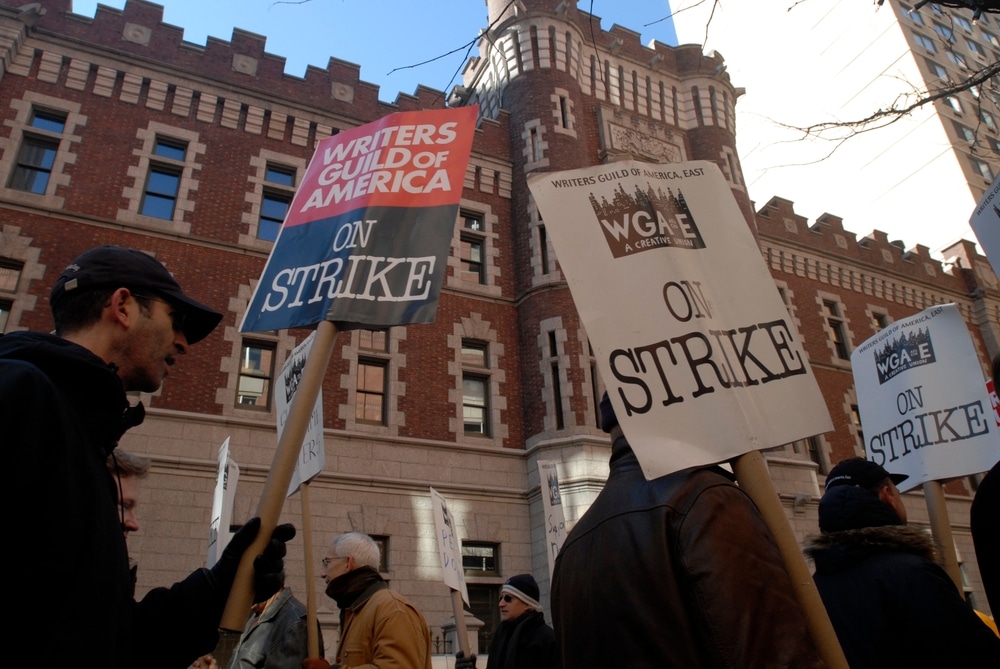
It is worth noting that the industry is currently at a crossroads. In 2023, Hollywood writers and actors went on strike. In a report by the Writers Guild of America strike, it says,
“Compared to traditional network TV, the streaming platforms such as Netflix and Amazon Prime Video typically offer writers fewer episodes per season, fewer weeks of employment, smaller paychecks, less financial reward through residual payments when shows are successful, and smaller writers’ rooms with fewer jobs.” — Molly Kinder
Those strikes highlighted how the new streaming model has affected creators behind the scenes. Post-strike, there is hope that networks and streamers might consider slightly longer orders or at least fairer deals to address these issues. At the same time, streaming services are facing a financial reality check. Netflix, Disney+, and HBO Max are not afraid to cancel shows if they are not producing enough, no matter how popular they are.
So where does that leave the eight-episode season? On one hand, the economics post-strike might double down on fewer episodes because it is safer financially. On the other hand, there’s a clear, creative, and obvious case to be made that the model is hurting fandoms and might not be sustainable if viewers grow fatigued. Coming out of the strikes in 2023, networks and streamers have an opportunity to reassess: do we really want every season to feel like a mini-movie followed by a prolonged break? Or is there value in bringing back a bit of consistency?
Can we find a happy medium?
the fallout show would be infinitely better if it had 16 episodes instead of 8. i mean hell, even just 12 episodes would be a huge improvement given how many different storylines are happening at once. fallout deserves to have more than 8 episodes
— bianca (@rapunzelariels) January 17, 2026
Ultimately, the future of TV may depend on finding a middle ground between the eight- and 22-episode seasons. Sure, maybe every season does not need to have 22 episodes. However, the eight-episode seasons have proven that it is just as limiting. It is compressed, fleeting, and too often followed by years of silence.
Some examples suggest another path is possible. HBO’s The Pitt moved quickly into production on its second season, with only a year’s gap between the first and second. This signals a consistency that still matters. In another example, we are reminded that some of television’s most iconic characters exist because the show had time to evolve. Creator of Breaking Bad, Vince Gillian, says in a New York Magazine interview that “it became clear to me that Aaron Paul [Jesse Pinkman] was an absolute asset to the show. I’d no more kill him off now than cut off one of my pinkies.”
A 12- or 13-episode season offers a smarter compromise. There would be enough room for character development without filler bloat, and enough momentum to keep audiences emotionally invested. If the post-strike industry is serious about sustaining fandoms rather than exhausting them, the answer may not be “less is more,” but rather enough is enough. Twelve or 13 episodes are enough to build attachment and offer enough consistency to make television feel alive again, which is the revamp the industry clearly needs.













Steven Woolf
May 2, 2026 at 4:55 am
Wrong! Only idiots would want too many episodes for a show’s own good to the point you RUN OUT OF IDEAS FASTER!
The British (for the most part) does this right by not ordering so much bloat.
Are you happy that The Simpsons have over a 1,000 episodes?, most of them being bad?
Or are you at least glad Starcom only had 13 (mostly) good episodes even though that show got pummeled by the competition?
Charlie
May 24, 2026 at 5:43 pm
8 episodes, is just a slightly extended 1.5 – 2 hour movie with padding. And in each episode, we are reminded over and over of the same things as people and their devices have shorter and shorter attention spans (read ADHD inducing devices) so you need to dumb down content and repeat things multiple times so viewers on phones won’t get lost.
“Netflix knows we are on our phones all the time, with as many as 94% of people tinkering on their devices while watching TV, according to a 2019 study commissioned by Facebook. Dumbed-down scripts that lack nuance and visual cues can help viewers with divided attention follow along, making them less likely to turn the program off.” (https://www.pcmag.com/news/netflix-is-telling-writers-to-dumb-down-shows-since-viewers-are-on-their)
Since your article spells out that this will mean less jobs for the people creating shows, less full-time work, eventually content will be just another gig job where you need a couple of other jobs to stay afloat. As many of us our seeing, that mirrors our current economy.
I would like to think we wouldn’t go down the road that Mike Judge’s Idiocracy stupidly prophsied but here we are.