Following the UK Online Safety Act, YouTube and Spotify have made some sweeping policy changes that are affecting people around the world. Rising prices and worsening usability keep leading me back to the same unfortunate question: Is any of this even worth it anymore?
If you haven’t seen, Spotify and YouTube made some massive policy changes this past month. Most notably, they’re introducing an AI monitored age verification check. The AI flags users it suspects of being underage and requires the submission of their photo, government ID, or credit card to prove they’re of age. They claim this protects underage users from accessing dangerous content. But I’m not so sure.
When data breaches are becoming more and more common, is it really safe to upload all your most sensitive information online? This is following the rollout of the UK Online Safety Act, which is facing similar security concerns. If users fail to verify their age, they could face the erasure of their account and all their content.
As someone who uses Spotify, YouTube, and other streaming services every day, this is all pretty scary. I love these services. I’ve been a user for over 10 years. But the degree of degradation over that time is insane. These new policies are just a part of a larger trend of enshittification. It’s been years of them raising prices, ruining features, and tightening restrictions. And this might just be the last straw.
Prices and ads: the start of streaming’s problem
I’m going to sound like an old lady when I say this, but there was a time when we didn’t have to deal with this tiered premium nonsense.
YouTube was completely free, and if you got an ad it’d only be one (1) of a reasonable length, on a purposefully monetized video. In 2011, you could stream all the content you wanted on Netflix, without ads, for $8 a month. And in 2013, you could have a plan for the whole family for $12 a month. In 2011, you could get Spotify Premium for a mere $4.99 per month for ad-free listening. Or you could settle for the free version and get a reasonable number of ads for every handful of songs.
But that time is no more.
The ad takeover
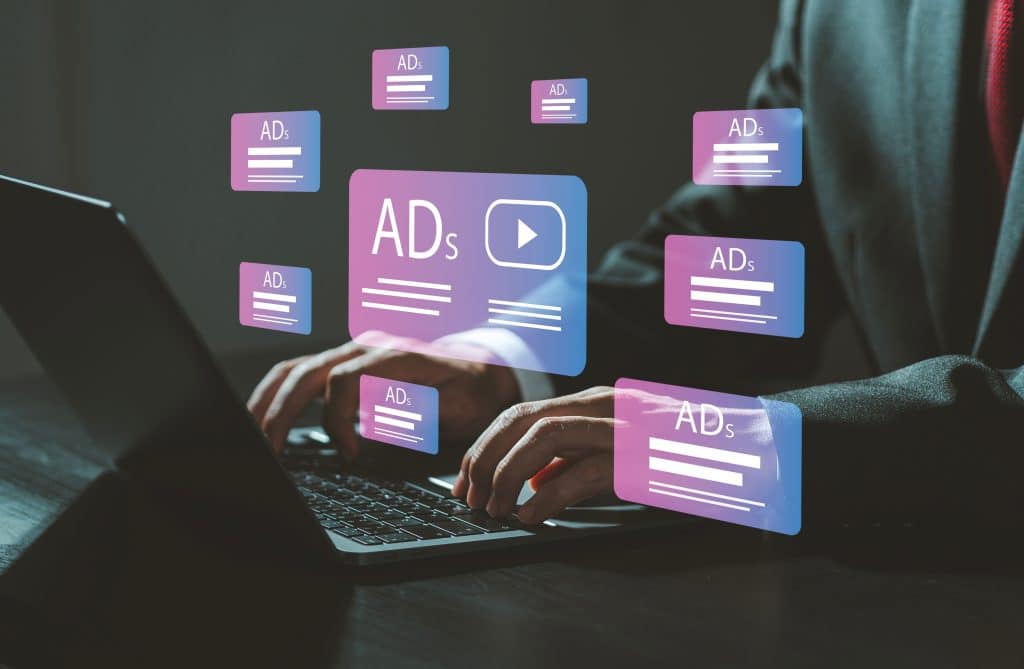
It started slow. Maybe you’d get the occasional longer ad on YouTube. Come 2018, it might even be two ads if you were unlucky. People hated it, obviously, but the general understanding was that it supported the creators we were watching. But this was just the beginning.

Soon, YouTube would start adding ads to videos that weren’t even monetized. And they weren’t just regular ads. These were unskippable, long ads. Sometimes two, then three at a time. And now, most videos are more ad than video. I pause the video and there’s an ad. I try to scroll to the comments, and it’s ads. On the TV, I can get as many as five-plus ads that are minutes long at a time. Even worse, they’re often timed to the most popular points in the video so they’re extra irritating.
Spotify followed a similar timeline. First the occasional quick ad on the free account. Then two, then more, and even more frequently than before. When I was still on a free account, it felt like I wasn’t even listening to music anymore. I was straight up just listening to ads. I still have their spiels burned into my brain.
For a long time, Netflix was the only safe haven. After all, one of the selling points of the service was it being an alternative to the ad-riddled overinflated packages of cable. Then 2022 came… And Netflix introduced their new ad-supported tier that was $2-3 cheaper than their regular package.
That’s supposed to be a deal, but there’s a problem. Streamed content is not optimized for commercials/ads. That means, instead of the natural transitions and stopping points you get from cable, your content gets constantly interrupted. Sometimes, content will even be interrupted mid-sentence, making streaming ads twice as disruptive as normal commercials.
Forever inflating prices and premium tiers
So ads suck and streaming platforms know it. Which is why they started introducing their premium tiers. You can now pay more to get the same user experience you used to get for free. Yay, problem solved!
Except no, not at all, because now that’s not enough either. Because now that they know you’ll pay more, they’re going to push it until you have nothing left. Instead of just offering one premium subscription that will get you the features you used to have, they’re adding more and more tiers. If you pay $8 a month on YouTube, you can get slightly fewer ads than before. But if you shell out just a few extra dollars on top of that, you can return to that golden era of 0 ads.
And they’ve realized, ads aren’t the only way they can make your lives miserable. Now things that you used to be able to do with ease, like using your account on multiple devices, are also behind a paywall. Sharing your password with someone outside your household could cost you an extra $8 per person on Netflix. You want your video quality to be good? Have you tried paying more? You want to download the content you’re already paying for? You’ll need to pay for that too. Better yet—you want to view the full library of content you’re paying to access? Sorry, but that specific show or season also has an additional cost.
Meanwhile, the price for a “standard” package, just continues to rise. And the number of subscriptions you need to keep up with the shows you love is rising with it. The average American household spends about $69 a month on streaming services and subscriptions, and that’s not even counting music. That’s about $830 a year. Do you know how much food I could get with that money?
It’s no wonder a growing number of people are opting for the high seas over all this mess. Or even better, owning physical copies. Because even if you purchase a movie or TV show, there’s no guarantee that you’ll get to keep that content. It is technically on rent to you, so at any point the service could remove it from your library (or retroactively alter it). Shows like Infinity Train even got wiped from the internet entirely, much to the devastation of their creators.
Poor treatment of artists and creators
You’d hope that at least the artists and creators that these services are profiting off of would be benefiting from all this. But that’s not true either.
Spotify is renowned for having one of the worst payouts for their artists on the market. On average, Spotify pays between $0.003-$0.005 per stream. Although those numbers vary based on subscription, location, and distribution agreements. And according to their newest terms of service, uploading to their platform will allow them to redistribute, remix, and use your content in any way they see fit.
Anyone who’s been an active user of YouTube also knows they’re not much better. YouTube monetization is shaky at best, and discriminatory at worst. They’ve had many issues with demonetizing and suppressing videos from Queer people and people of color. But the demonetization of a video doesn’t necessarily mean it won’t have ads. Which means that YouTube then gets to profit off of the unpaid labor of their creators.
Speaking of content suppression, I haven’t even mentioned the impact of YouTube and Spotify’s suggestion algorithm. Creators rely on the algorithm to show their content to subscribers and new viewers. But any number of things can cause the algorithm to hide those videos from discovery. Anything from discussing a political issue to changing the format or upload schedule of the videos you upload can lead to your account becoming a ghost town.
And this issue has only become exponentially worse with the advent of AI and these new age restriction policies.
Because of these issues, the monetization of most modern YouTube channels only makes up a small fraction of the creator’s income. Many creators live off of sponsors (which adds another layer of ads into the YouTube experience), merch, and support from their Patreon.
Safety and privacy concerns with new policies
So now YouTube and Spotify are asking for your government ID, photo, or credit card information to verify your age “for your own safety.” And users are expected to just trust that this information will be protected or deleted from their databases, and not sold to the highest bidder. Even though YouTube is now encouraging creators to share data about their audiences with advertisers.
But if you’re paying to use the service, and then they’re collecting and sharing your data, are you not effectively paying them to profit off of your information?
If the massive privacy concerns aren’t bad enough, there’s also an issue of censorship and suppression of information. This is a measure to protect underage users from potentially “dangerous” or “inappropriate” content, but who and what determines what meets that criteria?
If we’re going based on the way the YouTube algorithm currently functions, then I have some major concerns. Spend some time on YouTube Kids, or even the default YouTube page, and you’ll find a sea of misinformation, far-right extremism, and horrifyingly violent and sexual AI slop. These are the things YouTube recommends and considers “age appropriate.”
What does YouTube consider inappropriate?
Educational videos about health, any slight use of profanity, coverage on current events, discussions of Queer issues, and more. In an era where fascism and misinformation is on the rise, this should make you very, very scared. Especially since many kids are getting on the internet at a younger and younger age.
Are there solutions?
So you’re expected to pay more for a worse product that exploits you and actively damages society. What are you even supposed to do in the face of this magnitude of corruption and greed?
Well, one option a lot of people are taking is ditching all of it.
These services rely on you not having other alternatives. Remind them that you have other options. Invest in physical media. In this age of constant subscriptions and renting, ownership is its own little act of resistance. You can also support creators directly through independent companies and revolutionary platforms like Dropout TV.
And most importantly, you need to know how to protect yourself in the digital landscape. Ad blockers and VPNs are your best friend in this brave new world.
So am I ditching streaming and going analog entirely? Probably not. But I’m not willing to sit back and let them rip me off either. Streaming as a medium needs us more than we need any of the companies that run it. And it’s always healthy to remind them of that.