There is a storm brewing in front of the wrought iron gates of hell. Two titans collide: the Prince of Darkness and a magick-wielding dragon slayer, locked in eternal combat. The prize… heavy metal’s thorny crown. When the smoke clears, who will emerge the victor in this epic rock ‘n’ roll battle that has been raging for decades?
“Children of the Grave” – Origins of Black Sabbath in Birmingham, England
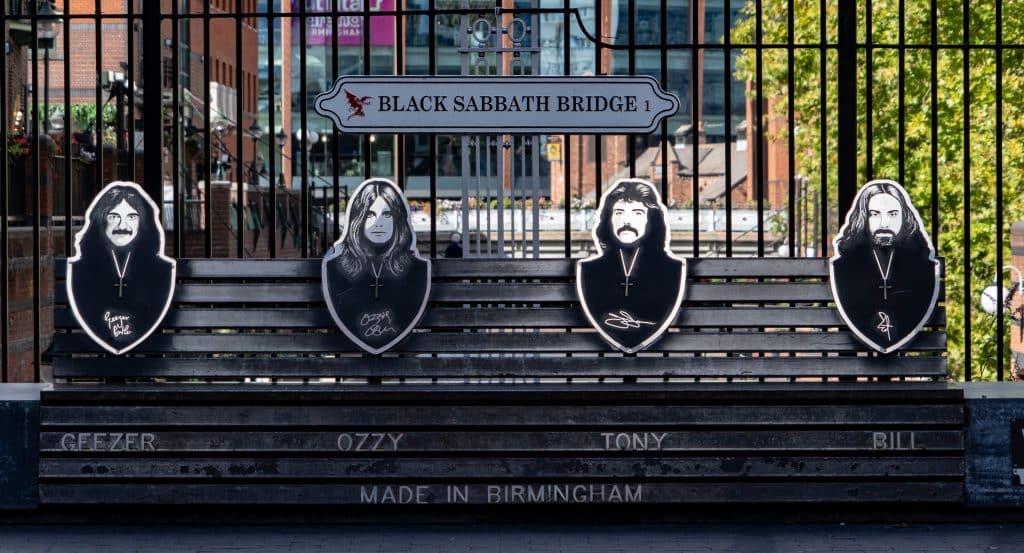
For the uninitiated, Black Sabbath is heavy metal music’s spiral architects. The 1968 unholy alliance of original lineup and founding members—Ozzy Osbourne (lead vocals), Tony Iommi (guitarist), Geezer Butler (bass), and Bill Ward (drums)—took place in Birmingham, England, a city known for its psychological social scars.
The band’s birthplace witnessed the Birmingham Blitz, air raids by Nazi Germany during World War II. Urban decay crept into the metropolis a decade later and went unchecked, bringing with it unemployment, poverty, crime, and red-light districts. Rampant prostitution in the area dubbed a local street, Varna Road, “the wickedest road in Britain.” Sabbath’s artistic direction, creative palette, and visual aesthetic reflect these dark origins. Subject matter popular with their contemporaries of the era—free love and partying—was unfamiliar territory to the quartet that adopted its moniker from a Boris Karloff horror film and subsequently didn’t flow from its collective creative well of compositions.
“Changes” – From the ‘Summer of Love’ to the Manson Murders
Dark, brooding lyrical subject matter with less-than-subtle Satanic references, set against a massive wall of sound and guitars downtuned to the depths of Hell, were elements of their music. Sabbath embraced an ominous aura in all things associated with them. The release date of their debut album (Friday the 13th, 1970) is superstitiously significant, rooted in the arrests of the Knights Templar hundreds of years earlier in 1307. An apparition of malevolent presence lingered ethereally on the cover: artwork suggestive of supernatural forces at work and a Faustian pact, later revealed with the compilation We Sold Our Soul for Rock ‘n’ Roll.
Sabbath seduced the hippie generation away from Woodstock’s peace and love, drug-induced haze to a more cynical children of the grave mentality as tumbleweeds kissed goodbye to a ghostly Spahn Ranch after the Manson murders. Seventy million record sales, countless concert tickets, an induction into the Rock & Roll Hall of Fame in 2006, and legions of hardcore fans are Sabbath’s legacy, but their journey to success encountered a hard road in 1979 when Iommi, Butler, and Ward fired Ozzy Osbourne.
“Snowblind” – Substance Abuse, Addiction, & Its Sacrificial Lamb
There is a well-known photograph taken in 1978 of Osbourne sporting a handmade T-shirt which reads “Blizzard of Ozz.” It pre-dates his firing from Sabbath and his solo efforts, suggesting that perhaps Osbourne was not happy in Sabbath before being dismissed and was already considering a solo career.
Snowblind, a reference to cocaine use, was proposed by the band as the original album title for Vol. 4, but Warner Bros shut it down because it was too controversial at the time. Even the word “cocaine,” which appears in the song, had to be whispered into the mix—low enough that it could still make its way past radio censors. Ten years later, cocaine use became so prevalent in the entertainment industry—and in other professions—that when Speak of the Devil (1982), a live compilation of Sabbath classics, was released, Osbourne shouted the word “cocaine” on the track “Snowblind.”
It wasn’t just Osbourne who was living the lyrics of “Snowblind,” as the whole band was. As the decade closed, the substances stopped fueling the music and started suffocating it. Creative differences flared and the axe fell in 1979 on Osbourne, making him the sacrificial lamb and scapegoat.

“Disturbing the Priest” – Osbourne’s Departure from Black Sabbath
Osbourne preached at Black Sabbath’s altar since the quartet’s 1968 unhallowed inception in Birmingham, England. In 1978, Sabbath released Never Say Die!, their last studio album with Osbourne until reuniting with him in 2013 for the aptly titled 13. The following year, the band excommunicated Osbourne. Cast out of his own cathedral and banished from the pulpit he so lovingly crafted, Osbourne now faced a career crisis: how to reinvent himself as something bigger than the ex-lead singer and steeple figurehead of heavy metal’s founding church.
Pink Floyd, Michael Jackson, Olivia Newton-John, Captain & Tennille, and Billy Joel ruled the singles charts at the dawn of the new decade. Billboard magazine ranked Blondie’s “Call Me” as the top song of 1980, and Osbourne may have appeared strangely out of place on the musical landscape. After all, the world saw Black Sabbath as a bloated rock act of the previous decade, representing its old guard. In spite of this, Osbourne pursued a solo career at full throttle and assembled talent worthy of a challenge to his former bandmates. Bob Daisley (bass), Lee Kerslake (drums), Don Airey (keyboards), and Randy Rhoads (guitars) helped Osbourne transition from Sabbath’s sonic signature to more commercially accessible music without losing his dangerous, cutting-edge pedigree earned during his tenure with Sabbath.
The Blizzard of Ozz band created a proto-punk metal polished sheen on Osbourne’s 1980 solo effort, Blizzard of Ozz, and in the process, reimagined and reinvented the former Sabbath frontman for a brand new audience unfamiliar with his lineage. The lead-off single, “Crazy Train,” became Osbourne’s signature song, eventually reincarnated as a rallying call in stadiums during sporting events.
“Flying High Again” – Osbourne’s Solo Success
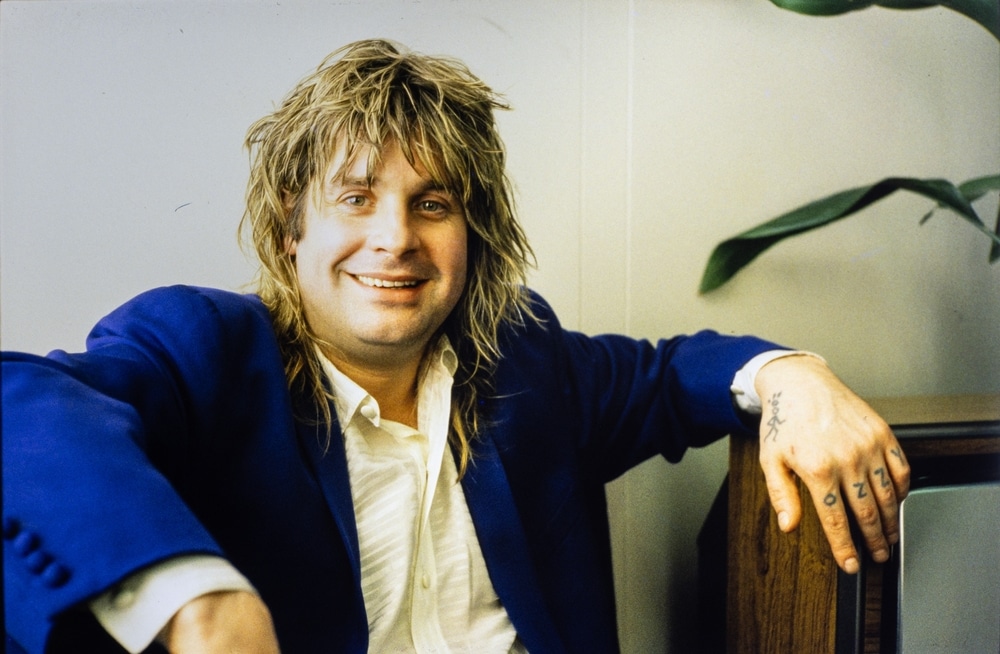
Diary of a Madman, Osbourne’s second solo album in 1981, utilized the same creative elements, minus Airey, and avoided falling victim to the so-called “sophomore jinx” (a commercial dropoff that occurs when artists can’t replicate the success of their debut and their follow-up doesn’t sell as well). Diary confirmed Osbourne’s success as a solo act wasn’t a fluke. Shaking off the shadows of Sabbath, Osbourne’s identity no longer associated with what he had accomplished in the 1970s. He was now a bona fide commercial act in his own right, able to achieve success without his former bandmates. Both Blizzard and Diary are a prelude and a template for the direction popular music would follow for the next few years. To date, Blizzard boasts over 4 million copies sold in the United States, and Diary has delivered more than 3 million copies worldwide.
Rhoads was a key ingredient in Osbourne’s initial triumph as a virtuoso who could shred the fretboard or lovingly caress the strings of a classical guitar. Tragically, a plane crash cut Rhoads’ life and music short. Bark at the Moon, Osbourne’s third solo studio album in 1983, changed the creative formula. Daisley and Airey reprised their roles, while Jake E. Lee replaced Rhoads as axeman, and Tommy Aldridge stepped in behind the drums in place of Kerslake. Aldridge also appeared on Osbourne’s 1982 Speak of the Devil, a live album of Sabbath standards covered by and reinterpreted by Osbourne.
“Ozzy, Ronnie, and Black Sabbath have had such a massive impact on the world of heavy music, and it’s great to see a younger generation carrying that flame forward.
Those early days with Ozzy on Blizzard and Diary were pure fire; there was an energy that felt bigger than all of us. Ozzy’s voice had that rare ability to cut right through, equal parts haunting and soulful, and it connected instantly with people. Ronnie was every bit as powerful in his own right; majestic, commanding, and truly one of a kind. Both of them brought such different colors to Sabbath and to heavy music in general, but each helped shape the genre in ways that are still felt today.
Being part of the Bark at the Moon era was also something special; seeing the music evolve while Ozzy continued to push forward was inspiring. For me as a drummer, it was all about matching that intensity and giving the songs the power they deserved onstage every night.”
—Tommy Aldridge
A “Rainbow in the Dark” – Left on Their Own, Sabbath Found Dio
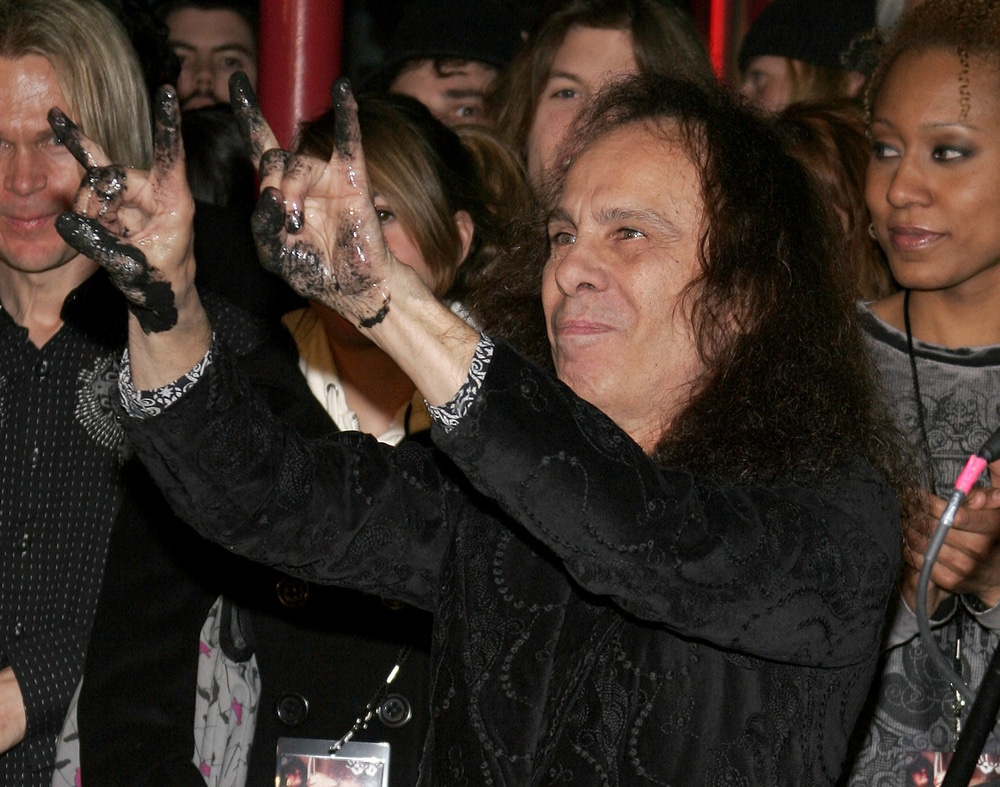
Uncertainty and cautious optimism associated with a new decade emerged as the 1980s defiantly danced along the precipice, offering a steady diet of overindulgence and material consumerism. Sabbath’s music blared and gurgled through Chevy Camaro factory speakers as the band lay in wait, plotting its next move to stay relevant without its iconic singer and frontman. Any contender for the position would have to ascend more levels than Dante’s Inferno: compete with Osbourne’s specter, have reverence for his predecessor’s contributions, and contribute creatively to bring Sabbath’s sound into the 1980s, all while honoring the band’s 1970s roots.
Blasphemy best describes the initial response of fans to the possibility of another singer for Sabbath other than Osbourne. Competing with Osbourne would be no small feat, but Sabbath’s prayers came answered in the form of Ronnie James Dio, a singer from the other side of the pond who broke through the floodgates as a member of Rainbow (a band formed by Deep Purple guitarist Ritchie Blackmore). In 1978, Dio’s departure as Rainbow’s lead singer would be a blessing for Sabbath. The following year was Dio’s baptism by fire. Walking on water would be easier than filling Osbourne’s shoes, but Dio was determined to convert Sabbath’s congregation and lead them to redemption.
“The Mob Rules” – If you Listen to Fools… Dio’s Coming to Call
Dio’s 5 feet, 4 inch physical frame—complemented by black, kinky hair—was the visual antithesis of Osbourne who stood at almost 6 feet tall and sported long brown working-class hero, uncoiffed hair. The gentle exterior possessed by Dio would belie both his vocal abilities and ability to command a stage. Artistic integrity and vocal gymnastics supplied by Dio made Sabbath’s post-Osbourne releases, 1980’s Heaven & Hell and 1981’s Mob Rules, competitive with what was happening at the time. The inclusion of Black Sabbath’s “The Mob Rules” on the soundtrack of the 1981 animated science-fiction/fantasy motion picture Heavy Metal is testament to Dio’s ability to keep the band afloat. Rather than drift during a tumultuous time in their history, they broke free from the vinyl groove shackles of 33 ⅓ revolutions per minute onto celluloid in Dolby Stereo.
Wizard, magician, dragon slayer, and medieval imagery were thematic elements of Dio’s onstage persona and songwriting. He brought these dynamics to Sabbath, stretching their artistic wings and adding yet another layer of mystique to a well-established band. Injecting Sabbath with new life, as well as helping to retain the band’s fanbase and faithful disciples shocked by a Sabbath sans Osbourne, are his legacy.
“Kill the King” – Dio’s No Pawn, So Be Gone
Although Sabbath enjoyed a resurgence with Dio, a schism in 1982 ended their creative partnership. Dio’s trajectory was now aligned with that of Osbourne’s. Following his stint with Sabbath, Dio embarked on a solo career under the eponymous banner, Dio. 1983’s Holy Diver, Dio’s debut solo effort, contained his signature song “Rainbow in the Dark.” 1984’s follow-up, The Last in Line, progressed the narrative of Dio’s solo success with music videos for singles from the album in heavy rotation on MTV and A Special from the Spectrum, a direct-to-home video release on VHS format known at the time as a video album. Filmed at the Spectrum, a hallowed ground for concertgoers in the City of Brotherly Love, it’s a snapshot of Dio’s commercial viability at the time.
Like his counterpart Osbourne, Dio would also reunite with Sabbath’s Tony Iommi and Geezer Butler, first in 1992 for the Dehumanizer album and again in 2007 with the same lineup for the Heaven and Hell tour. These reunions proved that the collaborative effort between Dio and Iommi had additional untapped potential. Unfortunately, Dio’s untimely passing from stomach cancer at the age of 67 prevented that potential from being realized fully.
Osbourne passed on July 22, 2025, at the age of 76, just a little over two weeks after the Back to the Beginning farewell concert in England. While the world mourned, Osbourne’s passing reignited an age-old debate.
“Lord of This World” – Who’s the True Voice of Sabbath (and what does your choice say about you?)
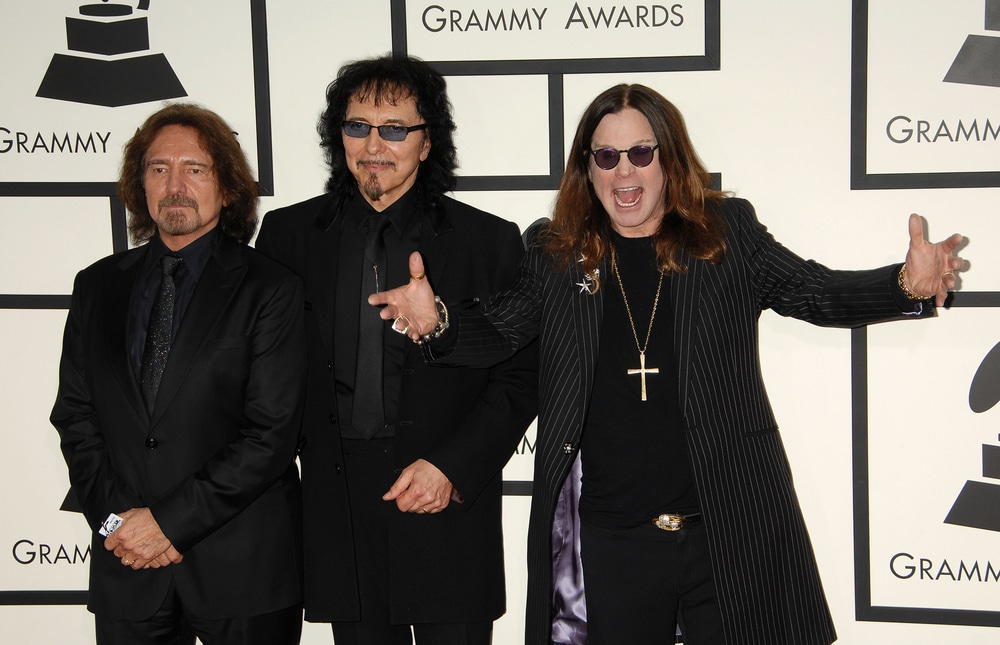
Whether you prefer the original frontman in Osbourne or his replacement Dio is the culmination of many factors, including: your age, when you discovered Black Sabbath, and with which album you entered their storyline. Among devout followers, Ozzy versus Ronnie is a controversial issue because there is no easy answer. Without Osbourne, Sabbath may never have reached the pinnacle of heavy metal stardom. Remove Dio from the equation, and Sabbath may have ended after Osbourne’s firing, leaving Never Say Die! as the band’s final studio album and bookend to their self-titled debut.
In concert, each had a unique persona. Osbourne leap-frogged and headbanged. Dio stalked the stage, flashing the sign of the horns. This pop culture conundrum doesn’t need to cause a chasm for fans. Osbourne and Dio can coexist together within the context of their contributions to Sabbath, and should be viewed through that lens. Each had talent and made contributions of enduring value.
Maybe the more appropriate question to pose is whose solo material is better…