A new wave of digital creators is dominating entertainment media, and we’ve never felt closer to our favorite celebrities. They’re no longer these distant, almost mythical figures that exist only in professional, rehearsed settings. When placed with the right personality and environment, that media-trained barrier starts to break down, and we get to see a version of them that feels more real.
Gone are the days when polished, sit-down interviews and press junkets were the only insights we got into celebrities’ off-screen personalities. Unlike traditional media outlets and late-night shows, which are bound by the rules of fair journalism and network regulations, the internet operates with far fewer limits on what can be shared. At this point, online culture has almost erased the idea of “too personal.” People will share anything and everything—the weird, the vulnerable, the slightly (and often more than slightly) unhinged— and no one even blinks.
One could say we’ve become a little too comfortable with oversharing to the masses, but at the same time, it’s created a new wave of relatability rooted in radical transparency. The usual social boundaries don’t exist in the same way online, which makes it easier for people to be open — and for others to feel connected to that openness.
That sentiment carries over into how creators interact with celebrities. They’re not these polished professionals, and they’re not trying to be, which creates an energy that lets their guests drop those usual filters for the cameras and just be a person talking to another person. Personally, I think it’s a refreshing change from the overly structured, media-trained interactions we’re used to getting. And frankly, it just makes for better entertainment. Because not everything has to be —and not everything should be— that serious. Today’s digital creators fully embrace this philosophy.
From chicken shop dates to couch therapy sessions
How each creator goes about creating that space depends on who we’re talking about. Typically, it’s built around their own humor or energy, which leads to completely different approaches when it comes to connecting with both their guests and their audience.
Let’s take a look at a few of the online personalities that have been dominating the industry as of late.
Quenlin Blackwell – Feeding Starving Celebrities
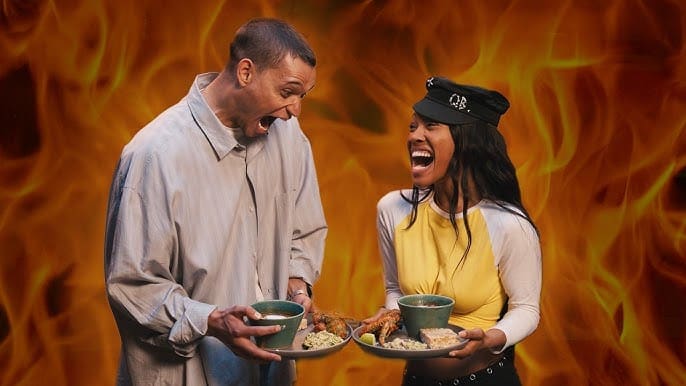
Known for clowning the internet with her signature chaotic antics, Quen brings that same unpredictable energy into the kitchen in this celebrity cooking series.
The best part about Feeding Starving Celebrities is watching how each guest reacts to the personality across from them — whether they match her energy with the same level of weirdness, break down in laughter, or figure out how to match the chaos in real time.

Even the editing style feels like an extension of her online brand — very “brainrot,” very cartoony, which makes for a highly overstimulating watch in the best way. Those who are just as chronically online will appreciate the humor at play here.
Brittany Broski – Royal Court
Nothing breaks the ice quite like having celebs play dress up and testing their worth to enter a make-believe royal council.
Broski takes a similar comedic approach to connecting with her guests, leaning even further into the absurd and playful. By encouraging guests to don medieval garb and beginning the show with a series of lighthearted questions — i.e., asking Harry Styles to confirm or deny if his teeth are fake — Brittany strips down the typical formalities of an interview to create a space where celebs feel like they can just let loose and lean into the bit.
Jake Shane – Therapuss
Some of the realest moments and takes come from sitting down with a friend and yapping until you lose track of time. It’s that idea that’s at the core of the Therapuss experience.
On Therapuss, Jake Shane leans into a more intimate, conversational style of interviewing. Episodes often stretch past an hour and a half, giving guests plenty of time to open up, get vulnerable, and go on tangents they normally wouldn’t have time for.
Instead of trying to force a headline or a viral moment, the conversation is allowed to unfold naturally with all its awkward pauses and random side stories. And in a media landscape that’s constantly trying to condense everything into a 30-second clip, that willingness to slow down is exactly what makes it stand out.
Amelia Dimoldenberg – Chicken Shop Date
If you’ve ever wanted to see what your favorite celebrity is like on a date, watching Amelia’s Chicken Shop Date is about the closest you’ll get.
Amelia Dimoldenberg takes being a shameless flirt to the next level. Chicken Shop Date uses the awkward tension and flirty banter of a first date to bring out a natural chemistry with her guest. It’s all for the cameras, of course, except…is it? Sometimes it seems a bit too real to be just for show, and whether it is or not, we as viewers still eat it up. It’s that blurred line between performance and genuine connection that makes the series particularly enticing.
Ziwe – Ziwe: You’d Be an Iconic Guest
If most creator-led interviews aim to make celebrities feel comfortable, You’d Be an Iconic Guest does the exact opposite, and that’s the point.
Ziwe puts celebrities on the hot seat by asking questions that are intentionally uncomfortable and blunt, leaving no topic off-limits. By using satire and deadpan humor, she forces guests out of their usual, media-trained responses. For the first time, celebrities aren’t the ones in control, and she makes that known.
It’s what the fans want
At the end of the day, the success of digital creators and this type of content comes down to one key factor: they function as a bridge between fans and celebrities.
It’s almost like we’re watching them make a friend out of these high-profile figures — and getting to live vicariously through those interactions. They’re shrinking the distance that once defined celebrity culture, tapping into the audience’s desire for a parasocial relationship with the people they watch.
And in doing that, they’re quietly changing the expectation of what celebrity media should feel like. It’s no longer so much about what’s being said but instead about feeling like you’re part of the moment. And it’s the fact that creators have no agenda besides letting the moment unfold naturally that they’re capable of making that possible.