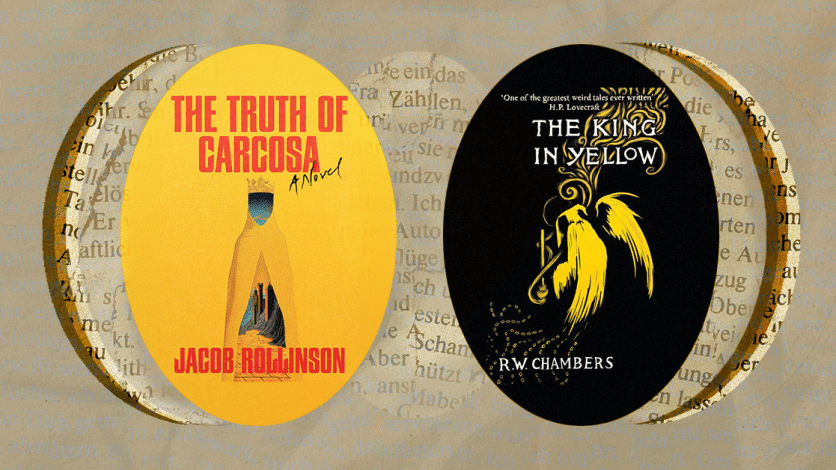
Some stories refuse to fade with time, and The King in Yellow is one of them. First published in 1895, Robert W. Chambers’ short story collection is best known for its opening set of stories loosely connected by a forbidden play that seems to corrode everyone who encounters it. And now, more than a century after its release, author Jacob Rollinson is attempting to capture the magic of that book once more with his new book, The Truth of Carcosa.
But before turning to the new release, it’s worth looking at the legacy of the original. The King in Yellow influenced generations of weird fiction and cosmic horror, shaping atmosphere and structure more than plot. As a result, many readers encounter its ideas secondhand before ever opening the book. The names Carcosa and The King in Yellow entered the cultural bloodstream when True Detective evoked Chambers’ atmosphere of unease without directly adapting his stories.
This long shadow means that a sequel is a dangerous proposition. The collection thrives on the fear of the unknown, and any attempt to expand it will risk undermining it. It’s within this cultural context that The Truth of Carcosa emerges: a book that promises to capture Chambers’ atmosphere rather than his literal plot. Unlike most sequels, Rollinson doesn’t seem to be interested in answering questions. Instead, he suggests that finding answers was never the point.
What The King in Yellow is (and isn’t)
“Strange is the night where the black stars rise, and strange moons circle through the skies, but stranger still is lost Carcosa.” – Robert W. Chambers, The King in Yellow
Before considering its influence or legacy, it’s crucial to understand what The King in Yellow actually is. The collection takes its name from a fictional play that haunts several of its stories, but the book doesn’t center on the play alone. Only the opening stories of the novel actually engage with the play and its corrosive effects, while the remaining stories shift toward a romantic and sentimental tone that characterized much of Chambers’ broader oeuvre. The result is a book that feels at odds with itself, its dreadful atmosphere only escalating as its melancholic ending juxtaposes with its beginning.
The influence of the cursed play manifests in different ways across the stories. In one story, a character is coerced into believing he is an heir to the American throne, while in another, a man is left terrorized by an organist in a church. In each case, the play acts less as a supernatural object than as a destabilizing idea. And beneath all these narratives, three elements plague the characters: a mysterious name called Hastur, references to a realm named Carcosa, and a cult-like symbol known as The Yellow Sign.
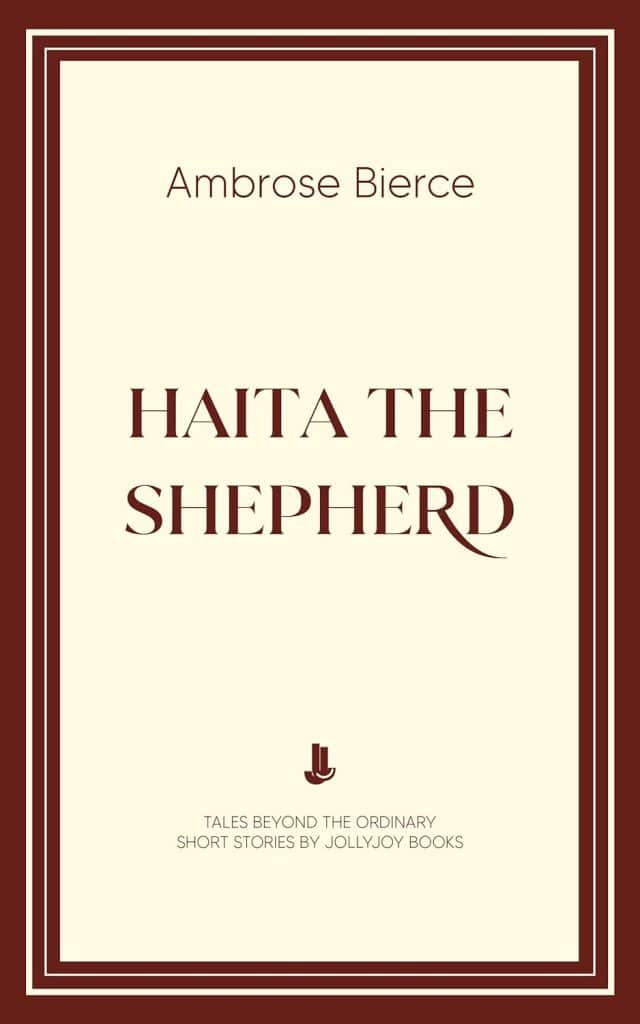
Surprisingly, the figure at the center of this erosion, Hastur, did not originate with Chambers. The true origin of the name lies in Haïta the Shepherd, a short story written by the American journalist and writer Ambrose Bierce. In Bierce’s story, Hastur presents himself not as an ominous cosmic deity but as a benevolent guardian deity of shepherds. In a strange way, Chambers’s repurposing of Hastur‘s name perfectly embodies his own work: stories united under a common theme of transformation and madness.
The legacy issue: writing after Chambers
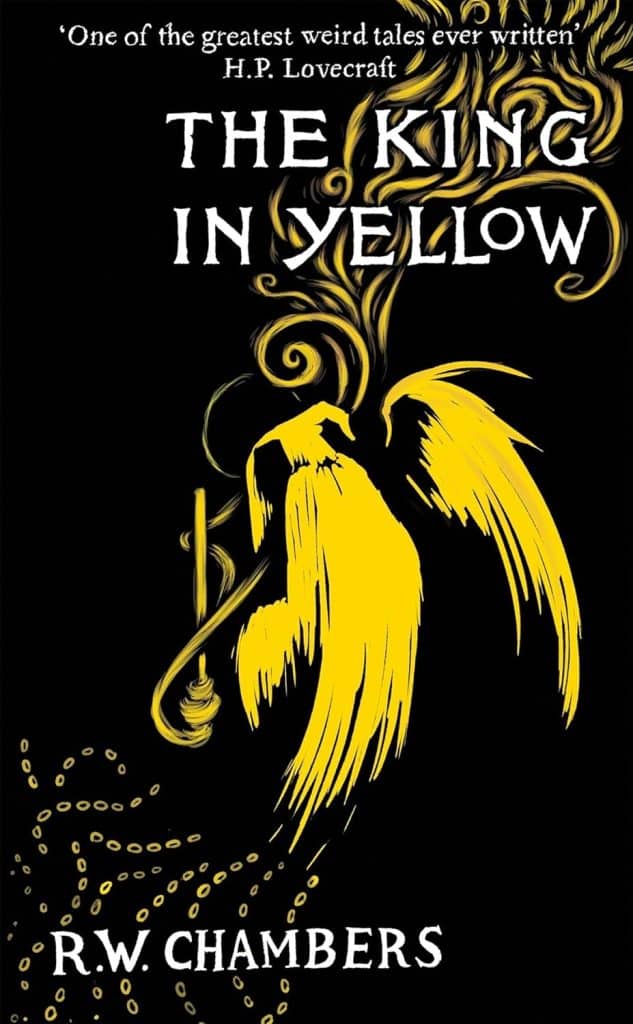
“…one of the greatest weird tales ever written.” -H.P. Lovecraft, in a letter written to J. Vernon Shea, 28 January 1933
Any expansion of The King in Yellow is bound to be met with skepticism. The central play reveals itself through excerpts, while Carcosa and Hastur remain even more elusive. The collection lacks a narrative altogether, featuring only disordered stories surrounding one anomaly. So how can one expand the story when there really isn’t even a story in the first place?
Over the last century, many writers influenced by Chambers have tried to ground The King in Yellow, from subtle references to heavy-handed expansion of its mythology. H.P. Lovecraft offers one of the more restrained examples. In The Whisperer in Darkness, he briefly name-drops Hastur without explanation, inserting the deity into a cosmic interweb while preserving the mystery enshrouding him. August Derleth, on the other hand, offers a more careless example. By establishing Hastur as the half-brother of Cthulhu, Derleth removes the original appeal of Chambers’ works altogether.

It’s unclear where exactly The Truth of Carcosa will fall within this spectrum. Will it fall closer to Derleth’s impulse to formalize the lore, or will it fall closer to Lovecraft’s lighter touch of broadening the themes? Reader reception will answer that question, but one distinction is already apparent. Instead of adapting Hastur and Carcosa into an entirely new work, Rollinson builds on these names by reenacting the original collection’s themes.
What we know so far: a dangerous manuscript
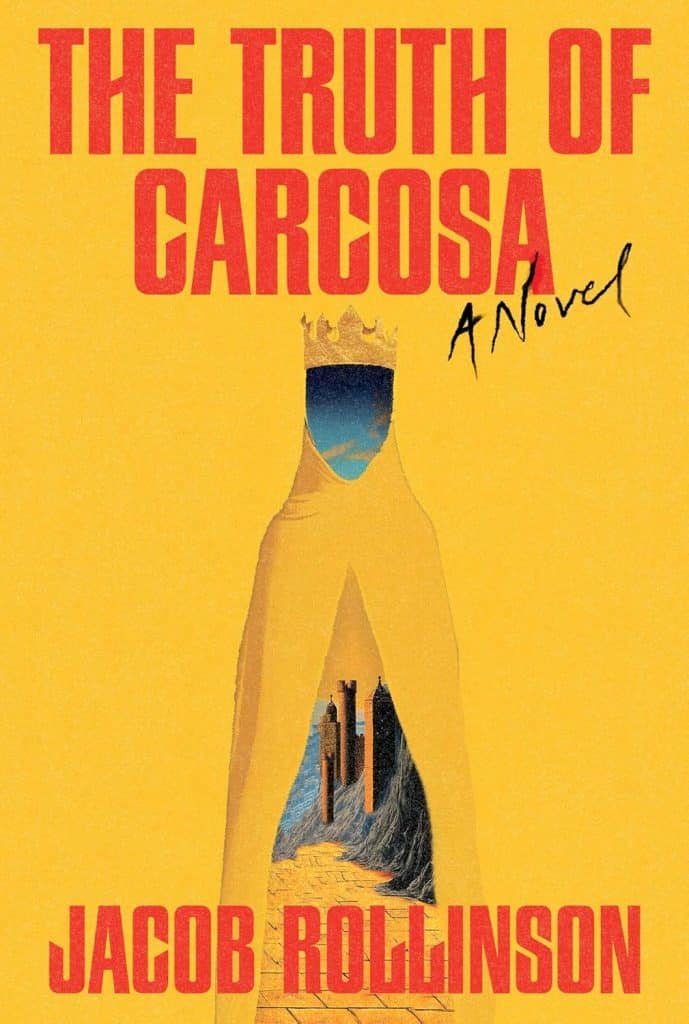
“Rollinson may have cracked the code to discover how to find cosmic horror’s future in its surreal history.” -Tobias Carroll, author of In the Sight and Political Sign
At the center of The Truth of Carcosa is another book, just like how the play of the same name centered The King in Yellow. Written in 1984 by the exiled author Salvatore Archimboldi, the manuscript emerges from an attempt at self-examination. With the help of a psychotherapist, Archimboldi tries to transform his trauma into art. But the resulting book, The Truth of Carcosa, is pure evil.
His response is not to publish, but to erase. Archimboldi suppresses the book, and all printed copies are marked for destruction. Archimboldi’s maddening spiral mirrors the fate of many characters in The King in Yellow, who respond to forbidden knowledge with mental collapse and withdrawal. This parallel is unsettling, especially to readers already familiar with Chambers’ stories.
But as all efforts of censoring tend to be, Archimboldi’s effort fails. Decades later, in a world marked by political extremism and violence, Archimboldi’s legacy resurfaces within the Archive for Literary Investment, a shadowy institution dedicated to preserving and monetizing rare works. A biographer and his protégée sift through Archimboldi’s papers, searching for clues about the manuscript even as outside interests close in.
And as the story unfolds, it becomes clear that the manuscript is more than just a forbidden book. The contents of the manuscript slowly unravel one by one, but questions, not answers, arise. Why is the Archive so intent on preserving Archimboldi’s legacy? What drives corporations to pursue any fragments of this mysterious manuscript at whatever cost? What are the strange, dancing figures that arise from the shadows wherever Archimboldi’s work is discovered? And most importantly, who – or what – is the Yellow King?
Who this book is for (and who it isn’t)
Unfortunately, The Truth of Carcosa will not suit everyone. Readers who prefer fast-paced, page-turning horror will likely be left unsatisfied. Likewise, those hoping for a definitive explanation of Hastur or a mapped version of Carcosa may end up feeling frustrated. Rollinson appears to be far more interested in the terrifying effects of the manuscript rather than explaining its contents.
But for readers familiar with Chambers and adjacent writers, this book will likely recapture the magic of early weird fiction. In addition, it will serve as the perfect introduction to the subgenre for readers craving slow-burn horror. After all, the novel relies on atmosphere and deliberately leaves the plot vague, just as the weirdest tales do.
And for readers who want more Carcosa after True Detective, or for readers familiar with Hastur through second-hand references? Adjust your expectations. This book is not about solving cosmic mysteries. Rather, it amplifies them.
A careful return to a dangerous place
Weird fiction, an early subsection of horror defined by mood rather than plot, remains a niche corner of modern horror. While there are sill writers upholding the tradition, the subgenre has since shifted toward cleaner mythology and faster-moving narratives. But with The Truth of Carcosa arriving in the bookstores, a renewed interest in atmospheric horror may spark once more. Whether Rollinson’s new installment will signal a broader return to these traditions remains to be seen.
Yet it is not quantity that matters; it’s quality. Will The Truth of Carcosa honor the tradition of early weird fiction and retain the mystery behind Hastur? Or will it end up as one of hundreds of stories that missed the point of The King in Yellow? That answer, as of now, is as unclear as Carcosa itself.