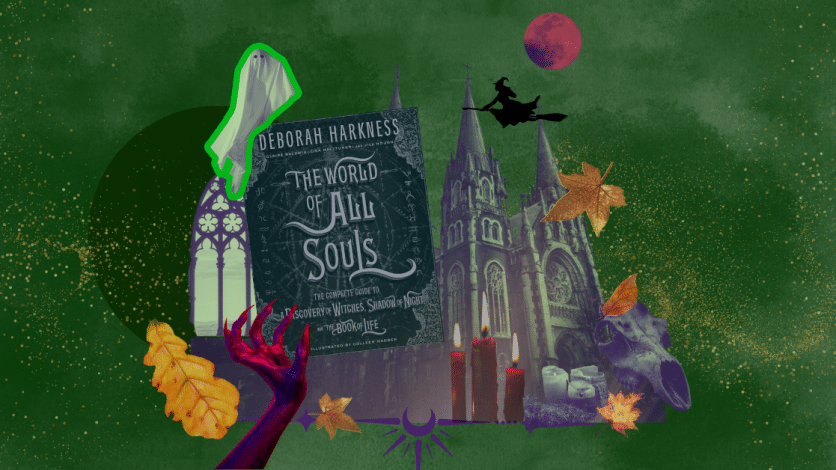
Long before BookTok discovered dark academia aesthetics and supernatural romance dominated bestseller lists, Deborah Harkness crafted a series that embodies both trends with remarkable sophistication. The All Souls series, beginning with A Discovery of Witches in 2011, reads like it was designed for today’s fantasy readers, who are seeking intellectual depth alongside romantic escapism. As autumn approaches and readers crave supernatural fiction, this series has it all: morally complex characters, academic settings, found family dynamics, and a romance built on intellectual equality rather than power imbalances.
Unlike the wave of YA supernatural romance that followed Twilight, Harkness delivers mature fantasy grounded in meticulous historical research and genuine academic expertise. The story follows Diana Bishop, a reluctant witch and historian who discovers an enchanted manuscript in Oxford’s Bodleian Library, launching her into a hidden world where vampires conduct genetic research, witches face evolutionary challenges, and centuries-old supernatural politics threaten to unravel. What emerges is a series that respects readers’ intelligence while delivering the emotional satisfaction that makes fantasy fiction irresistible.
As BookTok users search for sophisticated supernatural romance and dark academia content continues to trend across social platforms, the All Souls series is ready to capture audiences seeking both guilty pleasure and genuine educational value. This series isn’t just “romantasy” escapism—it blends entertainment with intellectual exploration, making it a wonderful fall read for anyone craving atmospheric supernatural fiction with substance.
No damsel in distress here
Diana Bishop subverts the “chosen one” trope by actively choosing her destiny rather than passively accepting it. As a historian at Yale and a fellow at Oxford, she brings academic rigor to her magical awakening, approaching witchcraft like any other research subject requiring methodical investigation and critical analysis. Her intellectual foundation distinguishes her from typical fantasy heroines who stumble through magical worlds without agency or expertise.
Harkness develops Diana’s character arc across five books, showing her growth from a witch who suppresses her powers to a confident leader who embraces both her magical heritage and academic identity. Her background shapes every decision—she researches spells like manuscripts, approaches supernatural politics with scholarly objectivity, and refuses to abandon her career for romance. Her character development will resonate with modern readers who want to see female protagonists maintain their professional identities and personal ambitions within romantic narratives.
The series explores how Diana’s academic training becomes her greatest magical asset. She deciphers ancient texts, uncovers historical connections between supernatural creatures, and applies research methodologies to solve magical mysteries. Her approach to witchcraft mirrors real academic practice: questioning assumptions, seeking primary sources, and building theories from evidence. This intellectual grounding creates a protagonist who feels authentic to readers familiar with academic environments while remaining accessible to those drawn to fantasy escapism.
“Even at a safe distance, this manuscript was challenging me—threatening the walls I’d erected to separate my career as a scholar from my birthright as the last of the Bishop witches.”
— Deborah Harkness, A Discovery of Witches
Diana’s relationship with power—both magical and intellectual—evolves throughout the series as she learns to balance the roles of witch, historian, wife, and mother. Her journey from reluctant magic user to confident supernatural leader demonstrates how academic training and magical ability can enhance rather than compete with each other, offering readers a model of female empowerment that encompasses both professional achievement and supernatural destiny.
Libraries, laboratories, and London

Harkness transforms settings into characters that shape plot development and create the atmospheric reading experience perfect for autumn nights. Oxford’s Bodleian Library becomes more than a backdrop—it’s a living repository of supernatural secrets where enchanted manuscripts choose their readers and ancient knowledge waits to be discovered. The library’s medieval architecture and scholarly atmosphere embody everything readers love about dark academia aesthetics while serving crucial plot functions.

The series moves between contemporary academic environments and meticulously researched historical periods. Elizabethan London comes alive through Harkness’s expertise in early modern European history, featuring real locations, accurate period details, and authentic cultural contexts that augment the fantasy elements. Readers experience the School of Night, encounter historical figures like William Cecil, and navigate 16th-century London’s political complexities alongside supernatural intrigue.
Contemporary settings receive equal attention, from Duke Humfrey’s Library filled with medieval manuscripts to Matthew’s laboratory where vampire scientists conduct genetic research. These locations ground the fantasy in recognizable academic and scientific environments, creating believability that allows readers to fully invest in supernatural elements. The contrast between ancient magical traditions and cutting-edge scientific methodology creates thematic tension that drives character development and plot advancement.
Each setting reflects the intellectual themes central to the series. Libraries represent knowledge and discovery, laboratories symbolize the intersection of science and magic, and historical locations demonstrate how past and present connect through supernatural continuity. This attention to setting creates the immersive reading experience that makes autumn fantasy reading so compelling, offering readers atmospheric escapism grounded in authentic academic and historical detail.
Vampire romance done right
Matthew Clairmont represents vampire romance evolution beyond typical genre conventions. As a 1,500-year-old vampire who’s also a respected scientist at Oxford, he brings intellectual equality to his relationship with Diana. Their romance develops through shared academic interests, mutual professional respect, and collaborative research rather than the power imbalances that characterize much of supernatural romance.
“Giving a woman your whole life is meaningless without giving her your whole heart as well.”
– Deborah Harkness
Furthermore, their relationship dynamics emphasize communication and partnership. Their conflicts arise from supernatural politics rather than relationship drama, yielding a mature romance that models healthy relationship patterns while maintaining the supernatural intrigue. This approach is appealing to readers who crave romantic escapism without problematic relationship dynamics.
Harkness uses their romance to probe themes of identity, belonging, and acceptance across different supernatural species. Their relationship challenges centuries-old supernatural laws prohibiting vampire-witch relationships, forcing the two characters to confront prejudice, tradition, and social expectations. This conflict presents genuine stakes while avoiding the artificial drama that typically plagues supernatural romance, giving readers emotional investment in both individual character development and broader social change.
The romantic tension builds through their intellectual connection rather than instant physical attraction, producing anticipation that is earned rather than manufactured. Their shared passion for research, history, and discovery is the foundation for intimate moments that feel authentic to their characters while maintaining the romantic tension that drives reader engagement. This genuine compatibility makes their relationship more compelling.
Real witches, real history, real research
Harkness’s background as a historian transforms typical fantasy world-building into educational experience disguised as entertainment. Her academic expertise in early modern Europe, the history of science, and medieval manuscripts provides a authentic historical basis that elevates the series beyond typical supernatural romance. Readers encounter real historical figures, accurate period details, and genuine historical events woven seamlessly into a supernatural narrative.
The series incorporates actual historical mysteries and unsolved questions, using supernatural explanations to bridge real historical gaps. The School of Night, a real intellectual circle including Christopher Marlowe, Walter Raleigh, and other Elizabethan figures, becomes a supernatural society in Harkness’s narrative. This approach exposes readers to genuine history while they enjoy fantasy escapism, creating dual appeal for audiences seeking both entertainment and educational value.
Magical systems reflect real historical beliefs about witchcraft, alchemy, and natural philosophy, not just invented fantasy concepts. Diana’s spells draw from historical grimoires and magical traditions, while vampire and daemon abilities connect to real folklore and cultural beliefs. This grounding in authentic historical and cultural sources allows readers to fully invest in supernatural elements without fatigue from the suspension of disbelief.
Research methodology becomes a plot device as characters use actual historical research techniques to solve supernatural mysteries. Readers learn about manuscript analysis, paleography, genealogical research, and archival investigation through Diana’s academic work. This educational component appeals to readers interested in history, research, and academic practice even as it sustains narrative momentum and keeps entertainment value high.
The series demonstrates how research bolsters rather than constrains creative storytelling, offering writers and readers a model for incorporating authentic historical detail into fantasy narratives. This approach cements a lasting value beyond immediate reading pleasure, giving readers knowledge and interest in real history.
Where to start and what to expect
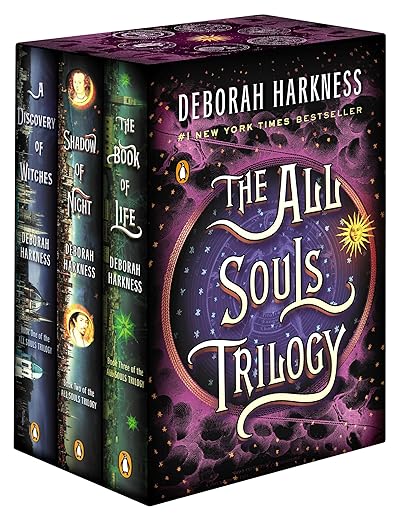
The All Souls series consists of five main novels plus an addition companion work, providing a substantial amount of reading material for autumn and beyond. Begin with A Discovery of Witches (2011), which establishes the world and central relationship while providing complete story satisfaction. Shadow of Night (2012) transports readers to Elizabethan London for historical immersion, while The Book of Life (2014) concludes the original trilogy with supernatural politics and family revelations.
Time’s Convert (2018) serves as both prequel and sequel, exploring Marcus’ transformation into a vampire during the American Revolution while continuing Diana and Matthew’s story in contemporary times. The Black Bird Oracle (2024), the most recent addition to the series, sees Diana returning to her ancestral home, where she endeavors to understand her family’s connection to higher magic.
Harkness has previously teased that there are several more works planned for the series. Already announced are upcoming novels The Falcon and the Rose and The Serpents Mirror. An additional work, The World of All Souls, supplies expanded universe content for readers who want deeper engagement with secondary characters and world-building details.
The television adaptation, which ran from 2019-2022, offers visual interpretation that can supplement the reading experience. While the show condenses and modifies certain plot elements, it brings the settings and characters to life. New readers can choose to watch first for visual grounding or read first for complete narrative experience. Harkness herself engages with readers through annual live read-alongs on her social media platforms, which is a great way to dive into the fan community, join conversations, or discover additional content.
You can find links to all the books in the series on Harkness’ website here.
Your fall reading list just got an upgrade
With autumn settling in, readers are gravitating toward atmospheric supernatural fiction that respects their intelligence and enables escapism. The All Souls series fulfills both desires. It not only predicted current literary trends; it embodies them, all while claiming lasting appeal through authentic research, complex characters, and sophisticated storytelling. Your fall TBR just found its perfect addition.