Sex work is often regarded as the ‘oldest profession’ in the world. Evidence of its history goes back to ancient Mesopotamia (2400 BCE), yet sex workers face, arguably, the highest level of stigmatization of any profession.
So why does society demonise this predominantly woman workforce? It is, after all, another demand and supply system set up within capitalism. Is this judgment a reflection of our deep-rooted misogyny, racism and aversion to empowered sexuality?
I spoke to two sex workers to better understand their work and the marginalization they endure.
Worldwide opinions on sex work
The selling of sex is judged differently all over the world. In countries such as Colombia, Germany, Peru, Hungary, Greece, Chile and Turkey, it’s legal. It’s illegal in South Africa, China, Russia and the United States. Currently, the only countries to have decriminalised sex work (no penalties for purchasing or selling) are New Zealand and Belgium. Some states in Australia follow this model too. The New Zealand Prostitution Reform Act (2003) was done to ‘recognise sex work as legitimate work’. This gave workers rights that were ‘guaranteed through employment and human rights legislation’. Research shows that 20 years on this has worked in protecting them. Though NZ is evidence that decriminalisation protects workers and their human rights, many workers still face stigma around their work.
In sex work, there is a difference between it being legalised and being decriminalised.
Legalisation: there is a legal framework of laws, codes and regulations that a sex worker must follow in order to work legally. This creates a problem for anyone who can’t fit that framework to work.
Decriminalisation: the removal of criminal penalties for selling or purchasing sex work, whilst enforcing laws against trafficking, violence, rape and sex involving a minor. Human rights organisations and sex workers favour this.
The Nordic Model
Sweden is another example of a government that has implemented a model in their society with the supposed aim to protect sex workers. This model is called the Nordic (or Swedish) Model, and has caused a lot of divided opinions. There are the ‘radical feminists, who view sex work as inherently exploitative,’ and then ‘sex-positive feminists’ who see sex work as ‘an expression of women’s sexual autonomy.’ This model decriminalises the selling of sex work but criminalises the purchasing. MP Diana Johnson talked about this model in the UK government in 2025, and the Scottish government is currently discussing it.

Seraphina Serene (a black queer stripper and pole dancer), said that this model ‘can be more harmful to sex workers because it pretends to take away the barrier but just puts it further down the street.’ Criminalising the customers will decrease demand, putting sex workers’ livelihoods into jeopardy; workers who already have to contend with online censorship in self-promotion.
‘The Nordic Model approach to prostitution […] decriminalises selling sex, provides support services to help those involved to exit, and makes paying for sex a criminal offence, in order to reduce the demand that drives sex trafficking.’- Nordic Model Now!
Radical feminism versus sex positive feminism
There is a lot of discourse on both sides of this argument. Those in favour of this model often tie sex work to exploitation. Dr Vuolajärvi (an assistant professor at the European Institute) reports that it was founded on the argument that ‘women who sell sex are victims of an intrinsically exploitative and morally objectionable activity.’ The exchange of money sets up a power imbalance between the two-participatory parties, placing the worker at the mercy of the seller. Researchers who investigated in Sweden heard stories from workers about ‘experiences of past abuse, extreme poverty and violence.‘ This model wanted to fight sex-trafficking and exploitation. But sex-positive feminists have argued that this is a one-dimensional look at sex work, which they see as empowering because it exercises a woman’s right to choose.
The voices of sex workers
Weirdly enough, neither one of these perspectives centralises sex workers’ voices. When asked about the Nordic Model, Evangelica (stripper and financial dominatrix) says it ‘can make it more dangerous for workers to fulfil their role. It doesn’t have their safety taken into consideration.’ This is backed up with research. A recent policy brief on Nordic Regions of Finland, Norway and Sweden done by Dr Vuolajärvi, found that ’96 per cent of those surveyed believe the criminalisation of the sex buyer has made workers in the industry more unsafe and more vulnerable to exploitation.’
Speaking to sex workers, I became aware of how decentralised their voices are in this discourse. Discussing sex workers without listening to them only furthers misunderstanding. It imagines them as objects who cannot speak for themselves. Radical feminists (which include SWERFS*) ‘often dehumanise sex workers’, says Seraphina. ‘We aren’t included in their version of feminism’. She hypothesises that the negative stigma surrounding stripping and pole dancing is rooted in misogyny and racism, the origins of both tracing back to black women. The dehumanisation she experiences as a black woman in society is exacerbated in her profession, sometimes by customers but also by ‘hobbyist’ pole dancers who don’t respect stripping as a legitimate profession. ‘There is this stereotype of sex workers being powerless women, but this isn’t the case. We enjoy what we do. I am comfortable in my sexuality and can monetize it in a safe environment.’
S.W.E.R.F.- Sex Worker- Exclusionary Radical Feminist
Sex work mysticism
Evangelica has a similar opinion: ‘Often clients are shocked that I have two degrees. They see sex work as a desperate choice and not that I’m here because I want to be here. The nature of this job means it’s not for everyone, yet people project their conventional view of sexuality onto me. People moralise sex work; either for religious or cultural reasons, or for lack of understanding because this environment creates mysticism.’
Radical feminism carries a lack of understanding of the layers of sex work. It perpetuates an elitist and ableist perspective by imagining every woman to be in the same position (whether sexually, financially, bodily), much like how ‘white feminism’ views violence against women only through one understanding of misogyny. Because of the many avenues of sex work (cam girl, stripping, OF, escorting, etc), Evangelica says that ‘there is such a high demographic of disabled workers, as well as high numbers of queer, trans and people of colour.’ This industry lies in the middle of the intersections of many already marginalised voices.
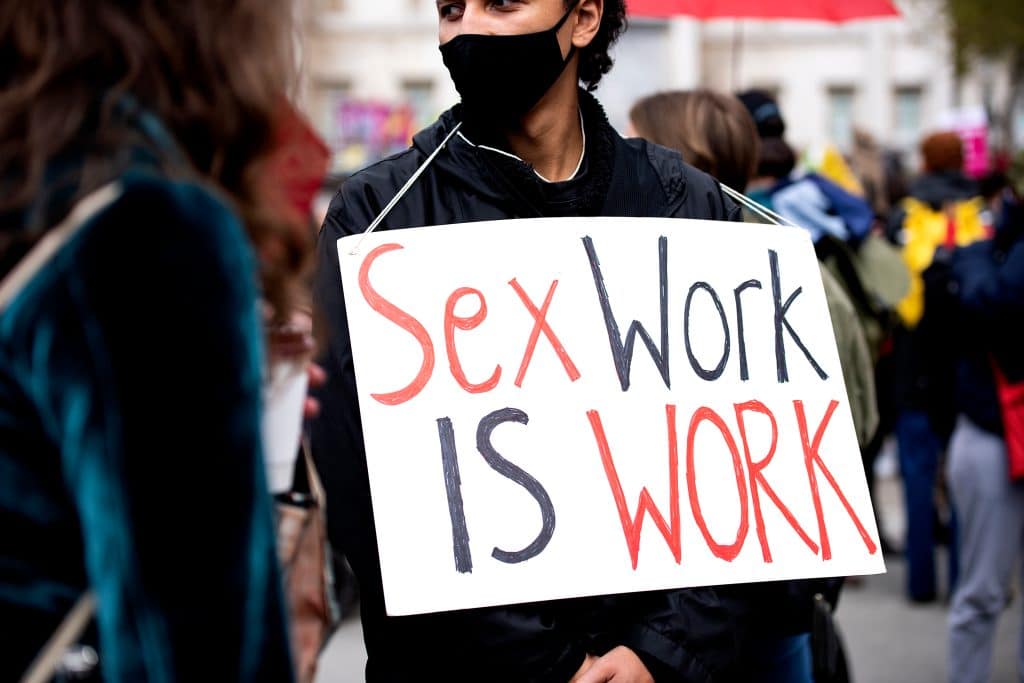
What radical feminists don’t seem to see is that the sex work industry has become an accessible and enjoyable space for women from different avenues of life to work exactly how they want and need. Decrim Now found in a recent study of 172 sex workers that 77% identified as ‘disabled or living with a long-term health condition.’
Making sex palatable
Negative stigma around sexuality and sex work also seems illogical when we look at our popular culture too. With artists like Sabrina Carpenter and Zara Larsson, who’s aesthetic you could argue is based upon burlesque and stripping, it seems society chooses the parts of sex work it can capitalise from. When pop stars are a product for purchase, this highlights further hypocrisy between what is acceptable versus what is not. Media like Euphoria (season 3) have sex work as an integral part of the plot and yet depict harmful one-dimensional stereotypes.
Seraphina says that ‘this is frustrating. Why can pop stars and media sell sex when I am demonised for it? They take the best parts of sex work, make it palatable and profit from it.’ She sees this appropriation akin to black culture being appropriated by white people; certain aesthetics become trends for groups of people who do not face the same discrimination as the people who created it.
What can we do?
Evangelica says, ‘We need to be more willing to talk openly about topics that aren’t comfortable. Society’s approach to sexuality is what makes people judge, but sexuality is wild and beautiful and has inspired art for all of time. At the end of the day, I am providing provision of a service that is in demand, just like other people do. More people need to engage with sex work in ethical ways.’
Seraphina knows that ‘so many choices are made by people who don’t have our best interests at heart. Sex is already everywhere, but for some reason it’s not normal when sex workers do it. Things are decided for us, and we face discrimination because this industry is different than others. But the more we talk, the more it’s normalised.’
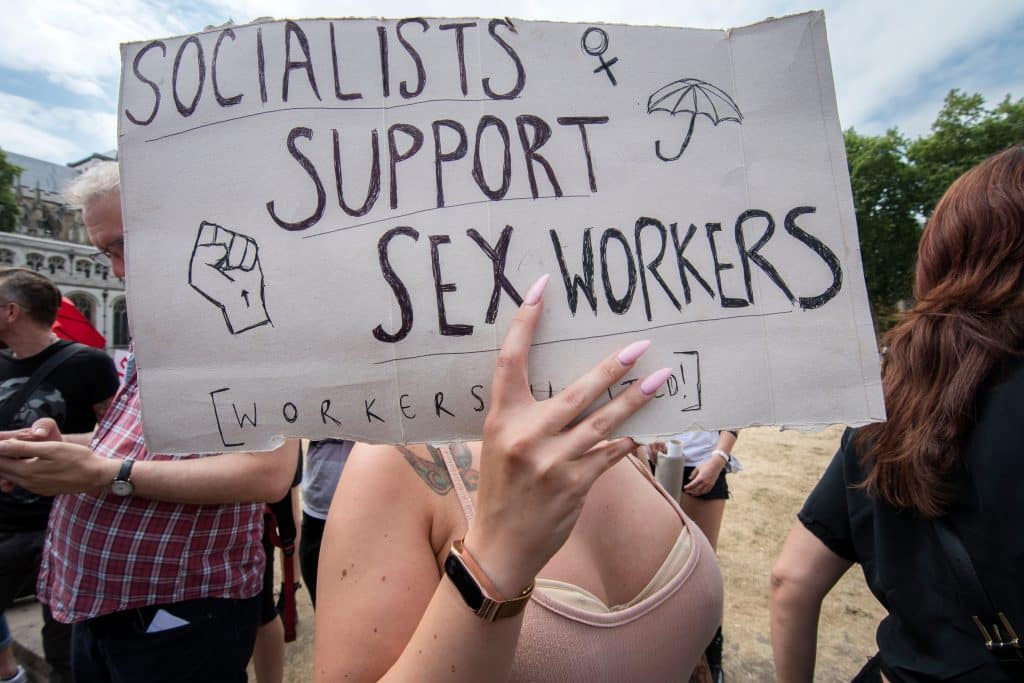
We should be listening to the voices of sex workers, especially in conversations about their rights, safety and livelihood. As one of the only woman-dominated professions, the stigma surrounding it is inherently misogynistic, magnifying patriarchal ableist, racist and elitist standards. We can work to break this stigma by challenging our own prejudices. Engage in conversations with sex workers. Listen to them. Become their allies. At the end of the day, judgement of this profession is ultimately hypocritical because don’t we all sell our bodies in some way?