For years, BookTok’s dream man was easy to spot. He was rich, powerful, and usually emotionally unavailable. Think billionaire CEOs, luxury penthouses, and men who could solve almost any problem with money.
But spend five minutes on BookTok, and you’ll find readers obsessing over a very different fantasy.
The modern book boyfriend makes soup when you’re ill. He remembers your coffee order. He communicates his feelings. Most importantly, he texts back.
At first glance, this might seem like another passing romance trend. Yet the rise of cosy romance, emotionally available heroes, and “golden retriever” boyfriends raises a bigger question: what if our romance fantasies are changing because the world around us is changing too?
One viral BookTok trend asks readers to share the biggest “green flags” in fictional men, and the answers are rarely about wealth. Instead, readers praise emotional intelligence, acts of service, clear communication and reliability.
As Gen Z navigates rising living costs and burnout, romance fiction appears to be moving away from fantasies of excess and towards fantasies of stability. In other words, the hottest thing in romance right now is not wealth.
Its reliability.
From Billionaires to Bakers: Has Booktok’s ideal man Changed?
The billionaire romance is not disappearing anytime soon.

Bookshops are still packed with wealthy CEOs, elite athletes, and powerful men who seem to have unlimited money and influence. Dark romance and romantasy continue to dominate bestseller lists and BookTok recommendations.
Yet alongside these stories, another type of romance is thriving.
Contemporary romance has increasingly embraced small-town settings, family businesses, local communities, and emotionally grounded relationships. Instead of private jets and luxury holidays, readers are falling in love with bakers, hockey players, farmers, and ordinary men who know how to communicate.

This shift is visible across some of romance’s biggest names. Authors such as Emily Henry and Abby Jimenez have built loyal audiences around stories where emotional intimacy often matters more than extravagant lifestyles. Readers are less interested in whether a character owns a penthouse and more interested in whether he knows how to process his emotions.
That might sound like a small change, but it reflects a much bigger cultural shift.
The Romance Recession Theory
My theory is simple.
The romance recession theory suggests that romance trends often mirror the social and economic realities readers are experiencing.
Entertainment has always responded to uncertainty. During difficult periods, people often gravitate towards stories that provide comfort, reassurance, and escape. Romance fiction has always offered that through its guaranteed happy ending.
But what happens when the things people are craving begin to change?
Many members of Gen Z are entering adulthood during a period marked by economic instability. Rent prices continue to rise. Home ownership feels increasingly out of reach. Discussions about burnout dominate social media feeds.
At the same time, dating culture has developed a reputation for being exhausting.
Ghosting, situationships, and dating app fatigue have become familiar parts of modern relationships. Scroll through TikTok for long enough, and you’ll find countless videos about mixed signals, commitment issues, and emotionally unavailable partners.
Against this backdrop, it becomes easier to understand why romance readers might be gravitating towards different fantasies.
When uncertainty becomes normal, certainty becomes attractive.
BookTok’s Comfort Economy
Romance fiction isn’t the only place where this shift is happening.
Look at almost any corner of popular culture, and you’ll find people gravitating towards comfort. Whether it’s cosy games, comfort shows, or endless rewatching of old favourites, there seems to be a growing appeal in stories that feel safe and reassuring.
Romance reflects that change, too.
For a long time, the fantasy was about escaping into a life that felt bigger and more glamorous than your own. But increasingly, readers seem drawn to stories that offer something different. Not necessarily a mansion or a private jet, but a sense of stability. A relationship where people actually talk to each other. A dependable partner. A life that feels calm rather than chaotic.
That might sound less exciting on paper, but in a world where uncertainty often feels unavoidable, comfort can start to feel like its own kind of luxury.
BookTok’s New Ideal Man
Few platforms have shaped modern reading culture quite like BookTok.
The app has helped launch books onto bestseller lists, revived older titles, and turned fictional characters into internet celebrities. It has also made it easier to identify which romantic archetypes readers are currently obsessed with.
One of the biggest examples is the popularity of the “he falls first” trope.
Unlike older romance stories built around emotionally distant male leads, this trope centres men who are emotionally invested from the start. Readers love the certainty it offers. There are no mixed signals. No guessing games. No situationships.
He simply likes her.
The popularity of “acts of service” storylines tells a similar story. Across BookTok, readers regularly celebrate scenes where characters cook meals, offer support or take care of practical tasks.
These moments often generate more excitement than grand displays of wealth.
The same can be seen in the rise of the “golden retriever boyfriend” archetype. These characters are kind, enthusiastic and emotionally expressive. They are a long way from the cold, mysterious alpha males that dominated parts of romance culture in previous decades.
Even the term “book boyfriend” reveals something interesting. Readers are not simply discussing who is attractive. They are discussing who would make a good partner.
And increasingly, the answer seems to be someone dependable.
Why Gen Z Loves Soft Masculinity
The growing popularity of softer male characters has sparked wider conversations about masculinity itself.
The Guardian argued that romantasy has changed the modern male hero, while other outlets have explored why readers continue to obsess over emotionally intelligent fictional men.
BookTok has become part of this discussion.
Readers regularly praise characters who are vulnerable, emotionally aware, and supportive. Rather than celebrating emotional distance, many romance communities now actively criticise it.
This reflects broader cultural conversations around “soft masculinity.”
While the term can mean different things to different people, it generally describes a version of masculinity built around emotional openness, empathy, and communication rather than dominance or detachment.
The popularity of these traits suggests that many readers are not necessarily searching for perfection. They are searching for emotional security.
That makes sense when viewed alongside modern dating culture.
In a world where people regularly discuss ghosting, breadcrumbing and commitment issues, a fictional character who communicates honestly can begin to feel surprisingly aspirational.
What Romance Fantasies Say About Real Life
Romance fiction is still fantasy.
Nobody is arguing that readers expect real life to function like a novel. Yet the popularity of certain tropes often reveals what people are longing for.
The rise of cosy romance offers one example.
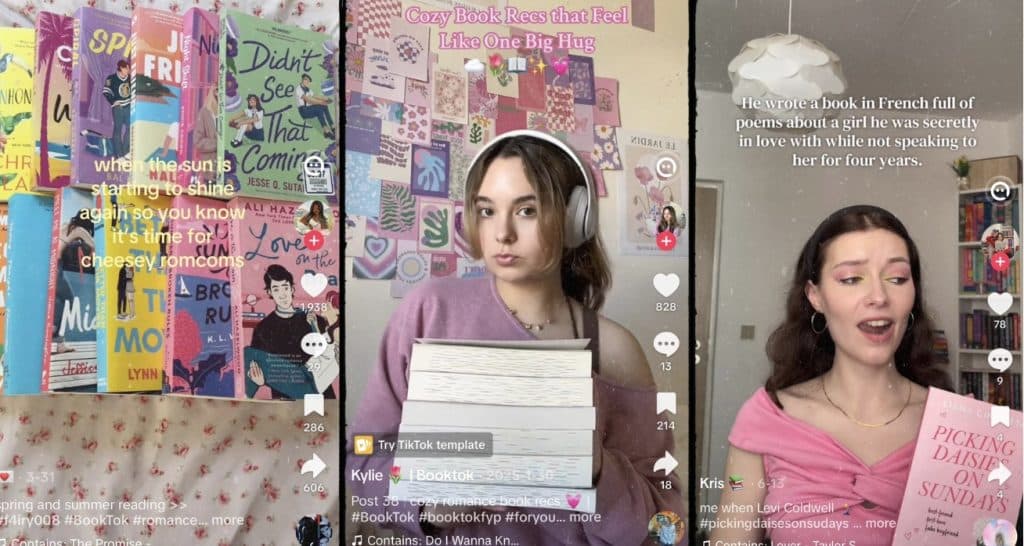
BookTok clearly outlines this as we can see via many creators.
These stories often feature small communities, close friendships, and slower lifestyles. They create worlds where people know their neighbours, support one another, and find a sense of belonging.
That vision can be particularly appealing at a time when loneliness is increasingly described as a social problem.
This desire for comfort extends beyond romance fiction. As explored in Trill’s article on slow living, many young people are increasingly prioritising stability and emotional wellbeing over constant productivity.
Similarly, the popularity of emotionally competent heroes reflects a desire for stability.
The fantasy is not always about finding the richest person in the room.
Sometimes it is about finding the most reliable one.
In an era defined by economic pressure and emotional exhaustion, comfort itself has become aspirational.
When Reliability Becomes the Fantasy
The romance recession theory is not an argument that wealth fantasies are gone.
Readers still love billionaires. They still love castles, dragons, and extravagant lifestyles.
But another fantasy has emerged alongside them.
A fantasy built around certainty. A fantasy built around care. A fantasy built around someone who knows what they want and is not afraid to say it.
Perhaps that is why so many of today’s most popular book boyfriends are not remembered for their bank accounts. They are remembered for the way they make people feel.
For decades, romance fiction promised readers luxury.
Now, increasingly, it promises something else.
Someone who shows up.
And in 2026, that might just be the ultimate fantasy.