As the midterms close in, gerrymandering remains in full swing. Over the last year, both parties have taken victory laps as gerrymandering wins have trickled in. But how do Americans feel about this battle?
The battle started off when Donald Trump directed Texas Republicans to draw him more seats for the midterm. Democrats were incensed, calling the effort an attempt to rig the midterms. The debate became a national issue. Democratic lawmakers in Texas even left the state to break quorum and stall the vote.
For Republicans, this was an example of Democratic hypocrisy. Gerrymandering can be seen throughout the United States, by both parties.
“When you’re winning in Illinois you’re happy to play by the rules,” Fox News host Will Cain said in an interview with James Talarico.
States often redistrict after the census to account for changes in population. Many argued the decision to gerrymander before the 2026 midterms was a deliberate attempt to change the outcome.
Partisan gerrymandering is legal in the United States and has been a part of American politics for a long time. Gerrymandering on the basis of race has long been prohibited by the Voting Rights Act, but a recent Supreme Court ruling weakened this regulation, allowing states to carve up minority population districts.
What did the battle look like?
After Texas Governor Greg Abbott announced his intention to engage in mid-decade redistricting, Democrats soon realized that words of condemnation were unlikely to change the situation. California Governor Gavin Newsom announced his intention to draw a new map in California if Texas approved its new maps.
The Election Rigging Response Act came in the form of a proposition to California voters, asking their permission to redistrict the state in order to create more Democratic seats. The response prompted requests to gerrymander other Republican states from President Trump. A number of Republican controlled state legislatures moved to gerrymander even more seats, including North Carolina, Ohio, and Missouri. Though Republicans control the Utah legislature, a judge ruled that its maps had failed to follow anti-gerrymandering standards voters had adopted, giving Democrats a seat.

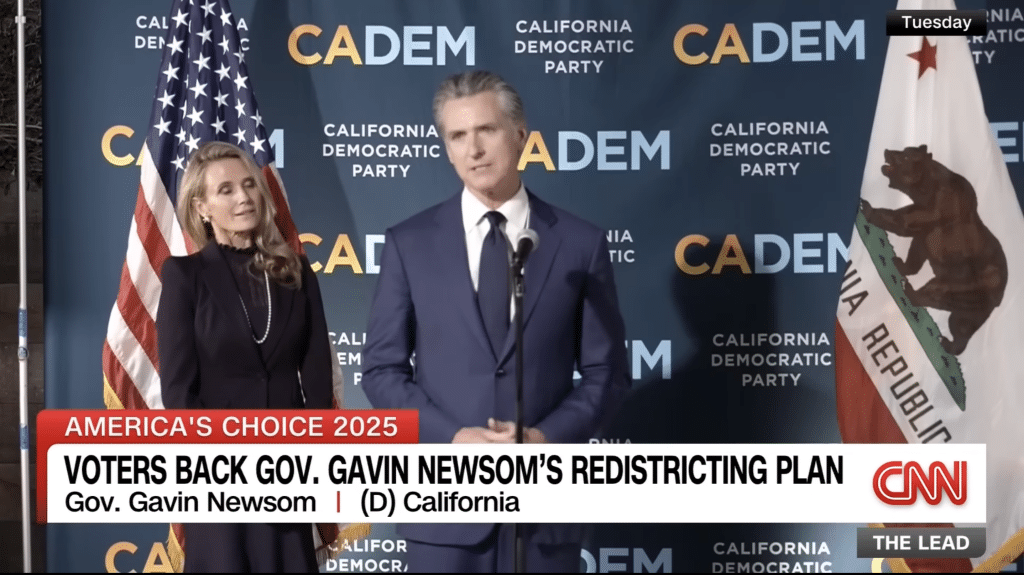
Proposition 50 passed in November 2025. The win was decisive for Gov. Newsom, highlighting a willingness to fight that many Democratic voters had felt was missing. In April 2026, Virginia voters approved a referendum to change the maps in order to win more Democratic seats.
Democrats filled news cycles, taking victory laps while Republicans expressed disdain. Florida promised to gerrymander its districts, despite it being against the Florida Constitution.
The fun eventually stopped for the Democrats with the Supreme Court’s decision around the Voting Rights Act. Previously, the act prohibited states from drawing maps that diluted minorities’ voting power. Many minority constituencies align with the Democratic Party, often stopping Republican legislatures from gerrymandering to a state’s full potential.
The court decision started a frenzy of redistricting attempts from states like Louisiana, Alabama, Tennessee and South Carolina.
Around the same time, the Virginia Supreme Court ruled the referendum was unlawful, forcing Virginians to use their old maps and docking seats from the Democrats so carefully tallying them up.
How do the seats match up?
According to CBS News, before the Supreme Court decision the potential outcome had Democrats on between four and six seats and Republicans between nine and 14.
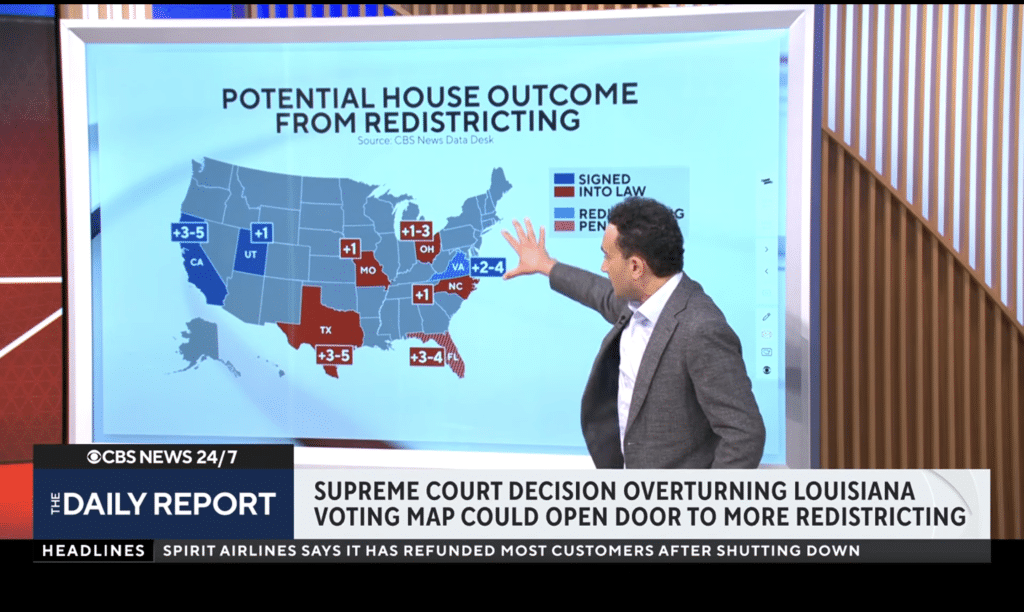
The tally after the decision is still hard to predict, but pollsters believe Louisiana, Tennessee, Alabama and South Carolina could gain one seat each, removing all Democratic representation from Tennessee and South Carolina.
How does this affect the American people?
Pundits and commentators have been vocal on social media, but the opinions of voters have gone unnoticed.
Gerrymandering isn’t popular with voters. While voters approved propositions in California and Virginia, approval of gerrymandering has not increased.
In California voters approved of the proposition by nearly 30% with 64% of voters approving of the measure. Yet, research by the Public Policy Institute of California (PPIC) shows that the vote doesn’t necessarily reflect positive opinions about gerrymandering.
In the October survey before the vote, 72% of Californians said the independent redistricting commission had been a good thing.
“Ninety-two percent of voters in the exit polls felt districts should be drawn by an independent commission, even though most of them (63%) voted to suspend the map California’s independent commission had drawn,” the PPIC said on their website.
Co-Director of the Berkeley Institute of Governmental Studies Erik Schickler told Cal Matters voters were able to treat the vote as a referendum on Trump and Republicans rather than a representation of their preferences for non-partisan redistricting.
The results were closer in Virginia, with only 51% of voters approving the map. In 2020, voters had approved the creation of a bipartisan redistricting commission. Many Virginians expressed worries that they would be left unrepresented.
Forty-eight percent of registered Virginia voters believed the maps would be an unfair representation of Virginians if they were approved, according to a Washington Post-Schar School poll. A survey by Roanoke College found that 62% of respondents supported Virginia’s current method of mapping districts through a bipartisan commission.
None of the Republican states locked in the current gerrymandering battle have held referenda.
Throughout the United States there is widespread disapproval of gerrymandering. In a YouGov poll from April 28, 71% of Americans said parties shouldn’t be allowed to draw maps to benefit themselves.
The results remain close when broken down by party ID. 74% of Democrats disapprove of partisan gerrymandering while 69% of Republicans also disapprove.
What next?
Democrats still hope to win the midterms, but have fallen behind in the House race with redistricting setbacks. With leading Democrats looking to further partisan gerrymandering in 2028, it’s unlikely the fight will be over anytime soon.