Glasses have quietly moved beyond function.
They are no longer just something you put on to see clearly—they’ve become part of how you present yourself. A subtle but consistent extension of style, mood, and identity. And lately, a quiet divide has been taking shape in eyewear: minimal versus bold frames.
Not as a rule, but as a reflection.
In response to this shift, newer eyewear brands like EYDOLOGY are starting to rethink what glasses are meant to do—blending design with everyday practicality, including features like progressive lenses that support everything from reading to screen time without compromising on style.
Minimal frames: the language of restraint
Minimal frames are not trying to be noticed—and that is precisely their appeal.
Thin metal structures, barely-there rims, muted tones. These are frames that don’t interrupt a look; they refine it. They sit comfortably in the background while quietly shaping the overall impression.
There’s a certain discipline to this kind of design choice. It suggests a preference for clarity over excess, intention over noise.
People drawn to minimal frames often gravitate toward:

- clean, structured aesthetics
- neutral, considered wardrobes
- understatement as a form of confidence
But minimalism, at its core, is not absence. It is precision. A decision to remove everything unnecessary until only what feels essential remains.
In that sense, minimal frames don’t disappear—they distill.
Bold frames: visibility as expression
On the other side of the spectrum, bold frames operate with a very different logic.
They are not designed to blend in. They are designed to be seen.
Oversized silhouettes, sculptural shapes, saturated colors, thick acetate—these frames treat the face as a canvas rather than a backdrop. They introduce volume, attitude, and a sense of deliberate presence.
Those who gravitate toward bold frames often embrace:
- expressive, personality-driven styling
- fashion as a visible extension of identity
- contrast, disruption, and play
What once might have been considered “too much” has become, in many contexts, a new kind of normal. In a visually saturated culture, boldness no longer feels like exception—it feels like language.
The blurring of style categories

Still, framing this as a strict binary feels increasingly outdated.
Style today is less about consistency and more about context. For digital nomads and creative professionals in particular, the same person who chooses restraint on one day may lean into exaggeration on another—not as contradiction, but as calibration.
In increasingly screen-mediated environments, ideas like “The Digital Eye Lift” have emerged—suggesting that eyewear can subtly elevate how we appear on camera, adding definition, balance, and presence in virtual interactions.
This shift reflects a broader change in how we approach personal style: less about defining a fixed identity, more about adapting between different versions of it.
Eyewear as a rotating system
As this mindset evolves, eyewear is beginning to function less as a single purchase and more as a small system of rotation.
One pair for daily clarity and ease—especially for those navigating hybrid work and multiple focal distances, where progressive lenses and blue light blocking help reduce strain and support long hours across screens. Another for presence and expression. Occasionally, a pair is chosen purely for mood rather than utility.
Increasingly, eyewear is also being considered as a practical yet personal gift—something that blends utility with self-expression, rather than a purely functional purchase.
In this space between function and style, brands like EYDOLOGY are leaning into a wider spectrum of design—offering frames that move from minimal restraint to more expressive silhouettes, making experimentation feel less like a commitment and more like an option.
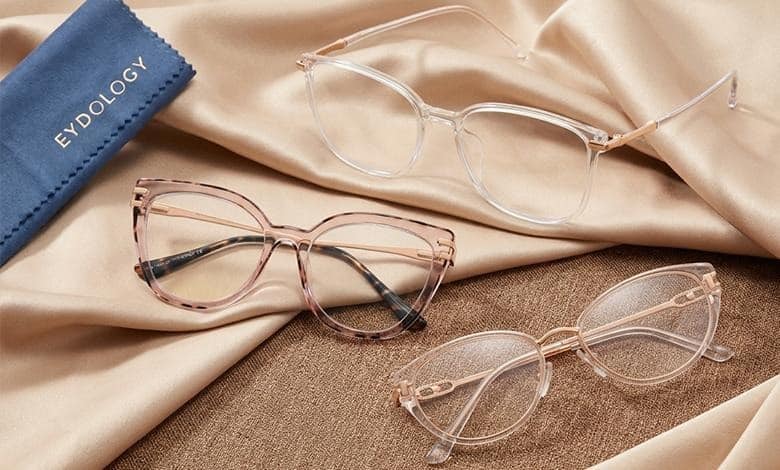
The result is not just more choice, but more permission to shift.
So, what do your frames say about you?
Ultimately, frames are not just aesthetic decisions. They are small signals of how you choose to appear in a given moment.
Minimal frames suggest quiet control, clarity, and refinement.
Bold frames suggest visibility, confidence, and expression.
But perhaps the more interesting reality is that most people are not one or the other.
They are both—depending on the day, the context, or simply the version of themselves they want to step into.
And maybe that is the point.