


R.F.K. Jr.’s hearings haven’t gone well for him. Throughout the event, Democrats criticized him for spreading conspiracy theories, wasting tax dollars, and making Americans less healthy. Some also discussed his negative messages about people with disabilities. However, these hearings suggest that most politicians and activists, regardless of side, don’t know how to talk about disability yet.
All-natural ableism
Ronald F. Kennedy Jr., a member of the famous Kennedy family and an environmental lawyer, is most well-known for being an “anti-vaxxer” and promoting the conspiracy theory that vaccines cause autism.
Trump appointed him as Secretary of Health and Human Services in his second term, when they launched “Make America Healthy Again.” Under this policy framework, they promoted several ideas, ranging from seemingly common-sense statements to dangerous conspiracies. These include rejection of ultra-processed food, reliance on “natural” cures, fears of a chronic disease “epidemic,” and a deep opposition to vaccines and fluoride.
This ideology tends to favor “personal responsibility” for one’s health, rather than addressing systemic health problems. So, when it comes to people with disabilities, the message is generally that if one becomes disabled, they made bad choices and don’t deserve care. Additionally, many of R.F.K. Jr’s messages make disability look like a terrifying tragedy. MAHA encourages people to avoid vital public health measures just so they do not “become autistic“, has created a Super Bowl ad with an obese man who claimed this made him want to commit suicide, and has suggested that SSRIs (antidepressants) are addictive or make people violent, which could deter people who need them from taking them. (And that doesn’t mention how Trump mocks people with disabilities and rolled back disability rights.)
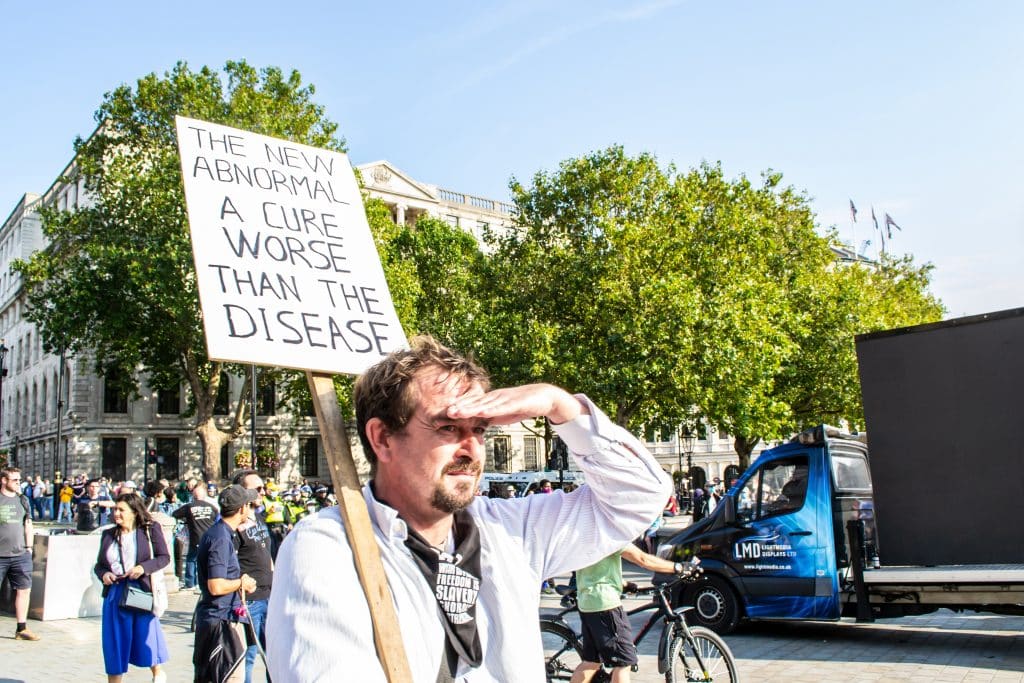
Now, MAHA might be falling apart, or, at least, losing faith in this administration. Many prominent members have criticized Kennedy for declaring glyphosate (an herbicide that some suspect may cause hormonal disruptions) a national security priority, and being less outwardly anti-vax while in office. His action against ultraprocessed foods has also been underwhelming compared to what MAHA supporters might have hoped, because he has shifted from wanting to ban “ultraprocessed” foods (which lacks an agreed-upon scientific definition) to wanting to create informational labels on how healthy different foods are.
Although such issues were good campaign slogans when Trump and R.F.K. Jr. claimed to want to address “government conspiracy,” it is a problem for them now, because many of the promises he made are simply too unscientific, unpopular, and contrary to other important political interests- such as farmers, who use glyphosate, and powerful food companies– for any government to live up to.
Additionally, there has been tension between right-wingers in MAHA’s sphere who support R.F.K. Jr.’s environmentalism and other conservatives who support major businesses in energy instead.
However, R.F.K. Jr.’s hearings reveal that despite his coalition fracturing, ableism is sticking around.

What is ‘impossible’?
At the beginning of the hearings, Democratic Governor Josh Shapiro made a statement critiquing Donald Trump and R.F.K. Jr.’s ableism.
“We have a President and a Secretary of Health and Human Services who openly disregard, disrespect, and mock people with disabilities,” he said. “I think that’s disgraceful. We’re different here in Pennsylvania. Here, we treat all people with respect and with dignity — the kind of dignity that they deserve.”
Democratic Wins Media, a social media group that claims to be “The largest online community supporting Democratic candidates and causes,” posted this after.
What exactly about this was “impossible?”? Realizing that Trump and R.F.K. Jr. mock people with disabilities? Recognizing these insults as a pattern of ableism, instead of just thinking, “Trump is an asshole,” each time? Saying it out loud?
Given that Democrats so often champion themselves as committed allies to all marginalized groups, it does not seem promising that these allies did not think calling ableism “disrespectful” was possible before Shapiro did so. No marginalized group deserves to feel like the only ones who will care about them are themselves.
Shapiro is not above critique, either. For one, his claim that the state of Pennsylvania is respectful is such a broad generalization that it indirectly downplays how widespread – and systemic – ableism is. The truth is that Pennsylvania – like all of America – is far from equal. For example, disabled preschool children are 14.5 times more likely to be suspended or expelled. Guardians of disabled people can petition courts to stop them from getting married. Pennsylvanians with developmental and intellectual disabilities die twenty years younger than the general population due to healthcare barriers.
Shapiro signed three Executive Orders aimed at protecting people with disabilities shortly after his statement. They aim to protect disabled people’s medical information from the federal government and create a disability-focused advisory board. He claimed this was “inviting disabled people to the table” so they could influence decisions about themselves. This is a good first step. However, it is also arguably the bare minimum to let people influence the decisions that are made about them. For most people, that’s called democracy. With disabled people, it’s called heroism. That difference in framing is still ableist, even if it is likely unconscious and coming from good intentions.
Additionally, whether this board has any impact depends on whether Shapiro listens to the disabled advisors’ recommendations, even or especially when it gets contentious. In the same meeting where he signed the Executive Orders, he agreed that, for disabled people, it would be necessary to raise Medicaid. But he also cautioned that most voters on the other side of the political aisle wanted him to cut Medicaid, so raising it could pose a problem.
In the hearings themselves, Democratic Congresswoman Lucy McBath asked R.F.K. Jr. about his comments about autistic people. These included claims that autistic people cannot use a toilet unassisted, write a poem, or go out on a date. She added that many autistic people can do those things, and that those who need assistance should not be considered “less than” or “unable to lead fulfilling and productive lives.” She asked him to apologize for his “lies.” The Health Secretary responded by saying that he was talking about “profound” autism. She replied that he should still apologize to the families of children with autism.
While she came from a well-intentioned place, there is some ableism here, of a more subtle, unconscious kind. For one, she asks him to apologize to families with autistic children. This makes (presumably nondisabled) family members the subject of conversation, while actual autistic people are the object. It also overlooks the existence of autistic adults. Secondly, her statement that people receiving in-home care can lead fulfilling and productive lives indirectly minimizes the worth of people with disabilities who cannot be “productive.”
In both cases, Democrats are trying to be heroes, but don’t understand that combating ableism is more complicated than telling off a playground bully. Like being an ally to any marginalized group, it requires learning (and un-learning), patience, and a willingness to say things that’ll make you unpopular.
The politics of deviation
These days, it often seems like Democrats and Republicans don’t agree on anything. One thing that does tie them together, however, is their love for civility and normalcy.
In their article, “This is Not Normal”: Ability, Gender, and Age in the Resistance to Trumpism,” disability studies scholars Byrd McDaniel and Paul M. Renfro analyzed common liberal critiques of Donald Trump and pointed out that many rely on ableism. Liberals have often described Trump as “not normal,” crazy, fat, weird, narcissistic, and ugly to explain his terrible politics. This type of criticism relies on common associations of physical and mental “purity” (lack of disability or abnormality) with moral goodness.
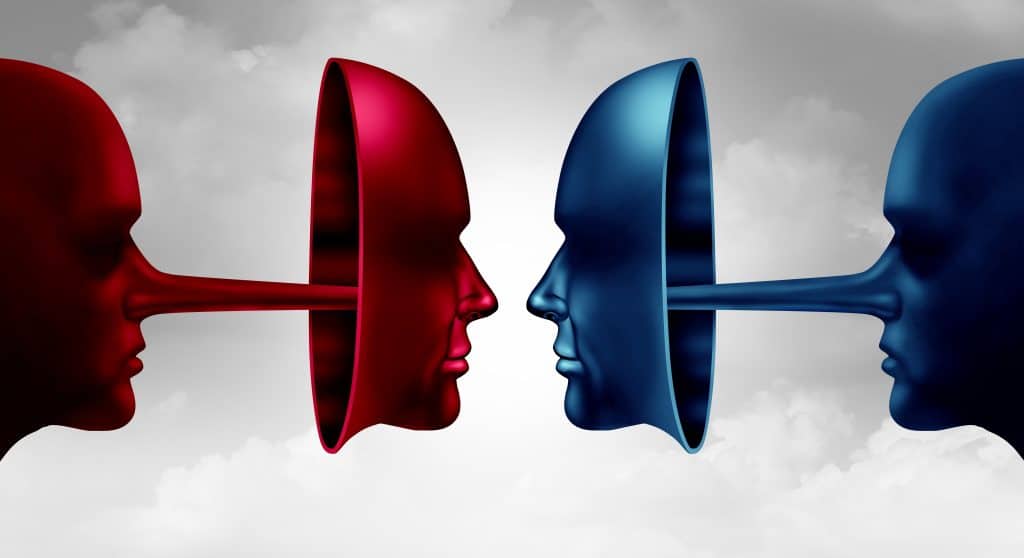
While this can, politically, be an effective way to criticize Trump, it doesn’t just affect Trump. When one side criticizes one of the most famous people in the country with these terms, it associates every “non-normal” person with Trump’s cruelty – and makes Democrats who try to be anti-ableist look uninformed at best, and hypocritical at worst.
The same thing happened with R.F.K. Jr.’s hearings. Before the hearings, Shelley Moore Capito, a West Virginia Republican who helps oversee the Health Department, told POLITICO, “I think he’s got a lot of stamina.” However, during one of the first hearings, a popular liberal media account posted this:
Does this shaking matter, though? Legally speaking, employers cannot fire someone who can perform their job with reasonable accommodations. Yet, although shaking is not even indicative of a disability, it’s being presented as a reason he cannot serve as Health Secretary.
Another post by popular anti-Trump journalist Aaron Rupar calls R.F.K. Jr.’s labored, strangled breathing “terrifying,” while replies compare him to fictional disabled villains like Darth Vader and Bane. These people probably don’t know that his voice is that way because he has muscle tension dysphonia. (This is a condition where excessive muscles around the voice box result in hoarse, strangled sounds.) Regardless, it’s the same kind of regressive nitpicking and demonizing of deviations. And illustrates that, when so much fictional media portrays its villains as disabled to make them terrifying, it can have real-life impacts on people who subconsciously interpret disability.
Additionally, Bulwark, a liberal news outlet with almost a million subscribers, discussed how the CDC is “in line to get a normie director” referring to a recent nominee who supports vaccines. (Their “About” page also characterizes America’s rising fascism as “weird.” It states, “At the heart of all this weirdness is a reconsideration of liberalism and democracy.”)
However, when people overfocus on Kennedy’s eccentricities as reasons for removal, they shift attention away from his policy. When they joke about him being crazy, this makes it harder to call him what he is: a dangerous extremist.
In a two-party system, disabled Americans deserve better than to be openly demonized by one party, and, with the other, be helped but not always heard, and be weaponized. No matter what happens to MAHA, ableism is one bipartisan issue that must change.












Sophia Forster
April 30, 2026 at 10:39 pm
Correction: The featured image was made by Jillian Marshall on the Trill graphic design team.