


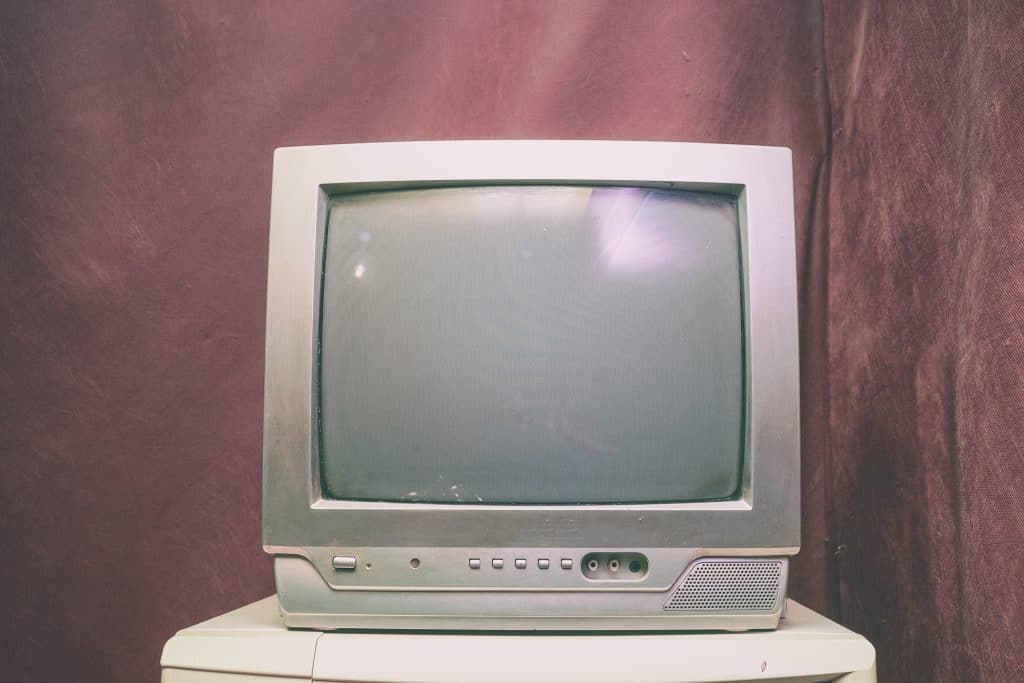
How many people use DVD players in this day and age? Most Gen Zers’ memories of such an ancient artifact lie tucked away in their formative years, circa the early 2000s. A nostalgic time, when people slipped movie discs into box TVs, the kind that came to life with a white fuzzy flash and a whir of static.
Nowadays, people watch movies on demand with a click of a button. If a movie can’t be streamed, people pirate it.
Though it may seem like a distant relic of the past, physical media is still a valuable thing. And it’s not about the money. It’s valuable because it allows people to own movies. Above all else, physical media preserves art: art that has shaped society and acts as a reflection of humankind’s creativity.
A movie disc doesn’t have constant mid-movie ads nor buffering with bad wifi. That Blu-ray can’t be taken away from its buyer if or when the rights holder changes. A film can’t get scenes permanently cut because the new owner, focused on their reputation alone, thinks that one moment aged poorly. A classic 35mm film isn’t compressed to its ugliest, lowest-bitrate quality on a disc like it is in the digital stream. And so on.
If it’s not clear by now: owning tangible media is freedom. It’s an escape from the clutches of streaming’s smothering embrace. It allows movie watchers to see a film in its unedited, irrevocable, and purest form. It prevents the greedy from turning films into a constant commodity rather than the work of art they are.
The history behind home video
Vladimir Sukhachev/Shutterstock
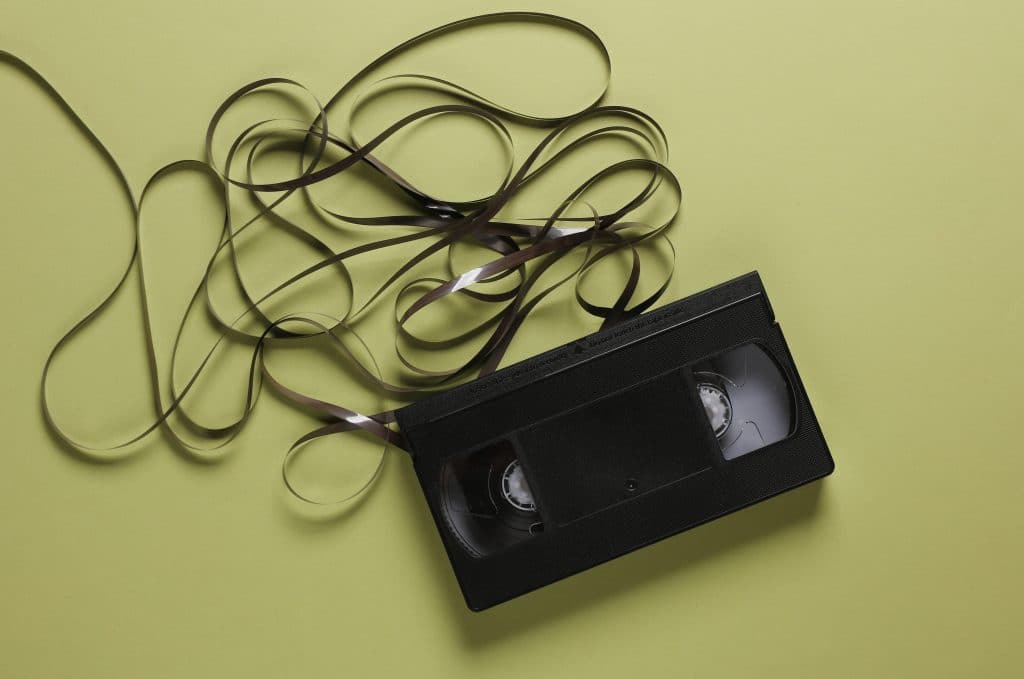
The mid ‘80s marked the very first time people could (affordably) watch movies in the comfort of their own home. Video Home System, widely referred to as VHS, was the first form of movies transposed to a portable medium. VHS is completely analog, the only home video system that is. Similar to how a cassette encodes audio, VHS encodes video and audio on a much larger tape. VHS degrades crazy fast; today, the few tapes that are still around are falling apart because they only last 10 to 20 years.
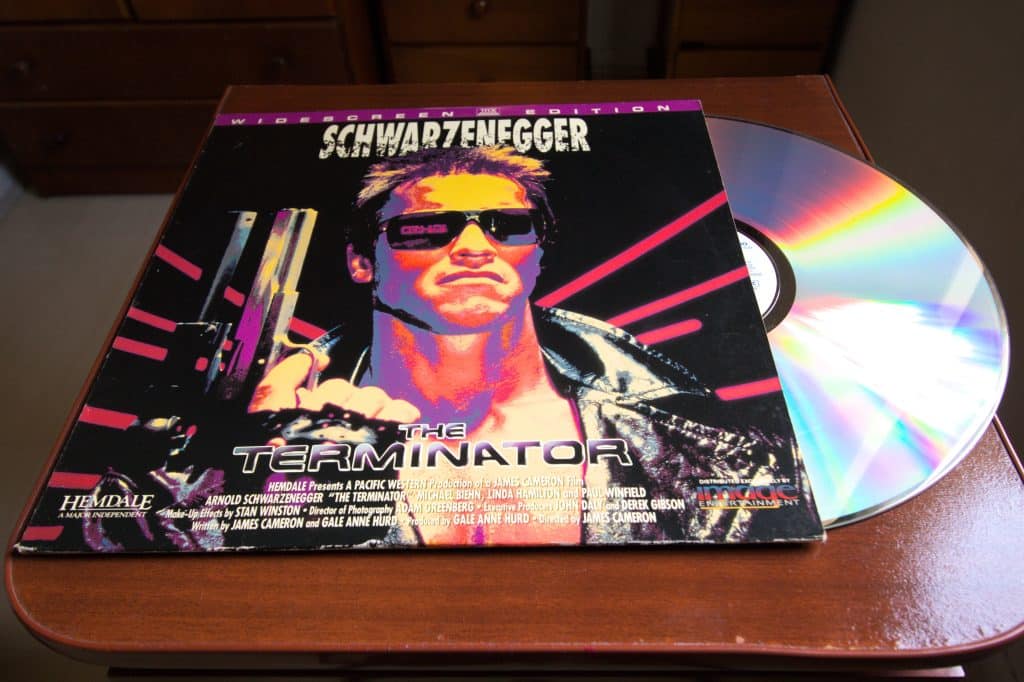
After VHS came LaserDisc, which was the first disc-shaped form of home video. The name technically refers to the trademarked creation made by companies Philips and Pioneer, but it became a generic term for the type of disc. What made this new system entirely unique was the combination of both digital and analog technology, something that no other home video has done or does today. The product looks quite different from what consumers are used to now: the discs are the size of vinyl records, and the reflection on their shiny surface is a little more saturated.
Cromatoki/Shutterstock
DVDs (shorthand for digital versatile discs) arrived circa the late ‘90s. They work similarly to LaserDiscs but are completely digital. Compared to VHS and LaserDiscs, DVDs made movies look incredible – especially on the big, boxy TVs of the time. Only a decade later, Blu-rays were created, and in 2016, 4K was invented. Those film scans are as crisp and visually tasty as home video can get.

The technical side of discs

Shanistov.Net/Creative Commons CC0 1.0 Universal Public Domain Dedication.
The back of a movie disc is shiny and reflective; that reflection looks prismatic. Anyone who’s seen a movie disc knows that. What’s not common knowledge is the science behind it. That rainbow reflection is composed of itty-bitty bits of data, which start in the very center of the disc and spiral outward. This data lies in what is known as pits and lands – microscopic grooves and bumps covering the surface.
Though pits and lands don’t rise and fall in a way that’s visible to the naked eye, they’re observable in a different way. When holding and rotating a disc, the prismatic reflection looks slightly different depending on where the light hits it – whether the light is shining on a pit or hits the land. When a disc is inserted into a player, a laser reads these grooves and translates them to binary data (pits turn to 1s, and lands become 0s).
Though every type of movie disc has pits and lands, different home video formats vary in quality. This is caused by three things: pixel count (or resolution, if we’re talking strictly about digital formats), laser technology, and restoration.
Pixel count

spacedrone8085/Shutterstock
VHS is a fuzzy mess. That’s because it only has a pixel count of 333 x 480. DVD’s pixel count is (480p); Blu-ray is (1080p), and 4K is a whopping (2160p). In short, the farther back one goes into the history of home video, the smaller the dimensions and the lower the pixel count of the system are.
Now, if this sounds confusing, think of a YouTube video and its adjustable quality. Some videos are in 480p; they look blurry and distorted. Other videos can go up to 1080p; those videos are crisp and clear.
35 mm film (the most commonly used film) has a resolution that isn’t determined by pixel count. Because it’s analog, the information it holds isn’t converted into data, as opposed to digital media, where the information (color, lighting, etc) is turned into code. As a result, a movie made on film is in far better quality and clarity than anything that could be made with a digital camera.
Unfortunately, as film is an analog medium, it’s subject to degradation and must be constantly cleaned. Dust, temperature, lighting, etc., greatly affect the quality of a film reel and its copied scans.
Laser technology

nikkytok/Shutterstock
In order to get a movie onto the disc, the film needs to be scanned with a laser. Studios use a process called Digital Intermediate (DI) during the very last steps of a movie’s post-production process. DI is used to decode the movie for different formats, turning the film’s information into binary code and embedding data in it for different resolutions.
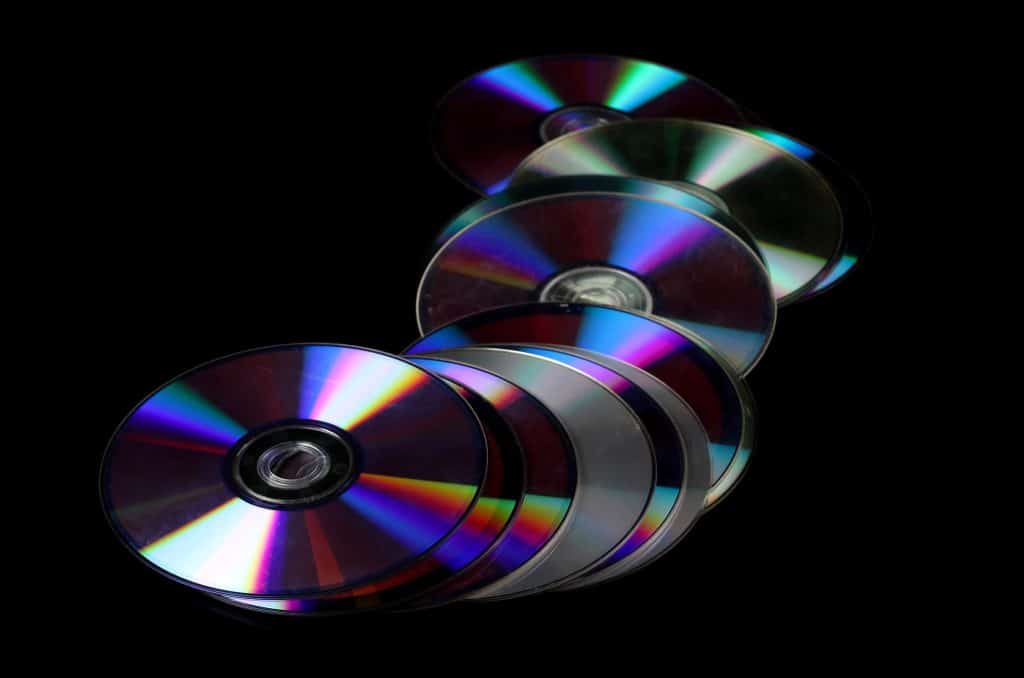
Once the film is in the appropriate format, a laser is used to get all that information – all that binary data – onto an actual physical disc. Though DVDs are outdated today, back when they were big, their binary was transferred onto a disc with a red laser. Blu-rays use a higher quality blue laser, which captures more data, and in turn, has better resolution. 4K has the highest quality laser, and captures more than double the information that Blu-ray lasers do.
xpixel/Shutterstock
These lasers create those aforementioned pits and lands. Then, when that disc is inserted into a player, the player translates those pits and lands back into binary, making the whole process come full circle.
How does physical media differ from digital like streaming?
Mijansk786/Shutterstock
A movie released on streaming still goes through the DI process, but instead of re-coding the movie for disc transfer, the studio creates streaming encodes. These are, essentially, versions of the movie at different bitrates (the rate at which X amount of data is processed in a second).
Those files are uploaded to the streaming platform. And that’s it. It’s a much less fascinating, much less complex process. When the play button for that movie is pressed, the server sends a compressed video via the internet.
Compression is not good for movies. It smushes everything together and makes the data easier to handle – similar to a zipped file versus an unzipped file – but at the cost of lower quality. Streaming bitrates are incredibly low compared to movies that get transferred to a disc. Hence why they’re awful in comparison.
Restoration
Resolution and laser tech show quality changes over home video’s entire history. Restoration, on the other hand, is used specifically for re-releases of older movies — classics that came out decades ago. It’s the most pertinent part of this discourse.
Movie restorations happen when a studio or company physically repairs damaged film, usually for a fresh, new, higher-quality release. In the best-case scenario, the restorers have access to the original film reel. Sometimes, though, given no other choice, a lesser scan is used. As previously mentioned, film degradation is very common. Storing film properly takes immense amounts of time, money, and expertise.
Restoration is a painstaking process that involves dozens of film industry experts going through a movie, frame by frame. For reference, one single second of a movie has 24 frames. These experts clean up any debris, dust, or visible wear-and-tear. All of this takes a lot of planning and preparation.
First, there’s the cost of restoration, which is absurdly expensive. It takes, at minimum, around $50,000 to restore a movie. That’s a barebones minimum – say, for an old black and white movie. Every factor about the film reel’s quality is going to go into planning the budget. For example, for a movie in color in bad condition with plans to improve the degraded sound, that cost is going to go up.
The studio or company planning the restoration then has to decide what the scope of the project is. Maybe the goal is for a moderate restoration where the movie is just getting a one-time theatrical release. The price will be much more exorbitant if it’s being remastered for Blu-ray or 4K; even more so if the company is planning a release for streaming distribution.
Investors help back this process. These investors might be private; they could also be larger foundations, streaming companies, or the studio itself if it’s big enough.
Erwin Verbruggen / Creative Commons Attribution-Share Alike 2.0 Generic license.
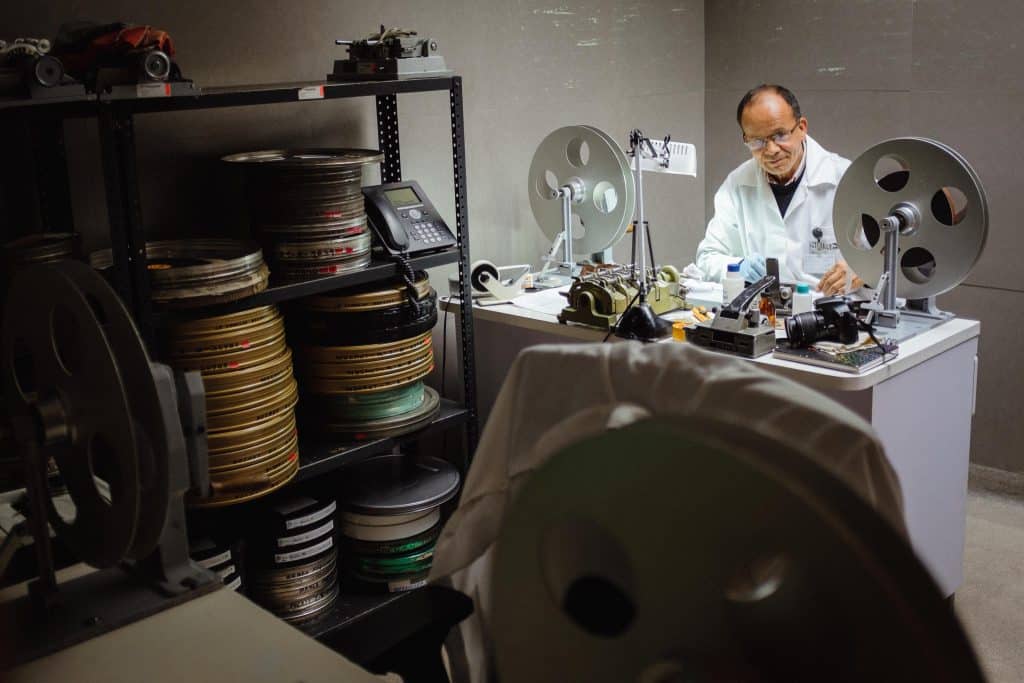
After all those logistics are figured out, the restoration process begins. First, the original movie negative is copied. No changes are made to the original, and the restoration is done on the copy. If a movie is degraded enough, experts have to bake the film strips together – literally melting them – in order to prevent them from crumbling into dust during the restoration process.
Next, overall damage to the film is assessed. Any scratches, stains or general imperfections within each frame are removed to the best of the restoration technician’s ability. After the technician salvages what they can, a color correction specialist comes in. For some context, there are different types of film – cellulose nitrate, cellulose acetate, polyester film, etc. – and all of them suffer color degradation.
Hence, a color correction specialist is hired to recolor and color grade the film as closely to the original as they can. This can be tricky, especially if the original reel’s colors are especially faded or garbled.
Audio improvements follow this, oftentimes with the help of digital tools. Noise reduction adjustments are made, sounds are equalized, and in certain cases – if the company has access to the original reel – the audio is converted into surround sound. Lastly, digital tools are used over the movie to make any last adjustments. After this, the arduous process comes to a close.
It wasn’t until the 1990s that film preservation was taught in an academic setting. Before that – and sometimes still today – it was an even smaller niche that people would stumble into, usually due to semi-related background experience in archival or research work – or just because of pure passion.
Equally as important, and often overlooked, is the archival process which follows restoration, and is included in the general preservation of a film. If the studio or company cares genuinely, the original film master and the copy are moved to a well-kept storage facility. The said storage facility is maintained at specific temperatures with particular lighting. It’s organized, and everything is labeled; no tape or disc is thrown about haphazardly in a bin.
This would be ideal. Yet, over the course of movie history, that hasn’t always been the case, nor is every film given the proper restoration and preservation process that it deserves today…but that discussion comes later.
Releasing the Disc, and Big Names Involved

Major studios always release movies that they have produced…up until recently, at least (more on this will come). This meant that, for a long time, Blu-rays for big box office releases were easy to find. People could go to Target or Walmart and find rows upon rows of fresh, just-released movie discs for purchase.
Now, if a movie is independent and becomes established or gains a cult following, boutique companies can release a disc. Boutique companies are smaller and aren’t tied to a major studio. They get their funding primarily through four things: investors, licensing movie rights from big studios, creating their own streaming platforms, and selling physical media.
There are a few indie brands that have become known for their expertise in movie scanning. Criterion is the largest of them.
Criterion is meticulous in its restoration, and in turn, its releases are quite pricey. Unlike major studios — or many other boutique companies — Criterion’s releases are oftentimes director-approved, meaning the film’s director sat in a studio with their team during the editing and restoration process. Criterion’s releases are also beloved for having a plethora of bonus features like cast interviews or behind-the-scenes excerpts.
There are plenty of other boutique groups that do great work too: Arrow, Kino Lorber, Eureka!, Shout Factory, Blue Underground, Indicator, 88 Films, to name just a few.
The reason there are so many companies isn’t just so they can rake in the profits on a copycat product. What makes each unique is that their restoration process can produce different results. In turn, one scan can have more saturated colors while another might have less grain, for example.
It becomes a fun little game. Buying a Blu-ray from this company might look better (or worse) than from that other company. For movie fanatics, this can be a strange sort of hobby. Caps-a-holic.com is a great site for looking at various scans.
Boutique companies are not only genuine and meticulous in their craft; they preserve physical media like no other. Major streaming platforms (most of which are owned by or own major studios) shy away from boutique brands’ efforts, though it’s not completely clear why.
Why It Matters
Jeppe Gustafsson/Shutterstock
First of all, it’s important to know the history of things like this. Without carrying on this knowledge, it dies. That’s why all of those seemingly trivial details are actually so important.
In 2008, there was a fire at Universal Studios. It started on a backlot and spread to Universal’s archival space. The fire destroyed somewhere between 118,000 and 175,000 movie master tapes, including both movies and music recordings. This included movies that were nearly a century old and album outtakes.
Universal assured the public that they had made copies of everything lost. Unfortunately, over the course of many years, movie aficionados have figured out through rereleases and remasters done from poorer quality sources that far more material was lost than previously reported. Hundreds of thousands of works of art in their absolute purest form were destroyed that day.
This wasn’t the first time a disaster had struck a preservation vault. It was a wake-up call. People started to realize just how fragile preserved art was – and just how important it is too.
Movies should be treated like the artwork that sits in world-famous museums. These artifacts are kept in pristine conditions with entire centers dedicated to touch-ups and long-term preservation. Museums ensure pieces are rotated in and out of the gallery; that direct light doesn’t hit them; and that people do not, under any circumstances, touch the artwork.
Movies should be treated the same, but they often aren’t. The 2008 Universal Studios fire was a wake-up call, not just to the future of preservation, but to preservation of the past. Too many studios have lost master tapes, from either carelessness or unplanned disaster, over the course of many decades.

Picture of 2008 Universal Studio fire.
pinguino k/Wiki Commons Creative Commons Attribution 2.0 Generic license.
For too long, master tapes have sat in messy, disorganized rooms struck with light, humidity, or heat. Sometimes movie reels aren’t even in their proper casing. This lack of care is ruining pieces of history.
Now, let’s go back to that point about major studios not releasing new movie Blu-rays anymore. Today, a lot of major releases are “streaming only.” This means that big-name studios aren’t releasing them for physical purchase. It might have to do with the last decade’s decline of consumers buying physical media, making Blu-rays and the like seem cost-ineffective. Or, it could be because these studios simply don’t want to lose out on streaming business. Physical media is a one-time purchase, not a monthly subscription.
Even worse than not releasing movies for home video are the studios that release poor-quality scans. Every now and again, the public will criticize a major company for releasing an alleged 4K scan of an older movie that’s actually not 4K. Instead, it’s a copy of an older scan that’s “upscaled” to 4K with AI. In straightforward terms: sometimes the problem is not a lack of a release; sometimes it’s a disingenuous, money-grubbing release.
Even though digital media doesn’t degrade (rapidly, at least), streaming will never be able to replace the physical preservation of a film. If restoration disappears, all that will remain are compressed, ugly, blurry copies of what once was.
To make matters worse, boutique companies don’t always have the rights to release movies if studios don’t give them the rights. Movies are getting lost. They’re slipping between the fingers of consumers; becoming mythical treasures, stuffed somewhere in the Cloud’s chaotic closet of information.

AB Images/Shutterstock
With people barely going to the movie theaters anymore – mostly due to bad inflation – filmmakers are making less money than ever before. Indie filmmakers are seriously worried that their passion-fueled career path is becoming a hobby for the job-stable upper crust. In a world without physical media, cult followings wouldn’t have spurred, and larger society wouldn’t have had the pleasure of seeing the works of Wes Anderson, Richard Linklater, Kevin Smith, The Coen Brothers, etc. When physical media dies, movie culture dies, and so do its artifacts.
For consumers, the issue is just as bad. Without physical media, people can’t own the movies they know and love. There’s something beautiful – something emotional even – about being able to hold an item of personal value. It’s empowering to know that this beloved thing cannot escape a physical grip; it cannot be taken away by some big corporation, sans assault and battery. It’s about more than just movies. Without physicality, media is turning into just another thing the rich and powerful can take away from ordinary people.
It is becoming clear that the U.S is entering an era where the ability to own things – just about anything – is fading away. Everything is rented, leased, or Klarna’d from the powers that be. And as a result, the things that matter most – the things that show humanity’s goodness despite all the evil – are forever disappearing.
The Revival
Proshkin Aleksandr/Shutterstock
Generation Z is bringing back movie discs, so much so that it’s become breaking news. A possible reason for the newfound love of physical media might have come from Gen Z’s upbringing, which mixed both old analog tech and the new digital stuff.
Current teens and 20-somethings grew up sandwiched between tech-inventing millennials and chronically online Gen Alpha. As young kids, they took trips to Blockbuster and used chunky computers equipped with CD players. Big, modern tech was just beginning to boom, and it wasn’t fully integrated into people’s lives quite yet.
Unlike millennials, who spurred the movement, and unlike Gen Alpha, who had iPhones in their hands upon exiting the womb, Gen Z knows what it’s like to live without flat screens or streaming, even if that time seems far away or like a forgotten, nostalgic dream.
They’re the generation that grew up with hopes of owning a house. A landline still hung on the wall of the family home. When they were teenagers with fresh new licenses, gas was only $1.80.
It wasn’t an absolutely idyllic time, but compared to now it seems perfectly blissful. Being born amidst the transition to the modern, tech-charged world left Gen Z with an idea of what it used to look like before all of this debilitating, end-stage capitalism arrived and started crippling society. When people still cared about what came before and preserving it.
Gen Z grew up being told that it was their job to change the world, to make it better. In a way, with this surge of love for physical media, the generation is doing just that. Even though this topic is bleak and ever darkening, that tidbit brings light and hope to the mission of preserving movies, and therefore, the wider culture.