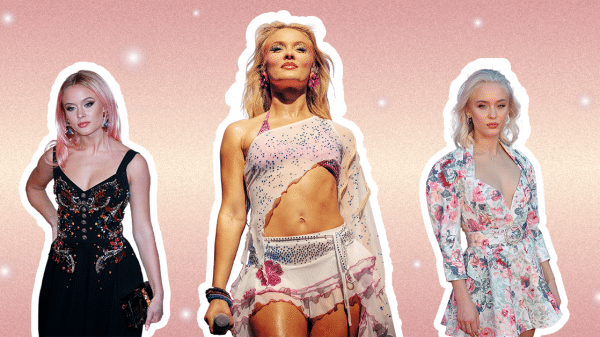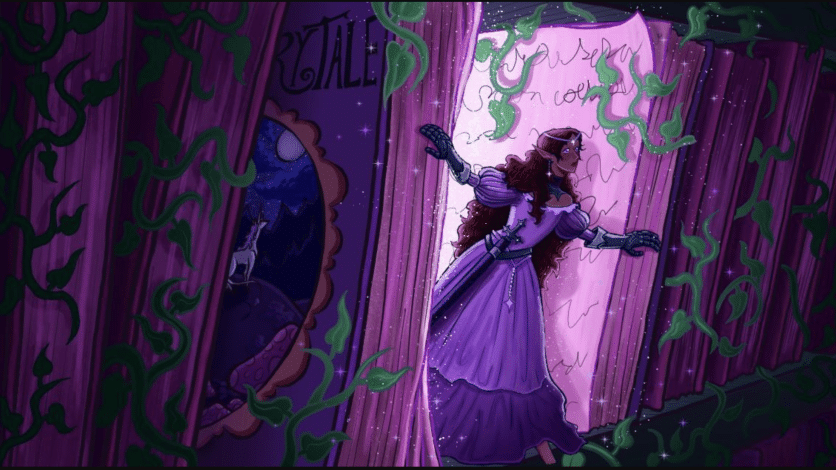
If you’ve been paying attention at all to online fashion trends, you might have noticed the rise of various “cores.” Many of them include inspiration from fantasy aesthetics such as princesscore, knightcore, mermaidcore, and fairycore. Although TikTok is novel, the idea of fantastical fashions is far older, with the roots lying amongst folktales and children’s games.
In 1959, Iona and Peter Opie coined the term “childlore” to describe the culture and stories that children develop and pass between themselves. Childlore often takes the form of rhymes, chants, games, or stories. Folklore and fairytales are related to childcore but fit better into the category of children’s literature.
Childlore often consists of the same themes as many fairytales and folktales. The two genres that play with ideas of freedom versus repression, fear of the unknown, and magic. Childhood and nostalgia are very influential in the fantasy aesthetics that are popular on social media.
On TikTok, creators of content that embody niche aesthetic “cores” often cite media from their childhood or games as the inspiration for their adult tastes in fashion. Examples include mermaidcore; the story of The Little Mermaid is a fairy tale by Hans Christian Andersen, but the act of playing mermaids in the bath or at the beach is an element of childlore, giving rise to the playful aspects of mermaidcore.
Medieval revival and a romanticization of the past
In the age of industrialization, many artists found themselves longing for a simpler time, much like how fashion influencers on TikTok think of their childhood’s as simpler times. The 19th-century artists found the Middle Ages to be the era that they romanticized for its simplicity.
The phenomenon is now described as the Victorian medieval revival. The Victorian period of fashion history (1837 to 1901 in England) overlaps with the Gilded Age and the Progressive Era in American history. The era is defined by industrialization, especially when it comes to the manufacturing of clothing. Once craftsmanship fell away to prioritize profit and speed, artisans were inspired to return to a time before the advancements of the sewing machine or the cotton gin.
Examples include this dress from the Met, an example of the influence of the Pre-Raphaelites. This movement called for a return to the simplicity and quiet of the period before the Renaissance.
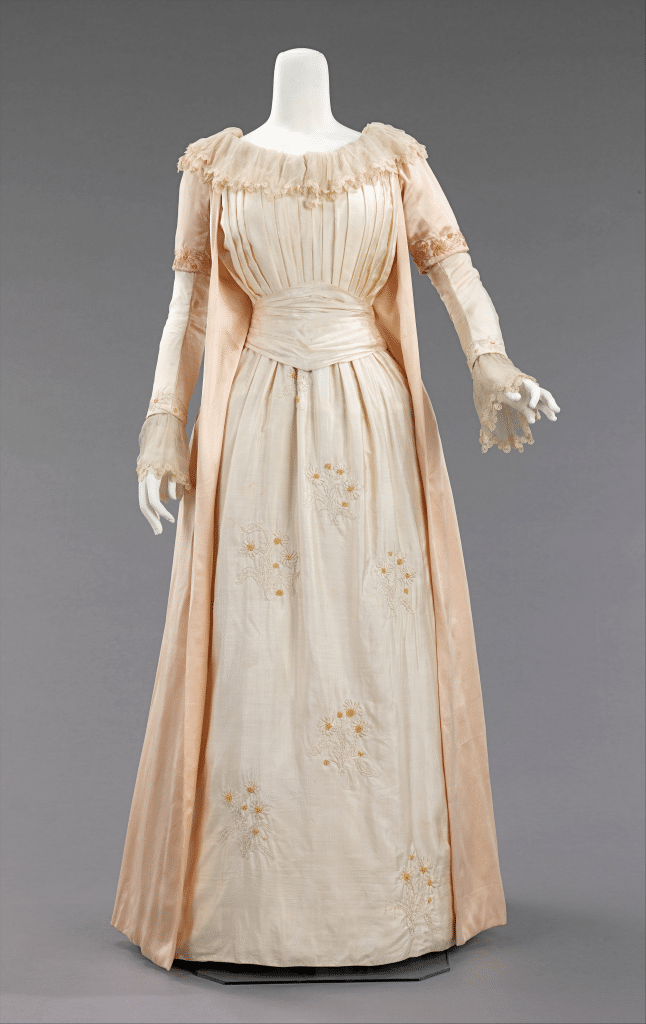
This tea-gown, a sort of Victorian lounge wear usually reserved for a hostess who may be hosting her friends for tea, is reminiscent of the soft colors of the medieval time period. And by Victorian fashion standards, it is quite a simplistic garment, with no boastful colors or other adornment. The gathers that converge at the waist of the gown are similar to those of a Greco-Roman tunic. An era where garment construction was far less advanced.

For the Pre-Raphaelites, the Middle Ages and the centuries prior served as the perfect setting to idealize and romanticize. The handcrafted goods, slow production, and a simpler way of living untied from modernity were regarded as quaint or charming.
Although it may seem like your idea of childhood stories is a far cry from the medieval revival, it is not so far of a stretch. Fantasy often takes place in a fantastical medieval world, a tradition that is exemplified by Tolkien’s Lord of the Rings series. Naturally, the characters in these stories also adopt the fashions of the medieval period.
For the modern adolescent, examples of medieval fantasy include older Barbie movies such as “Barbie and the Diamond Castle” and “Barbie of Swan Lake.” Both movies take place in a vaguely medieval setting. The Harry Potter series and the Chronicles of Narnia both use dark, gothic castles, witches, and magical creatures as part of their storytelling. Nostalgia for those childhood stories which invoke the medieval translate into the whimsical modern fashion cores of the 2020’s.
The rise of fantastical ‘cores’ post-pandemic
Platforms like TikTok, Pinterest, and Tumblr spread these aesthetics through image spreads and DIYs. Countless aesthetics draw from the medieval, including princesscore, knightcore, fairycore, and goblincore.
Princesscore a feminine fantasy
Starting with princesscore, this aesthetic includes ornate gold detailing, soft pinks, and plenty of imagery invoking royalty and luxury. One of the most popular DIY accessories in this core is to create hennins, cone-shaped headdresses worn by medieval royalty.
Princesscore is not confined to a particular era; the princess transcends time itself. You can pair a hennin with a regency silhouette as long as it’s pastel, lacy, and elegant; anything goes!
Knights in shining armor
Knights are another fixture of feudal society, along with princesses. So it is only natural for them to have their own aesthetic.
Knightcore relies heavily on both plated armor and chainmail, with silver being the dominant color. Swords and daggers are also common accessories for the knight. It is a good alternative for those who find princesscore to be too feminine for their tastes. The knightcore aesthetic often takes on an androgynous quality. Some choose a more traditional suit of armor, while others will pair a sword with the princess dress or something in between.
Faries and goblins galore
Fairycore and goblincore relate most to folklore and childlore. By using whimsical details, natural prints, and plenty of green, fairycore portrays the fairy as a mythical creature. Goblincore does the same but is typically darker and less overtly glittery than fairycore.
These two aesthetics draw more from the idea of medieval fantasy rather than the folklore of fairies and goblins themselves. In the Middle Ages and prior, eltic myths described fairies as mischievous or malevolent creatures who would trick humans. Later on, the trope of a fairy godmother or a good fairy was invented in the 1800s. Writers who put their own spins on fairytales, such as Charles Perrault, who penned a less gruesome version of Cinderella.
These friendlier versions of fairies inspire the modern fairycore as a pastel and shimmery aesthetic with woodland elements. Meanwhile, the darker nature of the fairies is more so exemplified through goblincore. The modern fairycore also overlaps with the 2020s revival of Y2K.
Y2K connects to the same sense of nostalgia that the Victorians felt for simpler times, like the 2000s and late 90s do now. Y2K and fairycore share elements of beaded embellishments, a dropped waist, lace details, layering, and plenty of glitter.
Mermaids and sirens
Much like fairycore, mermaidcore takes the whimsical and playful aspects of mermaid mythology and runs with them. The aesthetic is influenced by childhood mermaid shows like H2O: Just Add Water, Disney’s The Little Mermaid, and Barbie mermaid movies.
The mythology around mermaids, or other sea-maidens who lure men to a watery death, is much darker, though. In the Odyssey, the sirens are half-bird, half-woman hybrids who give you visions of what you most desire if you listen to their song. The sirens lure sailors into crashing their ships against the rocks of their island. Sirencore reflects this darkness with a deeper color palette, smoky eyeliner, and an air of seduction.
I encourage you, dear reader, to revisit a bedtime story or a long-forgotten favorite show to inspire your next outfit. Whether you choose to be a mermaid, a princess, or a knight matters not. Simply let yourself play with clothing.