It’s official, folks: Auntie Dyke is back and with a whole new format! Determined to create a crash-course for some of the most “simple-passing” questions, AD is here to go over some short and sweet answers that aren’t as easy to solve as they may sound. With a fixation on the tricky basics, Auntie Dyke is here to go over it all!
To my Dear Queers,
Welcome back! I’ve missed you all, and I’m especially excited for this particular round of questions!
In today’s day and age, information about queer culture and expectations can be so normalized at times that I fear we may leave those well-meaning, yet undereducated, individuals behind!
Oftentimes, people want to be supportive allies, and end up with their foot in their mouth by asking questions that are entirely unwelcome.
As you all (hopefully) know by now: That’s what I’m here for! I’m here to be a safe space to ask questions that may not always be appropriate to pose in other circumstances.
But even here, we tend to dive into more…. complex topics. We talk anxieties about sapphic sex, about the key details between labels, and queer wedding blues.
Sometimes, simple can be better. Especially in an environment like ours.

So, consider this your crash course for some basic (but intimidating!) pieces of information.
Let’s get into it!
(Want to talk to Auntie Dyke? Fill out an anonymous form here… She’ll get back to you ASAP!)
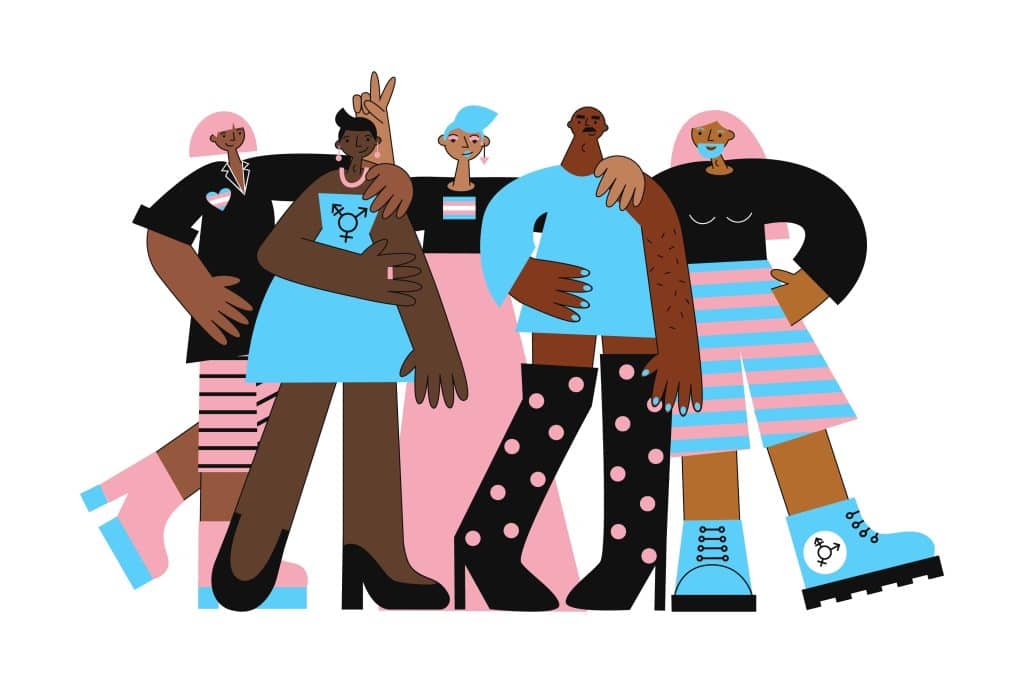
Identifying trans peers
Dear Auntie Dyke,
Is it OK to refer to a trans person by saying, “They were born female/male, but now they’re a trans man/woman”? What’s the most respectful way to phrase that?
My short and sweet answer? Absolutely not.
It’s vital to remember that phrases like these negate the genders of many trans individuals. Phrases like these are akin to saying, “Hey! This is John! He’s a man, but not a normal man…”
Introductions like this one instantaneously others the individual being introduced. On top of that, many trans people work hard to “pass” in their day-to-day life (ie: be unidentifiable as a non-cis person) for safety, social, and/or personal reasons, and an introduction like this can out someone before they’re ready to have the conversation. Best way to phrase it? Don’t say it at all.
That said, for identification purposes, it is worth saying that many trans people may use abbreviations such as MTF (male-to-female) or FTM (female-to-male) to identify themselves as transgender. But even this can be controversial to some, and should generally be left to the trans individual to claim (or not claim) of their own accord.
Queer labels in “straight” relationships
Dear Auntie,
If you’re dating or married to someone of the same sex, is it offensive if someone refers to you as gay or lesbian? If someone identifies as bi, do they prefer to keep that label regardless of who they’re with, or does it not matter?
Referring to an openly gay person as gay (queer as queer, lesbian as lesbian) is never offensive! Gay, queer, lesbian, etc., are not insults, but rather descriptors.
It’s more important to be conscious of the context in which you’re using the terms… It’s about why you’re noting someone’s sexuality, rather than being offensive by properly identifying their labels.
Regarding labels within relationships, the rule of thumb is that the relationship and an individual’s sexuality do not have to be the same! A perfect example of this is my fiancée and my relationship. I am a lesbian, and she is bisexual. Despite us being together, she remains bisexual, but we are in a lesbian relationship.
Inadvertently insulting (We don’t blame you… But it hurts!)
Dear A. Dyke,
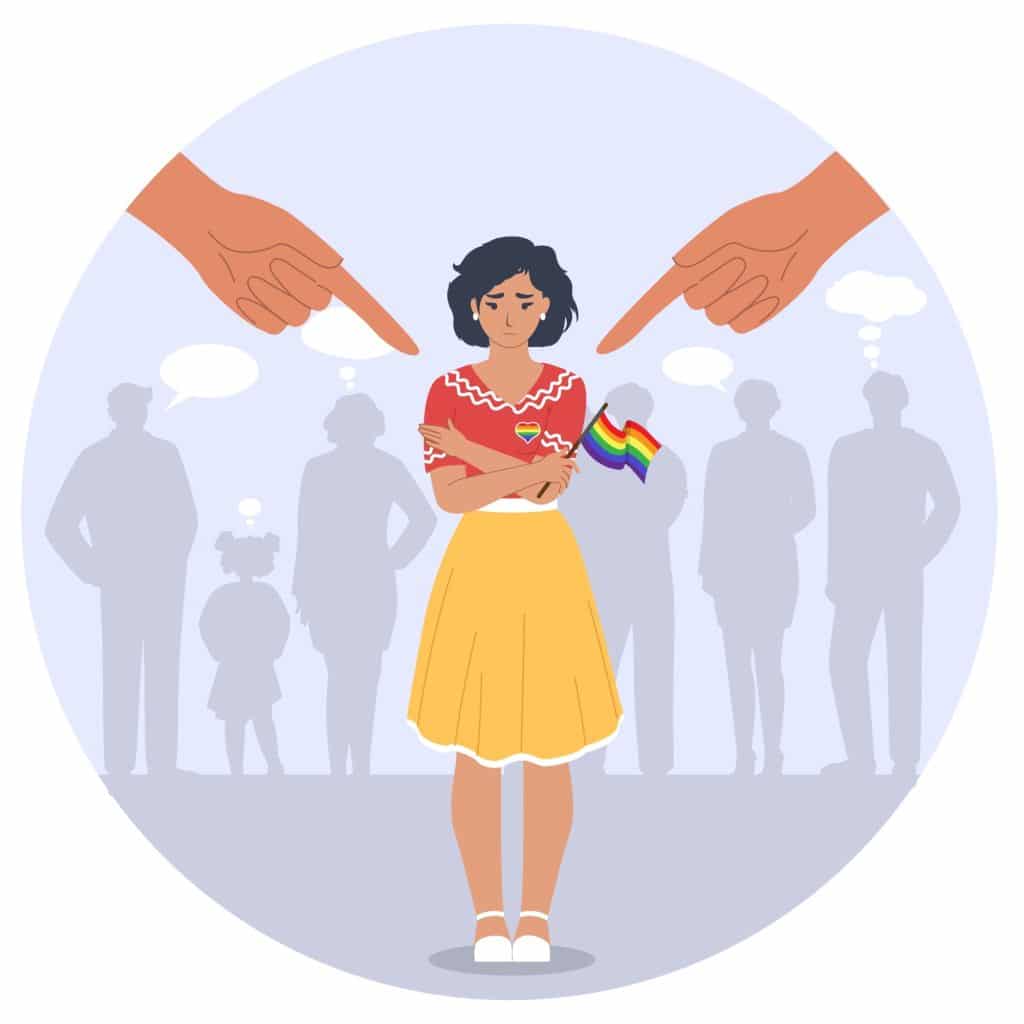
What are some of the biggest unintentional insults you’ve heard from straight people about your sexuality or relationships? Not the hateful stuff—just the ignorant comments people don’t realize are hurtful.
There are a lot of potential answers here, from a number of varying perspectives. My personal (significant) qualms are when people are surprised by my being a lesbian, and mark such surprise by saying, “You’re so pretty! I would have never guessed!” or “Oh! You don’t look gay, that’s crazy!” While this may sound innocent to some, it reads as, “Oh! I thought all lesbians were ugly!” This never feels good.
In regard to this question, I asked my wider community about their thoughts, and some responses I received included:
“Isn’t that heterosexual?” [regarding dating men as a transmasc (ftm-ish) person]
“Well, you couldn’t defend me if I were in danger!” [From a woman to a gay man]
“Well, you aren’t bisexual anymore!” [said to a bisexual person in a straight-presenting relationship]
“I have a wife/girlfriend, too!” [said by a man to a queer woman]
“You two are my favorite lavender couple.” [said to two bisexual people in a relationship]
“You look like you use pronouns.” [said to any visibly queer individual]
“Oh! So you’re a carpet muncher like me!” [said to queer women by men who like women]
“I hope you find a nice relationship, you would make a woman so happy!” [said to a bisexual man]
“But you’re not like… a real boy…” [said to a gay man]
“Your hair was so pretty before you decided to be a full lesbian!”
“I wish I were a lesbian, it would be so much easier!” [said by any non-man to a lesbian]
“I love this dyke energy you have!” [coming from someone non-lesbian]
How to: Make queer besties
Dear Auntie Dyke,
I don’t have a ton of queer friends, and the ones I do have, we’re not super close yet. What are some traits or conversation topics that help build genuine friendships between straight and queer people? What’s a good mix of things to relate on and things to learn?
The first mistake here is assuming that there are basic things that bridge all queer people. That is not the case. The best way to foster relationships with queer people in your life is by staying informed and advocating for basic-queer rights regardless of who they’re with.
The most significant aspect of this question is your expectation that queer people have common interests that bridge all communities. This creates a blanket expectation of queer people that isn’t quite fair or accurate. The truth is that all queer people, like every individual person, are unique in their own way and have different interests, ideals, and dreams from each other.
The best way to approach queer people in your life is to be:
A) Familiar with politics in your life, while also having empathy for those queer individuals who are impacted by such policies
B) Thinking of them as any normal individual may.
I could certainly list some “typical” queer topics: Drag race, show tunes, carabiners, The L-Word, pride parades, gay clubs, poppers, leather, fashion, etc. But ultimately, all people are different, and each of us has our own interests! The best way to think about us is as follows:
We are a community comprised of individuals, but each of us is unique and enjoys different things. Remember this, and let it empower you!
Thank you, straights… But…
Dear Ms. Dyke,
What’s something straight people do when they’re trying to be supportive that actually feels awkward?
Straight people love to introduce their queer friends by announcing their sexuality and/or gender…
“This is my nonbinary lesbian friend…”
“This is my gay friend I told you about!”
“Meet my friend, they’re lesbian too, I think you might be interested in one another…”
All queer people are different. Please don’t expect us to be friends/partners/acquaintances just because we’re both queer. I have met plenty of queer individuals that I don’t like, for reasons entirely unrelated to their sexuality. We may not have the same interests, perspectives, or callings, despite the fact that we’re all queer. You may think you’re bringing us together, but in reality, you’re simply highlighting how we’re different from others and how you expect our differences to make us the same.
For the corporate queers
Dear Auntie,
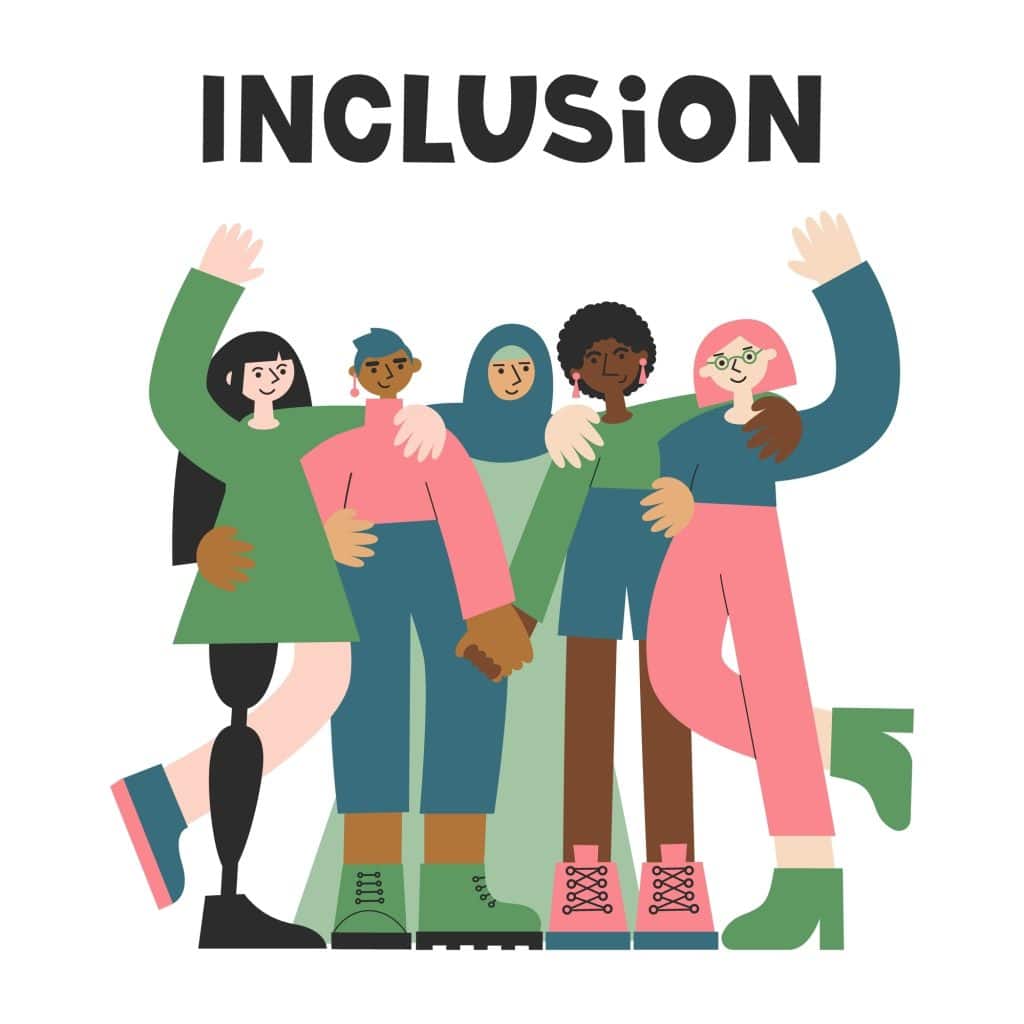
Is there something you wish workplaces or friends would do differently to make things feel more inclusive?
I know this may seem simple, but… Displaying your pronouns in your workplace is more valuable than you may think. If everyone makes a point to display their pronouns, then it’s normalized. Oftentimes, when someone makes note of their pronouns publicly, they’re assumed to be queer… Which is why cisgender, heterosexual people announcing their pronouns can be so valuable! If we all wear our pronouns on our sleeves (literally and metaphorically), it will remove the stigma from queer people and normalize the endeavor entirely!
Exhausting explanations
Hi AD,
What’s something you wish you didn’t have to explain anymore?
Lesbian sex.
I’m sure there are other answers for this, but the answer from me…? Is resoundingly lesbian sex.
I am so, unbelievably tired of people asking me what lesbian sex is.
Stop asking me what counts as sex if there isn’t a penis involved. Stop asking me if sex includes scissoring. (Please, stop asking me about scissoring!) Stop asking me if fingers-only counts as sex. Stop asking me about oral sex. Just…. stop. If you aren’t a queer woman… I don’t want to hear it! These questions are invasive, dehumanizing, and upsetting!
I’ve had these questions asked of me in educational settings, professional settings, and casual social settings… It’s never okay, and it’s always uncomfortable.
Auntie Dyke is willing to answer those questions! But even Auntie Dyke (me), outside of anonymous and safe settings, feels incredibly uncomfortable and cornered by such questions. Please, just… stop.
A Final Remark
And there you have it, folks!
Some “simple” questions with some… complex answers. I hope this article compiles some of the more complex answers that accompany some “obvious” questions. Send this list to your friends, family, and loved ones who may be well-meaning, but are missing the basics of queer conversation! It’ll do more good than you likely expect.
Can’t wait to chat with you all next time!
Love, hugs, and smooches to you all.
Want to reach out to Auntie Dyke? Do you have any burning queer queries? Fill out an anonymous form here, and keep an eye out for Auntie Dyke’s next column for an answer!