
Waking up late – again. Where are your jeans? Is this jumper clean or dirty? Your t-shirt is crumpled and creased at the bottom of your closet. Don’t even get me started on the socks, unpaired and scattered across three drawers. Twenty minutes later, and you’re wearing the same outfit as yesterday and odd socks.
A messy closet is, let’s be real, a nuisance. It’s inconvenient, leaving you constantly running late and hating your outfit. So, as a New Year’s Resolution, why not declutter and organize your closet? Tackling that mountain pile of clothes, folding and hanging up that one-week-old pile of laundry. Finally getting rid of old clothes. A fresh start, a calmer you.
Facing the overwhelm
Decluttering, organising, going through mountains of clothes, and letting go of beloved items. It’s overwhelming. “Pulling everything out at once often backfires,” professional organiser Melanie Summers warns, “and creates more stress.”
Therefore, the best way is to start small. Break it down into manageable portions. This can be a single shelf, drawer, or category, such as socks, underwear, shoes, etc. You don’t even have to do it all in one day, just whenever’s best for you. “Any start is a good start,” Marine Andre, KonMari Consultant and founder of organisation Company En Route To Joy, points out, so just do at least one thing.
“The goal is progress, not perfection,” Melanie Summers
Making a start
Take a functional approach, Melanie Summers suggests, rather than an emotional one. You have to be practical and ask yourself questions such as:
Does this fit my body and current lifestyle?
Have I actually worn this in the past few months?
Do I have a time and place to wear this? Such as work, school, gym, or as an everyday item.

Can I make an outfit with this item?
Do I actually feel good wearing this?
Marine Andre suggests that when decluttering and discarding items, imagine you’re packing a suitcase and can only take items you love.
“If you love it, you keep it (and you wear it)!” Marine Andre
Listen – do not keep clothes that don’t fit. Too often, we keep clothes that remind us of a person we used to be, or a body we dream of having. Keeping items that are too big, too small, or that we simply don’t have the confidence to wear takes up valuable space with unnecessary clutter. And, it puts pressure on ourselves to look a certain way. Clothes should fit the body you have right now. They’re the problem, not you. Get rid of them
Reloved and reworn
Ok. This is the hard part. Letting stuff go.
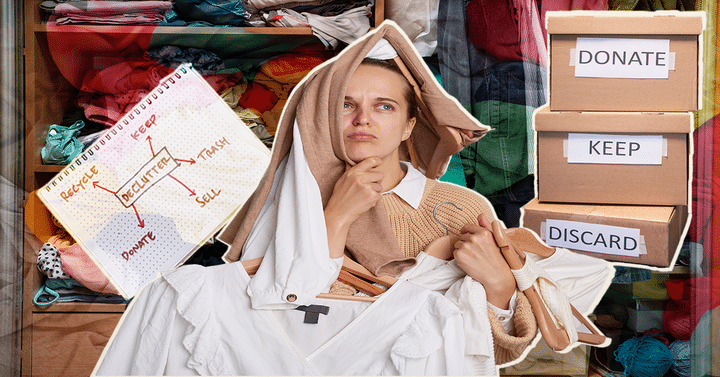
Unwanted clothing can be sorted into three main piles: donate, sell, and too-damaged/ beyond repair.
Clothing and accessories in good condition can be sold or donated. Selling at yard sales, flea markets, or on apps like Depop, Vinted, or eBay guarantees the items will be loved and worn again. And, you can get a little bit of cash!
Pieces that are seriously stained or torn and cannot be donated or sold can be repurposed into rags for cleaning or sent to textile banks. Remember, anywhere is better for clothes than a landfill.
Organising and storing
Storage comes easily after decluttering, Andre points out. The process becomes far more efficient. For starters, you have less to work with!
The best thing to do is categorise. Keep similar items together. Believe me, this will be easier for you to find things in the future. “Where’s my flared blue jeans?” Well, with your other jeans, of course!
While it’s easier (and quicker) to shove things in boxes and drawers, it’s just not practical. The right storage methods will make your space neat and keep items safe and protected.
Summers recommends putting shoes on shelves or clear boxes so they’re visible.
How do you even fold a coat or dress? These are items that should be hung up. And, preferably with sturdy hangers, so they aren’t drooping off. Jeans, t-shirts, and knitwear, on the other hand, are best folded in boxes or drawers to avoid overhanging or stretching. Blouses can go either way. If they’re prone to wrinkling, however, they should be hung up.
Keep everyday items like socks and underwear accessible, such as in your top drawer.
Storage options
When dealing with small areas, vertical space is your best friend. Summers recommends shelf risers, hanging organisers, slimline hangers, and even the back doors.
Drawer divides allow you to keep smaller items such as underwear, socks, tights, and accessories separate and organized, preventing daily rummaging through overstuffed drawers.

Over-the-door racks are great for shoes and an off-the-floor alternative to racks or shelves.
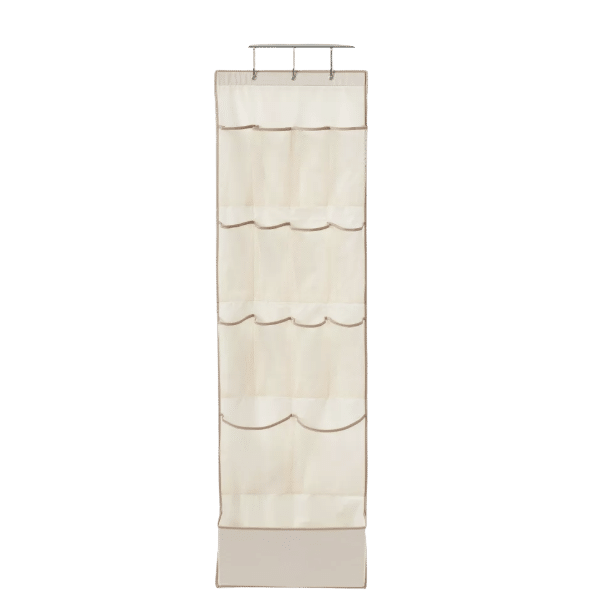
Rolling rails or carts can be utilized when you have limited closet or drawer space. They can be easily moved around rooms where accessibility is important.
Vacuum-sealed bags can be used for seasonal or less-used items. Bulky coats or bedding can be flattened and stored on shelves or wardrobes.
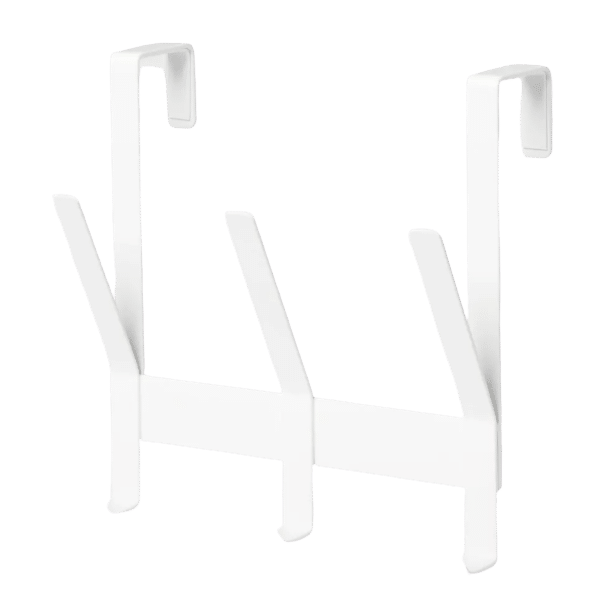
Wall pegs or over-the-door hooks (preferable for rented spaces) are ideal for coats, jackets, and accessories such as scarves when closet space is limited.
Boxes, baskets, bins, and tubs are storage options for…well, everything. Stored on shelves and under beds, they can be easily moved and kept anywhere! They are multi-use!
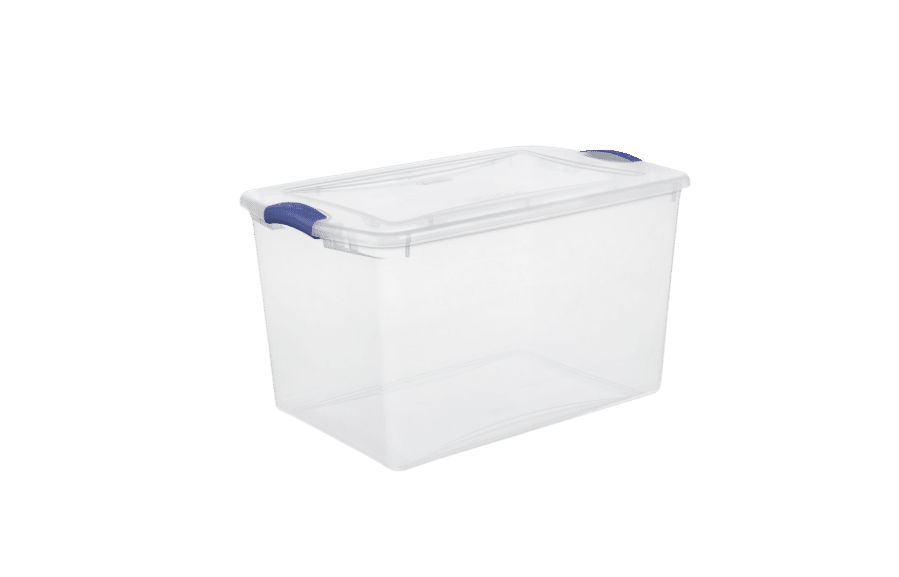
Hot Tip: Boxes and bins without lids make it easier and quicker for you to put things away, keeping your rooms tidy and clutter-free.
A more organised and calmer you
“At the end of the day, it’s about creating systems that are easy to maintain and reduce daily stress,” Summers emphasizes that when closets work, mornings are calmer, and that feeling ripples throughout the day.
Every day presents a new opportunity to change just one little thing that can improve your routine, your life, and your mood. Sometimes, it can be as simple as organising a single drawer.