

The transatlantic connection: a fruitful friendship across the pond that proved so homogeneous at one point that the transatlantic accent was common for movie stars of the time. However, in light of President Trump’s divisive politics, a distrust has developed in the modern age. As in the case of someone sleeping with their best friend’s girlfriend, there is an obvious strain to the once legendary friendship. Okay, maybe it’s not that extreme, but it certainly has been in decline.
American culture feels like a comfortable stepping stone that we can all understand. You might not know how the cumbersome tiers of Congress, but we’ve all seen Goodfellas and The Godfather. We all partake in the accessible reference pool of ‘Americanness’; cheeseburgers and French fries are more common than sommeliers in upmarket restaurants in my hometown. Regardless of whether we want to or not, America is a unanimous color in our collective palettes.
That said, British culture seems to be the new keen fascination of Americans. Past Harry Potter and Sherlock Holmes, there is a growing love for the UK’s niche culture. Clive Martin branded the modern phenomenon: “British Chaos,” picking out a blossoming eclectic brand of micro-celebrities and strange social media moguls. Booking a Jet 2 holiday, cozying up to Love Island, and squaring up against the Ibiza final boss have finally transcended the streets of Shitterton, Wetwang, and Giggleswick.
The boom in “UK-isms” feels like a modern weight change in the proverbial scale. Brat summers, traitors, and the royal family controversy have positioned America’s looming gaze toward the island nation. Britain has already stolen all its culture via the Commonwealth and shut it behind dusty museum doors, so maybe it was a long time coming.
Social media rebirth
TikTok and its bleeding into Instagram reels seems to be partially responsible. Not only has the niche culture become more popular; but it has also become more accessible because of the internet.
Americans have only started to comprehend the concept of the varied accents of the small island. In a press interview for Wonka, Timothee Chalamet showed love to the Hull accent, calling it attractive and underrated. I hate to disagree, but each to their own.
The Americanization of The Traitors and Love Island boosted this fixation with the UK. Just like with The Office, no good idea can survive too long without an American counterpart. Calling these shows pillars of British culture feels like an exaggeration, but they are wildly popular. They are also what boring people talk about, but that’s irrelevant.
Subculture: Charvas
Branding himself as a pariah amongst a sea of Americans who didn’t understand him, Vuncle205 was labeled as the only scouser in his home state of Alabama. His aspirations of a true UK experience took him on an endless holiday across the pond, embracing the “Charva” aesthetic and the culture of northern England. Though he started off as a parody, his followers propelled him homeward bound, journeying in the latter half of last year. His Columbus-esque expedition gained him a vast following of confused Brits, and we all watched intently as he paraded around Liverpool and the north.

Meeting famed DJs like Kettama and partying with the aforementioned final boss of Ibiza, his trajectory from unknown Anglophile to a slightly known Anglophile was inspiring.
What was chalked up as a humorous journey into the unknown was in reality a young man finally discovering where he belonged. Between the laughter and absurdity, I’m sure many shed a tear when he finally got a pair of 95s, or 110s if you’re inclined.
Subculture: Esdeekid
Rapper Esdeekid has a part to play in the British resurgence, too. The masked rapper’s tracks blew up across social media. Not only was his anonymity captivating, but so were his verses about council estate life and dreams of wealth. The once niche artist was hard to gatekeep following his social media boom. This was to the dismay of the individuals who had “discovered” him, with several sharing screenshots of his profile before his rise. Gen Z’s tendency to protect unknown artists proved futile here.
Across the internet, users found striking similarities between him and Wonka star Chalamet. The rumored pseudonym of the actor intrigued many of us; “Is there anything he can’t do?” we all asked. Their eyes look uncannily similar with images of their profile spliced together.
As his fame grew, TikTok hosted a series of increasingly cringeworthy videos of lip syncs and attempts at scouse accents from sorority girls. When Chalamet finally appeared, rapping his own bars over Edsdeekid in a collab on Instagram, the rapper’s fame further skyrocketed. It should have been cringey, but with the Marty Supreme press, it seemed that everything the actor touched turned to gold, or perhaps orange? It’s clearly working.
The internet has pulled strange threads to unravel the yarn of British culture. The new superstars of the UK are: rappers, random micro-celebrities, wannabe scousers, and the people who plug it are the modern sheep. It’s becoming far too big for my humble ideas about the eclectic aspects of the culture.
Subculture: Scottish TikTok
Scottish TikTok likewise contributed to the resurgence. Countless Americans were stunned to find that there were black people in Scotland. Shocker. The trend began as a bemused joke but translated into hundreds of thousands of followers for relatively small creators.
Funnily enough, my high school teacher was one of these lucky creators. His videos showed his unexpected rise to internet fame as fellow creators banded together to highlight the “phenomenon.”
The new spotlight put on Scotland highlights a strong desire for the wider UK to be understood. Americans’ interest in the deeper culture of the wider UK is serendipitously timed with the World Cup coming to the States.
The Uefa Peace Prize and the NA WC
Football, the unspoken national sport of the UK, is another key factor. Online, Americans are starting to pick UK clubs and follow them with the same passion they would basketball or baseball.
Newly elected New York Mayor Zohran Mamdani was recently praised by fans for his ball knowledge, as he was a diehard Arsenal fan growing up. In a recent interview, famed Arsenal striker Ian Wright congratulated Mamdani’s efforts and hard work on his successful campaign. It was touching to see him starstruck over the mayor.
Guardian journalist Bryan Armen Graham described the popularity of football and the significance of Mamdani in a recent article: “Mamdani’s affinity with Arsenal lands with added weight because it reveals what the sport already means in the US: a cross-class, multi-ethnic, diasporic, online, joyful cultural force.”
Rather than signifying another sport in a pile of endless ball games, the new love for football is carving a significant spot in US culture. Though it’s still strange hearing Americans talk about the sport, the upcoming World Cup seems to be strengthening its appeal.
Even President Trump got involved in the excitement. Though Mamdani was critical of his approach to the recent travel ban, the president has embraced football (or soccer) in a uniquely Trump way. After shoehorning himself into a photograph with Chelsea after their win in the Club WC, Trump accepted the UEFA peace prize at the end of last year. The irony isn’t lost on me, but it denotes a meteoric rise in the sports platform in North America.
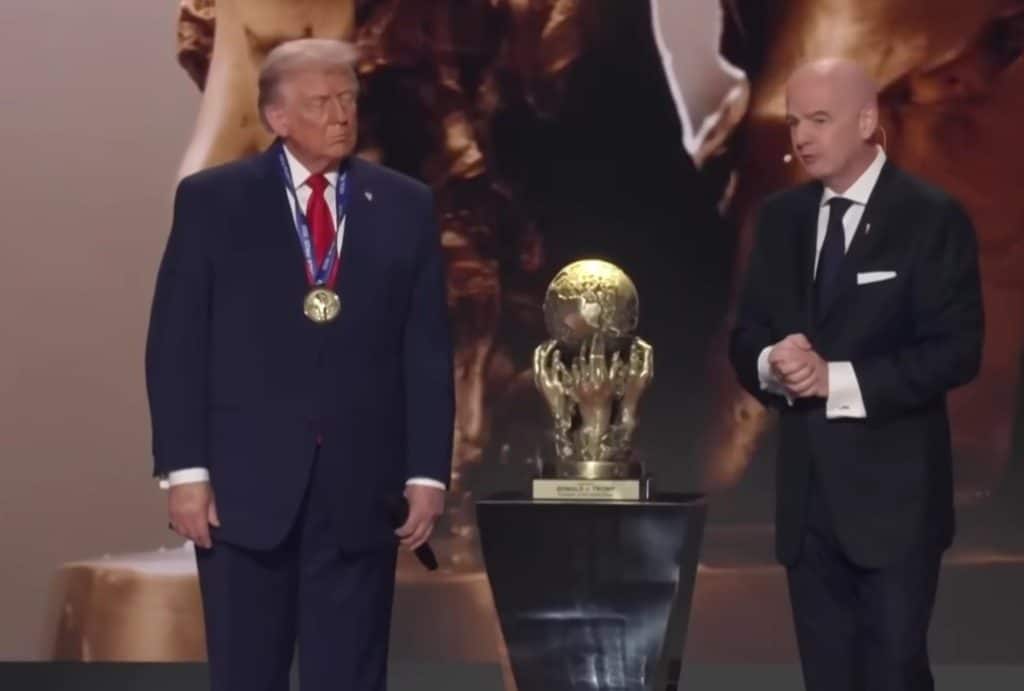
(Credit: YouTube/UEFA/The Guardian).
Accolades appear to be the only way to tickle his interest, but his example echoes the general change in attitude toward the sport. The new generation of athletes will hopefully have fewer head injuries as they dive into the rest of the world’s favorite sport.
The Migration: Americans move across the pond
The British Home Office reported last year that more Americans are moving across the pond than ever before. There has been a 40% increase in British citizenship from Americans compared to the previous year
The Anglophile invasion is only beginning. America’s slight interest in the strangest parts of the culture has finally become genuine intrigue. Despite their confusion about the many “isms” of the UK, the culture’s most opaque and idiosyncratic humor has unexpectedly transcended to international audiences. The dense networks of class, tradition, and regional “isms” that often resist easy understanding are being properly enjoyed and parodied.
Rather than discouraging engagement, confusion fuels it, suggesting a growing appetite not just for a sanitized version of British culture but for its strangeness in full view.
But by way of partaking, Americans have also become a part of UK culture. Seeing them as welcome strangers in our culture feels fitting for their worldwide status. If you look hard enough, you’ll find them everywwhere: cosplaying scousers in the north or roaming the streets of Scunthorpe, bemused at the accents they hear.