

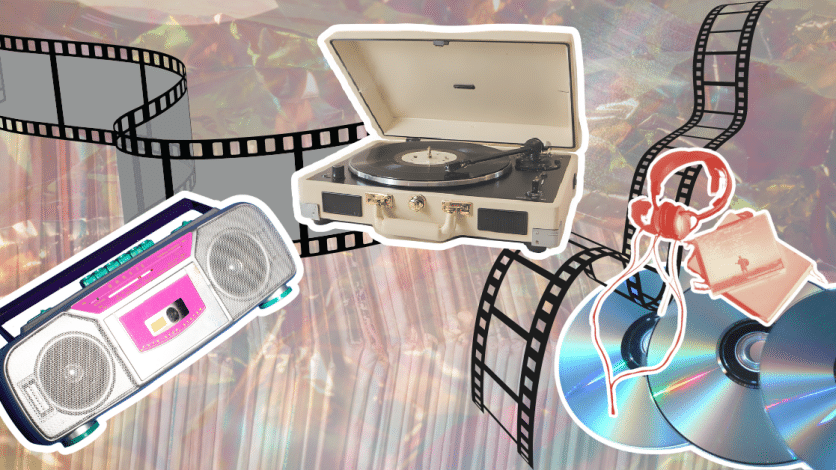
The “physical media movement” might be popping up on your social media feed, but what is it, really? And why is everyone so interested? This article will answer all the questions you may have, taking a deep dive into the 2026 physical media enthusiasm and how you can get in on the action too.
What is physical media?
Though this term may feel vague, “physical media” refers to technologies that physically store information, such as DVDs, CDs, MP3 players, or even film cameras.
These are pieces of tech that function without tapping into the digital world of WIFI and cell phones. Often, they come with many moving parts–if you want to watch something on DVD, you need a DVD player; if you want to take a photo, you need film; and so on.
Basically, they’re the single-purpose counterparts to the various apps we take for granted on our phones.
Many members of Gen-Z associate physical media with the slowness of the “offline” world they grew up in. In the past, a decision like what to watch for movie night? may have involved a trip out of the house to buy or rent a DVD. Now, we do the same thing in just a few clicks, so the process feels sped up and much less rewarding.
Gen-Z voices are calling for a shift back to a slower way of living, claiming that we binge our shows and movies too quickly.
Or worse, we leave them on in the background while we scroll on our phones.
Our speedy, on-demand access to everything has halted our ability to stay in the moment and fully enjoy what we watch. Streaming has greatly reduced the time and effort we put into finding new media, and we often don’t appreciate all that we consume.

Luckily, Gen-Z is beginning to push back against streaming services and spark some change.
Why all the hype?
In 2026, Gen-Z is calling for a “physical media revolution,” hoping to inspire the masses to ditch the fast-paced convenience of streaming services. This means cancelling Netflix and Spotify and fully returning to DVD rentals and MP3 players with regular wired headphones.
This movement has become tremendously popular. While the nostalgia alone may be compelling, there are countless other reasons to get involved, from building a stronger community to helping our planet.
Let’s take a closer look at a few positive impacts physical media can bring.
Building more connections
Instead of scrolling for hours trying to find something new and interesting, why not use that time to get out of the house? The act of purchasing physical media provides an amazing opportunity to check out a new store, meet a new person, or ask around for recommendations! So rarely does that happen when you’re alone and looking through a streaming catalog. And you may find something totally unique out there!
Plus, when friends are involved, physical media can become fun for the whole group. You can share the DVDs you collect, take Polaroids together instead of selfies, or create personal mixtapes. These little changes can make you feel much more connected with your inner circle, allowing you to stay offline and enjoy moments together.
Helping our planet
If you want to become more sustainable in 2026, collecting physical media is a great option! Since demand has dropped significantly for these items, you can find plenty of them secondhand and save plastic-y items from landfills. We’ve already produced so much; the best course of acttion is to give these items a new life.
Streaming is not totally ethical, either. The amount of television we stream has produced a significant ecological footprint, and music services like Spotify require data centers, which use up tons of energy. There are no perfect solutions, but by using the products we already have, we can reduce our digital footprints this year!
Taking control of our media (and our money!)
How much media do you really own? While we flex our millions of streaming options, we often forget that the titles are being rented rather than purchased. These programs have the right to remove media, cancel long-running shows, or claim ownership from others at any time. By paying for dozens of services at once, we become complacent, jumping between them just to watch one show.
For me and many others, it’s getting pretty tiring.
But physical media is something you buy to own forever. This gives you the power to curate your own watchlists, which you always have access to.
Streaming is also incredibly expensive. Instead of paying for multiple services–and only really watching a few titles–you can save money and instead purchase DVDs and CDs of things you genuinely enjoy. And if you’re looking to rent something new, you can borrow from libraries or from friends at essentially no cost.
Physical media lets you own what you love for much less money than streaming. An all-around win!
How do I get involved?
Since we live in a digitally reliant world, it may feel strange to stop streaming things altogether. However, finding others willing to make the switch can influence everyone to disconnect.
Friends and family are wonderful options; they can be the strong, supportive voices you need to get started. If you’re in school, consider joining or starting a club to share experiences and tips!
Online groups and forums are also great to check out! These resources can recommend specific movies or music as well as places to shop. Instead of mindlessly scrolling, you could look through a few chats and get inspired!
What do I buy?
Before you start collecting, it’s important to understand the devices you may need. While there isn’t an exact guide for this part, there are plenty of helpful tips to guide you.
First, be sure to check for any devices that you may already own and could use again. You may be surprised to find a huge, unused collection hidden away at home!
If you need to buy something new, research what devices will work best for you and your budget. For example, if you have a CD player built into your car, collecting CDs could be your first step toward cost efficiency.
Equally critical is learning how to set everything up. If you’re looking to buy a DVD player, ensure that you have all the right cables to connect to your TV. Similarly, MP3 players will need proper chargers or batteries, and film cameras will all need specific types of film. Research is crucial!
While it’s slightly more difficult than setting up streaming apps, these devices will last for years and save tons of money in the long run.
Where can I shop?
It’s time to scope out the places in your area that still carry physical media. Unfortunately, in the age of streaming, fewer places carry DVDs and CDs than in the past.
But secondhand stores will always have your back! Local thrift stores and flea markets are sure to have an abundance of options at a very low cost. Yard sales are a good bet, too.
If you have music shops, bookstores, or other small, artsy businesses in your area, you should head out and explore them. They typically have a wide variety of recent artists and genres, which could simplify your search.
Check out this guide on physical media stores and online retailers if you’re craving more specific recommendations!
Of course, libraries are excellent resources for jump-starting your collection. All you need is your library card, and you’re good to go!
What comes next?
As the New Year picks up, it’s a better time than ever to join the physical media movement. You can start fresh–shopping for movies and music, cancelling your streaming services, and unplugging for a while. Use that motivation to join the physical media comeback!
Whether you want to help the planet, save money, or take back control of the media you own, making the shift to a slower, less internet-reliant lifestyle could be exactly the kind of change you need.
After all, many of us are clearly itching to get off of our phones.
So get out there, start collecting, and make 2026 your best year yet!










Stephanie B
January 20, 2026 at 12:55 am
My nieces and nephews are having a BLAST typing notes and homework in old typewriters pulled from grandma’s garage stash(!)