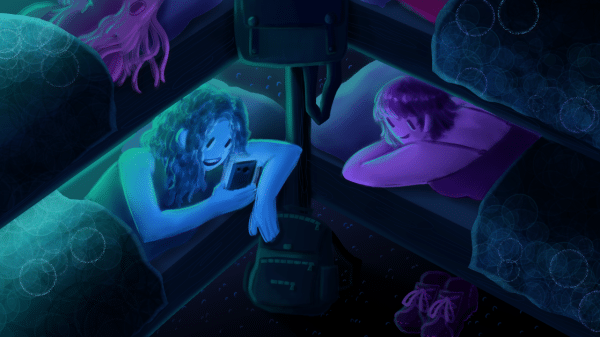
I woke up this morning, and my phone was dead, and I sat in silence. My morning routine is picking up my phone and scrolling, then getting up and going about my day.
Whenever I lose access to my phone, I feel… adrift. Uncertain and unsettled. I am reminded of how my friend’s mom once told me that she cannot think at all in the morning until she has a coffee. Or how my uncle had an alcoholic drink each morning before work.
This is a real problem, and in 2026, it’s time we recognized it.
What are phones even doing to us?
Whenever I’m not doing anything else, I find myself on my phone. Not for a purpose, just mindlessly scrolling. I’ve noticed that I can open Instagram purely on muscle memory, before I even know what I’m doing.
It’s a time filler. I’ve lost hours to scrolling for the next funny video. You enjoy a video, so you scroll to see if the next one is good, and the next one, before you know it, you’re stuck in an endless loop.

With a slot machine, you pull the lever over and over, because “maybe this time I’LL WIN BIG!” But that’s not how it works. Like gambling, social media profits from your mindless scrolling, over and over.
I’ve become so dependent on the dopamine I get from scrolling that I find it hard to start my day without it.
Life without the phone: is it possible?
Last summer I went camping with my friends, way out in the mountains. Picture this: grilled burgers, a campfire, and no phone chargers. I knew I’d need the charge for Google Maps on the drive home, so I tried to keep the thing off 24/7.

I ended up reading a lot, and my book at the time was “Four Thousand Weeks” by Oliver Burkeman. In it, he quotes spiritual philosopher Alan Watts’ perspective on the constant sprint of our lives.
“Take education. What a hoax. As a child, you are sent to nursery school. In nursery school, they say you are getting ready to go on to kindergarten. (…) In high school, they tell you you’re getting ready for college. And in college you’re getting ready to go out into the business world….”
The internet is a place that shows us a million more places to want to get ready for. A million more paths our lives can take. And each path is a never-ending chase to achieve perfection in some way.
They are never here. They never get there. They are never alive.
Alan Watts
I think we measure success by ‘being the best’ at something. Being the best artist. Getting the highest grades. Receiving the most awards. There’s always a goal to reach, and we’re always getting somewhere. But what I realized at that campsite is that always getting somewhere just makes me feel bleh.
I felt more alive, in those four days without my phone, than I have in years.
My New Year’s Resolution is….
It’s easy to say “I’m going to use my phone less,” but hard to do. Rebecca went 7 days without a smartphone, and as she describes it:
…Putting down my phone made it much easier to connect with the things and people I truly enjoy.
Rebecca
She describes having time for reading and arts & crafts. Her article sounds like a life I want to live, but it’s not realistic to lock my phone completely away. And I’ve tried to just put it down. It’s nearly impossible to stop scrolling just out of willpower, and as said, I can’t lock it up. So how can I actually use my phone less? This is what I want to focus on in 2026.
There’s a lot of advice out there about putting down the scroll machine. Some of my favorites that I’ve seen are putting your phone in “work” mode, so it’s not as pleasant to look at, or putting it in a drawer for one hour each day.
Isobel Moore describes how to detox from constant scrolling, and criticizes advice to just cut yourself off completely. That’s what I’ve been failing to do in the months since my camping trip.
“Cutting cold turkey,” as the Australian Gov. Department of Health defines it, is “giving up smoking or vaping suddenly, with no outside help or support.” Giving up social media suddenly doesn’t solve the problem; the underlying need that I try to fill with scrolling is still there.
The science behind dopamine-scroll
I’ve done some research on why we’re so obsessed with scrolling, and I found an absolute gem of a “what did I just read??” quote. From the abstract of a study titled “Dopamine-scrolling: a modern public health challenge requiring urgent attention” (stay with me here):
The neurobiological basis involves small doses of dopamine released with each scrolling motion, coupled with variable reward schedules.
BT Sharpe, RA Spooner
Whew! I’ll re-explain that. Dopamine is often defined as “the happy chemical.” Every time we scroll, we get a little bit of it. Like a dog being given a treat, we want to do more scrolling to get more dopamine. Plus, we’re motivated to keep scrolling to see if the next video will be a good one.
They go on to say that the “reward uncertainty” (we don’t know when the next reward will come) is part of what makes behaviors habit-forming.
Once we recognize that constantly needing dopamine is a real psychological problem, we can begin to address it as such. We can’t just “quit scrolling,” it’s not that easy. Algorithms are designed to make us happy, and we need the dopamine we get from scrolling. So, we must satisfy the need in other ways.
I’m committed! Here’s what I’m going to do
I can replace my phone use time with a video game: fun and engaging, with enough action and stimuli to keep my attention. If I pick one with a quest line, I can even get the rewarding feeling of completing tasks—which is also dopamine!!! Make no mistake, dopamine is not the enemy. It only becomes a problem when it becomes an addiction, and we have plenty of collective knowledge on how to recover from addictions.
Here are some more ideas I’m going to implement. I don’t need to check my phone first thing in the morning. I can’t just lock away my phone completely, but maybe I can leave it in my room while I go make a sandwich. And I can’t delete Instagram, because I use it for communication with my friends, but maybe I can add screen time limits.
I’m planning to set my password to something really long. Maybe I won’t use my phone as much if it takes more effort to unlock.
I’m also resolving to not expect immediate and consistent success. I’ve spent the second half of 2025 failing to put my phone down and wishing I could do better. That’s okay. The goal with any resolution is not to be perfect at it, but to try. If you fail, try again. I won’t beat myself up over my screen time if you won’t.
I’m going to spend 2026 dedicating myself to using my phone less, and I want you to join me.