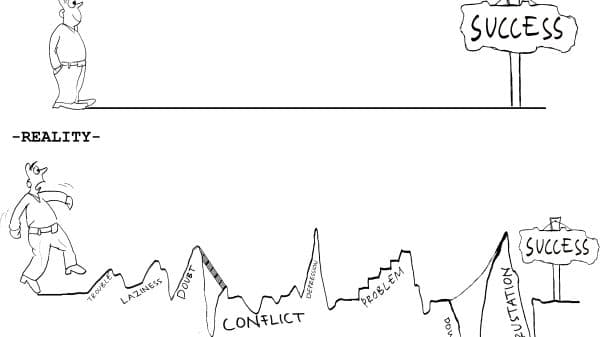


Vulnerability can be hard in relationships.
“To be loved is to be known,” is a phrase that many of us have come across, most likely during a TikTok scroll, Pinterest binge, or half-drunk group conversation with friends.
This phrase, as of late, has become a constant echo that reverberates in my brain.
As my relationship blossoms and I continue to grow as a person, the echo becomes louder. I am reminded that I am not alone in my day-to-day actions. That all my positive, celebratory moments are now shared with an amazing person.
However, in stark contrast, so are all of my ugly, uncomfortable moments that cause me to shriek and recoil in fear like a vampire exposed to sunlight.
This fear of exposure is something I never envisioned for myself. I once believed that if I “found” my person, everything would just — click. That all my worries, anxieties, and insecurities would wash away like a baptism. That the discovery of love would absolve me of the sins committed in pursuit of it.
But I still fear being exposed. My sins have not been absolved.
So what can a person do when their partner has become their sun? Here are some tools we hope you’ll find useful to overcoming emotional barriers.

Vulnerability is the path to liberation

Everything has a truth and origin. This phrase above is no different.
Timothy J. Keller, a late pastor, is thought to have widely expanded on the phrase to what it is known as today:
“To be loved but not known is comforting but superficial. To be known and not loved is our greatest fear. But to be fully known and truly loved is, well, a lot like being loved by God. It is what we need more than anything. It liberates us from pretense, humbles us out of our self-righteousness, and fortifies us for any difficulty life can throw at us.”
Timothy Keller, The Meaning of Marriage: Facing the Complexities of Commitment with the Wisdom of God
The phrase, in its entire context, perfectly encapsulates what it feels like entering a new relationship. Entering a union, where someone looks upon you with reverence rather than contempt for who you truly are.
Opening yourself up to this gift of liberation can be hard, but not impossible.
In this article, you and I, dear readers, will look at and analyze all the ways we can start the journey of being vulnerable — just because we’re scared doesn’t mean we shouldn’t try.
Acknowledge the fear, don’t succumb to it

When the word “vulnerability” is used, many assume that being open about your feelings is all there is.
While that is one huge aspect, many other layers shouldn’t be ignored in this process. You can be open about the past, but what about the present? What happens when you encounter a moment that triggers your fight or flight response? Do you let your partner into your thoughts, or do you shut down and hold it all in?
The first step in dispelling the fear of vulnerability is acknowledging that you have the issue. Standing in your truth and wanting to become better, not just for your partner but for yourself.
The second step is figuring out the root cause. What causes you to shrink yourself in emotionally charged moments? Is it something that can be talked through with your partner?
Oftentimes, it can be hard to pinpoint a root cause. It could be one or an amalgamation of causes. You must take the time to identify them to face them.
Commit to healing
Once identified, the next step is commitment to healing.
Healing can look different for everyone. There is no “one-size-fits-all” approach to this. But generally, being able to bear it all to your partner is the goal.
I’ve found that healing for me is the ability to view my partner as his own being and not just another person who’s out to hurt me, like in the past. Every person is a new experience. You can not and must not hold others to the same crimes that have been committed against you.
You are not responsible for what has happened to you physically or emotionally, but you are responsible for how you deal with the fallout of these new experiences.
Healing isn’t linear. It’s ugly, messy, and uncomfortable; nonetheless, it’s important. Always seek to be better than you once were. This mindset will not just help improve your relationships but all aspects of your life. This I can guarantee.
Victim mentality stunts growth
Keeping up the theme of responsibility, a key issue that many run into is victimhood. When you’ve been hurt, it’s easy to form a “them against me” mindset. Do everything in your power to dismantle this notion.
You. Are. Not. Always. Right.
In an era of “therapy speak“, echo chambers, and social isolation, many interpret all their decisions as sound. That can bleed into relationships and, if not monitored, create a tension that separates instead of unifies.
You should always be open with your partner, especially when it comes to how you feel. But, in doing so, remember a door has been opened which allows the flow of the same dialogue to be returned. Being vulnerable doesn’t mean you spout your emotions without criticism. You and your partner may not have the same outlook on events. Sometimes, communication can be misunderstood, and things meant to be said in jest are taken as insults. This is all okay!
Other times, you are the villain.
Learn how to accept your infallibility as myth. Humans can be mean, spiteful, and just plain rude at times. Accept this now, so in the future, when your partner practices vulnerability, you are equipped to handle the emotions that may arise from this.
Have some grace for yourself

The belief that we are our own biggest critics is something that rings true in so many ways. Relationships are no different.
There are times when I miss my partner so much that I spam his phone with memes, TikToks, and messages inundated with affection. Once my love spree is over, and I see his love not immediately reciprocated, I spiral. My head begins to fill with thoughts formed against my will — anxiety overcomes.
Over time, I learned it’s okay to feel this way. As mentioned before, showing emotions can be scary. Accepting this truth has allowed me to be easier on myself during these periods.
You won’t always have a listening ear or shoulder to lean on. You have to be these comforts.
Recognizing that the fears and worries you have in relationships are normal. The key is not to let them overtake you. You and your partner are separate individuals with life commitments and responsibilities. Every lingering silence from an unanswered message isn’t a “sign”.
“It’s not that deep,” is a phrase I believe has become overused, but still applies to many things. When I am faced with a potential conflict, I ask myself, “Is it that deep?” Normally, the answer is no, and I can proceed with life.
Try this the next time you hit an internal conflict. You might be surprised by how much it can help.
Be present and intentional

The past and future are two things focused on a lot in relationships, but what about the present?
When it comes to opening up in a relationship, being mindful causes less rumination to occur, which in turn, promotes compassion for all parties involved.
Take the time to spend time in nature, notice the small joys in life, and engage in creative hobbies.
I myself practice meditation from time to time. At first, it can feel awkward being within yourself. It can feel intimate and intense. Taking it slow and being aware will allow you to get better as time goes on.
This continual process of returning to the present is the basis of mindfulness. Some may find it helpful to visualize their thoughts floating away, while others may prefer to repeat a phrase that reminds them of the present.
Jayne Leonard, How To Let Go Of The Past
Just like your relationship, this will take time. You are already in the present. It’s time to enjoy it.
Move on
The title says it all. Move on.
A key part of healing and vulnerability is the power to let go. However, many attempt to do this without doing the necessary groundwork. Moving on without completing some form of the aforementioned steps above is counterproductive. Instead of facing your fears, you have now run from them.
Moving on in this context, after you’ve started the process and reached a place of comfort in your journey, requires that you let go of past hurt.
Block your exes. Get rid of the images. Start anew with the person who is there for you now.
It’s tempting to find solace in pain. You may think it protects you against future harm. Molds you into a realist who knows what the world truly has to offer. And while this hurt can provide some form of education, it is usually just a fortress that is hard to enter.
You are not the sum of your experiences but of your actions. Use the past to learn from. To notice bad habits and patterns. To shape your resolve and allow yourself to pick up the pieces when it’s all said and done.
We all hurt. I say this to not minimize your experiences, but to provide comfort that you aren’t alone in your feelings. That’s the beauty of being human. That’s the beauty of being in a relationship. You both can empathize with the other.
What can be more liberating than that?
It’s never too late for love

If you take anything from this article, know that you are worthy of love.
Whether this is your first relationship ever or your fifth one, understand that you are more than your worries, anxieties, and fears. There’s a person underneath all of that who values connection with another.
My hope in writing this is that it provides a starting point in your upward journey of vulnerability and acceptance. It may feel impossible at times. When those feelings arise, reach out to people trained to navigate them. There are many affordable options for those in need.
In the end, it will all be fine. Take it slow & be present.
You’re liable to miss what’s right in front of you.