

On November 4, 2025, Zohran Mamdani won the New York City (NYC) mayoral election, becoming the city’s first Muslim and Asian American mayor. This is a milestone making headlines, but not just out of celebration.
After a campaign marked by opposition from both Republicans and Democrats, Mamdani addressed the apparent, rampant scourge of Islamophobia.
In a message responding to the racist and Islamophobic attacks, Mamdani reflects on the treatment of those who share his faith: “To be Muslim in New York is to expect indignity.”
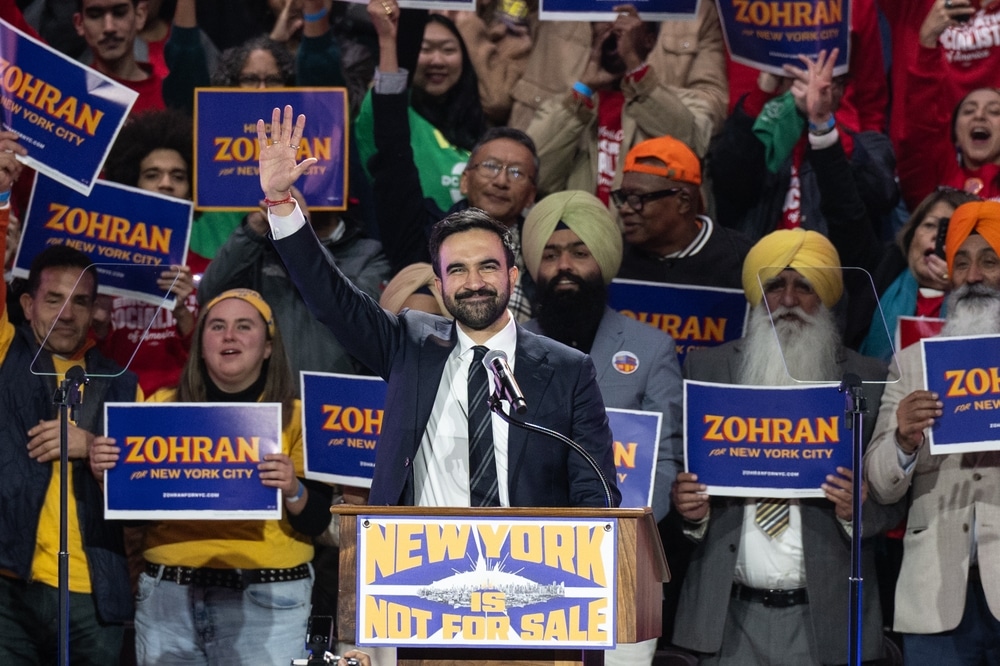
Though this sort of bigotry is nothing new, its overwhelming presence in the larger discourse about Mamdani’s campaign requires acknowledgement. It’s a case study of the continued racialization of US politics.
The simple made sensational
Beyond the typical fearmongering around democratic socialist politics, political and media figures wielded racist ideas against Mamdani. These discussions could be inspired by something as simple as Mamdani eating rice with his hands, a common practice among many cultures.
All it would take is one screenshot, one video clip, for conservative figureheads to warn of an impending threat of ‘uncivilization’ to American culture. But, sometimes, this line of attack didn’t necessitate any ‘evidence’ at all. Mamdani’s Muslim faith was enough for some to draw unfounded connections between him and the 9/11 attacks that struck NYC decades ago.
In a radio show appearance, opponent Andrew Cuomo seemed to agree when the program’s host suggested that Mamdani would “be cheering” at a 9/11-style attack. (To which, Cuomo responded: “That’s another problem.”)
Mayor-elect Zohran Mamdani has also been invoked within the wider immigration discourse. President Donald Trump and conservative allies have suggested denaturalizing and deporting Mamdani, a naturalized US citizen born in Uganda.

If words aren’t enough, the imagery used to criticize Mamdani clearly demonstrates the reliance of his opponents on racist tropes. President Trump reposted one political cartoon which depicts Mamdani with a turban, an exaggerated nose, and a crazed expression.
In another instance, Andrew Cuomo’s campaign released (and quickly deleted) an AI-generated ad attacking Mamdani. After depicting Mamdani eating rice with his hands, the ad shows a Black man in a keffiyeh shoplifting.
Maybe this bigotry doesn’t seem especially surprising on its own, but a confluence of factors make it much more notable. Primarily, the identity of Mamdani’s primary opponent: disgraced former Governor Andrew Cuomo.
The hypocrisy of the ‘uncivilized’ label
Andrew Cuomo is the epitome of a career politician. He comes from an established namesake and a well-connected family. Cuomo’s identity as a white Italian-American and centrist, pro-capitalist Democrat fits cleanly into the ‘American politician’ archetype. He strikes a compelling contrast with Zohran Mamdani.
As Mamdani faced endless attacks on racial and religious grounds, Cuomo was a broadly (if reluctantly) accepted candidate. This was the case despite his record of interpersonal misconduct and governmental mismanagement.
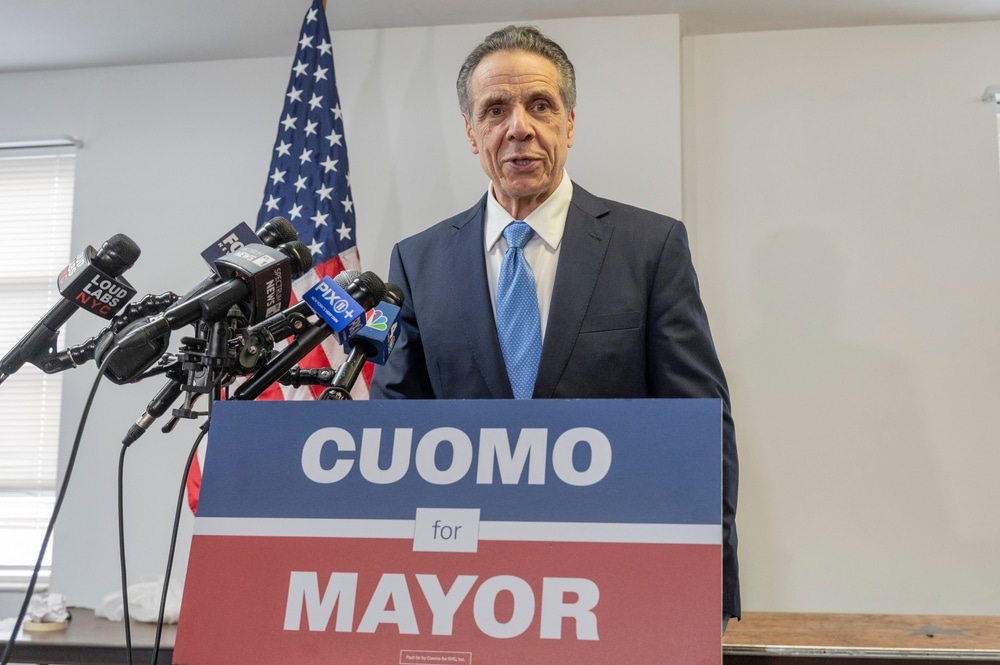
To start, thirteen women working in Cuomo’s gubernatorial administration have accused Cuomo of sexual harassment. The next prominent feature of Cuomo’s time as governor is his mishandling of the COVID-19 pandemic. He has faced criticism for issuing a directive that introduced COVID-19 into nursing homes and later downplaying its impact.
Tens of millions of New York taxpayer dollars have gone to legal expenses associated with Cuomo’s misconduct claims.
Even with his track record, Cuomo is somehow still enabled to operate publicly as an aspiring politician. Due to the disproportionate fear of a Mamdani mayoralty, Cuomo even received endorsements from people who previously condemned his conduct.
But, perhaps none of this really comes as a surprise. We know how these things go. We know that some possess impunity while others are always suspect. Still, the irony of it all hits especially hard in this case.
While Cuomo uses the premise of “criminals for Zohran Mamdani” in a campaign ad, he’s the one fighting lawsuits. While Cuomo’s supporters try to use the “nepo baby” line of attack against Mamdani, their candidate is the son of former New York Governor Mario Cuomo.
In more ways than one, there’s a literal lineage underlying Cuomo’s power and privilege in the political realm.
Who belongs?
This mayoral election is emblematic of a hypocrisy that has infected American politics since their inception. Over time, ideas develop about who and what is presidential, senatorial, mayoral, and the like. But, for all of our rhetorical emphasis on meritocracy, our political system was founded favoring the perceived ‘insider’ over the perceived ‘outsider’ in terms of race, nationality, gender, ideology, and more.
It’s this idea of the ‘foreigner’ that defines so much of contemporary politics. If the Trump era has exposed anything, it’s the magnitude of the resentment of ‘foreigners’ that has been brewing for years.
The Trump administration’s current outlook on immigration is one of the best examples of this. The worst of our citizens are, in some ways, still elevated above the best of our noncitizens. As immigrants of all kinds are facing the threat of deportation, those deemed American citizens don’t face the same displacement—even when they have records of misconduct.
This hypocrisy enables some ‘insiders’ to escape any form of accountability, making the sensational into something simple and commonplace. As just one example, Republican Senator Rick Scott was a co-founder and CEO of healthcare company Columbia/HCA, which defrauded Medicare. The company pled guilty to 14 felonies and received a fine of $1.7 billion in what was then the largest healthcare fraud settlement in US history.
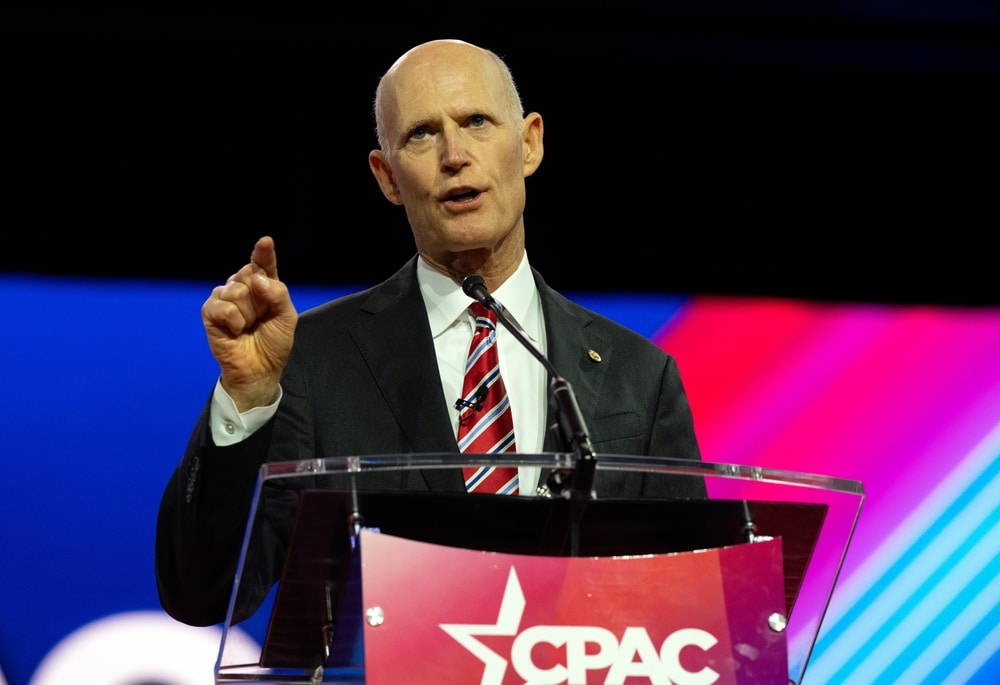
Congress has just ended the new longest government shutdown in US history, which centered on Americans’ access to affordable healthcare. Can you guess who the chairman of the Senate Committee on Aging (which tackles issues pertaining to Medicare and Social Security) is? If you can believe it, Senator Rick Scott.
However, there is perhaps no better example of this exact phenomenon than President Trump’s own criminal record. With convictions on over 30 felony counts, Trump demonstrates how his status as an ‘insider’—as part of a specific capitalist, white nativist in-group—diminishes the evidence of wrongdoing that surrounds him.
All of this affirms what many of us already understand: Belonging is not a matter of moral character, but of who protects and maintains the system as it exists. Corruption is par for the course, as long as it doesn’t threaten the status quo.
The ‘outsider’ as a scapegoat
While I’ve discussed racialization and religious bigotry in this piece, we have to reckon with the political objectives underlying the opposition to Mamdani. As much as some have sensationalized his cultural background, others have sensationalized Mamdani’s democratic socialist politics and opposition to capitalism.
Watching the mainstream media’s interviews of Mamdani, there’s an intensity of questioning that I rarely see with other political figures. (YouTube commenters often attest to this.) In conversations about Mamdani’s policies, commentators have uttered disturbing phrases expressing concern about “safety living … with a Muslim mayor.” There’s skepticism about his affordability agenda, from a rent freeze and universal childcare to fast and free buses.
Given that many media outlets are owned by wealthy people who could face the ‘economic threat’ of Mamdani’s tax increases, the suddenly-critical coverage starts to make sense. As do the questions about billionaires fleeing NYC, or those asking if they have the “right to exist.”
Not only did Mamdani’s opponents use his personal background to discount him as a candidate, but also his ideological oppositions to the status quo. We know of 26 billionaires who used these types of strategies to their advantage. They paid over $22 million in an ultimately fruitless attempt to defeat Mamdani. After all, the wealthy have a long history of using race and religion as tools of division to distract from class dynamics.
It all makes sense. The ‘foreigner’ and the ‘outsider’ are defined as such because they challenge and contradict some sort of hegemony, whether it’s of racial hierarchy or political persuasion.
For all of the accusations leveled at Zohran Mamdani, it seems that his real ‘crime’ may be a refusal to adhere to politics championing capitalism and white supremacy. His existence as a political figure contradicts the foundations and history of capitalist and white supremacist institutions.
The threat that politicians like Mamdani pose may not, to the vast majority of us, be any threat at all. To the powerful and privileged, however, Mamdani’s success is a reminder of a potential end to their way of life.
In uncovering the contradictions associated with capitalism and white supremacy, we’d be forced to admit that much of the American past and present is unjustifiable. We’d have to reconsider our history of colonization, as well as the hypocrisy of our anti-immigrant rhetoric. To challenge capitalism and white supremacy is to reject the idea that these systems are necessary for a successful society.
Being more than an ‘outsider’
If Zohran Mamdani was a different sort of candidate, his opposition could have won handily. If Mamdani had chosen to conduct himself solely as an antithesis to the status quo, his opponents could have smeared him as an unviable ‘outsider.’ But Mamdani recognized the importance of being more than an opposite, more than an ‘outsider.’
Instead, Mamdani built on that tired framing of opposition. He refused to be a mere “lesser evil” and argued an affirmative case to differentiate himself as a candidate. He continues to be active in his NYC community every day, showing how he fits into a city that he clearly knows as an ‘insider,’ no matter what his opponents claim. The campaign was never just about confronting existing systems, but articulating a vision of what we can construct in their place.
It could be exactly this that frightened so many. A moment that comes to my mind took place during one of the mayoral debates. Andrew Cuomo repeatedly referred to a post depicting Zohran Mamdani raising a middle finger to a statue of Christopher Columbus. It feels meaningful that such a subject of American myth, so often repurposed to whitewash the violence of colonization and ‘civilization,’ is who Cuomo ultimately defends here.
It strikes me that much of this fanfare has centered around individuals, the singular figures of people like Zohran Mamdani. (Another candidate who faced similar bigotry is fellow progressive Omar Fateh who recently ran for mayor in Minneapolis. Fateh’s opponents posted incessantly about the candidate waving a Somali flag while campaigning.)
Even as billionaires have spent millions to defeat Mamdani, I’m stuck on the inability of his opponents to say his name correctly. The pronunciation seemed to elude people like Andrew Cuomo to such an extent that Mamdani spelled out his own name during a debate.
While the mispronunciations were likely simple negligence, I can’t help but feel that something about them was rooted in fear. More specifically, a fear of granting Zohran Mamdani any amount of legitimacy. To correctly say his name, to present him as he really is, threatens the systems that depend on the nonexistence of people like him.