

Scroll through your For You Page, and you’ll see it everywhere. Racks of neutral tanks, tight ribbed dresses, and “SKIMS dupes” stacked in TikTok hauls. Creators tag #skimsdupe like it’s a badge of honor, showing off $12 bodysuits that hug the body just like Kim Kardashian’s viral designs.
Welcome to the SKIMS-ification of fashion, where even your simplest basics are now expected to be a little bit sexy.
The era of loud logos and maximalist prints has taken a backseat. In its place? A sleek, skin-toned sensuality that’s somehow both understated and unmistakably confident.
The SKIMS effect
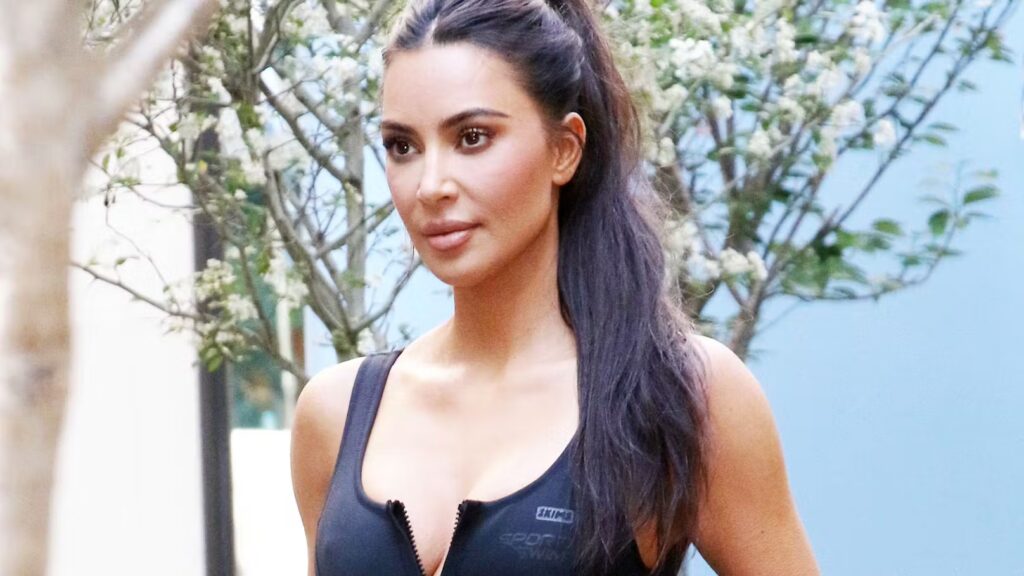
When Kim Kardashian launched SKIMS in 2019, few expected it to completely alter the fashion landscape. Originally positioned as a solution to the shapewear void, which was known as a space dominated by beige spandex and suffocating silhouettes, SKIMS promised something different: shapewear that didn’t need to be hidden.
And that’s the genius of it.
What was once an undergarment became outerwear. Kardashian didn’t just sell comfort, but she sold confidence, sensuality, and the illusion of “effortless” perfection. From the brand’s sleek campaigns featuring a spectrum of body types and skin tones to its minimalist marketing visuals, SKIMS made being “comfortable in your own skin” feel aspirational.
As Fibre2Fashion put it, “SKIMS became more than just a brand; it became a mirror in which people could finally see themselves.”
Still, that mirror also reflects how society continues to define desirability. Kardashian’s vision of “confidence” is inseparable from sensuality. We see curves accentuated by stretch fabric, and a tone of empowerment that’s still driven by physical perfection. In many ways, SKIMS sells the fantasy of self-acceptance, but one that exists within a very specific aesthetic ideal of being smooth, sculpted, and camera-ready.

From shapewear to streetwear
Once SKIMS rebranded shapewear as streetwear, it set off a domino effect across the industry.
We see this SKIMS-ification of fashion across various brands. Aritzia’s contour collection? SKIMS-coded. Garage’s sculpting bodysuits and stretch dresses? SKIMS-core. “SKIMS dupes” are even seen within luxury labels like Prada and Mugler began releasing body-conscious basics in muted tones, blurring the line between lingerie and leisurewear.
It’s not that these brands are copying Kardashian outright with their “SKIMS dupes”, but it’s simply that she reframed what modern fashion aspires to be. The “clean girl” aesthetic, with its slick buns and beige palettes, owes a major debt to SKIMS’ branding. It’s something aspirational yet attainable and sexy yet stripped back.
Even brands that once emphasized individuality have begun centering themselves on this new “neutral sensuality,” where sexuality is packaged as self-care and self-confidence. It’s less about seduction and more about self-presentation, where you’re looking desirable without seeming like you’re trying to be. That balance is exactly what SKIMS mastered.
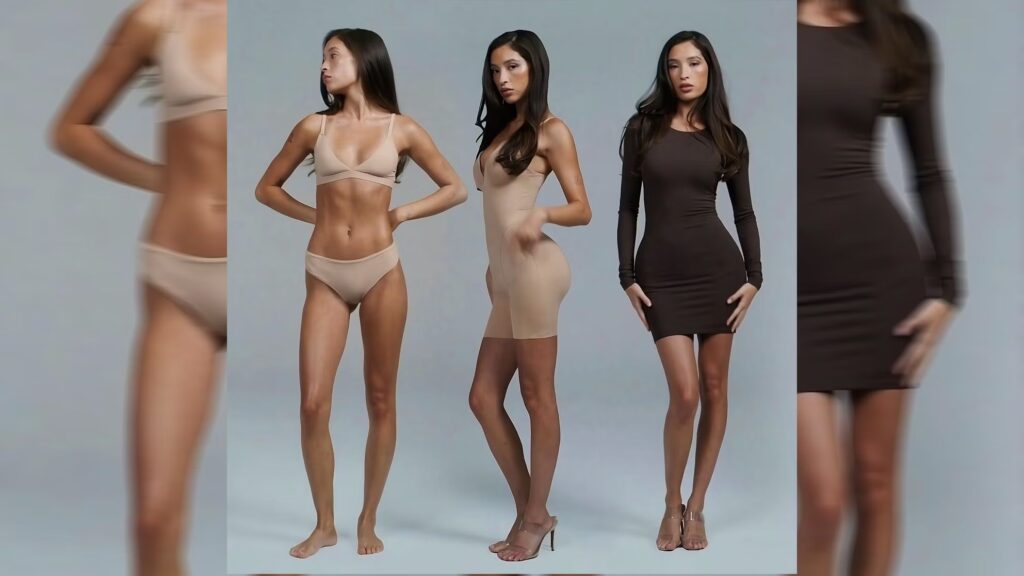
This new version of sexy isn’t about flashing skin, but it’s about sculpting it. Every line, every seam, every neutral tone is designed to highlight the body without looking like it’s trying too hard. The message is that effortless is the new extra.
Gen Z and the body-conscious paradox
But here’s where things get complicated.
Gen Z is often praised for rejecting impossible beauty standards and embracing body positivity, authenticity, and individuality. And yet, the SKIMS aesthetic thrives on a highly curated version of “natural.” The smooth silhouettes, the poreless finishes, the color-coordinated wardrobes seem a little performative.
The rise of “everyday sexy” basics speaks to Gen Z’s ongoing negotiation with self-expression. There’s empowerment in owning your shape and dressing for yourself, but there’s also pressure in constantly needing to look “effortlessly hot.”
It’s a paradox that mirrors the Kardashians’ own cultural influence. For years, Kim and her sisters have simultaneously promoted “self-love” while conveying beauty ideals built on cosmetic enhancements, body sculpting, and hyper-curated perfection. The SKIMS brand inherits this duality, where they’re celebrating real bodies, but often showcasing them through an idealized lens.
This raises the question: does SKIMS promote body positivity, or does it redefine body modification as empowerment? While the brand offers inclusive sizing and skin tones, its visuals still center a very particular type of body – hourglass, smooth, and symmetrical.
Performative minimalism
The SKIMS-ification of fashion has really become a mindset more than anything.
In the same way that Glossier made “no-makeup makeup” the beauty ideal of the 2010s, SKIMS has made “no-effort effort” the defining look of the 2020s. But what seems simple is often highly produced.
Think about the rise of “that girl” content, where we see minimalist routines, beige aesthetics, and oat milk matchas. It’s a presentation rooted in control and aesthetics, which are values that resonate deeply with a generation that lives its life online.
As cultural writer Christina Perez wrote at Vogue, “minimalist fashion requires a certain appreciation for nuance. An understanding of silhouette, texture, and proportion helps, but it’s mostly about having the confidence to let your discernment speak for itself.” We can see how SKIMS does exactly that. Instead of being viewed as a sense of anti-fashion, it should be viewed as its own aesthetic built on subtlety and curated perfection.
When comfort meets capitalism
From a marketing standpoint, SKIMS is a masterclass in cultural performance.
As Professionals & Coffee reports, Kardashian leveraged her celebrity network to perfection. The brand’s ambassador list reads like a pop culture all-star lineup: Cardi B, SZA, Neymar, and even the U.S. Olympic team. SKIMS has something for everyone, from athletes to icons.
This inclusivity is also very strategic. By offering a wide range of sizes and skin tones, SKIMS marketed itself as the anti-Victoria’s Secret, crafting a brand that embraces the real body, not just the fantasy.
However, the reality is that SKIMS, despite its message of accessibility, remains aspirational for the general public, with its price points, packaging, and celebrity attention reinforcing that this is still a look to be bought.
The result? A wave of competitors chasing the same formula, who are attempting to sell “confidence” in stretch fabric form.
It’s also worth noting that this commercialization of confidence plays directly into Kardashian’s long-standing brand strategy of turning insecurity into a marketable identity. The promise isn’t just that you’ll look good, but that you’ll feel like the kind of person who has their life together.
The sustainability tension
The irony is that this “minimalist” aesthetic has become a maximalist business model.
The SKIMS-ification of fashion represents a stripped-down wardrobe, but one that still encourages constant buying. TikTok hauls featuring “SKIMS dupes” or “basics you need this fall” often include dozens of nearly identical pieces.
Even as consumers preach capsule closets and sustainability, they’re simultaneously caught in the cycle of repurchasing the same silhouette in ten shades of beige.
Brands like Aritzia and H&M have tapped into this psychological loop perfectly with their “SKIMS dupes”, as they attempt to market basics as “investment pieces” while continuously adding colors and fits.
What the SKIMS-ification of fashion says about us
At its core, the SKIMS-ification of fashion reveals our obsession with aesthetics.
We live in an age where appearance isn’t just about looking good, but it’s also about looking consistent. The neutral bodysuit, the slick bun, and the clean lines all signal control and belonging in the digital age.
But they also reveal the need to perform effortlessness, and to appear confident and composed in a world that feels increasingly chaotic.
SKIMS didn’t invent this mindset, but it enforced it by packaging it into sculpting tanks and second-skin dresses that promise both comfort and control. And for a generation caught between self-love and self-observation, that’s a hard combination to resist.
The future of sexy basics
So where does fashion go from here?
We could shift back to expressive maximalism with intensely bold prints, unique silhouettes, and color, or amplify the SKIMS aesthetic and solidify it as the new normal for modern wardrobes.
What’s certain is that the conversation around “basics” has changed forever. Instead of being the background pieces, they’ve become the main event.
And whether you’re wearing an actual SKIMS bodysuit or a $15 dupe from Target, you’re participating in the same cultural phenomenon. You’re a part of a movement that turned simplicity into sophistication, and comfort into the ultimate flex.
Because in 2025, sexy isn’t about standing out. It’s about looking effortless while everyone knows how hard you tried.