It starts with an email that sounds like a bad joke: “We’re introducing new AI tools to boost efficiency.” You scroll past it, roll your eyes until you realize “efficiency” might mean you.
Artificial intelligence isn’t just writing code or generating deepfakes anymore. It involves writing press releases, designing logos, summarizing meetings, and scripting videos. The question haunting workers, from creative agencies to call centers, is no longer whether AI will take their jobs, but when.
The robots are already in the office
By 2025, the conversation around artificial intelligence will have moved from speculation to lived reality. From customer service lines that never need a break to AI assistants helping lawyers and marketers, the technology has quietly embedded itself into daily work. What started as an experiment is now a restructuring force in offices across the country.
A Goldman Sachs report, which remains a benchmark two years after its release, estimated that generative AI could replace the equivalent of 300 million full-time jobs worldwide. In the United States, the impact has been most visible in administrative support, data entry, and routine analysis, jobs that rely on repetition and pattern recognition. Companies aren’t necessarily cutting entire departments, but they are reimagining them around automation and efficiency.
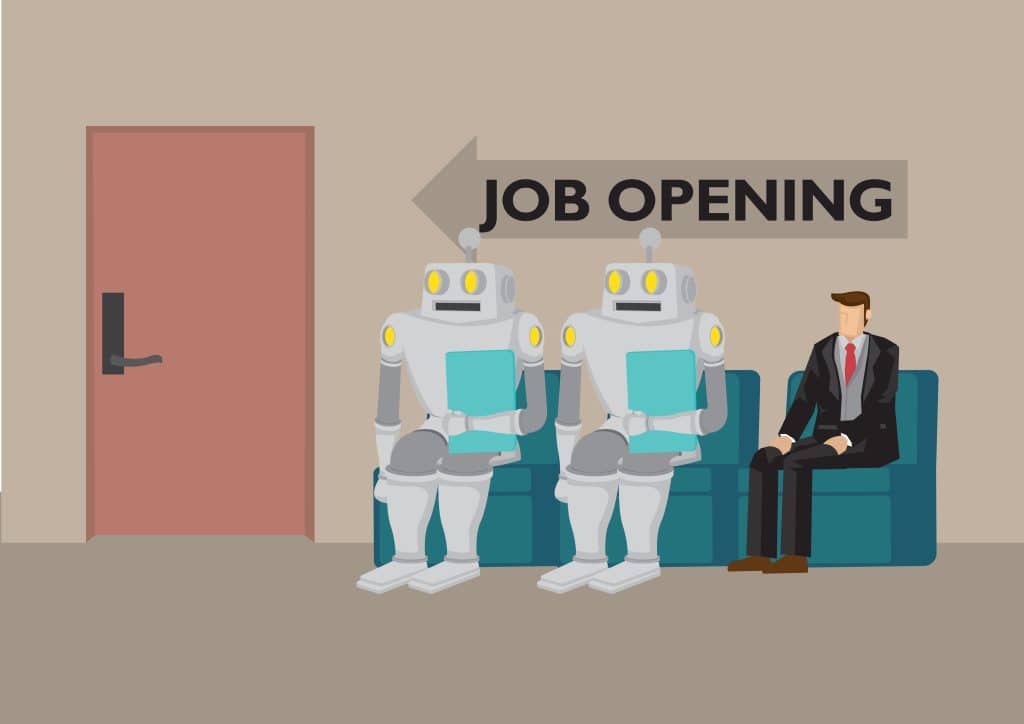
Still, experts note that widespread unemployment isn’t the inevitable outcome. Economists and labor analysts argue that while some jobs are fading, others are being reinvented. AI is taking over predictable tasks, but humans continue to lead in areas that require creativity, empathy, and strategic judgment. In other words, the robots may have entered the office, but they still need someone to tell them what to do.
Who’s actually at risk
Let’s be real: AI doesn’t care about job titles. It targets tasks. If your day involves following a process or dealing in patterns, that’s what algorithms eat for breakfast.
Admin and clerical work sits squarely in the danger zone. Data entry clerks, payroll officers, and schedulers deal with predictable information, the kind AI handles in seconds and without lunch breaks.
Customer service is another big one. Chatbots can already resolve simple issues, respond instantly, and never get tired of “Can I speak to a human?” While a human still needs to step in for nuance, fewer will be needed overall.

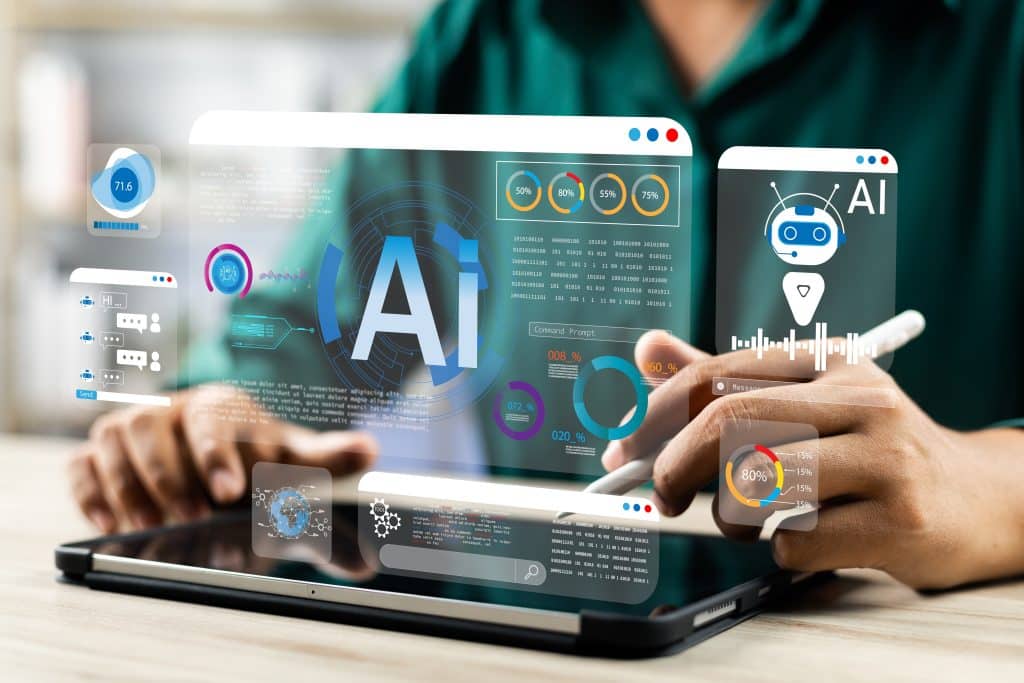
Even creatives are feeling the pressure. Tools like ChatGPT, Midjourney, and Adobe Firefly can now write copy, mock up ad campaigns, and generate images on demand. The result? Entry-level writers, designers, and freelancers are seeing fewer opportunities, as companies opt for “AI-assisted” production.
Then there are finance, law, and data analysis industries, once considered safe. AI is drafting contracts, reviewing audit reports, and generating insights faster than interns ever could. Accuracy still depends on human oversight, but the workflow is changing rapidly.
In short, if your job can be described in steps, AI is learning those steps right now.
The jobs AI can’t touch (Yet)
The good news is that some work remains unmistakably human. Jobs that rely on empathy, adaptability, or physical skill, like therapists, nurses, teachers, and social workers, are difficult for algorithms to replicate. The same goes for skilled trades such as electricians, plumbers, and mechanics, where problem-solving happens in real time, not through a line of code. Machines may learn the steps, but they can’t improvise or connect with people the way humans do.
Even in creative fields, there are limits to what AI can capture. It can churn out ideas or refine copy, but it still struggles with originality, emotion, and cultural instinct. As USA Today recently noted, AI isn’t replacing entire jobs so much as the repetitive tasks within them. The future of work won’t belong entirely to humans or machines; it will depend on how well they learn to collaborate.
The real threat: not AI, but who wields it
AI itself isn’t the real villain here; the real issue lies in how companies decide to use it. Corporate leaders love to talk about innovation and efficiency, but those words often mask a cost-cutting agenda. Over the past year, layoffs across media, tech, and customer service have been quietly justified as “AI optimization.” The problem isn’t the technology; it’s how quickly it’s being implemented without giving workers time or training to adapt.
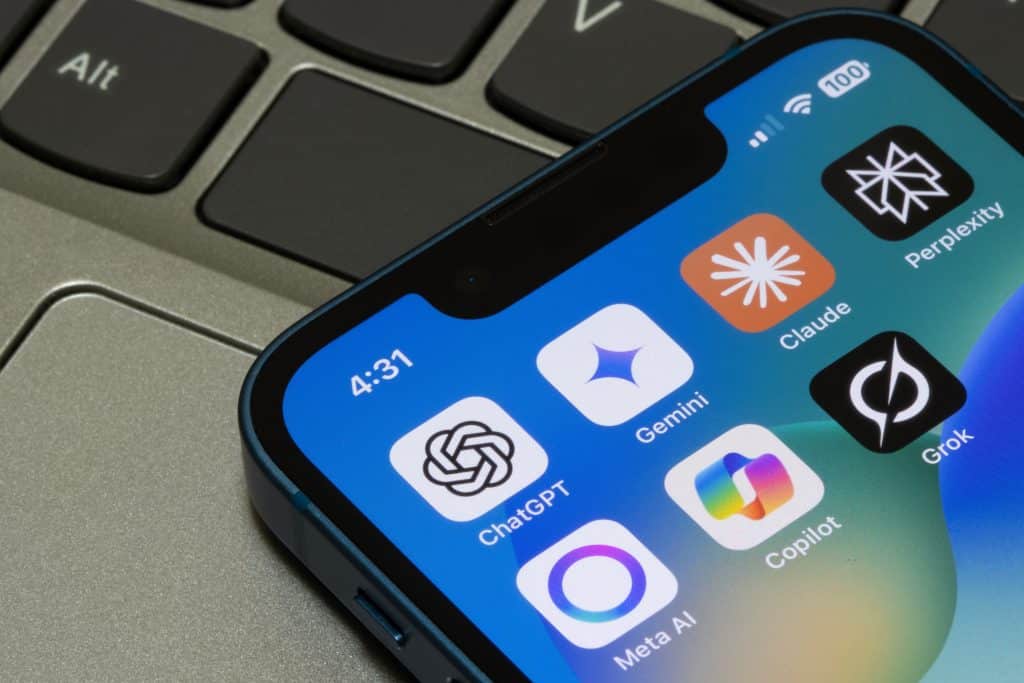
Experts warn that uneven adoption of AI could deepen the divide between those who benefit from it and those it replaces. Highly paid professionals actively use these tools to enhance their work, while employers leave entry-level and hourly workers behind. The real threat comes not from robots taking over but from the people making the decisions about how to use them.
How to stay one step ahead
The best response to the fear of automation is preparation. Experts agree that workers who take the time to understand AI will be better equipped to thrive. Learning how these tools function, recognizing their limits, and strengthening human skills such as creativity, empathy, and critical thinking are key to staying relevant. The most successful professionals will see AI not as a threat but as a collaborator that can make their work sharper and faster.
Writers now use AI to brainstorm or outline ideas, but still rely on their own instincts to bring emotion and voice to a story. Marketers use AI to analyze data while humans shape the message that connects with people. This collaboration is already shaping a new kind of workforce, one that blends technical fluency with human perspective. Gen Z, often called the AI generation, seems to understand this balance naturally. They are growing up alongside the technology, learning to question it, experiment with it, and make it work for them.
The human edge
Every major leap in technology has come with the fear that humans would be replaced. The printing press, the factory line, and the internet all reshaped work in ways that once felt threatening but ultimately opened new paths. Artificial intelligence is simply the next chapter in that story, though it is unfolding faster and touching more industries at once. Jobs will disappear, but many will evolve into roles that are more creative and collaborative than before.
AI can analyze data, generate text, and predict trends, but it cannot dream, empathize, or understand what moves people. The future of work will belong to those who learn to use technology as a partner rather than a rival. So while the machines may handle the heavy lifting, it will always take a human to decide what matters and when to hit publish.