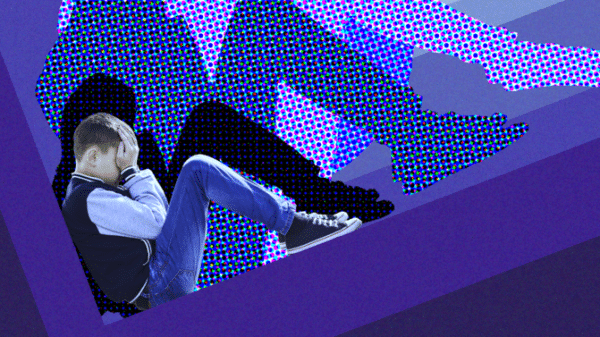
We’re living in a time where mental health feels like an epidemic. Between the flood of social media discussions, growing movements highlighting mental health, and a world that often feels overwhelming, it can be hard to know where to turn.
How do you make sense of mental health advice when the terms are overused, the healthcare system feels like a maze, and finding real support and treatment seems impossible?
*Incoming trauma dump (for context I swear)*
In October 2024, I had the worst panic attack I’d experienced in seven years. After a long Halloween weekend of partying, I had crammed myself into the back of an Uber headed to the airport. That’s when I felt my heart start to flutter. My hands and feet tingled, my palms grew sweaty, my chest tightened into a knot. And then, in an instant, my mind snapped into full panic mode.
For those who’ve never had a panic attack, I’m genuinely relieved for you. If I had to describe it, it feels like your entire body and mind are thrown into overdrive, hijacked by an overwhelming sense of impending doom. In the moment, it’s not just anxiety—it’s the absolute conviction that you’re about to die, or worse, lose your mind entirely. For me, it feels like I’m clawing to hold onto my sanity while panic pulses through every inch of my body. And no matter what I do, I can’t find the off switch.
Ironically, the more intense my panic attacks become, the quieter I get on the outside. Some of my worst episodes have happened while I stood perfectly still, just staring out a window. Dissociation is a common response to overwhelming emotional pain, and for me, it can look like going blank. What most people don’t realize is that your inner and outer worlds can look completely different—inside, you’re unraveling, but from the outside, you might appear calm. That silence became part of the problem. It made my panic attacks invisible to others, which meant I often didn’t get the care I desperately needed.
Anyway, I ended up forcing myself onto the airplane because I felt completely unprepared to handle the situation. At the time I was too embarrassed to even say anything (more on this later). I spent the entire flight with my head tucked between my knees, doing breathing exercises and literally praying I would make it through the day.
Eventually I made it home, but the episode was so horrific that I quickly got caught in a cycle. I became terrified of having another panic attack in public or while doing everyday things. Before long, I was having panic attacks just thinking about the possibility. They started happening everywhere—at the grocery store, the dentist, in the car, at friends’ houses, even the nail salon. Every time I left the house, my nervous system went into overdrive, and I would spiral.

When I finally talked to my therapist, who I’ve been seeing for five years, she said, “That’s textbook criteria for a panic disorder.”
It’s now October 2025—one year after that terrifying episode—and for the first time in a long time, I can say my panic attacks are under control. But getting here wasn’t easy. It was messy, exhausting, and confusing, and it took a lot of trial and error to find the right treatment, the right people, and the right resources.
With that, here are the six things I wish I knew when my mental health was spiraling and I had no idea what to do or where to turn (not ordered; all are equally as important!).
1) Talk about it
Often when we go through mental health struggles, it feels deeply personal—like we’re the only ones dealing with it. But the truth is, most people around us are carrying their own version of something similar. Opening up, even in small ways, can spark surprising conversations and reveal just how much we have in common.
During the heaviest months of my panic attacks, I couldn’t even drive my car. I mentioned this offhand to friends one night. One of my closest friends, who also struggles with anxiety, admitted he sometimes feels the same way. In that moment, I felt something lift. I realized maybe there wasn’t something “wrong” with me after all.
Keeping your struggles to yourself can feel protective. But it also shuts you off from the kind of connection that can make all the difference when your mental health is hurting.
2) Don’t be embarrassed
I mentioned this earlier because it’s so important. Embarrassment fuels shame, and shame leads to self-criticism and silence that can trap you in your own mind, leaving you feeling alone. Haven’t brushed your teeth in three days because you’re depressed? Okay. Need to check the stove ten times before leaving the house because your anxiety spirals? Fine. Wash your sheets every time someone with “outside” clothes sits on them? Cool.
Mental health—and the behaviors that come with it—can look like anything. Chances are, plenty of other people share the same tendencies. When embarrassment strikes, it’s normal to want to hide. But the more you hide, the less you give others the chance to see and accept you as you really are. And honestly, anyone who walks away after you open up about your most vulnerable parts wasn’t meant to stay in your life anyway, which brings me to my next point…
3) Pay attention to your community
Even in a generation where mental health is more normalized than ever, not everyone is accepting. Sometimes it’s because they’re emotionally shut down and can’t recognize it, sometimes it makes them uncomfortable, and sometimes they’re simply one of the lucky ones who hasn’t had to struggle (though if you ask me, they’ve simply repressed it).
When you open up, pay attention to how people respond. Do they listen with empathy, or do they undermine what you’re going through? Do they offer support and love, or do they hand you black-and-white solutions that barely scratch the surface?
This was a hard lesson for me. Some of the closest people in my life didn’t take my panic attacks seriously, and that made everything worse. I felt emotionally unsafe, unsupported, and even more anxious. When you’re going through a hard time, it’s essential to surround yourself with people who lift you up, rather than those who lead you to second-guess yourself.
4) Get a good therapist
My last three points have been important, but admittedly a little softer. This next one is practical: when a low period in your mental health feels impossible to climb out of, seek professional help immediately. Personally, I’m a big advocate for therapy even when life isn’t chaotic, because it gives you the emotional bandwidth to work on deeper things outside of crisis mode. But for many, therapy feels like a last-ditch effort—and that’s okay! Whatever gets you in the door.
When my therapist told me she believed I had developed a panic disorder, I started doing my own research. I was overwhelmed not only by how closely the symptoms matched what I was experiencing—frequent panic attacks, fear of the attacks themselves, chest tightness, racing intrusive thoughts—but also by what I learned was actually happening in the brain during panic. That information shifted everything for me and sent me down a new path toward treatment. This brings me to my next point—one of the most important ones.
5) The right medication, the right provider
Medication can be another tool—just like therapy, breathing exercises, mindfulness, or any other form of self-soothing you lean on to manage symptoms. But, just like coping strategies that help one person and may not work for the next, medication is highly individual.
This part of the journey isn’t always easy. Starting a new medication that targets the brain often means waiting weeks to feel results, adjusting the dose, weighing side effects, and sometimes switching medications altogether if you’re not finding relief. Years ago, I tried three different SSRIs and felt no improvement. But this year, after ten months of debilitating anxiety, I met with a psychiatric nurse practitioner (a provider who specializes in prescribing medication) and laid out my situation. She listened, repeated back exactly what I described, and reassured me it was common and treatable. Then, she told me she was glad I’d come in.
Three weeks after starting a new medication (an SNRI—similar to, but slightly different from, an SSRI), my anxiety had dropped by 90%. I could physically feel my brain re-regulating and the panic cycle breaking. For the first time in months, I felt like myself. Do your own research and be brutally honest about your symptoms, no matter how embarrassing they feel. Advocate for yourself when something isn’t working—these steps will fast-track finding the treatment that actually works for you.
6) Take the pressure off
I cannot stress this enough: cut yourself some f***ing slack. You’re already going through what feels like the hardest time of your life emotionally. On top of that, if you’re worrying about what your manager thinks, what your friends are saying, or how your partner is judging you, you’re just piling on stress that will tank you even more.
That said, there’s a balance. Completely turning away from everyone and everything in your life because it feels taxing isn’t the answer either. Accountability and community go hand in hand. But beating yourself up to the point where your self-worth takes a hit isn’t going to help you rebuild your confidence or your resilience. Just as much as owning yourself and staying proactive, self-compassion is integral to healing.
If things aren’t getting better where they are, move. Find a therapist. Change therapists. Stop hanging out with people who make you feel small. Try a new hobby. Switch jobs. Move apartments. Let yourself cry, rage, and then make a cup of tea.
Mental health can be as disruptive and crippling as it is strangely beautiful. It’s a window into your inner world, and sometimes it takes the lights going out to finally motivate you to rewire the whole house.
Navigating mental health is complex and deeply personal, which can make it easy to feel isolated. But these six points have served as a reliable roadmap for me. With the right mix of community, a safe space to confide in, and—when needed—some chemical support for the brain, it is possible to come back to life.
And go to therapy! Save yourself decades of confusion about why your life keeps following the same “inexplicable” patterns, and lean into really getting to know yourself. It’s a privilege—and one that can change everything.