


As pollinators dwindle in numbers and greenwashing campaigns mask the truth, the work of biologists and activists isn’t enough to address the climate emergency that threatens the balance of our ecosystem.
On August 20th, Oxford University researchers announced a breakthrough ‘superfood’ supplement which promotes fifteen times the amount of honeybee births. The study, between the University of Oxford, the University of Greenwich, the Technical University of Denmark and the Royal Botanic Gardens Kew in London, hopes to address a ‘critical nutrient deficiency’, as climate change and other factors threaten bee populations and other pollinators: if they go, we go.
Breakthrough study
Last month, the group of researchers reported that they had succeeded in gene-editing the yeast Yarrowia lipolytica, which they then incorporated into honeybees’ diets over three months.
The key findings of the study are as follows: bee colonies nurtured with the sterol-enriched yeast produced up to 15 times the amount of larvae to the ‘viable pupal stage’ (infant hood); they were also more likely to continue reproducing at the end of the three month trial. Meanwhile, and admittedly a more technical development, the sterol profile [the essential fats bees find in pollen] of the bees in the study matched those from the control group eating the non-engineered diet, which ‘suggests that bees selectively transfer only the most biologically important sterols to their young.’
Dr Elynor Moore of the University of Oxford, the lead author of the study, puts the diet into simple terms: ‘for bees, the difference between the sterol-enriched diet and conventional bee feeds would be comparable to the difference for humans between eating balanced, nutritionally complete meals and eating meals missing essential nutrients like essential fatty acids. Using precision fermentation, we are now able to provide bees with a tailor-made feed that is nutritionally complete at the molecular level.’
Understandably, for the biologists involved, this is a big win. Senior author, Professor Geraldine Wright, from the University of Oxford, says that the study ‘demonstrates how we can harness synthetic biology to solve real-world ecological challenges’: initiatives like this superfood may one day make a tangible impact.
Why the need
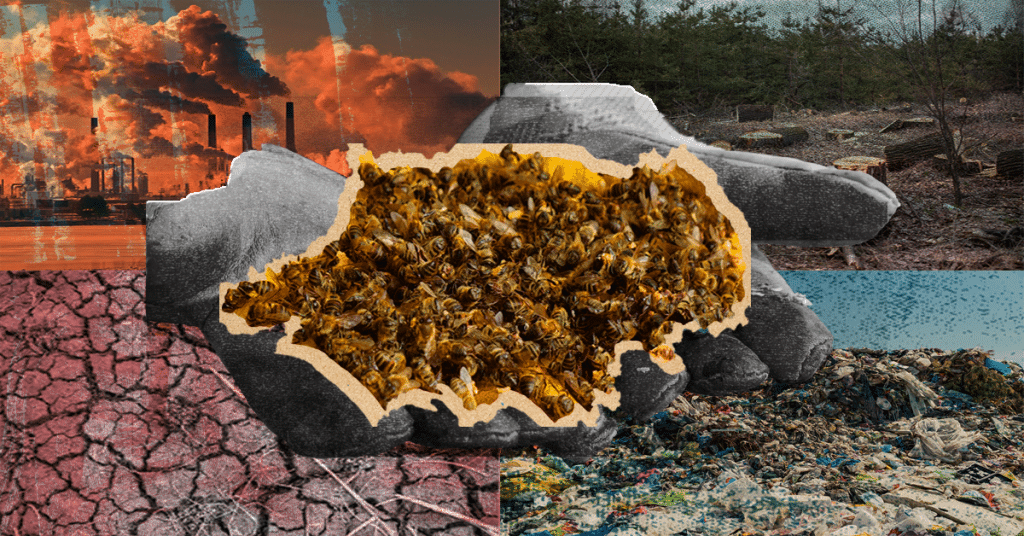
According to an Our World in Data article from 2021, around one-third of global crop production relies on pollinators to some extent, while ‘studies suggest crop production would decline by around 5% in higher income countries, and 8% at low-to-middle incomes if pollinator insects vanished.’ The Oxford report makes for more sobering reading: ‘pollinators like honeybees contribute to the production of over 70% of leading global crops’, while threats to pollinators’ food security and biodiversity, such as climate change, viral diseases, increased use of artificial pesticides, have had a deleterious effect on the populations of these insects. It continues: ‘over the past decade, annual commercial honey bee colony losses in the U.S have typically ranged between 40 and 50%, and could reach 60 to 70% in 2025.’
Bees don’t just make honey. They support the food chain for thousands of species, including humans. They are also vital in propping up ecology, flowering plants across a range of regions and climates, as well as improving soil health. According to the United Nations, the current extinction rate of bees is estimated as between 100 and 1,000 times higher than normal due to human influence. If this worrying trend continues, it warns, ‘nutritious crops, such as fruits, nuts and many vegetable crops will be substituted increasingly by staple crops like rice, corn and potatoes, eventually resulting in an imbalanced diet.’

‘Bee buffets’
Biologists aren’t the only people taking action. Across the UK, pollinator pathways are taking flight across urban centres. The initiative, started just over a year ago, set out to populate urban areas in Bristol, UK with plants to enable insects to thrive. These pathways rely on hardy, drought-resistant plants and manual weeding instead of herbicide use. A map by conservation charity buglife shows that these pathways now stretch across the UK, with over 3,800 registered so far. A similar map from the Pollinator Pathway website shows that they stretch the world, with most registered pathways found in the US and UK.
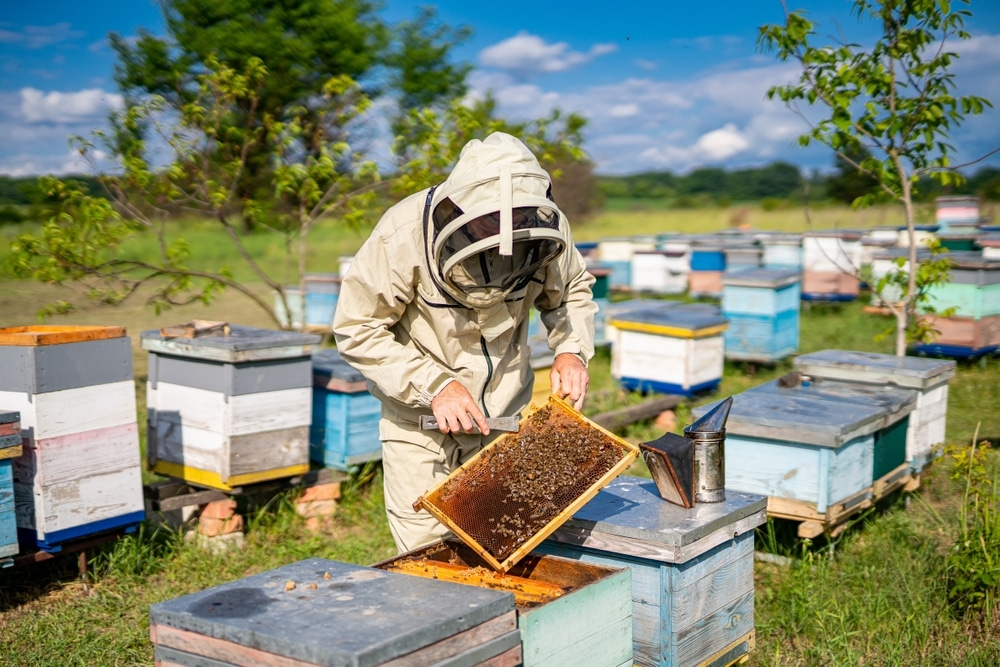
Flora Beverley, who started the project in Bristol, highlights the reciprocal benefits of investment in nature and the living world:
‘The things that are good for nature tend to be very good for people too’; ‘we’re lucky to have so many green spaces in Bristol, but there is a lack of connection between them. Habitat fragmentation is a big issue.’
Professor Dave Goulson from the University of Sussex says that such community initiatives are ‘a fairly easy win’: ‘we already know that urban areas can be surprisingly good for pollinators compared to modern, intensive farmland,’ he says. ‘There’s no downside to having lots of wildflowers in our cities. As well as helping to conserve biodiversity, it connects people with nature. Kids can grow up surrounded by bumblebees, butterflies and birdsong.’
Greenwashing
Like many grassroots and environmental initiatives, Beverley isn’t paid for her efforts. She applies for small grants in her own time, relying on the work of volunteers and donations from local businesses. At the risk of sounding cynical, these well-meaning efforts by biologists and conservationists aren’t enough. Large-scale policy change is needed, but governments appear to be taking little notice.
Meanwhile, a range of industries (oil, fast fashion, fast food, among others) have launched successful PR campaigns, framing themselves as sustainable and environmentally friendly. These campaigns, known as Greenwashing, rely on organisations using superficial, eco-friendly messaging, like nature-themed visuals or vague buzzwords (now largely on social media) to create a green image while avoiding meaningful change. According to Greenpeace, this often takes the form of token gestures: vague, unsubstantiated claims made with a lack of evidence, and using buzzwords and (the now heavily-contested) carbon offsetting as a crutch.
With oil and gas companies spending billions on altering narrative and lobbying on climate since the 2015 Paris Agreement, the impact is that the public begins to believe that environmental issues aren’t as pressing as they actually are. They buttress a social and economic system built on harvesting natural resources for financial gain, a sleight of hand which operates on a global scale. What’s more, people who are actually interested in making a positive environmental impact are labelled as fanatics – simply not content with these industries’ ‘generous’ contributions to green initiatives.
To resist Greenwashing, Greenpeace recommends becoming an active citizen, writing your local politicians, signing petitions, complaining to advertising watchdogs and seeking out guidance on how to live in a more climate-friendly manner.
Societal implications
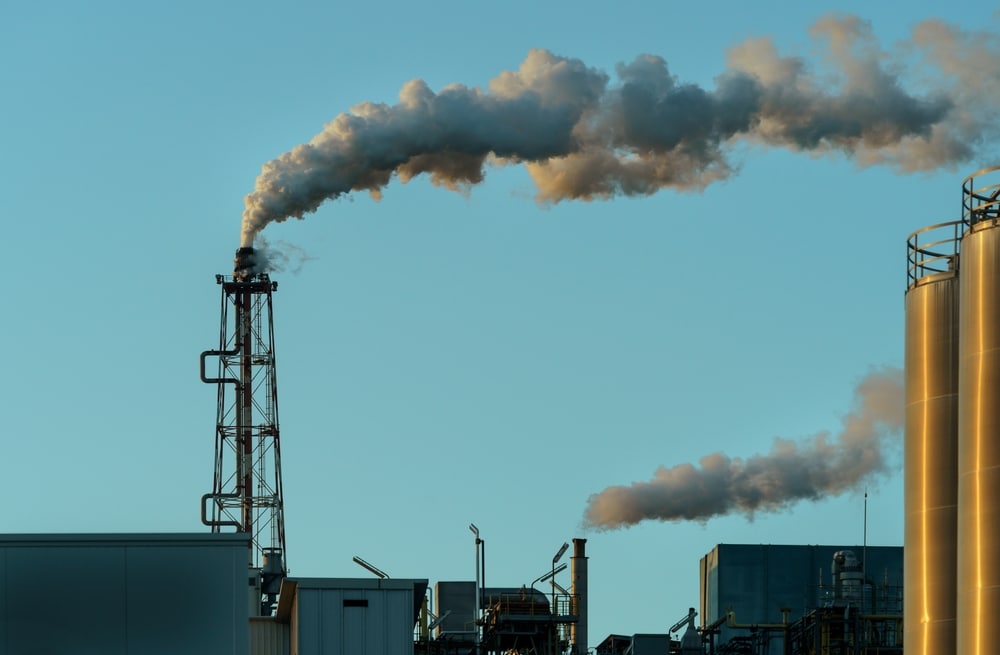
The 2015 Paris Agreement set a 1.5ºC increase of global temperature against pre-industrial levels as the maximum threshold which humanity cannot afford to cross. Research shows that going beyond this limit could trigger irreversible shifts that would threaten society.
The Intergovernmental Panel on Climate Change (IPCC) projects that, at our current pace, the planet could pass 1.5ºC of warming by 2040. Alarmingly, 2024 was the first year that global temperatures averaged more than 1.5ºC above pre-industrial levels. Even if governments deliver on their 2030 emission pledges, we’re still on track for 2.7ºC of warming by 2100. At that level, scientists say many regions will face ‘unbearable heat’, severe weather extremes, food insecurity, and widespread ecosystem collapse. Petro interests exacerbate the problem, and emissions climb solidly. Fossil fuels remain the biggest driver of climate change, as CO2 lingers in the atmosphere far longer than other greenhouse gases, and by 2024, their emissions hit record highs.
The threat to humans is existential. According to the IPCC, roughly 3.5 billion people already live in areas highly vulnerable to climate risks. By 2100, up to 75% of the global population could face deadly heat and flooding. Food systems are deteriorating: grain yields are dropping, farmland is shrinking, and fisheries are all feeling the brunt, despite biologists’ and conservationists’ best efforts. Surely profit-seeking businesses can see that the looming climate emergency is bad for business. Each year, bees deliver hundreds of billions of dollars (US) in economic value, and contribute to between $235 and $577 billion (US) of annual global food production.
A change of philosophy
We must change our philosophy surrounding climate issues. With the Guardian reporting last year that fossil fuel companies had seen record profits capitalising on the war in Ukraine, Shell’s 2022 profits the highest-ever in its 115 year history, and the world’s largest banks pledging $869bn to fossil fuel firms in 2024, the largest contributors to climate change, and therefore the largest contributors to the decline of pollinators, and potentially us, is us. If the bees go, we go.