Emma is 20. She believes she has a healthy diet—or at least, that is what she has always thought.
Her mornings begin with a creamy protein milkshake, the kind advertised as a fitness essential. Breakfast follows with a bowl of crunchy ‘high-fiber’ cereal that promises slow-release energy. When lectures drag on, she reaches for a bit of chocolate—’brain fuel,’ she calls it. Lunchtime means a classic meal deal: a sandwich neatly wrapped in plastic, a bag of crisps, and a fizzy drink to wash it down. Dinner is something quick, eaten between assignments, often with a Diet Coke at her side.
To Emma, this is normal—balanced, even. After all, the packaging says ‘healthy,’ and it is the same kind of food she has grown up eating.
The real issue
But beneath the convenience and clever labeling lies a very different story. It is one shared by millions of young people in the UK. A growing body of research reveals that more than 66% of their diet, starting as early as age 11, is made up of something called UPFs—ultra-processed foods. Across the Atlantic, the situation is even more stark: in the United States, over 70% of the average person’s calories now come from ultra-processed products. The highest consumption rates are among teenagers and young adults. These foods are designed to be cheap, long-lasting, and irresistibly tasty. However, this often comes at the expense of nutritional value. And the effects aren’t just showing up on waistlines—they’re quietly shaping mental health, gut health, and the way an entire generation feels, thinks, and lives.
So, what exactly is an ultra-processed food? And how can something so familiar—and so heavily marketed as harmless—be influencing our bodies and minds in ways we barely notice? To find out, I spoke to scientists, nutrition experts, and those who’ve tried to cut UPFs from their lives.

What Are Ultra-Processed Foods?
Food processing isn’t inherently bad. Humans have been processing food for centuries—to preserve, add flavour, reflect cultures, and foster community. However, there is a key distinction between traditional processing and the industrial-scale modification seen in UPFs.
The NOVA classification system, developed by Professor Carlos A. Monteiro and colleagues at the University of São Paulo, identifies UPFs as Group 4 foods. These are the most heavily industrially processed category. These products are made primarily from ingredients extracted from other foods (for instance: refined oils, fats, sugar, and starches). They are often combined with additives like flavorings, colorings, emulsifiers, and preservatives.
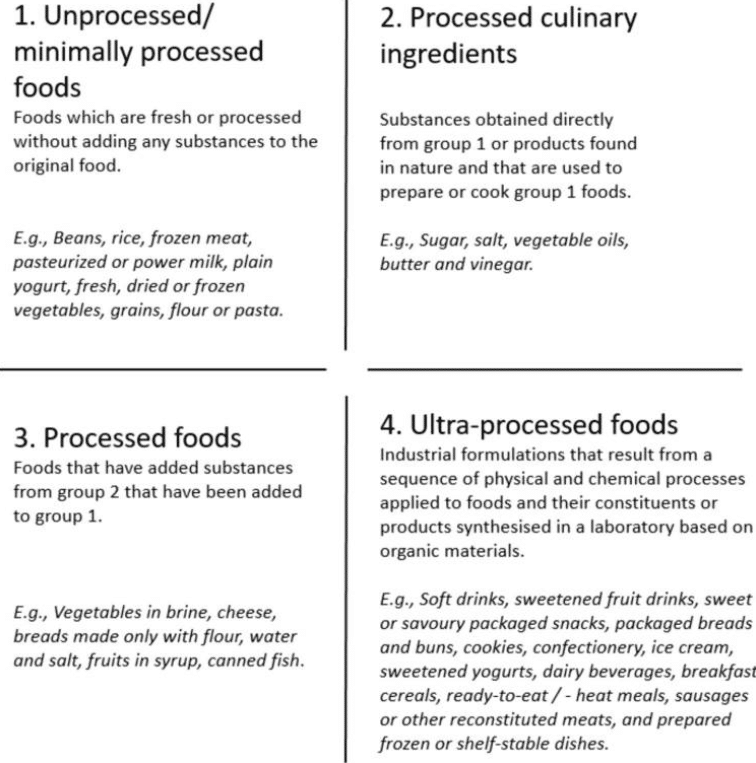
They’re designed for convenience, affordability, and taste—with a long shelf life—but often at the expense of nutritional value and long-term health.

A debate on the science
Anthony Warner, known as The Angry Chef, acknowledges the nutritional concerns but remains sceptical about NOVA’s scientific rigour:
“An orange is probably digested differently from orange juice. There is a structural change. But the NOVA classification is flawed from a scientific point of view,” said Warner. “Group 4 includes a wide variety of things, with no clear common thread. You can’t chase a clean cause-and-effect chain. Still, it is true that foods high in sugar and fat can cause problems—and young people should be cautious about what they hear on social media.”

Lewis Wallis, a Regulatory Affairs Advisor with a PhD in Digital Food Environments, adds nuance to the discussion:
“Having worked in both public health and the food industry, I try to meet the debate in the middle,” said Wallis. “I don’t have strong opinions either way. NOVA is a good direction of travel—encouraging people to cook more from scratch—but it is not an actionable framework for the industry. If you sell UPFs, you’re kind of stuck.”

Gut feeling: The mental health link
One of the most compelling arguments against UPFs is their impact on the gut—and, by extension, the brain.
The human gut houses around 100 trillion microbes, collectively called the gut microbiome. It plays a crucial role in regulating mood, digestion, and overall well-being. Over 90% of serotonin—a neurotransmitter linked to happiness and calm—is produced in the gut.
Consuming UPFs, especially those high in sugar, can disrupt this delicate microbial balance. The result? Gut inflammation, dysbiosis, and impaired production of essential brain chemicals.
Charlotte Catignani, a scientist at YPMH: The Foundation for Young People’s Mental Health, explains:
“Young people often know which foods are good or bad—but that is where it stops. They aren’t taught why it matters,” Catignani said. “We help them understand that different types of fibre feed different gut bacteria, which in turn produce the essential chemicals the brain and body need. That explanation makes a difference.”

Lived experience
For some, reducing UPFs is life-changing. Steffan Rhys, a journalist, who gave them up for over a year, reflects:
“I noticed a huge difference—not just physically, but mentally,” Rhys said. “I felt clearer, less sluggish, more in control.”

Steffan also admits it is not always easy. But as a parent, he is committed to keeping ultra-processed foods off his children’s plates. He shows them, by example, what a healthier way of eating looks like.
Final bite
What can we do now?
Food is personal. It is cultural, social, and emotional. But in a food environment saturated with hyper-convenient options, it is more important than ever to be aware of what we’re consuming—and what it is doing to our bodies and minds.
Ultimately, the choice of what we eat, how much, and when belongs to us.
But choice is only real when it is informed. In a world where ultra-processed products dominate supermarket aisles and takeaway menus, it takes awareness and intention to break the cycle.
What is more, understanding how UPFs affect not only our physical health but also our mood, focus, and long-term well-being is a vital first step.
And while experts disagree on whether the NOVA classification system is the perfect scientific measure, almost all agree on one thing. Reducing dependence on these industrially produced foods is a move towards better health.
However, the challenge, is that UPFs are deeply woven into modern life—sold as convenient, affordable, and even ‘healthy’ alternatives.
Consequently, the solution isn’t just personal discipline; it is also about demanding transparency, better food education, and a food environment that makes the healthy choice the easy choice.
Does it change Emma’s percpective on what she eats?
All in all, for Emma, this new understanding is more than just a nutritional wake-up call — it’s a chance to take back control. She now realizes that what she thought was “healthy” fuel was often ultra-processed convenience in disguise. It was quietly shaping her mood, energy, and well-being. By replacing even a few of these quick fixes with fresher, fiber-rich foods, she can nourish her gut, steady her mind, and step off the rollercoaster of sugar spikes and crashes.
For a generation hooked on speed and convenience, Emma’s story is a reminder: food is more than calories, taste, and appearance — it is nourishment.
Finally, caring for both mind and body means making wholesome, intentional choices. It means refusing to let marketing strategies pull us into an endless cycle of anxiety.
References
Lane, M.M., Gamage, E., Du, S., Ashtree, D.N., McGuinness, A.J., Gauci, S. et al., 2024. Ultra-processed food exposure and adverse health outcomes: umbrella review of epidemiological meta-analyses. BMJ, 384, e077310. doi:10.1136/bmj-2023-077310
Mutebi, N., 2024. Health impacts of ultra-processed foods. London: Parliamentary Office of Science and Technology.
Monteiro CA, Cannon G, Levy RB, et al. 2018. Ultra-processed foods: what they are and how to identify them. Public Health Nutrition, 22(5), pp.936–941.
Firth, J., Gangwisch J.E., Borisin A., Wootton R.E., Mayer E.A., 2020. The ‘food–mood connection’: How diet affects mental wellbeing. The Lancet Psychiatry, 7(6), pp.487–500.