I love friendship—the idea (and reality) that people can live separate lives, be different, yet connect, coexist, and, together, form a cohesive unit in which the sum is greater than its parts.
How touching is that?
I was the girl who drew hearts in my diary around my friends’ names, thought up secret handshakes, and promised we’d be best friends forever. I saw us reflected in famous partnerships in movies, like Anne and Diana in Anne of Green Gables or Carmen, Bridget, Lena, and Tibby in The Sisterhood of the Travelling Pants.
Yet, in romanticising friendship, I can often mistake mediocrity for closeness. Basically, friendship becomes an ideal, not real.
In thinking that my friends complete me, I am codependent. I expect things from them they cannot give, and, consequently, am at greater risk of experiencing disappointment, rejection, and resentment when love runs out.
Making space
Every relationship (characterised by frequent, repeated interactions between two people)—be it romantic, platonic, or animus—creates a unique shape.
This “shape” may be the sacred love between mother and child, or the first awkward interactions of recently awakened lovers.
In her article for British Vogue How I Embraced the Thrilling Uncertainty of Situationships, Annie Lord quotes Sally Rooney’s Beautiful World, Where Are You? in which best friends Alice and Eileen keep in contact by writing long, descriptive emails to each other. Alice writes to Eileen about her relationship with her boyfriend Felix:

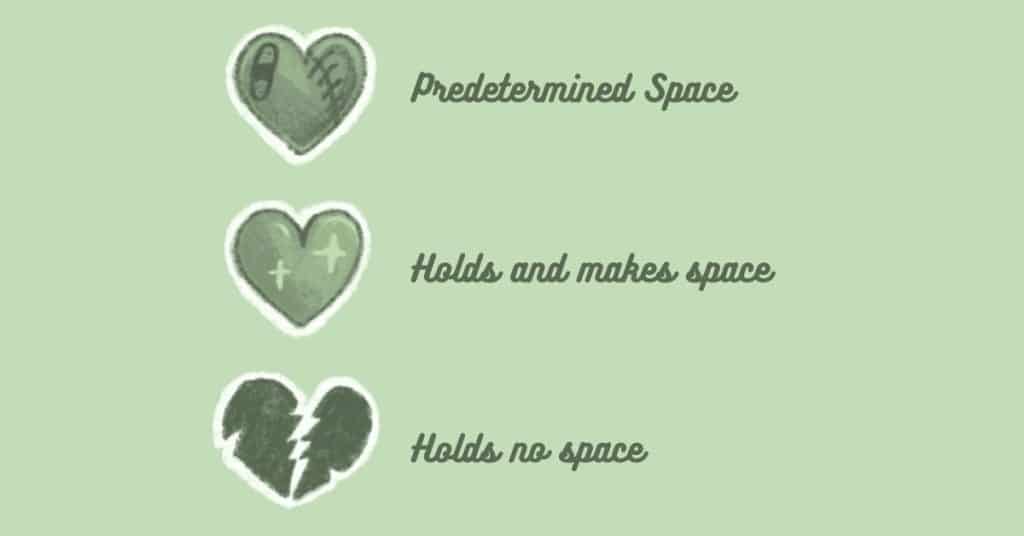
“At times I think of human relationships as something soft like sand or water, and by pouring them into particular vessels we give them shape. So a mother’s relationship with her daughter is poured into a vessel marked ‘mother and child,’ and the relationship takes the contours of its container and is held inside there, for better or worse. Maybe some unhappy friends would have been perfectly contented as sisters, or married couples as parents and children, who knows. But what would it be like to form a relationship with no preordained shape of any kind? Just to pour the water out and let it fall. I suppose it would take no shape, and run off in all directions.”
This quote made me consider the possibility of pre-ordained shape. At the time of reading, I had recently escaped a turbulent, not-so-thrilling situationship, in which the “vessel” I had moulded for our relationship was rigid: made of concrete, inflexible to the comings and goings of life, time, and shifting expectations. I had assumed he would be “the one” before he permitted it.
On the other hand, this passage highlights the weakness of relationships with no shape. Like a liquid, they lack structure, stability, or strength to support.
What would a happy medium look like—a vessel that at once holds and “makes space”? This vessel would be in a solid state yet able to melt, like metal, and be moulded, like wet clay. It would be more flexible and adaptable to individual differences and life changes.
The Birth of Attachment
It’s important to understand that it’s very natural and healthy, to some extent, to have pre-conceived ideas of the shape of a relationship.
We’re pro-social beings, wired for connection. Attachment is also largely evolutionary, enlarging our defence against predators and ensuring the continuation of our species.
Attachment is the need for proximity to and connection with our caregivers in infancy, first researched by psychologists such as Harry Harlow, John Bowlby, and Mary Ainsworth in the mid-20th century.
Infants rely on their caregivers to provide for their needs, such as food, warmth, and comfort. Insecure attachment arises when an infant does not receive enough proximity or connection. Their parents may be absent, abusive, neglectful, or simply inattentive enough for the infant’s needs to be inadequately met and for them to be improperly cared for.
Importantly, no parent can be completely emotionally and physically present 100% of the time.
What you do need to know is: your attachment to your caregivers in infancy are absolutely affecting your present friendships.
Our experiences with our caregivers in infancy create internal working models: schemas (or scripts) that guide our expectations and interpretations of the world and our vision (or ideas of the shapes) of future relationships.
These internal working models can be problematic if they cause us to stay in unhealthy or toxic relationships or sabotage good ones.
Anxious Ambivalent Attachment: Am I the Red Flag?
In their recent podcast episode Can You “Fix” an Anxious Attachment?, The Psychology Sisters (Kat Wyeth, registered psychologist, and Aimee Hudson, clinical psychotherapist) explain how caregiver inconsistency causes anxious ambivalent attachment, one of three types of insecure attachment.
The caregiver is sometimes responsive and attentive while at other times they are demanding or distracted. The infant’s proximity to and connection with their caregiver is continually interrupted. As a result, they grow to expect interruption.
They develop ambivalent behaviour and juxtaposing desires: the need for love but also the fear of abandonment. Ironically, they perpetuate this cycle, seeking inconsistency in relationships because they’re familiar with it; they’re used to earning and chasing love.
As a result, the ambivalently attached tend to have an excessive external focus. They’re hyper-attuned to others’ emotions, particularly to any sign of abandonment. They also often reach out to their loved ones to relieve internal conflict, anxiety, and distress, and therefore they are often perceived as clingy or possessive.
But this tendency can create a self-fulfilling prophecy. The ambivalently attached individual’s need for validation and assurance may cause their friends or loved ones to feel smothered or drive them to leave the relationship, confirming the individual’s belief that they are unloved, unworthy, or somehow deserving of abandonment.
The secret to healing anxious ambivalent attachment, say Kat and Aimee, is to redirect attention inward; practice self-soothing, and learn to accept and receive love.
How Do I Know If a Friendship is Toxic?
This is your signal to pause, breathe, and pay attention to how your friends make you feel. When are you giving more than you’re receiving? Consider whether you need to step back momentarily or maybe even altogether.
Before you officially cut ties with any friends, hear me out! I am not promoting cancel culture. I believe strongly in the importance of grace and forgiveness. None of us are perfect.
We may need to learn to express our needs—kindly but firmly—and embrace healthy levels of conflict. We may also need to set firmer boundaries for ourselves.
However, I am referring to the consistent experience of being mistreated, undervalued, or giving more than you receive. Continuing to invest in a relationship in which you constantly have to chase love, approval, or attention is a form of self-abandonment.
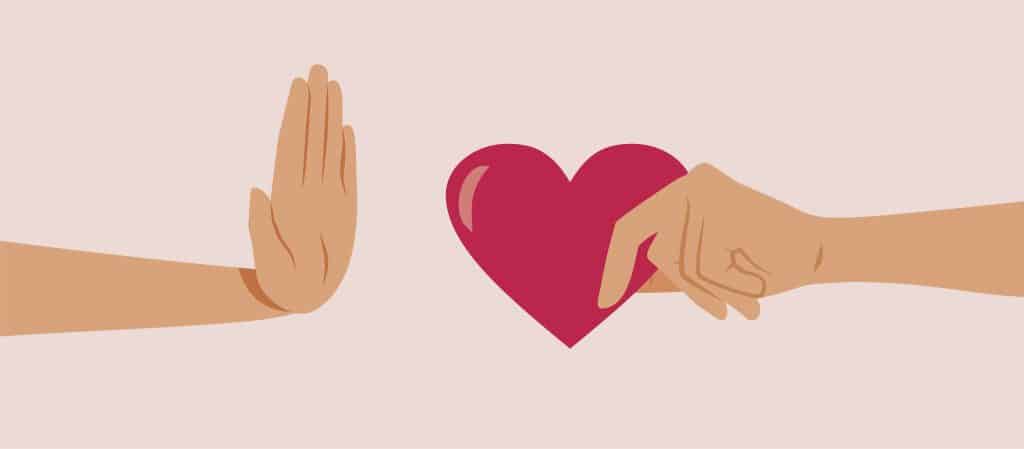
These sorts of friendships are a ticking time bomb. You need to step back before you get hurt.
For example…
Imagine you have a friend who’s been a bit distant lately. You feel like there’s been some tension between the two of you, and you want to resolve the situation, so you text her to ask if she’d like to grab a coffee and catch up.
Initially, your friend agrees, but later she texts to say she changed her mind and she’d like space.
You reply, trying to be empathetic and understanding, but also expressing your desire for care. She accuses you of being controlling, psychopathic, and not caring about your friends.
You reply, again trying to be empathetic and understanding, but also defending yourself against her accusations. This time, she doesn’t reply, leaving you on read.
A month later, she still hasn’t responded. You text her again, asking if she’s given it any more thought. She says you’ve crossed a line, and she has no desire to resolve the situation.
You have two choices: you could persist trying to mend the friendship, or you could cease texting, knowing you were kind and stood true to who you are.
To help you choose, consider the friendship through the lens of an hourglass and a circle.
Hourglass and Circles
First, an hourglass.
The sand in an hourglass is not always evenly divided between the upper and lower bulbs. Sometimes the sand is divided in a ratio of 60:40; other times, 80:20.
If the amount of sand in each of the bulbs is too often unequal and skewed in their favor, you’re more like a funnel than a bulb, someone who constantly pours their attention and effort into others (without receiving love in return).
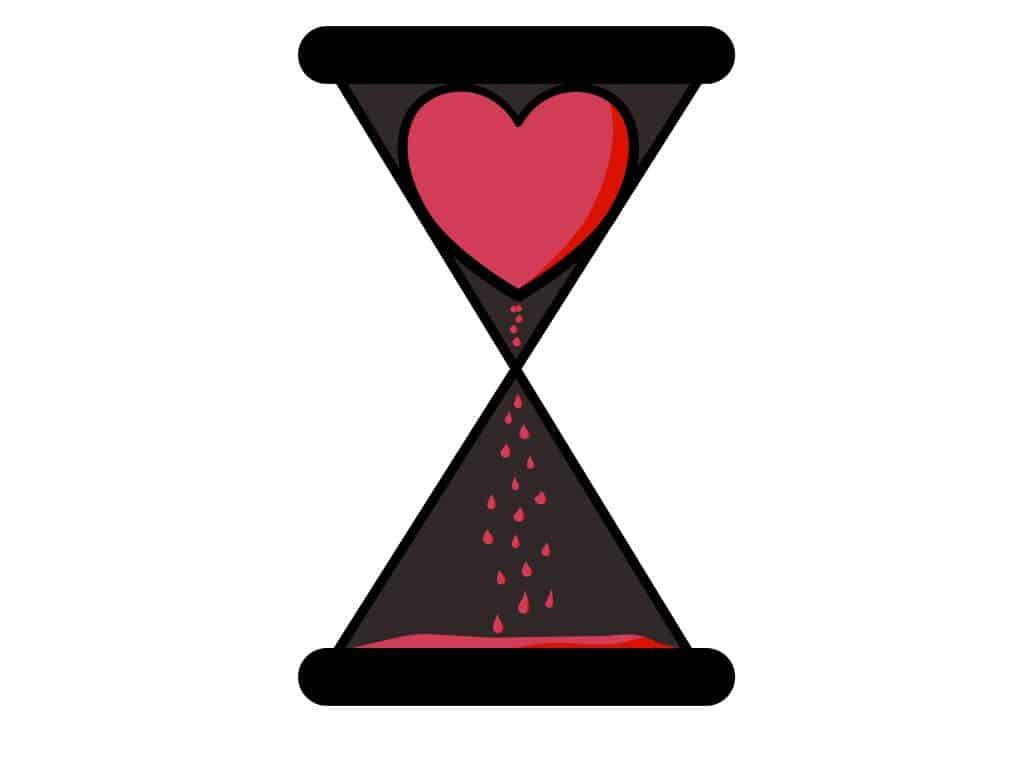
In the above example, you might realise you’re the only one trying to resolve the situation or listening to the other person’s feelings. You’ve reached out, while she didn’t respond to your text for a month nor did she intend to do so ever. If so, it might be time to stop pouring in more sand and to let that friendship run out.
Alternatively, consider a series of concentric circles.
Inside a large circle is another smaller circle, inside of which is an even smaller circle, etc. In Robin Dunbar’s Social Network Theory, the circles represent various types of friendship. We are at the centre. The closer a friend is to the centre, the closer they are to us.
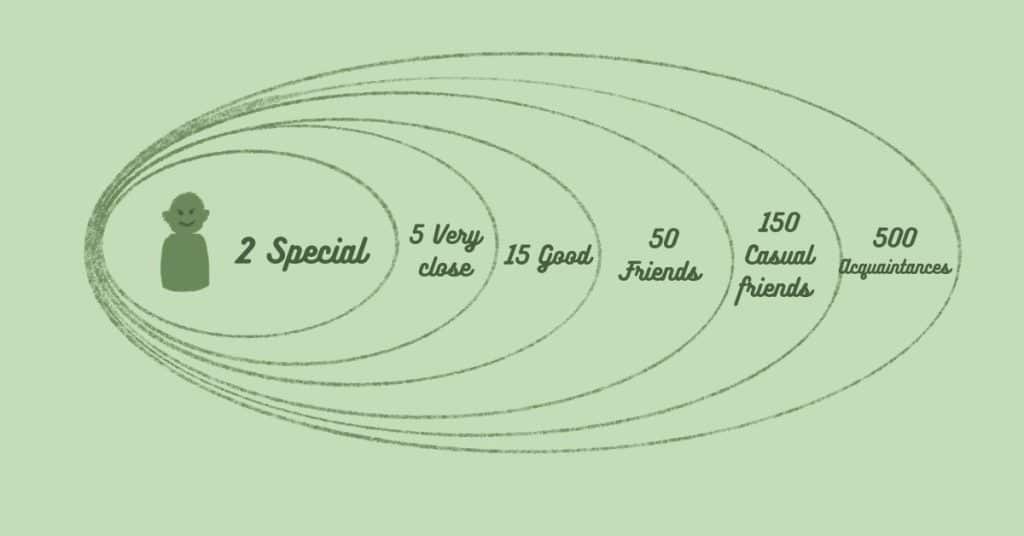
In the above example, you might realise she was never a close friend to you. You had good conversations with her occasionally, but you could never really confide in her about personal things. She was in the outer circle.
The closeness of the individual to us should guide how much energy we put into the relationship. If the person is close to us, we might spend more energy trying to mend the friendship. Otherwise, we can more easily let them go.
The important thing is that the closer to the centre, the more sacred and safe the space where we receive true love.
And that starts from you.
True Love is Self-Love
I get it. Break-ups and friendship falling-outs are hard. It’s always difficult to lose someone you love.
In fact, ambivalently attached individuals tend to be unduly affected by grief. Compared to individuals with differing attachment styles, their grief tends to be more intense and prolonged, writes Hal Shorey, Ph.D.
When you decide to end a friendship, it might be helpful to assure yourself, “Hey, I’m actually doing the right thing here!”
I’ve experienced the painful ups and downs of relationships. And as someone who identifies as ambivalently attached, I understand what it’s like. I get anxious when close ones engage in avoidant behaviour, and I develop people-pleasing tendencies or demand love out of desperation to prevent people from leaving.
I’m not writing this because I’ve completely healed my ambivalent attachment — because I haven’t.
However, I have realised that friends are people who love me as I am and with whom interactions flow organically because I don’t have to prove myself.
I used to think love meant denying myself—continuously giving, even when I needed my own time, love, and care. But I realise now that sometimes love is refraining from giving.
Giving your time and energy to others to resolve your internal guilt and avoid abandonment comes from fear, not love; it is selfish, not selfless. Besides, depending on someone else’s approval is forgetting that you are enough as you are.
Sometimes you should refrain from giving—for someone else, but first and foremost, for yourself.
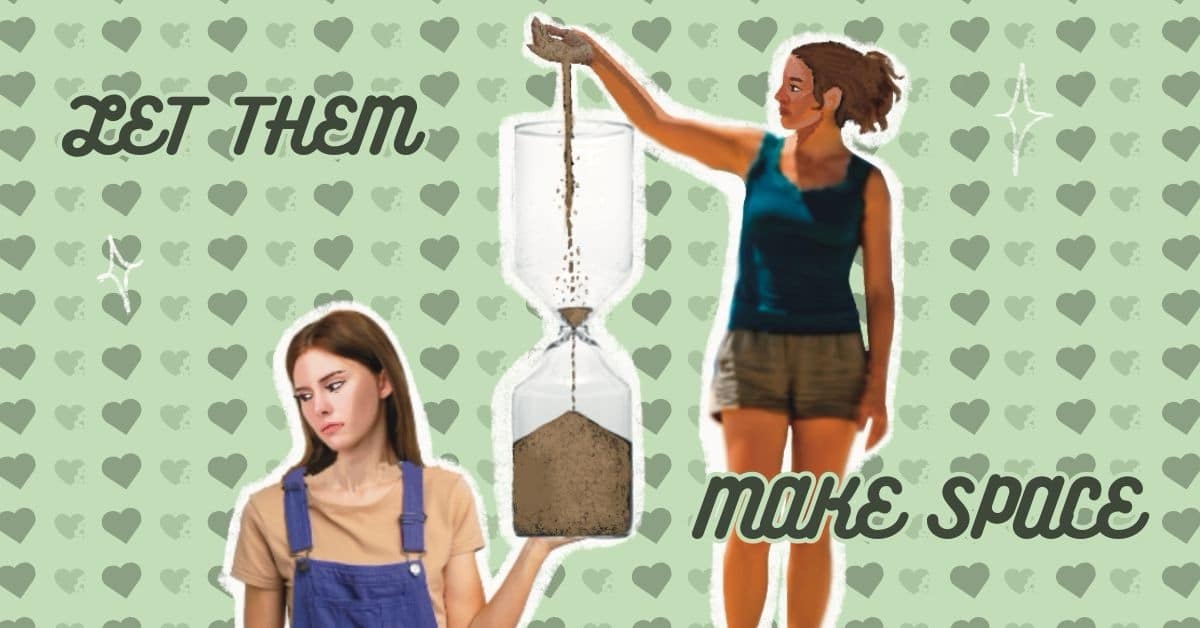
“Let Them“
The “Let Them” Theory, founded by Mel Robbins, is currently trending on social media.
The theory suggests that if someone mistreats us, let them. Not in a lie-down, become-a-rug-they-walk-all-over sort of way. Rather, in the knowledge that by continually giving, fighting, and investing in unequal and toxic friendships, we’re likely to exhaust ourselves and become increasingly unhappy.
Instead, we should redirect attention to what we can control (the “let me”).
Hello! Does this not remind you of Kat and Aimee’s advice to redirect attention inward?
At its heart, “making space” in friendships is simply recognising and accepting that we can’t control people. We can’t drag someone into the inner circle if they don’t want to be there, or force someone to fill the pre-ordained shape we’ve prepared.
Not everyone will be best friends forever. Some will be hourglass friends. And that’s okay.
The fix is to know when time has run out.