It seems like every company nowadays is trying to find some way to incorporate AI into their business. Students use it to cheat on assignments, healthcare providers use it in medical diagnoses, and marketing professionals use it to target audiences.
For many people, their understanding of artificial intelligence is limited to the basics of ChatGPT. These books will help you comprehend the reach and limits of AI, how machine learning works, and what the future may hold for artificial intelligence.
You Look Like a Thing and I Love You: How Artificial Intelligence Works and Why It’s Making the World a Weirder Place by Janelle Shane
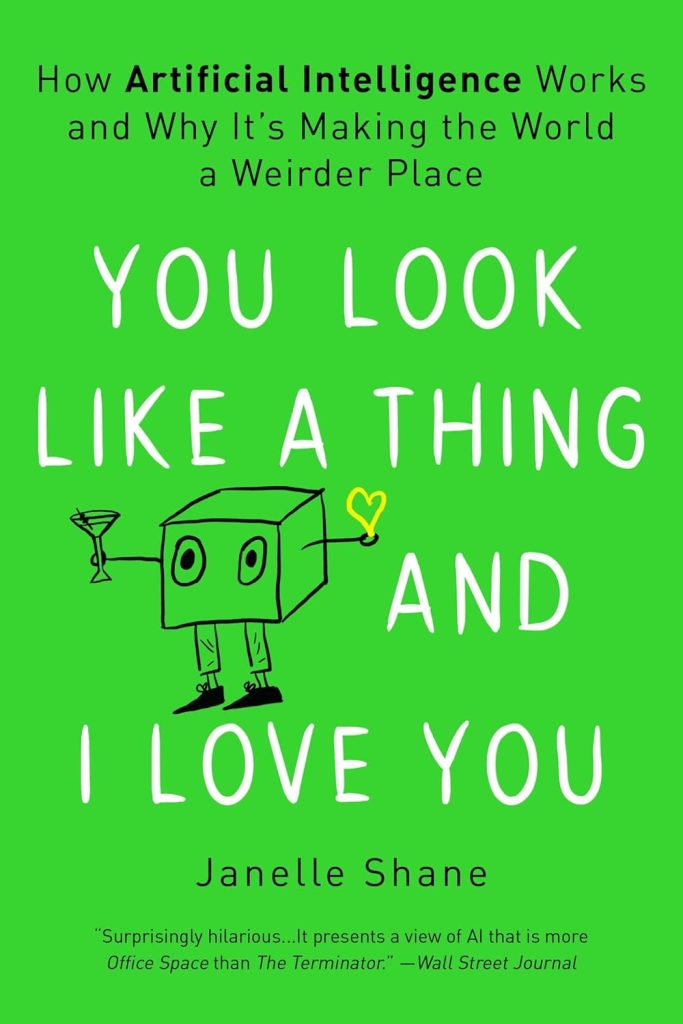
One of the best pickup lines ever, according to an artificial intelligence trained by author Janelle Shane, is “You look like a thing and I love you.” Shane creates different AIs that learn how to paint, write, and flirt in an attempt to better understand the technology.
In this humorous book, Shane probes how AI thinks. Is AI really as smart as people think? How does it go about making decisions? What does AI-generated Harry Potter fanfiction look like?
In You Look Like a Thing and I Love You, Shane answers all of the basic, and the not-so-basic, questions that you might have about AI technology. The book shows how this technology learns and adapts and how it reflects humanity. It is an excellent introduction to the expanding world of artificial intelligence.
Buy on Amazon
The Alignment Problem: Machine Learning and Human Values by Brian Christian
The book The Alignment Problem explains everything that goes wrong when AI systems are built. Best-selling author Brian Christian unpacks how data trains our AI and “machine-learning” systems in the present day. They are trained to listen, learn, and make decisions on our behalf.
However, when the systems we build fail to do what we want or expect, ethical and existential risks emerge. Researchers call this the alignment problem.

Machine-learning systems sift through resumes, but they have inherent gender biases. There are algorithms that decide bail and parole; yet they assess Black and White defendants differently. As AI continues to take over, it is no longer assured that human eyes see applications, tests, or forms.
Christian introduces the first responders to the alignment problem and dives into their plan to solve it before AI takes over decision-making entirely.
The Alignment Problem displays humanity’s biases and unstated assumptions through the behavior of artificial intelligence. It describes how human values clash when confronted with the harsh reality of data.
Buy on Amazon
Unmasking AI: My Mission to Protect What Is Human in a World of Machines by Joy Buolamwini
Artificial intelligence may seem fairly new but it has been under scrutiny for quite some time. In fact, Dr. Joy Buolamwini has been studying AI and computer science for over ten years. As a graduate student at MIT, she exposed widespread racial and gender bias in AI services from tech giants.
Unmasking AI tells the story of how Buolamwini uncovered what she calls “the coded gaze.” It refers to the data-encoded discrimination that occurs in tech products. She conveys how racism, sexism, and ableism can overlap and render certain groups “excoded,” leaving them vulnerable.
Buolamwini encourages everyone to join the fight for algorithmic justice. The book raises awareness of the imperfections of AI applications and advocates for more equitable and inclusive artificial intelligence systems.
Buy on Amazon
The Master Algorithm: How the Quest for the Ultimate Learning Machine Will Remake Our World by Pedro Domingos
Humans seem intent on building a computer intelligence that is as flexible and resourceful as ourselves. In The Master Algorithm, Pedro Domingos chronicles the race to invent the ultimate learning algorithm that is taking place across the world’s top research labs and universities. These scientists and researchers are working to construct an AI that is capable of deriving any knowledge from data and doing anything we want before we even have to ask.
The book has ten chapters, each catered toward a specific topic. Domingos outlines the revolution of machine learning, how human brains work, and how scientists study artificial intelligence.
The central hypothesis of the book can be summarized as follows: “All knowledge – past, present, and future – can be deduced from data by a single, universal learning algorithm.” This statement drives the plot and is tied into every chapter.
The Master Algorithm is a great book for anyone looking to understand how data is applied and how AI will influence the future.
Buy on Amazon
The Edge of Sentience: Risk and Precaution in Humans, Other Animals, and AI by Jonathan Birch
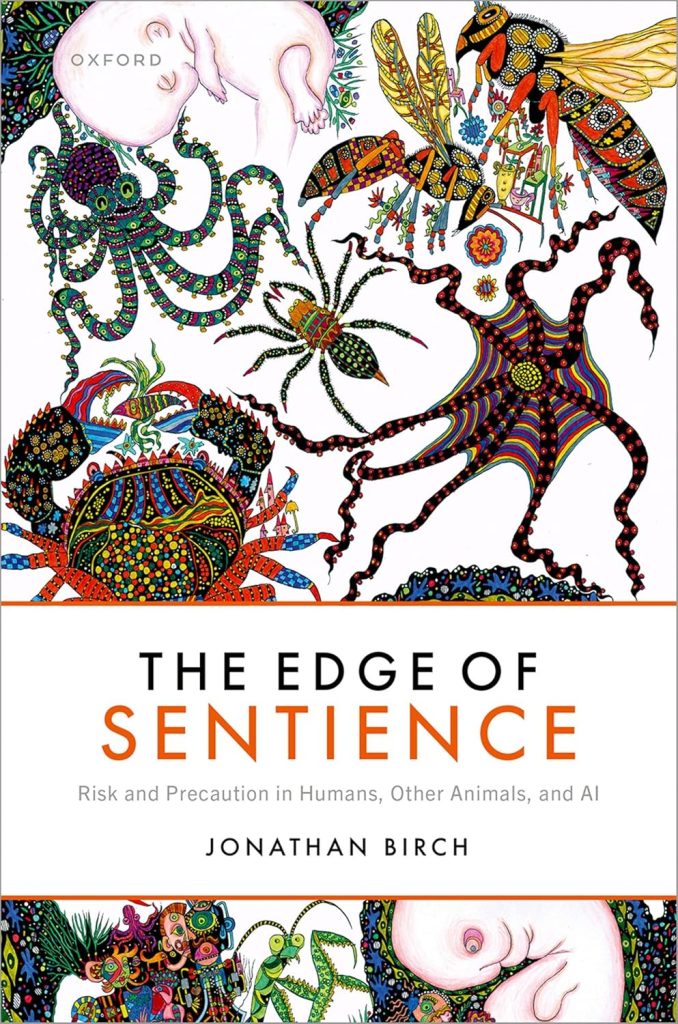
For those who aren’t as interested in the world of hard technology and intense science, The Edge of Sentience poses a more philosophical take on the concept of artificial intelligence.
Jonathan Birch questions the reach of sentience. Can octopui feel pain and pleasure? How can we tell whether a person with a severe brain injury is suffering? When does a fetus in the womb start to have conscious experiences? Does a miniature model of the human brain that is grown from stem cells have feelings? Does AI?
Birch philosophizes on the consciousness of AI. Does one need a body to be conscious? Does a mechanical brain harbor feelings and thoughts?
It is a complex issue filled with ethical dilemmas, and The Edge of Sentience will make you rethink the world around you.
Buy on Amazon
Understanding AI in a Changing World
With AI becoming ever-present in day-to-day life, a lot of people have questions about this new technology.
It’s a very controversial topic. Some people can’t imagine life without it, while others just wish it would go away. If your school or workplace is adapting AI technology and you are curious about the potential impact, try one of the books on the list.