On Nov. 5, a humble Andrew Cuomo took the stage of his campaign headquarters just hours after the polls for New York City’s mayoral race. “This campaign was to contest the philosophies that are shaping the Democratic party, the future of this city, and the future of this country,” he said. The Independent candidate conceded respectfully to his Democratic competitor, Zohran Mamdani. Mamdani garnered just over 50% of the vote—beating Cuomo by 9 percentage points.
New Yorkers handed the progressive Mamdani a mandate, at the same time decisively ousting Cuomo. The Queens-born politician lost every burrow but Staten Island. “Take a hit, Andew Cuomo: Voters want you to get lost,” was the headline of a Nov. 27 story published by the New York Post after he suggested in a WABC interview Republican Curtis Sliwa was to blame for his mayoral loss. The Post’s editorial accuses Cuomo of whining in the face of a “Cuomo-weary public,” beginning, “with all due disrespect, it’s long past time for Andrew Cuomo to go away.”
The end of Cuomo’s career has been punctuated by failure. Defeated by the fresh-eyed and widely inexperienced Mamdani, who’s nearly half his age. Cuomo criticized the Democratic Socialist for his short resume. However, voters chose Mamdani’s potential and promise over Cuomo’s tumultuous political record. Even with the support of billionaire and former mayor Michael Bloomberg, New York City chose to gamble rather than uphold the tired status quo that Cuomo has come to represent.
A family in the public eye
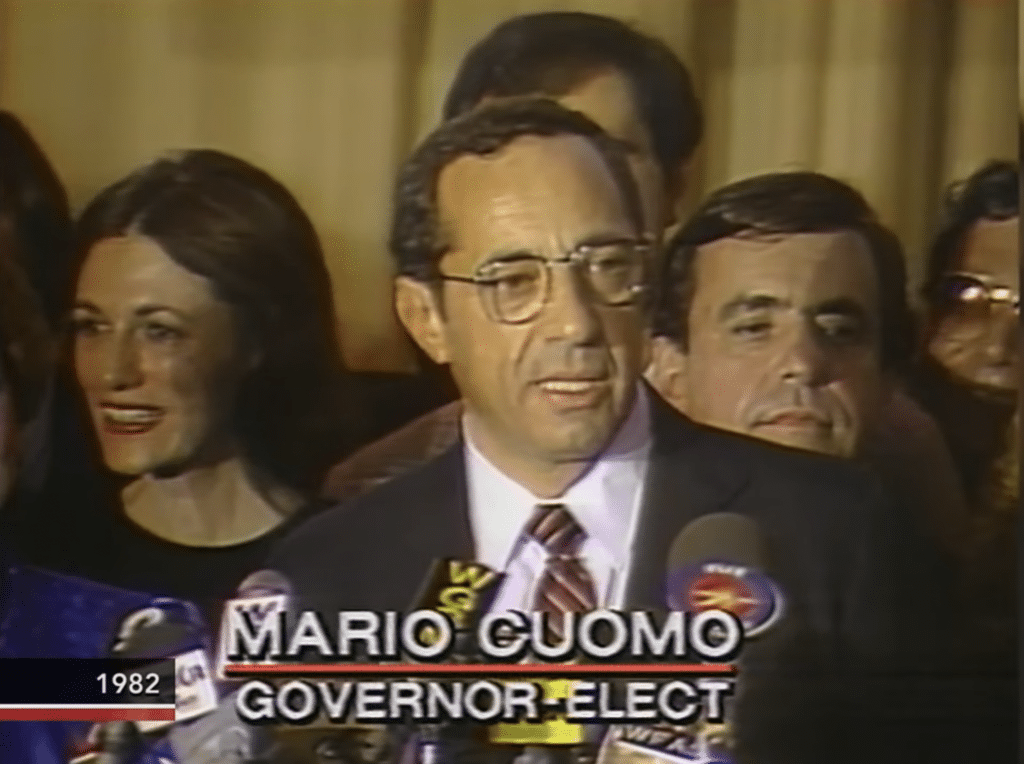
Mario Cuomo, father to Andrew Cuomo, served three terms as the Democratic Governor of New York from 1983 to 1994. The older Cuomo was a skilled public speaker, drawing in his constituents with what seemed to be an earnest disdain for the state of politics. However, he was a willing cog in the Democratic political machine.
A booming personality and sharp sense of humor shaped Mario Cuomo’s distinct identity, but unfortunately so did his political shortcomings. Despite his success in overseeing the closure of Shoreham nuclear plant, he never made a serious bid for the presidency, despite teasing the idea for years. He was honest about his regrets about never taking a stand to align himself with a career-defining initiative.
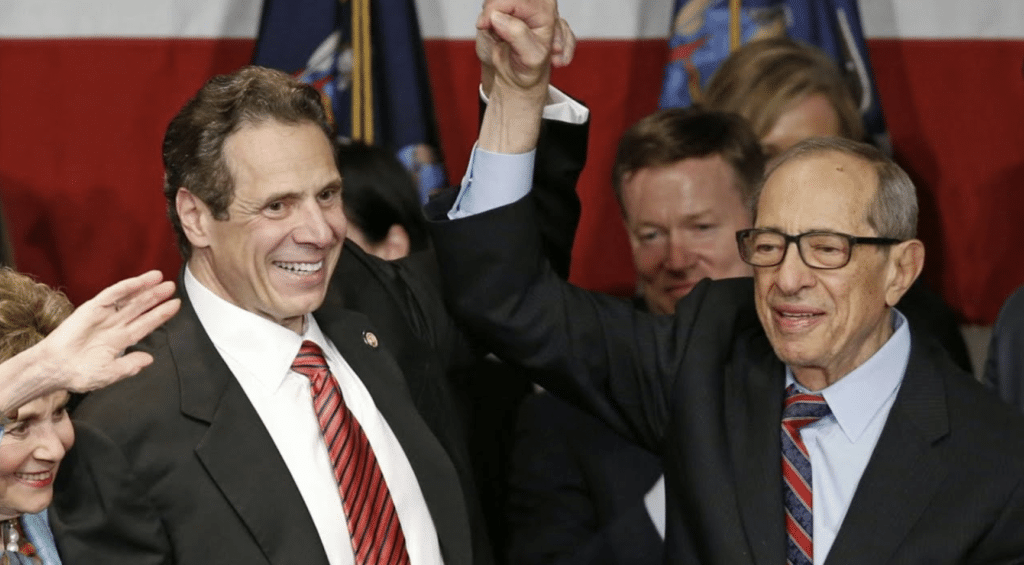
Andrew Cuomo walked in his father’s shadow, for better or for worse, from the very beginning of his political career. As a 19-year-old Fordham student, he aided his father’s 1977 Democratic primary campaign against Ed Koch. In the 1980s, he worked as Mario’s advisor in the State Capitol. The two even lived together in an apartment in Albany for a time.
Wayne Barrett, a former reporter who followed the Cuomos for the Village Voice, characterized the difference in personality between the two in an interview with The New York Times. “While there was a competition in terms of record, there was an understanding between the two of them, from the very get-go, that one was the intellect and the other was the tactician,” he said. Mario was the intellect and Andrew was the tactician.
Mario Cuomo died in 2015 at the age of 82 of heart failure, just hours after his son won his second term as Governor of New York.

Trial and error before political success
In 1986, amidst acting as an advisor to his father, Andrew Cuomo collaborated with various business and government leaders in order to form the Housing Enterprise for the Less Privileged, (HELP). Cuomo was 28 at the time. The idea behind the organization was to build apartments in what was then an abandoned lot in New York These apartments were overseen by nonprofit organizations, offering a short-term homelessness solution as well as various on-site support services.
H.E.L.P. 1, the first of these apartment complexes, was a success, singled out by Congress as a national blueprint for how the United States should respond to homelessness. Following the 1996 election, presidential elect Bill Clinton named Cuomo as Secretary of Housing and Urban Development.
Soon after, the patient and ever ambitious Cuomo sought political agency of his own. Cuomo was entering in the New York Gubernatorial election. In 2002 his campaign garnered media attention, in part, because of his father’s name.
He suffered a humiliating defeat, dropping out just one week before the Sept. 10 primary in a nearly unprecedented move. Democratic elites nudged Cuomo’s decision, reportedly backed by both former President Clinton and then Senator Hillary Clinton. The New York Times reported on Sept. 4, 2002 that Cuomo was “avoiding what polls indicated would have been a searing defeat at the hands of his opponent, H. Carl McCall.”
Most Democratic leaders had favored New York City Comptroller McCall to represent their party over Cuomo in the first place.
Cuomo returned to politics four years later, elected as New York State Attorney General in 2006. He won against his Republican opponent Jeanine Pirro by nearly 20 percentage points, avenging his earlier gubernatorial campaign. Cuomo leveraged his father’s image as a former governor, while also pledging a need for legislative reform as well as better enforcement of environmental laws.
“The New York attorney general can be the great equalizer,” Cuomo said in his victory speech in a Midtown Manhattan hotel, “because no one is so powerful that they’re above the law.”
Cuomo finally gained political momentum of his own. Four years later, he was elected Governor of New York in a landslide victory.
Cuomo’s tenure ends in disgrace
Cuomo would have served three terms as Governor had he not resigned in 2021.
In June of 2011, he succeeded signing a law to legalize same sex marriage, despite having a majority Republican State Senate. He began reconstruction on the Tappan Zee Bridge in 2013, leading the new bridge to be unveiled as the Gov. Mario M. Cuomo Bridge in 2018. Cuomo oversaw the opening of the Second Avenue Subway Line as well as a remodel of Laguardia Airport. In 2014, he succeeded in reaching a budget agreement that would increase the New York City minimum wage to $15. He broadcasted interpersonal daily briefings during the Coronavirus pandemic, charmingly ragging on the federal government’s slow response.
Any of these glowing achievements might’ve been a legacy-defining win for Cuomo; the kind his father had dreamed of.
Instead, Cuomo’s political mistakes overshadowed his successes, beginning in 2014 when he promptly shut down the Moreland Commission. The commission had been investigating corruption in the state government as related to the Governor.
Years later, in 2021, New York’s Attorney General Letitia James found that Cuomo’s Covid-19 policy willingly allowed for the deaths of thousands of nursing home residents. His administration, alleged James, purposefully underreported pandemic nursing home deaths by the thousands. The Health Department confirmed James’ suspicions, finding nearly 4,000 deaths to have gone undercounted.
Amidst revelations of Cuomo’s pandemic-era policy ramifications, Lindsay Boylan—a former aide to the Governor—publicly accused him of unsolicitedly kissing him in his office. Boylan detailed a variety of other sexual assault allegations, and years of mistreatment that prompted her to leave her post.
Caitlin Girouard, Cuomo’s press secretary, responded, saying, “Ms. Boylan’s claims of inappropriate behavior are quite simply false.”
But Boylan was just the first of many to speak out. A 2024 investigation by the Department of Justice would later determine that Cuomo sexually harassed 13 women, all employees of the state, over eight years. The same investigation also determined that he used workplace intimidation to retaliate against four of the women he harassed.
Cuomo vehemently denied the allegations. State legislators began an impeachment investigation in March of 2021, concerning both the sexual assault allegations and the nursing home deaths.
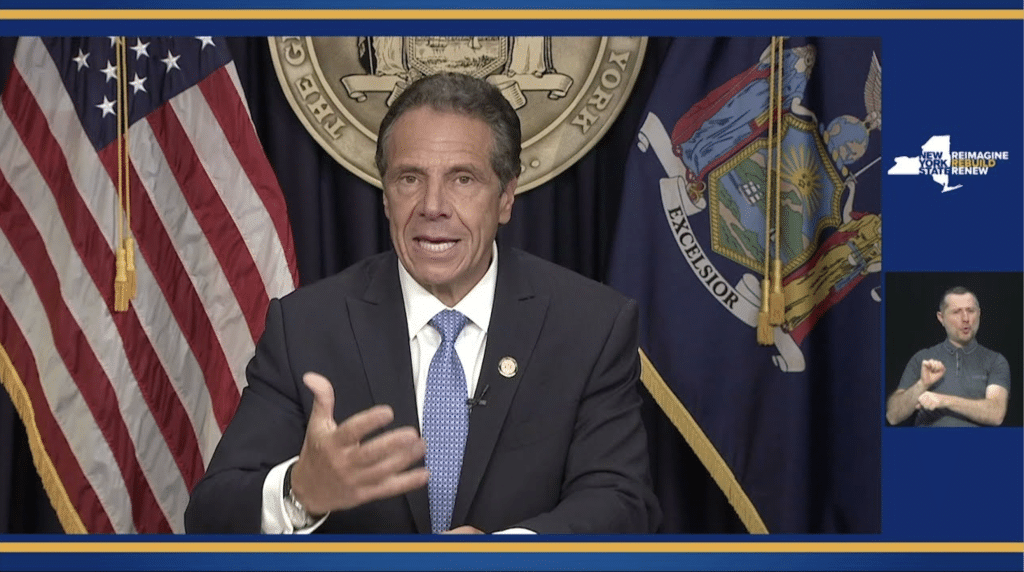
“In my mind, I have never crossed the line with anyone,” Cuomo said in his August resignation speech. “But I didn’t realize the extent to which the line has been redrawn,” he continued.