The Government claims that it wants to invest in young people, but do their numbers add up?
After facing over a decade of neglect from successive governments, Labour is promising to invest in young people. Now that the government has the opportunity to put its money where its mouth is, do its proposals match its rhetoric?
After months of media speculation, the budget has finally been presented to Parliament, with a whole raft of measures that will impact young people’s lives, both positively and negatively.
In a speech after the budget, Prime Minister Keir Starmer claimed that his goal was to “remove all the barriers which hold back the potential of our young people”. But has Rachel Reeves presented a budget that delivers this?
Student loan repayments and a levy on international students

Starting with by far the most disappointing decision in the budget, the freeze in the student loan repayment threshold will make graduates worse off in real terms.
Typically, the threshold is reviewed annually, taking into account inflation and average wages, and raised accordingly. The government has frozen this threshold at £28,470 for students who started their courses before 2023 and at £25,000 for those starting after.
In practice, this means that more graduates will begin repayments while making less.
Alex Stanley, National Union of Students Vice President for Higher Education, said:

“For graduates, the freeze in the repayment threshold means they will be repaying more on their loans much sooner.
“By freezing the thresholds for three years, the salary graduates are on when they begin repayments will edge dangerously close to the OBR’s minimum wage forecasts. Especially with graduate jobs still being located in expensive cities, many new graduates will be making repayments while not being able to afford food, rent, and bills.
“Graduates are already facing a challenging job market, coupled with ever-increasing financial pressures from the cost of living. This Government needs to recognise the pressures that young people are facing and start delivering for them.”
Along with this, a levy of £925 is being applied to international students, which could disincentivize people from studying in England. When International students account for 23% of university funding, this makes little sense.
The minimum wage
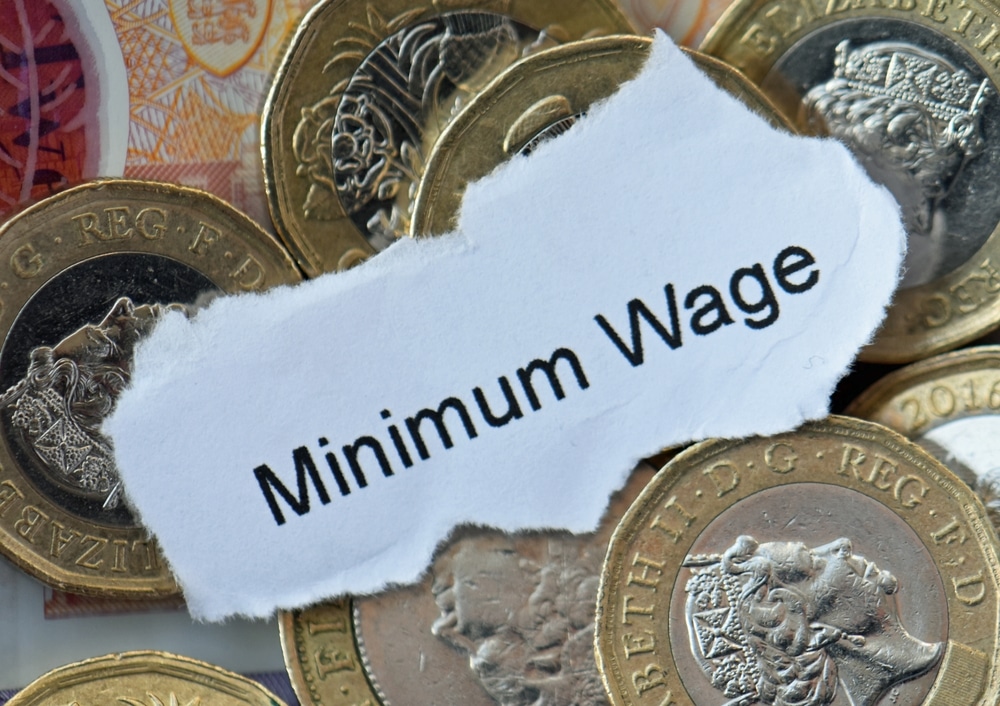
One major manifesto commitment made to young people was ending lower minimum wage rates. Two budgets in, and the government still hasn’t delivered on this. Instead, an 8.5% rise for 18 and 20-year-olds and a 6% rise for under-18s and apprentices has been announced.
The government called the lower rates “discriminatory” in August.
Abolishing the lower rates was a key promise to young people, and it’s disheartening to see it on the back burner. While the government claims it’s still committed to the elimination of lower bands, its work has been slow so far.
Investment into youth employment

The government announced an investment of 820 million pounds into the Youth Guarantee scheme. This scheme seeks to aid young people not in work, education, or training.
The investment also included a government-backed guaranteed jobs program, which is set to begin from April next year.
The Department of Work and Pensions claims that this scheme will help almost a million young people into work.
With 15% of under-25s out of work, training, or education, and the job market becoming more and more volatile, this guaranteed jobs proposal is just the thing that will help young people get their foot in the door.
Richard Rigby, head of UK government affairs at the King’s Trust, a charity that seeks to tackle youth unemployment, said:
“The government’s Youth Guarantee is a crucial step towards unlocking potential.
“Increasing training and work experience opportunities, alongside a guaranteed job scheme for the long-term unemployed, will help the young people we support in our centres each day to start overcoming the barriers they face, and take their first steps into work.
“If we get this right, we can transform the futures of young people out of work across the UK, and build a healthier, wealthier society.”
Sugar tax on pre-packaged lattes

A cheap and convenient alternative to coffee chains, pre-packaged lattes have been a favourite of young people in recent years.
This just might change, however, with the sugar tax being extended to ‘milk-based products’, which were previously exempt. A tax of 19 pence per litre will be applied to drinks with 4.5 to 7.9 grams of sugar, with 25 pence per litre being added on to drinks with over 8 grams of sugar.
The drinks impacted include milkshakes, pre-packaged coffees, and flavoured milk. Drinks made to order remain exempt, however.
There has been evidence to suggest that the tax has led to companies reducing sugar in their products. But there is still the risk that companies simply raise the price of their products to compensate.
The jury is still out on what the exact impacts of the policy will be.
Does this feel like a budget with young people in mind?
To put it simply, not really.
The investment in youth employment is to be commended. However, the rest of the proposals are at best underwhelming and at worst actively harmful.
Freezing the repayment threshold is a straightforward attack on aspiration, making it harder for graduates to get by. The action on minimum wage falls short of Labour’s commitments.
There are plenty of things the government could be doing to make young people’s lives better. The abolition of tuition fees, which were only introduced in the 90s. Making good on the promises that they have shied away from on minimum wage.
But as for right now, it seems that young people are to be left wanting by this budget.