
Though the United Nations enshrine it as a human right, access to water is not equal. The relationship for those in the Global South is often more precarious than for those in the North. However, access to water – and its mistreatment by for-profit bodies – is becoming increasingly insecure here too. On July 21st, the UK Environment Secretary Steve Reed announced that he will scrap Ofwat, the water regulator, to ‘prevent abuses of the past’. The prevailing attitude to climate issues is usually reactive: to fix ‘broken’ systems.
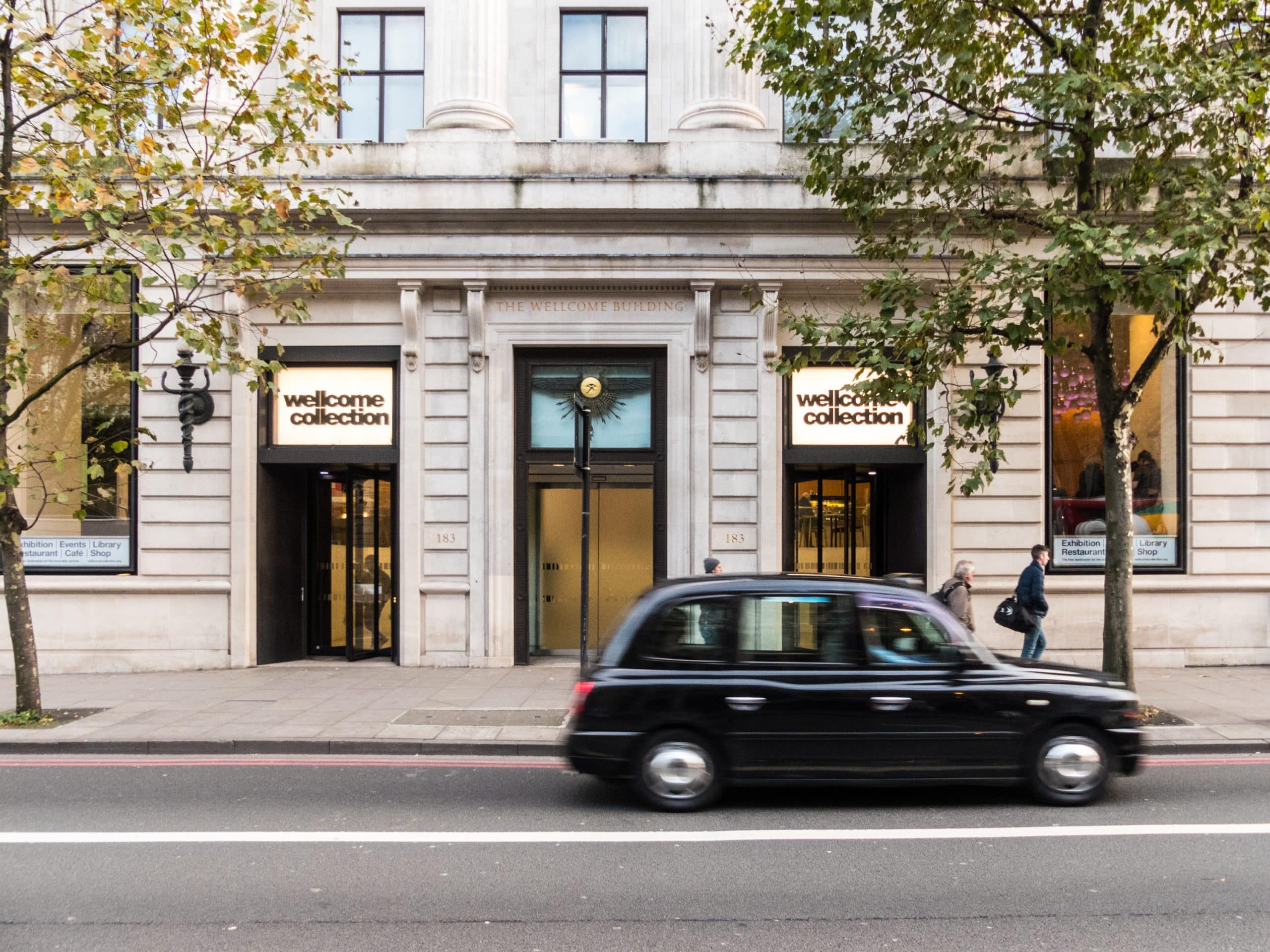
Across the 125 objects which make up the multimedia exhibition Thirst: In Search of Fresh Water at the Wellcome Collection in London, its artists, activists and curators ask us to consider our (often deleterious) impact on the environment. A handout asks ‘how much water do you eat?’ before telling visitors that the water footprint of a flat white with oat milk is 292 litres. It then delivers the kicker: each person in the UK wastes an average of 243 litres of water per day. Thirst implores us to reconsider the vital resource, and recasts it as not only sustenance but central to our cultural identities.
The Climate Emergency
Last year, the Guardian reported that the Global Economy could face a 50% loss in Gross Domestic Product (GDP) by 2070. The warning, from the Institute and Faculty of Actuaries (IFoA), highlighted the climate emergency’s role in this potentially catastrophic event. Five paragraphs into the feature, readers come across the true headline: ‘at 3C or more of heating by 2050, there could be more than 4 billion deaths, significant sociopolitical fragmentation worldwide, failure of states (with resulting rapid, enduring, and significant loss of capital), and extinction events.’ Sandy Trust, the lead author of the report stated: ‘nature is our foundation, providing food, water and air, as well as the raw materials and energy that power our economy. Threats to the stability of this foundation are risks to future human prosperity which we must take action to avoid.’
Water is central to this precarity. Warming seas and pollution obliterate marine life, melting polar ice caps raise sea levels, and storms increase. Human activity threatens to throw the Earth’s life-sustaining equilibrium—of which water is a cornerstone—out of balance.
Disinformation and Lack of Trust
Due to insufficient coverage of the causes of the climate emergency, initiatives like those captured in Thirst are important as many remain unaware of the threat to life. Worse still, conspiracy theorists propped up by petro-interests have successfully hoodwinked swathes of the public into believing that climate change activism undermines capitalism and is a hoax. A Reuters and Oxford University report from January reflects the public’s perception of the media. It found that ‘news media continues to be the primary way people access climate change information’. However, only half ‘say that they trust the news media on climate change’. Ultimately, people cannot make an informed opinion on issues like climate change unless they are fully aware of the details. They are also likely to remain sceptical if they feel they cannot trust sources.
The future looks bleak, with the efficacy of COP (the annual UN climate change conference attended by member states) called into question. Fourteen percent of respondents had ‘never heard of’ COP, while 59 percent thought COP itself ‘is influenced by big business interests’. Meanwhile, fossil fuel subsidies refuse to decline, allowing the industry to continue to make record profits. This report found that companies did not share profits equitably. It claims that, in the US, ‘51% of profits went to the wealthiest 1%’ of stakeholders, while ‘the bottom 50% only received 1%.’ It also said that escalating fossil fuel profits exacerbate ‘inflation inequality’ and also ‘reinforce existing racial and ethnic inequalities.’
Thirst: In Search of Freshwater
Thirst: In Search of Freshwater recentres water within daily life: across the 125 objects in the exhibition, it looks at communities spanning the globe and their interactions with this vital resource. From the qanats, which originate from the plains of Khuzestan in Iran 3000 years ago and resurface in rural Sicily, to wadis in Palestine, to the wetland ‘kidneys of the planet’, to the Black Mary Project down the road from The Wellcome in London’s Kings Cross, activists, curators and artists throughout the exhibition clearly feel that it is their moral prerogative to educate people. Water management is as much a social and ethical duty as it is a feat of engineering or governance. Water is a source of reverie and crucially, a form of hope.
Water enables transfers of knowledge, interhuman and between people and planet. The caption which accompanies a pair of Bummolos informs us that they are drinking vessels of Arab origin, unique to Sicily. The design – with a hole at the base, which extends inside the container like a bottleneck when flipped upside down, helps protect the water from external pollutants. Still used today in Sicilian households, the Bummolos reflect the cross-cultural influences of the Arab world on Southern Europe.

Water in Conflict
All geopolitics involves complex series and structures of humans’ interactions with one another and the natural environment. Thirst’s curators are keen to note that water is often a cause of friction. A series of maps shows us the punitive measures Saddam Hussein’s regime took against its neighbours in 1992, draining the Iraq Marshes. ‘Both to repress the local population and fleeing dissidents …they razed villages and dried up over 90% of the wetlands.’ Like the vested interests at play in 2025, there was another motive: the regime also had grand designs for oil and agricultural development in the region. Following the fall of the regime in 2003, local initiatives were able to partially reflood the marshes, though the exhibition notes these are vulnerable to new threats: the construction of a hydropower dam upstream in Turkey as well as climate change.
Dala Nasser, a Lebanese artist, made Mineral Lick (2019) from mixed discarded fabrics, latex, salt, and tap water from Beirut. Lebanon is a water-rich country, ‘but its capital, Beirut, has seen its public water infrastructure destroyed by unrest and governmental neglect. Tap water is contaminated.’ Nasser set about documenting this complex relationship between the city and the resource. Collecting tap water from across Beirut, mixing dye and rock salt with the samples, dipping the latex-mixed fabric into them, the effect is astounding: rash-like, oxidised textures reflect the different levels of salinity and acidity in the samples. The caption ends on a sombre note: ‘coincidentally, the bottom of this tapestry was soaked by floodwater, a main source of water pipe pollution, on the day civil protests against government corruption began in 2019’; the material is witness to these events.

Community Initiatives
Elsewhere, the mood is more upbeat. A flashy video documents a community initiative, also in Beirut, where volunteers rewilded a bank of the city’s river. An update on the website notes the reintroduction of bees and butterflies to the area.
It wouldn’t be an exhibition at the Wellcome without a high-tech installation piece. Raqs Media Collective’s interactive augmented reality installation Epilogue (2025) envisions a future beyond the present era, in which our fate already appears sealed. In true Muskian fashion, it looks beyond Earth to ‘a speculative future in which human survival depends on the search for and the mining of water from asteroids.’
Moroccan artist M’hammed Kilito’s photographic series Before it’s gone (2020–) serves as a synecdoche for the whole exhibition. . ‘Morocco has been in a drought since 2018. Parts of the Sahara did not see rain for four consecutive years, while a flash flood killed dozens in the desert town of Ouarzazate in 2024.’ Before documents the artist’s and others’ efforts to nurture biodiversity and ration resources in increasingly testing conditions. For Kilito, the oasis is a perfect form of sustainability. Date palms create a microclimate, resisting the aridity of the desert and retaining water in their soil, offering ‘an ecological defence against desertification and a refuge for biodiversity.’
Looking forward
Thirst is at pains to demonstrate that water is a complex conversation: there is no cure-all. We are simultaneously living in the most polluted period in Earth’s history, and the height of environmental projects which seek to preserve biodiversity and water resources, with a small group of people fighting a losing battle to keep the world in equilibrium. Despite their best efforts, experts speculate that the 2015 Paris Agreement which sought to keep the increase in the global average temperature below 2°C above pre-industrial levels is dead. Because global warming’s effects take decades to fully appear, we can only guess the extent of the fallout. The world as we know it no longer exists.
Thirst: In Search of Freshwater runs until February 2026 at the Wellcome Collection 183 Euston Road, London NW1 2BE, admission is free.