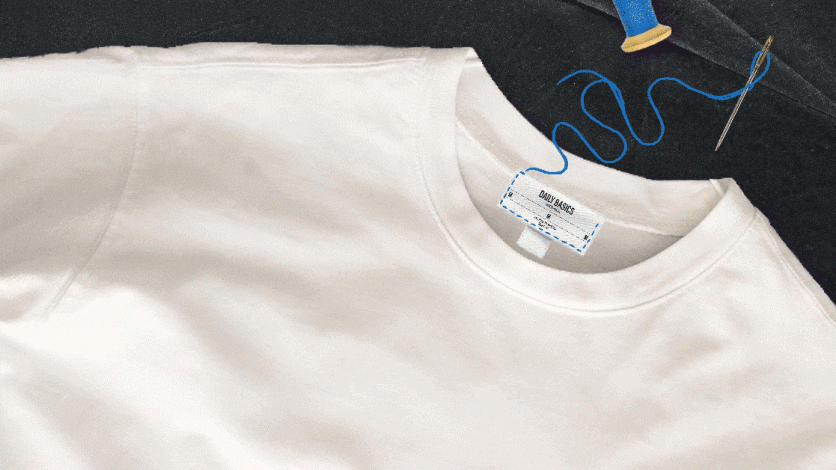
Cut out and discarded, forgotten about, or seen just for function, clothing tags are usually unseen as an important part of clothing.The law requires tags to include fiber content, country of origin, and manufacturer or identification details—but what goes beyond those basics? Clothing tags offer brands a chance to expand their story and showcase their artistic vision.
Whether sewn-in, printed, or intentionally exposed, tags serve messaging beyond utility. But let’s start with why we have clothing tags in the first place.
Why do we have clothing tags?
In the 19th century, mass production of clothing began replacing custom tailoring, and ready-to-wear clothing was starting to rise. With this mass production of clothing came the need for companies to begin branding and identifying their clothes. Simple woven tags or stamps were used to present the clothing maker’s name or the size.
By the 20th century, especially after WWII, brands began to standardize tags and use them as design elements. Clothing manufacturers customized colors, logos, and fonts to serve as marketing tools. Size, care instructions, and fiber content became standard and required.
Towards the late 20th century and early 21st century, clothing tags became an information overload with multiple care instructions or fiber content tags. However, high fashion began utilizing tags beyond just their logo or utility. Brands like Maison Margelia began pushing the narrative for deeply intentional tag design with their unique approach to tagging.
Today, brands create many types of tags—from screen-printed versions that cover the bare minimum to custom tags shaped like the brand’s logo. Whatever shape, font, or color these tags come in, it is undeniable that they serve messaging and branding with purpose.
With that said, let’s begin to get into what clothing tags are used for, starting with…
Using tags for vintage dating
Vintage lovers and clothing resellers rely on tags to identify when a garment was made and to estimate its value.

T-shirt tags offer one of the clearest examples of how people evaluate and date shirts.
In the 20th century, mass manufacturers like Hanes, Fruit of the Loom, and Jerzees served as the main suppliers of blank t-shirts. These companies supplied blank canvases for some of the most iconic graphics in pop culture – from band tours, movie promos, and sporting goods. The tags on these shirts were overlooked at the time, but now serve as key markers for collectors looking to authenticate vintage.
While the brands I listed are amongst the most popular tags, numerous vintage tags serve the same purpose.
However, certain vintage tags serve different purposes than others. For example, Liquid Blue tags (founded in 1987) are some of the most sought-after vintage tags. This comes from the high-quality graphics they feature and the iconic bands or pop culture moments they license.
Collectors also highly seek out Giant tags. Like Liquid Blue, the brand produces high-quality licensed band merchandise and pop culture graphics.
These tags are an essential piece of the vintage community and serve a purpose beyond sizing or care instructions. The value of a vintage t-shirt can decrease by a huge percentage without its correct tag. For most vintage buyers, the tag is one of the only ways to differentiate the shirt from modern reprints.
Which is why it has become so important in the vintage scene. These tags have a culture surrounding them with discussions and personal preferences about which brand made “t-shirt perfection” and what makes them so good. Endless information and dating guides can be found across the web, showcasing one of the most prevalent examples of why clothing tags are so important.
But what is beyond just sewn-in t-shirt tags?
That is what leads us to the next point of…
Brands utilizing tags beyond branding and function
In high fashion, branding is one of the most crucial parts of building a story and taking a garment to the next level.
While most casual brands still brand their tags, high-fashion or luxury brands have been utilizing tags beyond just their logo and fonts for a while now.
The most famous instance of an unorthodox tagging system is Maison Margelia’s tags.
Maison Margelia’s tag system is a white tag attached by four white threads in each corner. On the tag, there is a series of numbers 0 to 23 with one of the numbers circled. The circled number indicates what category the garment belongs in (e.g., 10 for menswear, 6 for womenswear, 22 for shoes, etc).
The reason for this approach to tagging is due to Maison Margellia’s rejection of industry obsession with branding and status.
This tagging separates the garment from branding and lets it speak for itself, even without a visible brand name.
Over time, this version of tagging was seen as a visual cue of anti-brand branding and was desired for it. For fashion-savvy individuals who value true craftsmanship and thoughtful design, Maison Margelia attracted them. Margelia’s tagging approach turned tags into a conceptual piece rather than a marketing tool.
Today, Margelia’s tags symbolize anonymity, intention, and subversion – aligning with the original fashion house’s values of reinterpration and quality.
What began as a silent protest against fashion norms has become one of the most respected and recognizable statements in the industry.
That said, some luxury brands take a different direction, like…
Gucci’s Outside Tags
Differing from Margelia’s anti-branding tags, Gucci did quite the opposite.
In 2024, Gucci released a couple of garments (suit coats and trench coats) that displayed the neck tag on the sleeve of the coats.

This design choice completely flips the purpose of the neck tag. Rather than hiding the tag inside the coat, Gucci displayed it on the sleeve to create a bold, branded look. The purpose of this was to shout Gucci’s strong branding in an unexpected location.
While Margelia’s tag embraces subtlety, Gucci’s external tag is about visibility, irony, and brand identity as status. It’s self-aware and acknowledges how obsessed the fashion world is with labels.
In this case, the tag becomes more than just informational or aesthetic; it becomes a statement about industry branding itself. This is an example of how tags can completely shift the meaning of a garment just by placing the tag in a different spot.
However, Gucci is not the only brand pushing boundaries when it comes to tag placement…
Another example of external tag branding
In 2017, Vetements released a hoodie named the inside-out hoodie. This bold red hoodie has “Vetements” embroidered on the front. And the back of the hoodie has a huge white patch that states “THIS IS THE OUTSIDE OF THE GARMENT”.
This hoodie is another example of tags being utilized to show branding by screaming out the brand on the garment.
While different from Gucci’s coat, but similar, this Vetements hoodie is intentionally displaying the branding to showcase the sought-after label.
Whether brands place the tag on the sleeve, the back, or keep it hidden, they use tagging as a deliberate tool for branding and artistic expression.
But why is all of this tag design happening, and where is this going?
Tagging as statement
At its core, a clothing tag is meant to inform. Whether it’s the fiber content, country of origin, or sizing, tags serve a functional purpose. But as we’ve seen, their role is evolving — and that evolution raises the question: why go beyond utility?
The answer lies in intention. A thoughtfully designed garment should be considered from stitch to tag. When brands treat tags as a design opportunity rather than an afterthought, they open up new space for storytelling, creativity, and connection. A tag can reflect brand values, spark curiosity, or simply make the piece feel more considered, and in a saturated market, those details matter.
Consumers are more conscious than ever, and they notice the details. Consumers pay attention—whether they care most about design, sustainability, or craftsmanship. It’s the brand’s responsibility to treat every part of the garment, even the tag, as a meaningful piece in their narrative.
But where can tagging go from here? And what might it look like in the future?
Tagging the future
In an industry constantly reshaped by technology, sustainability, and shifting values, every component of fashion is evolving — and that includes the tag. As manufacturing processes modernize and consumer expectations grow, tags may follow suit. Digital tagging is already on the horizon. QR codes, NFC chips, and scannable labels could transform tags into interactive touchpoints, leading consumers to styling suggestions, product origins, or care instructions. Some brands are experimenting with blockchain-backed tags to verify authenticity and ownership, particularly in luxury and resale markets.
But the future isn’t just about tech. As the meaning of fashion continues to shift, tags may also become more emotionally expressive. Containing hidden messages, notes from the maker, or symbolic gestures that speak to the values behind the garment.
In either direction — digital or poetic — one thing remains clear: the tag is no longer just a label. It’s a statement. And for brands that want to resonate with mindful, detail-driven consumers, it may be one of the most powerful tools they have.
So what do you think? Are tags simply for utility — or have they evolved into something more? As fashion continues to blur the lines between art, identity, and function, even the smallest details invite us to look closer. Maybe the tag isn’t just a label, maybe it’s the final signature.