We live in a world of constant noise. Voices speak to us from every possible direction, saying a million different things. “That’s actually not an hourglass; she’s pear shaped. Big back. A scary thin body isn’t attractive. Men like women natural. Her BBL is botched.”
It seems like every day the internet creates a new trend relating to your physical features, another impossible standard to meet. Pair this with peoples’ comfortability to speak on others’ bodies and you have a nasty recipe for insecurity.
So, how can young women continue to love their bodies in an environment like this? How can we ignore all the negative voices when we are trying to work towards our individual fitness goals? I did some research on fitness and self-love, and talked to Olivia Aghabi, a personal trainer with firsthand experience on fitness issues. Let’s take a look at what works.
Appreciating your body
Whether or not you are beginning a fitness journey, learning how to appreciate your body for what it is is incredibly important. So what exactly is it?
Your body isn’t just the number on the scale. It’s not just a pile of skin and organs. It’s not boiled down to one specific type, like apple or hourglass or triangle. It is so much more than that. Your body is the container that carries your soul.
It carries you around every day, allowing you to walk around and feel the sun on your face. It lets you dance. It gives you the ability to taste delicious foods and hear beautiful music. It hugs your mom and kisses your partner. How else would you feel so rejuvenated after a long night’s sleep or experience physical pleasure, if it wasn’t for the amazing vessel that is your body?
Sometimes we get so caught up in criticizing our physical appearance that we forget to love our body for the practical things it allows us to do.
The trouble with social media fitness fads
Loving your body also makes fitness all the more fun! If the reason you are working out is that you dislike your appearance, it’s unlikely to be enjoyable. This mindset results in unnecessary pressure, self-deprecation, and, honestly, a lack of results.

Olivia says that “… a lot of programs marketed on social media take advantage of people’s discomfort with themselves by falsely offering a ‘quick fix’, but the issue is that those never work, will ruin your health, and will make your relationship with your body much worse”.
As someone who works primarily with college-aged women, she’s seen the negative toll these fitness fads take on girls first-hand. It’s a nasty cycle. Young women visit social media platforms and are immediately flooded with this societal pressure to be both thin and “perfectly” shaped. They see bodies that are falsely advertised as natural and start to believe that they should look like that. Then, on these same platforms, the algorithm presents them with ridiculous, high-intensity fitness plans that claim they will make them thin or give them an hourglass figure.
This cycle is horrible and rooted in preying on the insecurity of young women.
Fitness for health
But what if we flip the narrative around? What if we engage in fitness because we love our bodies, rather than because we want to change them?
Weight loss does not always have to be the end goal of fitness. Changing your physical appearance is sometimes not the goal at all. If we give love to our bodies radically, for all that they are, of course, we will want to do good things for them.
You might be wondering what this looks like, and honestly, it can be a bit different for everyone. There are so many different ways to take care of your body and thank it for what it does for you. It may look like learning to cook nourishing, energizing meals. Maybe it’s teaching yourself how to dance or signing up for a new kickboxing class. Maybe it’s getting a new PR for strength training.
When your goal is to take care of your body, rather than to change it, fitness becomes self-care. Eating clean starts to feel like a reward, rather than a punishment. And if weight loss is a goal for you, that can also fit into this philosophy.
This may seem like a radical idea, but you can love the body you have, even if your end goal looks a lot different. It goes back to wanting to provide your body with fuel and exercise because you love it, not because you hate it. If you know that losing or gaining a few pounds would make you feel more confident, then you deserve that too!
Helpful and healthy tips
Following the right fitness influencers
Although Olivia advises against taking your fitness advice from social media, she says there are a few exceptions to that philosophy. She says she likes influencers such as Jeff Nippard and Abby Pollock because “…they always cite their papers. Every time. And they provide context… These two individuals always compare the literature to what the expert consensus is. That’s why I trust them.”
Choosing trustworthy sources to guide your fitness journey is critical. You don’t want to take faulty advice or set up unrealistic expectations for yourself. This is why Olivia advises following influencers who provide advice that is backed by fact and science.
Another piece of advice that’s been super helpful to me in choosing who to follow is picking people who have a body type that’s similar to mine. Genetics do determine a lot, so following people who have a similar height, bone structure, and build to mine helps to keep my expectations realistic.
Everything in moderation

When thinking about diet and lifestyle choices, the most realistic way to stick to your goals and continue to improve is by allowing yourself to consume everything you love, just in moderation.
This goes back to remembering that we are engaging in fitness because we love our bodies, not because we hate them. If your body loves the taste of macaroni and cheese, then self-love doesn’t look like denying that pleasure. But, it also doesn’t look like eating macaroni three meals a day, to the point of feeling bloated and sick.
Even if you have a daily calorie or macronutrient goal, it is entirely possible to enjoy all of the foods we love in moderation. If you want to eat macaroni and cheese for lunch, then you should do it. But instead of eating one large portion of just that, maybe have a smaller portion with some added protein like buffalo chicken. Pair it with a side salad or a bowl of fruit for some added nutrients. With a meal like this, your body and your soul will thank you.
Eating in moderation is also much more sustainable than restricting certain foods from your diet entirely. Telling yourself that being healthy means never enjoying your favorite foods again turns health into both a punishment and a rigid cycle that you are likely to break. Moderation helps to achieve positive consistency and an increased likelihood to stick to your goals.
Choosing fun workouts
Last night, I caught myself speaking negatively to myself because I wasn’t in the mood to go to the gym. In my head, I called myself lazy and inconsistent. I caught myself thinking, “This is why you’re still fat. You’re too lazy to get up and go to the gym”.
But then, I sat back and took a minute to reflect on why I was saying these things to myself. I clocked that I was engaging in a hateful mindset towards myself, and unintentionally treating exercise as an obligation, rather than an opportunity.
After I checked in with myself, I changed my mindset. I realized that I did want to work out, because I knew it would make me feel better. But I wasn’t in the mood to drive in the rain to go to the gym and lift weights for an hour. I was in the mood to dance, so I chose to do that instead.
Exercising never has to feel like a chore, because there are so many different ways to go about it. Some days, I am genuinely excited about going to lift at the gym. But other days, something like dancing, taking my dog for a walk, or swimming sounds much more enjoyable.
Opting for the fitness option that sounds fun and refreshing to me in the moment is both another way to reward my body and to continue equating my fitness journey with positive feelings.
Workout buddies
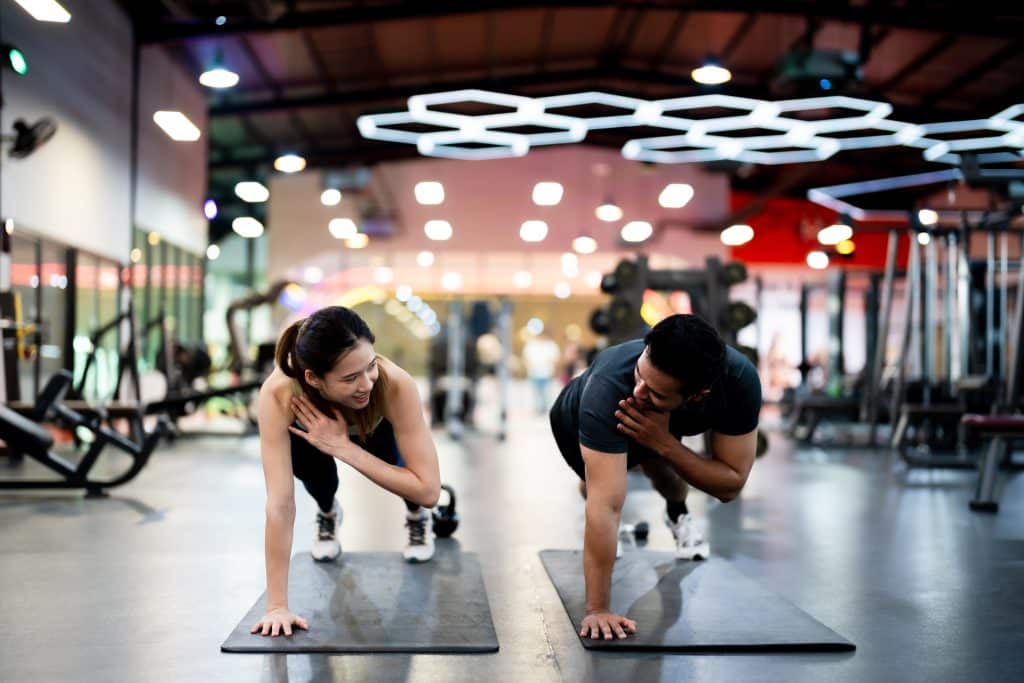
Have you ever been on a gym date?
Some people like to work out alone, and that is completely okay! But other people might think it’s a lot more fun when exercise can be a social activity.
Going to the gym with a friend or partner can take the activity from exercise to a fun day out on the town. Maybe you guys have some new exercises you want to learn together. Perhaps there’s a new high-protein restaurant you want to try post-workout.
Finding a friend to work out with is just another way to make fitness fun! You’ll also have the added benefit of having someone to spot you on difficult exercises and to encourage you to try and beat your PR.
Closing thoughts
Overall, fitness should be fun! Your body carries you everywhere you go, from place to place and experience to experience. It deserves to feel good.
And it can be such an enjoyable process to make that happen. Using these tips, I hope you are able to cultivate a journey of self-love and fitness goals. You and your body both deserve to feel amazing, and the only way to reinforce that is to go out and prove it to yourself!
To learn more about one of our team members’ fitness journeys with pilates, check out this article.