


If Greece is on your 2025 bingo card, first off—congrats! Since it’s such a popular destination, it can be hard to cut through the noise of Santorini and Mykonos being touted as the ultimate islands to visit. And while they’re beautiful, the “most popular” doesn’t always mean the “best.” I’m here to give you the inside scoop as someone who’s traveled to Greece multiple times—and got lucky enough to be unofficially adopted into a Greek family through my partner.
Want to travel like a local? I’ve got you covered with tips on where to go, what to see, what to eat, and even how to speak (if you’re up for learning a few Greek phrases that you’ll actually use every day).
Your guide to Greece’s islands and inland gems
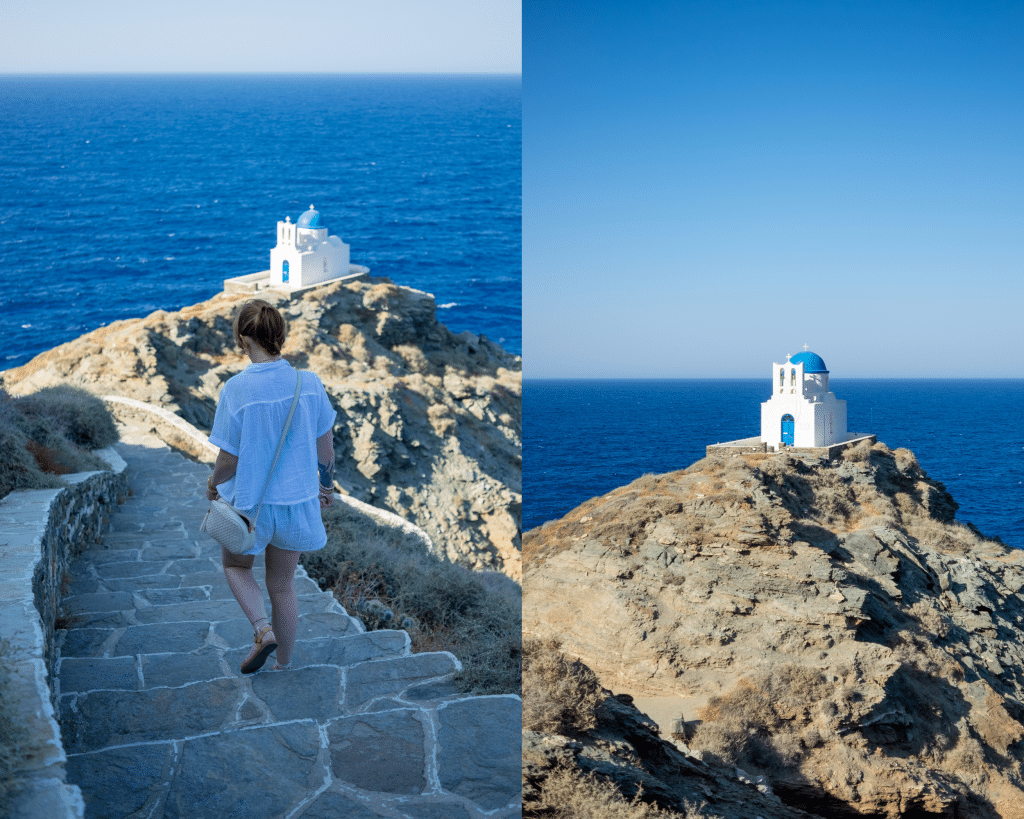
The Cyclades (Κυκλάδες) are a group of Greek islands in the Aegean Sea that parade whitewashed houses, blue-domed churches, and stunning beaches. Sure, Santorini and Mykonos are the headliners. But there are countless other islands with that same breathtaking Greek charm, minus the crowds.
Traditional Greek culture is slow, warm, and deeply rooted in community. Getting to experience it outside the usual tourist traps offers something far more meaningful than snapping the same staged Instagram pic as everyone else.
Some alternative islands to explore:
- Ios: Youthful, lively nightlife, but quieter in the day.
- Paros: Stylish but more relaxed than Mykonos. Great for couples & groups.
- Naxos: Laid-back, affordable, great food and local culture.
- Milos: Photogenic, offbeat-romantic, good for couples or photographers.
- Syros: Elegant, historic, lived-in.
- Serifos: Low-key, minimal tourism, for nature lovers.
- Sifnos: Elegant, food-focused, refined without crowds.
- Antiparos: Small, exclusive, great for a day trip from Paros or a serene stay.
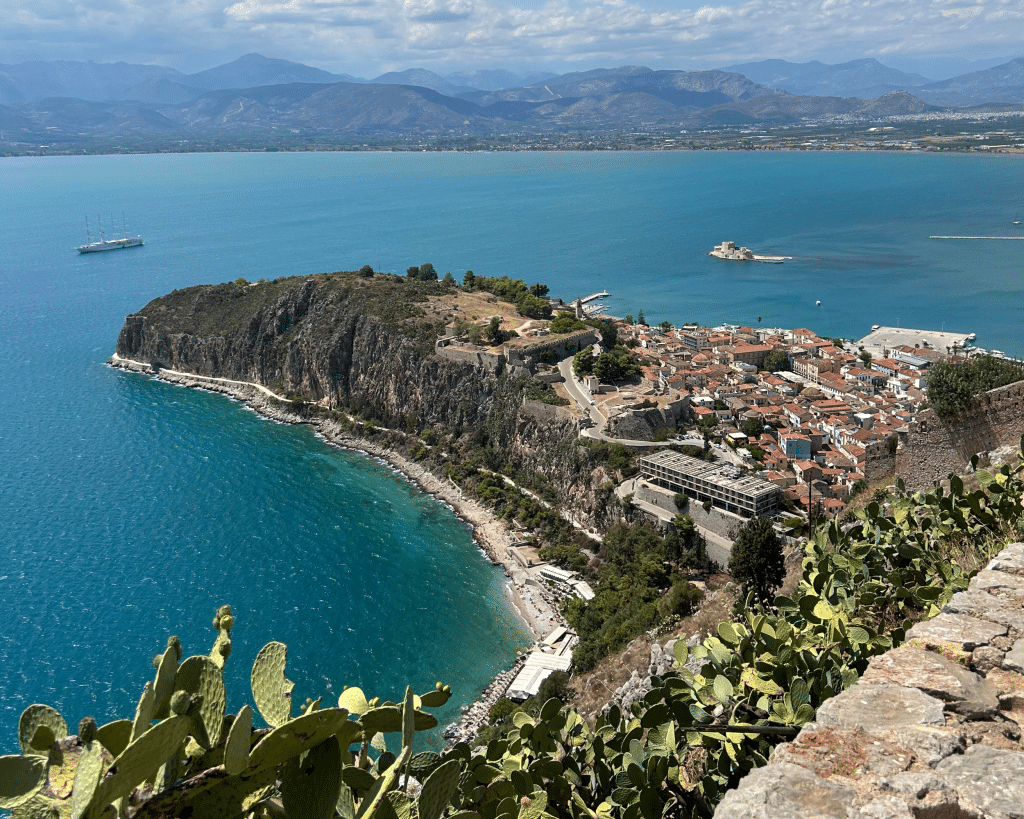
Alternatively, you can venture to an entirely different island cluster. The Sporades (Σποράδες), located in the northwest Aegean Sea, are less touristy than the Cyclades—but they’re quickly gaining popularity. They’re especially known for their lush greenery, pine forests, and crystal-clear waters.
Two of the most popular islands in this group are Skiathos and Skopelos; fun fact: Mamma Mia was filmed here! When visiting, you can take themed boat tours, explore charming villages, and relax on some of the most breathtaking beaches in Greece.
Obviously, the beaches are one of Greece’s main vacation attractions. The water is a crystal-clear blue, it’s warm, and the waves are usually mellow—making it perfect for easy, endless swimming. It honestly feels like living in a postcard.

But Greece is so much more than sun-drenched beaches and island life. The inland and mountainous regions offer an entirely different atmosphere: alpine forests, stone villages, foggy mornings, and even ski resorts.
I was lucky enough to visit a few of these towns, and it was breathtaking beyond the beaches. I might be a mountain girly at heart (so maybe I’m biased), but it truly felt like stepping into a fairytale. Cobblestone streets, hidden alleyways with sunbathing cats and wildflowers, tavernas tucked into cliffs with views of the sea far below, or nestled beneath the canopy of some ancient, enormous tree—it felt like another world.
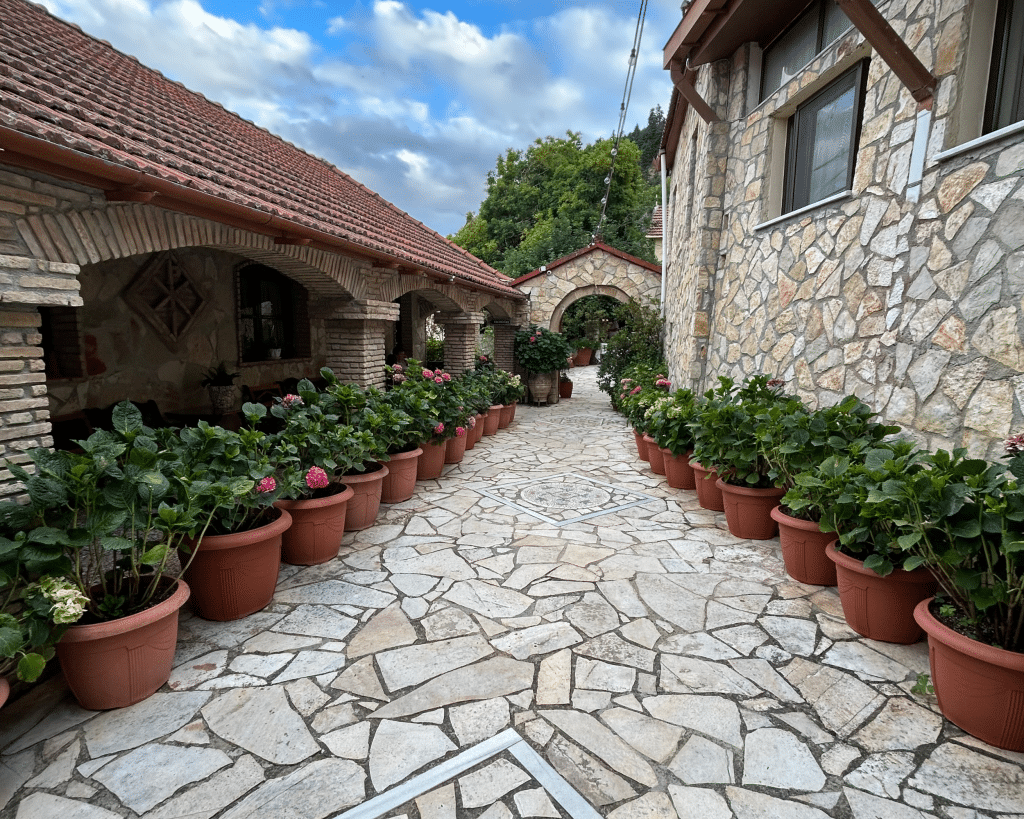
If you’re planning to rent a car on the mainland, I highly recommend carving out a couple of days for a side trip. Here are a few accessible places that will show you a whole new side of Greece.
- Metsovo (Epirus): Alpine village meets traditional Greek mountain life. Known for stone architecture, local cheese and wine, and views of the Pindus mountains.
- Arachova (Central Greece): The “Mykonos of the mountains” in winter. Known for trendy ski-town energy, stone houses, and proximity to Delphi.
- Zagorohoria (Epirus): Varies across 46 villages. Remote, fairytale-like, old-world Greece. Known for deep gorges, stone bridges, hiking, and preserved culture. Good to know: Papingo and Monodendri are two of the most popular villages here.
Sights worth slowing down for
Outside of the landscape, there are so many hidden gems throughout Greece. You might not even realize them if you don’t know what you’re looking for.
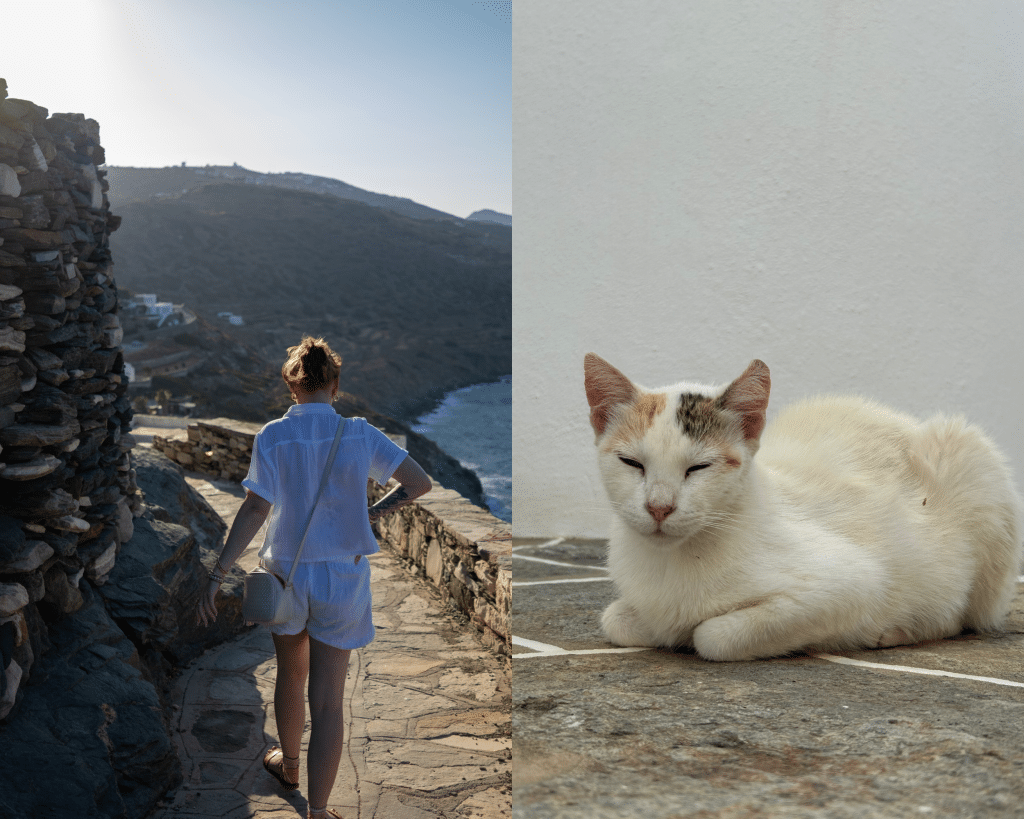
One of my personal favorites? The countless little churches and chapels scattered everywhere. You’ll often spot tiny roadside shrines in the shape of a traditional εκκλησία (church), scattered throughout Greece. Sometimes they perch on hillsides; sometimes they stand alone beside a winding road. These little chapels, almost toy-sized, often hold flickering candles and religious icons. Locals walking by will pause to light a candle or say a quiet prayer.
Their small windows glow into the night, like a soft flicker of community, a tiny flame of faith that holds Greece together in such a special, enduring way. I love peering inside, like I’m discovering a secret.
That said, taking the time to visit actual churches is an absolute must. When I was visiting with my boyfriend’s family, we drove high into the mountains to reach a small church perched on what felt like the very top of the world. Watching the locals sit quietly in prayer—and getting to light a candle alongside them—was one of the most unexpectedly memorable experiences of the trip.
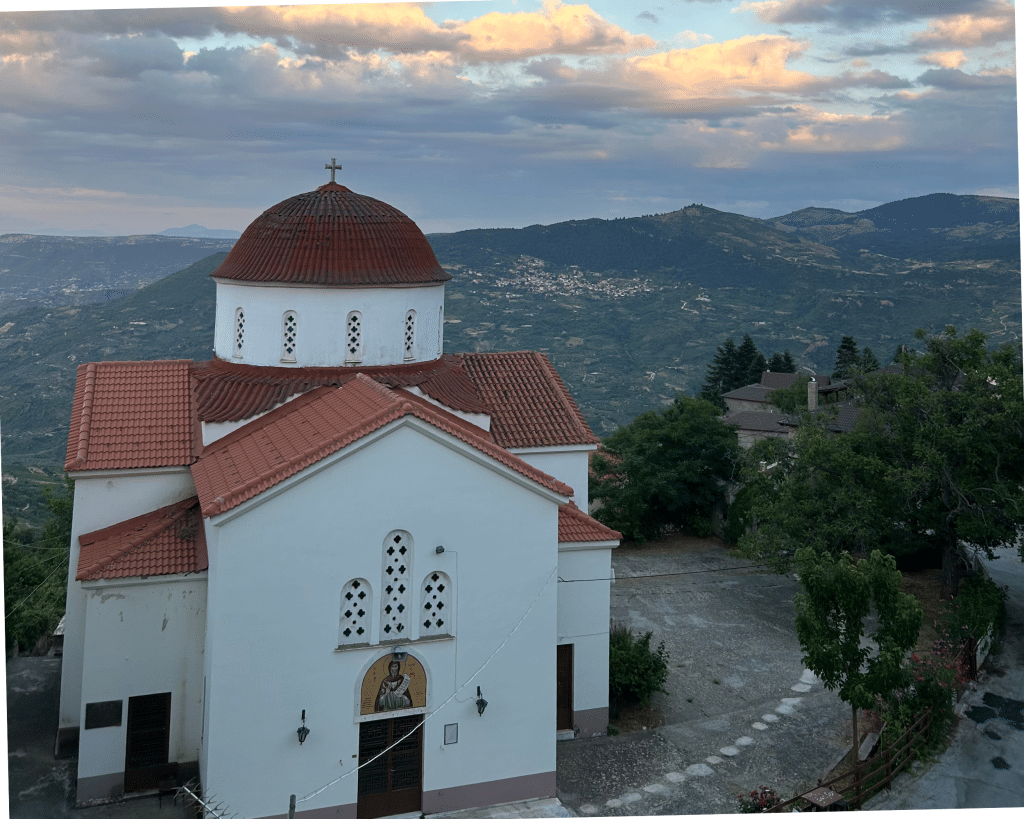
It’s one thing to visit a country and sit among other tourists. It’s another entirely to step into a living culture and a community that has flourished for thousands of years. Even just walking past a church and hearing the low hum of a prayer being spoken felt other-worldly.
I’ve never gone to church though I consider myself deeply spiritual. I take comfort in a higher power in the universe, but never in a traditional religious setting. Maybe churches in the U.S. always felt too commercialized to me: too loud and too big, as many things in America can be.
In Greece, it was different. The quietness of their worship felt more like a heartbeat—steady, life-giving, carrying blood and oxygen through an entire country for generations. I felt a heaviness in my chest that wasn’t unpleasant, but rather a rare weight. One you get in moments that make you stop, pause, and truly think.
Culture, humanity, prayer—they can reach deep inside you, shifting the way you see your own life. Especially when you step into a church that has held the voices and footsteps of countless generations before you.
Anyways—not to get too heavy. Some other highlights? The cats. They’re everywhere, usually pretty friendly (though approach at your own risk).
You’ll also spot the evil eye (το μάτι, pronounced to máti) in practically every shop you step into—on keychains, shot glasses, clothes, woven into bags, hanging on walls.
The evil eye is rooted in the belief that envy can bring bad luck, illness, or misfortune to the person being admired. The charm—a circular, blue, eye-like symbol—protects you from that energy.
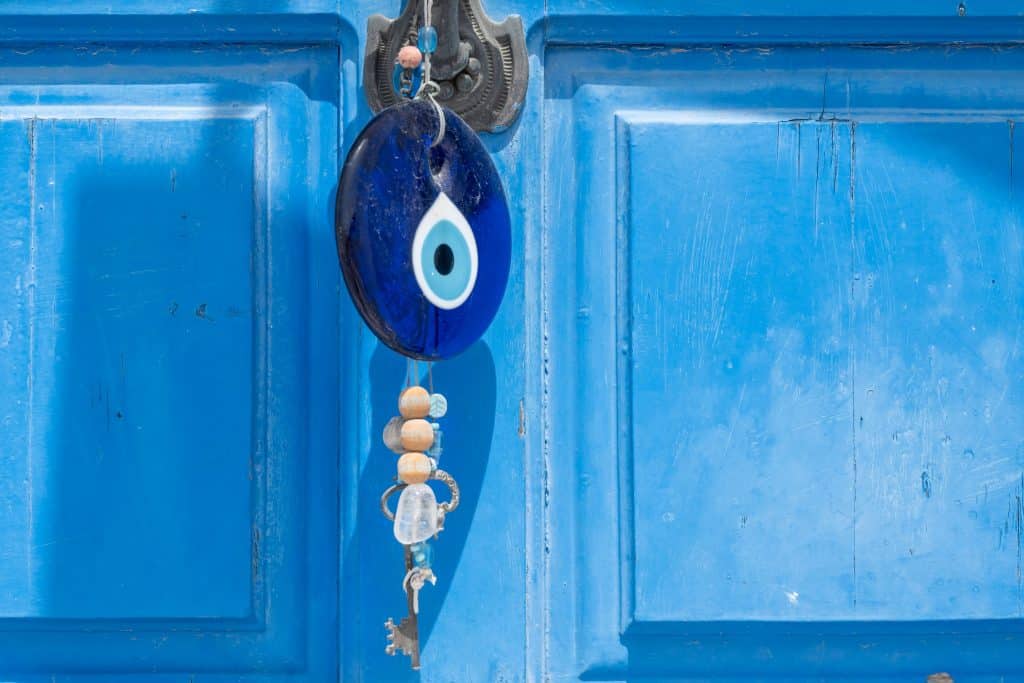
In countries like Greece, where tourism is a major part of the economy, deep-rooted traditions are often transformed into souvenirs. That’s not necessarily a bad thing. But if you’re going to visit, it’s so much more rewarding when you understand why you’re seeing something, and what it means to the people who live there.
Slow down when you walk. Some of the most beautiful parts of Greece aren’t in guidebooks—they’re in the tiny, in-between moments that most people pass right by.
Where the olive oil flows
The food in Greece is known world-wide, and for good reason. I could write an entire article, ten articles, about the food. But here I’ll give you the can’t-miss dishes and locals’ suggestions you may overlook.
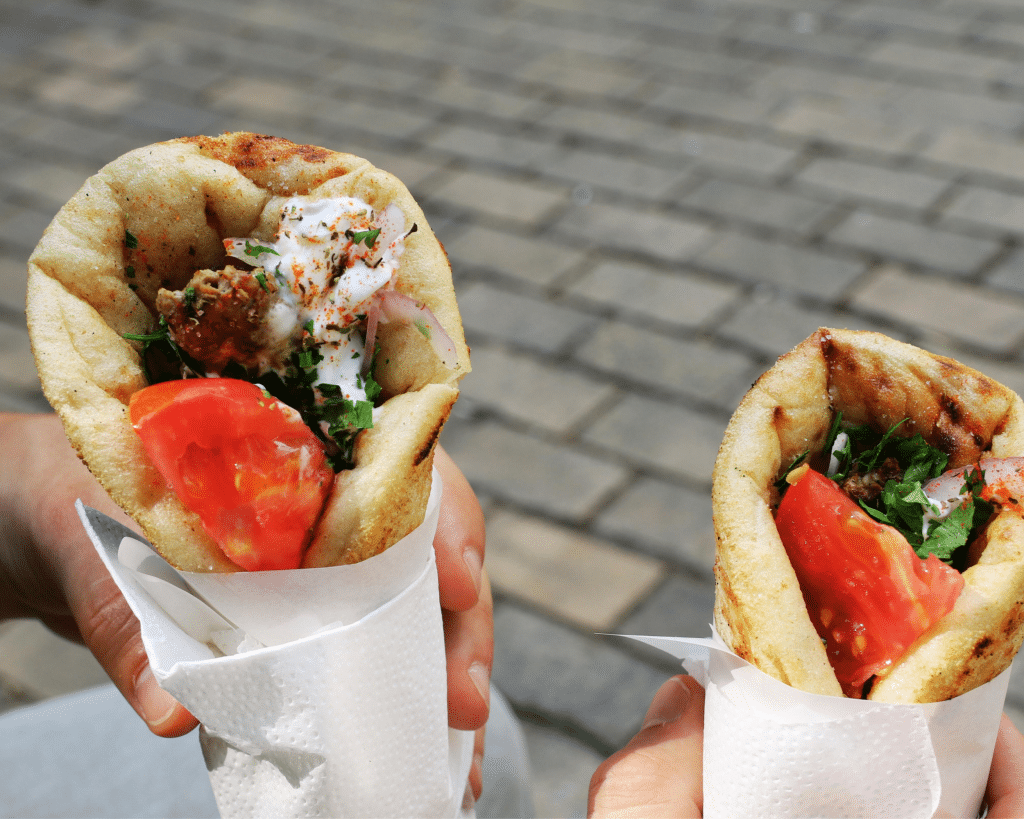
Are the gyros overrated? Absolutely not. There may not be as much fast-food in Greece, but gyros are the more iconic and beloved street food. Wherever you visit, there will be little windows or small restaurants serving gyros and kebab skewers. I recommend trying a pork gyro and pork or lamb skewers (kαλαμάκι pronounced Kalamaki), usually served with bread and lemon. They serve chicken gyros and skewers too, but pork is the more traditional choice and will give you a true taste of Greece.
The Greek salads are equally as amazing and deserve just as much recognition as they get online. The traditional salad (χωριάτικη pronounced horiátiki) with veggies, feta, and olive oil, should be on the table with every meal.
Some other dishes you should try to get a more rounded taste of the cuisine:
- Kleftiko (Κλέφτικο) refers to a slow-cooked lamb dish usually cooked in a claypot. It’s extremely tender and full of flavor—think falling-off-the-bone good. Restaurants often serve it on its own or alongside potatoes, fries, or seasonal vegetables.
- Revithia (Ρεβίθια) is a hearty chickpea soup that’s been a staple of Greek home cooking for centuries, especially on the islands. It consists mostly of chickpeas simmered with olive oil, salt, pepper, and lemon. It may seem simple, but it’s extremely flavorful and heartwarming.
- Moussaka (Μουσακάς), Greece’s beloved baked casserole, features layers of eggplant, spiced ground meat, and creamy béchamel, baked to perfection. Comforting and rich, it’s a dish that embodies the warmth of Greek home cooking.
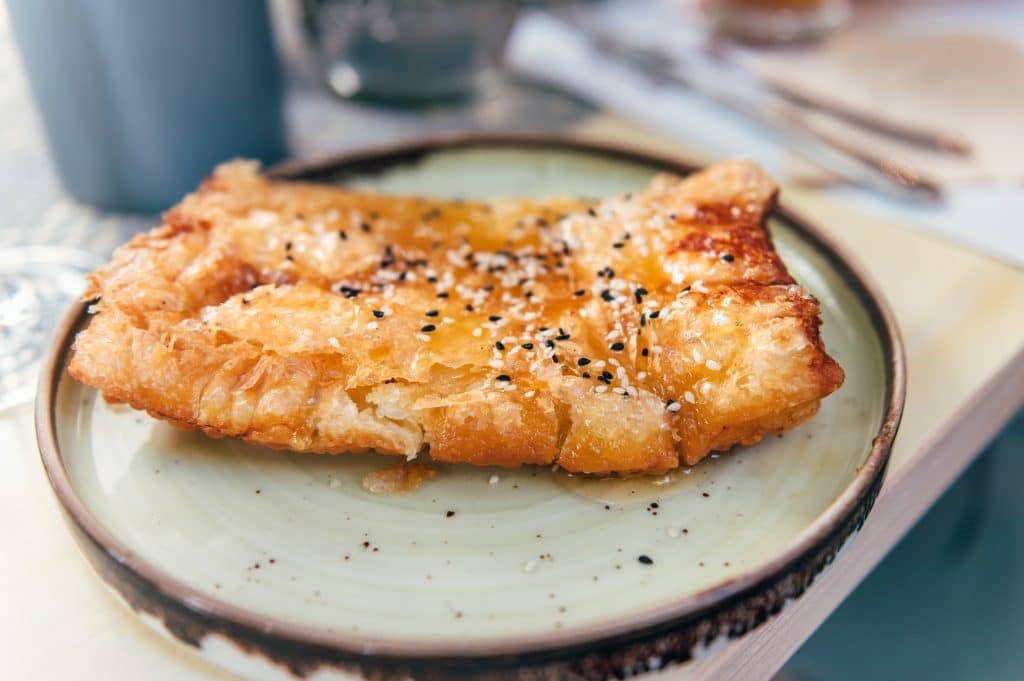
- Feta me méli (φέτα με μέλι) warm, baked feta cheese with a drizzle of golden honey, striking that irresistible balance between salty and sweet.
Dolmades (Ντολμάδες) comprises tender grape leaves wrapped around a flavorful mix of rice, herbs, and sometimes minced meat. Served warm or cold, they’re an appetizer that captures the essence of Mediterranean flavors.
- Gemista (Γεμιστά) are vibrant tomatoes and peppers stuffed with a savory blend of rice, herbs, and sometimes ground meat. Then, the combination bakes until it is tender and bursting with flavor. This classic Greek dish is a celebration of fresh summer produce and simple, comforting home cooking.
- Grilled octopus is a beloved Greek seaside delicacy, tenderized to perfection over an open flame and often drizzled with olive oil and lemon. Its smoky, slightly charred flavor captures the essence of the Aegean and is a must-try for seafood lovers.
- Fresh fish of the day is also staple in Greek coastal tavernas. Fishermen usually catch the fish that very morning, and chefs serve it open-faced, simply grilled, and dressed with olive oil, lemon, and sea salt.
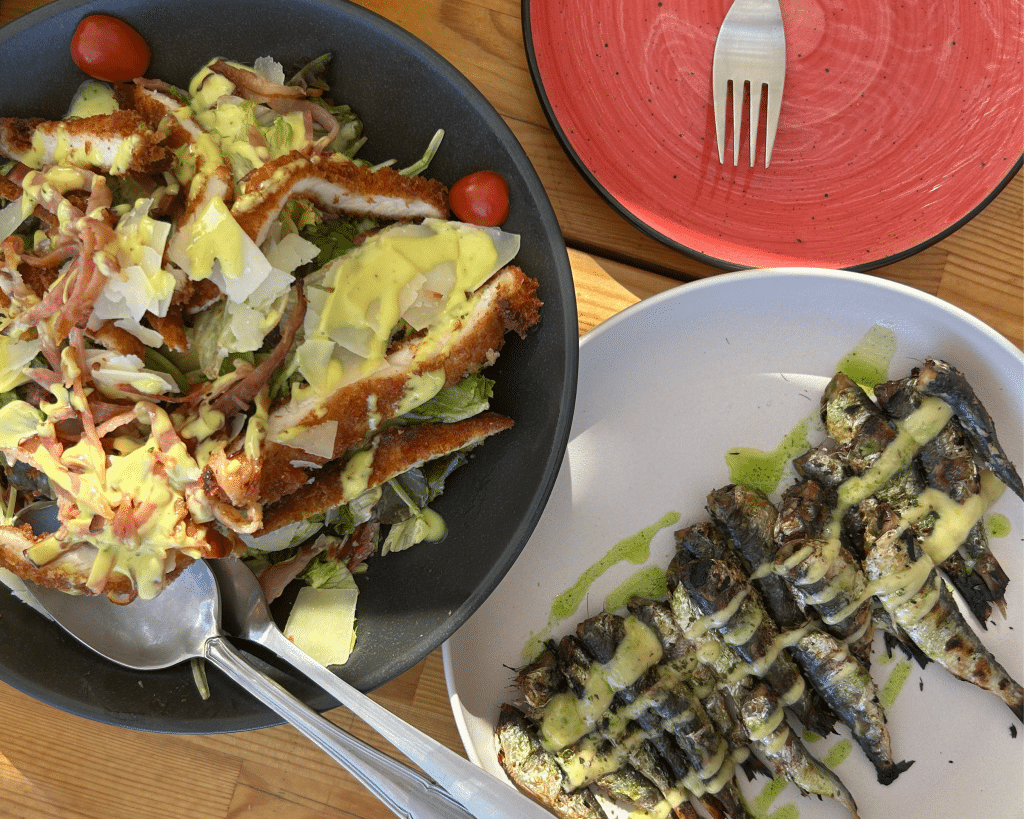
Like I said, I could go on forever. But these are some traditional Greek dishes that really capture the flavors of the cuisine, and they’re a step up from a street-side gyro. (Though, honestly, I still end up eating more of those than anything else!)
From metro to moped
When you land in Athens, there are a variety of ways to get around: bus, taxi, or metro. I recommend the metro—it’s fast, efficient, and will get you to most places (or at least close enough to walk or grab a short taxi ride). For me, someone who grew up in Oregon without any kind of underground transit system, it was fascinating to fly beneath the city in a matter of minutes. It was even better having my boyfriend narrate each stop along the way, sharing memories he had from different parts of the city.
To get to the islands, you’ll take a ferry. Most are pretty big, with plenty of seating as well as food and drinks available for purchase. If you’ve never done it before, make sure you arrive at the port early—you’ll want time to find your gate and make sure you’re boarding the right boat.

Once you’re on the islands, transportation options are more limited. Many islands have local buses, but a popular alternative is renting an ATV or motorcycle to explore on your own. The roads are shared, but be aware: they’re often narrow, and the driving culture in Greece can be… let’s just say, spirited. If it’s your first time navigating, take it slow (especially around curves) and always be alert.
A little Greek goes a long way
Now, this isn’t a Duolingo lesson, but I wanted to leave you with a few simple phrases I use when greeting shopkeepers, thanking waiters, or chatting with hotel staff. They’re small gestures, but they show you’re making an effort and respecting the fact that you’re a guest in someone else’s home.
“How are you?” in Greek
Πώς είστε
Pos Eíste
Pronounced: pos EE-steh (emphasis on the second syllable)
“Please” in Greek
Παρακαλώ
Parakaló
Pronounced: pah-rah-kah-LOH (emphasis on the last syllable)
“Thank you” in Greek
Ευχαριστώ
Efharistó
Pronounced: ef-hah-ree-STOH (emphasis on the last syllable)
I feel like this article barely scratches the surface of Greece’s beauty—its places, food, and history—but it’s a start. Experiencing another country’s culture is one of the main reasons we travel. For me, the deeper we can immerse ourselves in that culture—without bringing expectations from our own upbringing—the more we open our eyes to a different world.
And here’s a fun fact: Greece has over 6,000 islands and islets! Only around 200 are inhabited, but still, tell me how can you still be set on Santorini after knowing that?