

I’ve been dealing with depression for as long as I can remember. I will also say that, as a depressed person, my social media (especially Pinterest) is full of #sadgirl content.
Sometimes it is hard to tell whether consuming this kind of content hurts me more than it helps. Sometimes it can help me to feel less alone in my sad thoughts and feelings, but a lot of the time it can be dangerous.
What is the #sadgirl?
Firstly, what is the #sadgirl aesthetic? It’s kind of a mishmash of random things that evoke some sort of similar feeling or vibe.
Certain characters and images are its hallmarks. For example, in one of her songs, Lana Del Rey sings,
“I’m a sad girl, I’m a sad girl…”.
Important figures include characters from media like The Virgin Suicides, Girl, Interrupted.
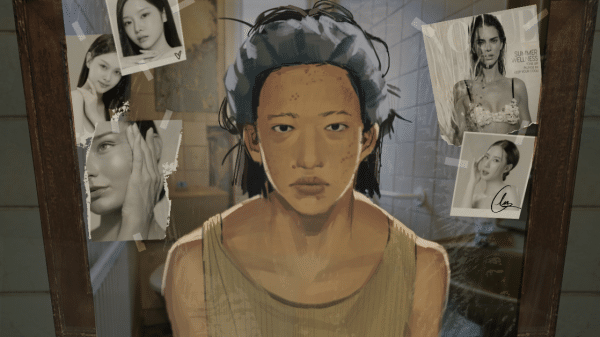
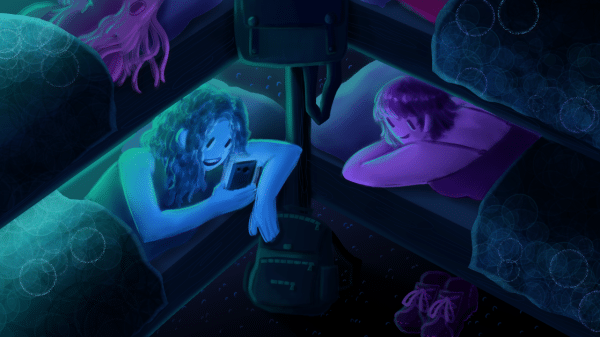
There are many images of girls crying, smoking, lying in bed, in a bath, or just “looking sad.”
From an artistic point of view, it sometimes evokes religious imagery, demonstrating the idea that suffering can be noble. On the flip side, it can also use imagery that is sultry and feminine, giving the idea that suffering can be sexy.
Essentially, like every other aesthetic on the internet, its focus is to look nice. So when the #sadgirl aesthetic brings in themes of depression, self-harm, eating disorders, and other mental health issues, it is not for the sole purpose of “bringing awareness” or talking about these topics. It is bringing them up in a way that makes them seem beautiful and romanticizes them to the point where they are aspirational.

When I found the #sadgirl aesthetic
I started thinking more about aesthetics in general during the pandemic, stuck inside, I got sucked into Pinterest and the world of “#aesthetic”, then it was Instagram, Tumblr, and TikTok. My interests were wrapped in aesthetics, cottagecore, dark academia, cabincore, goblincore, and basically anything with a -core at the end.
I think that I liked aesthetics because they took me out of the world I was living in at the time, and placed me in a new one where everything was meant to be there, curated and perfect.
It was only a few years later, when I started therapy, that I began to understand why I wanted out so badly. In college, I was diagnosed with depression, and it explained a lot about so much of what I had been feeling since around the age of eleven.
Thanks to algorithms, the aesthetics I started to see leaned toward the #sadgirl, probably because I was looking at a lot of content targeted towards sad girls. One thing I didn’t really think about until now was the fact that there is a difference between a sad girl and a #sadgirl.
I mean, putting a hashtag in front of something usually denotes that the thing no longer really means anything at all.
I related to some of the content, which provided a sense of community to someone who felt very alone at the time. Though there were a few problems, a few facts that seeped into my subconscious when I was viewing this content every day.
The effects of the content
One of these things was that if I could simply suffer beautifully, then at least I’d still be pretty.
I looked through the pictures of women who looked pretty as they cried, and I envied them. I was either too depressed to cry, or when tears did fall, I was a puffy mess.
Another thing was that if I was capable of achieving it, the ability to suffer beautifully, that is, I shouldn’t try to get better.
The fear of getting better stems from so many things. Eventually, the depression becomes familiar. Happiness seems like a risk, but the romanization and aestheticization of mental health struggles add another risk factor. What if I get better and I lose my beauty? What if I become boring? I’ve certainly been afraid of this. If my aesthetic is of the #sadgirl, then what aesthetic will I have if I’m no longer sad?
Lastly, on the #sadgirl Aesthetic
Another thing about the #sadgirl aesthetic: it’s stupid. If you’re a sad girl, chances are that you mean that you are depressed. But depression isn’t a pretty enough word to be a hashtag, and it is not aesthetic. If my depression were an aesthetic, it would be yellow teeth (too tired to brush them every day, big t-shirts (it’s better to be comfortable and sad than uncomfortable and sad), and everything would be dark and dull and gray.
I think that, as a depressed person, I found comfort in the ideas of the aesthetic because I thought that if I just tweaked the way I was suffering a little, it could be beautiful. At a time when it was so difficult to imagine ever feeling better in the first place, it brought me some peace of mind to think I could be pretty regardless. (which says a lot about beauty in our society, but that’s a whole different conversation).
Have you ever been unable to shower? Unable to get out of bed? Maybe you’re not a #sadgirl, because the #sadgirls are already up reading Sylvia Plath, doing their eyeliner, but smudging it for that messy look. They are having a breakfast of coffee and cigarettes in a matching white lace pyjama set. They are definitely not me.
The unfortunate thing is that I still like #sadgirl content, sometimes for those horrible reasons. It’s also nice to look at (it’s supposed to be, it’s an aesthetic).
I do try to consume it mindfully, to try my best to put the phone away when the content starts trying to convince me that I don’t need to get better. I limit it, and I place my recovery first.
But what does that — putting my recovery first — even look like?
Ideally, I wouldn’t consume this kind of content at all. Even if I try to be mindful about it, ideas about depression and sadness seep into my subconscious, which discourage me from recovering.
The ideas that suffering can be noble and sexy are very alluring to someone like me, who has struggled mentally for a long time. There is certainly something to be said about the way the content we consume affects us, especially subconsciously.
Looking at #sadgirl content tends to make me feel better in the moment, but it can be horrible for my deep-down feelings about my depression.
The next thing I try is to consume this content “mindfully,” whatever that means. Disclaimer: since I don’t really know what it means, I might not be doing it correctly. In my mind, if I am looking at this content through a critical lens, looking at it as an aesthetic, and nothing more, then perhaps it protects me. I figure doing this is better than consuming this content without considering these things at all.
All this being said, I simply hope for recovery while laughing a little at memes like these.