Have you gotten your colors done? Professional and seasonal color analysis are trending as methods to find your most flattering color palette. But is color analysis just a way to spice up your latest look, or another useless label reinforcing austere female beauty standards?
Though color analysis has been around long before its latest resurgence on TikTok, becoming wildly popular in the 80’s with Carole Jackson’s Color Me Beautiful, seasonal color palettes have been recently expanded. From the four original seasons—spring, summer, fall, winter—have come warm, cool, bright, and deep variants, to name a few.
Now, instead of simply being an autumn or spring, you must determine whether you’re a soft or deep autumn, a muted or bright spring. It can all become confusing pretty quickly.
However, the twelve- to sixteen- color analysis systems have gained traction through the use of color analysis filters, and the popularity of color analysis tests—especially palette draping—on social media.
That is so not your color
Much of the commotion around color analysis online has stemmed from users’ mere curiosity. Like zodiac signs or the Myers-Briggs 16 personalities, seasonal color palettes have piqued the interest of users wondering what category they belong in.
Notably, though, many contributors to the Internet’s continual interest in color analysis—arguably its target audience—are women. On YouTube alone, a quick search on color analysis yields a plethora of videos from almost exclusively female creators, including a popular exploration of the craft by Safiya Nygaard.
However, the online intrigue around the trend has promoted the idea of relying on someone else’s opinion about physical appearance.
When looking for resources for this article, I came across a breakdown of color analysis by the Concept Wardrobe. In it, colors are categorized as either flattering, neutral, or unflattering on a given person. However, some colors weren’t described as simply unflattering, but “bad or wrong.”

“These colors just make you look off or sick… Why do some colors look so terrible on you?” the Concept Wardrobe asks.
These remarks affirm a frequent experience in color analysis sessions—being brutally profiled by your consultant.
Relying too much on your palette diagnosis can add rules to your wardrobe, dictated by the input of someone else. You could potentially spend more money coordinating your closet to your designated seasonal color scheme, and unnecessarily purge your closet of colors outside your palette.
These rules can reinforce the concept of needing to change your appearance to be perceived as beautiful or desirable, adding another dimension to the already severe beauty standards imposed on women. Especially considering color analysis’s close ties to online trends and social media, the craft’s adverse effects on women’s confidence and perception of physical appearance almost seems inevitable.
There is some truth to color analysis
Nonetheless, with its roots in color theory, there is some value to be found in color analysis. Many color consultants examine the value, temperature, and chroma of a palette in relation to a client’s skin tone, and hair and eye color. From these assessments, a color palette deemed most flattering can be identified.
While there is some variation in the subcategories consultants use to diagnose a palette, color analyst Julia Dobkine, pictured above, uses the UCVO Method: Julia assesses the Undertone of a client’s skin (warm, cool), Contrast between their eye, skin, and hair color, and the Value (light, dark) of a client’s “overall coloring” to determine their most flattering hues. Finally, she aims for an Outcome which is practical and applicable to the client’s everyday life.
While unwavering adherence to your palette could mean spending more money modifying your wardrobe, the antithetical, more positive outcome would discourage impulse purchases via a controlled color palette.
Ideally, these limitations would eliminate the chance of a shopper being overwhelmed by options, and lessen the chance of buying something you won’t actually wear. And, consumers can avoid making purchases in conjunction with microtrends by merely referencing whether or not a garment suits their best palette.
Why worry about your palette?
However, what is “flattering” on someone is arguably subjective. Realistically, not just the color of an item but its style, fit, pattern, material, comfortability, and quality are also considered.
Limiting your palette to what is flattering through the lens of color analysis restrains the use of character, creativity, and personalization in one’s wardrobe. Color can be used to portray one’s personality, interests, subculture, aesthetic, or even mood.
You may be a dark autumn, but really enjoy pastels. Or you could be a deep winter, but love decora fashion. You could be a light spring and a trad goth.
Everyone could have a different opinion of what is most flattering on you, so why not just wear what you like?
I believe style is so much more than clothes. It’s the visual language we use to communicate who we are. It tells the world how we see ourselves before we even open our mouths.
Dejeuné Harris, personal stylist and the founder of Your Style Is Forever
Colorful costuming
Let’s look at world famous drag queen, Trixie Mattel, as an example—are hot pinks and retro pops of color flattering on her according to the seasonal palette system?
I don’t know, and frankly, I don’t care.
Trixie is a great example of playing with color in outfits, makeup, and overall appearance. She’s built an empire on the iconicity of her big blonde wigs, unmistakable eye makeup, and flirty, pink persona.

Her looks don’t have to be flattering through the lens of a system that sorts and categorizes people on their basic features, because Trixie (and many other drag artists) intentionally dramatize their appearance to craft their onstage persona.
Why don’t individuals getting their colors done utilize this same level of autonomy?
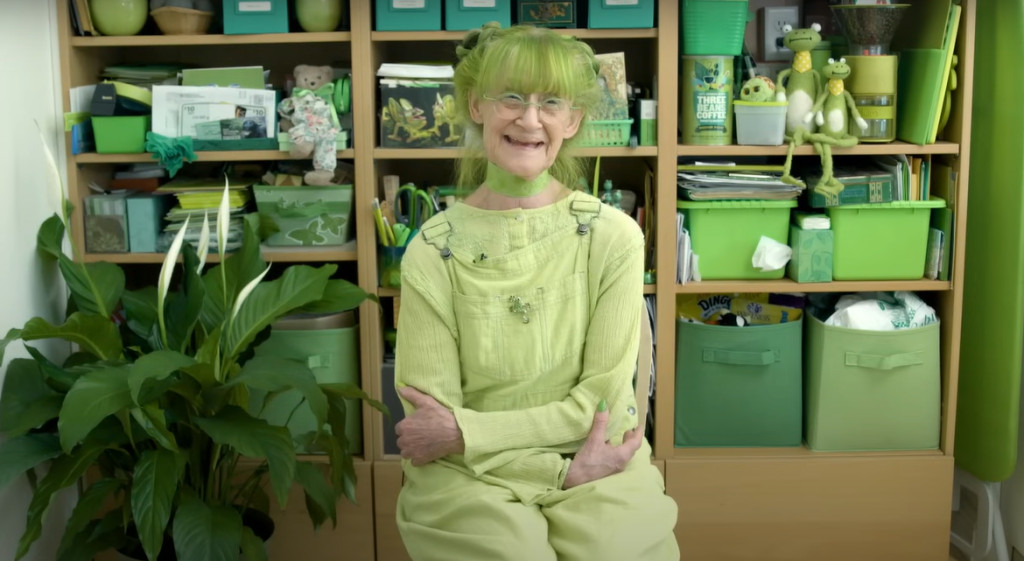
Elizabeth Sweetheart, affectionately nicknamed the Green Lady of Brooklyn, is another true example of bringing amusement and joy into your wardrobe. While the Green Lady’s wardrobe is noticeably limited in its palette, this constraint is one made with intention and agency, not under the pressure of the eyes of a color analyst or the public.
A box for women and a trap for consumers
A professional color analysis alone can cost hundreds of dollars. But some spend additional money altering their wardrobe, makeup routine, and even hair color to cater to their palette.
These restrictions amplify the already apparent rigidity of women’s beauty standards in the realms of fashion and physical appearance.
What’s more, some companies have found ways to capitalize off this new aesthetic ideal: the account pictured below advertises $30 color swatch cards for each of the twelve color seasons.
The idea behind the card is to only purchase a garment if its color matches a shade featured in the card’s palette. But do products like these intend to promote smart shopping habits or exploit female hypercriticism in the realms of beauty and appearance?
Where do women of color fit in?
It should also be noted that—though improvements have been made in recent years–less resources exist to properly analyze people with darker skin tones. This widely excludes black, brown, and Southeast Asian women from the benefits their white counterparts possess.
While the Concept Wardrobe donned some harsh words in their previously mentioned article, they do have a helpful guide on color analysis for people of color. Based on the earlier, rudimentary 4-season color analysis system, “developed primarily with white people in mind” in the words of the Concept Wardrobe, people of color would almost always be diagnosed as either deep autumns or deep winters. This is because these categories are defined by the possession of dark features.
This pattern of misdiagnoses holds up a trend of women of color having unequal access to beautifying resources, such as foundation shades that properly match the skin tone and undertone, and in this case, proper color analysis.
Both the dimensions of skin tone and racial background dispute the adequacy of seasonal color analysis.
Guidelines, not rules
You can get your colors analyzed to feel more informed about what your “best” colors are, but still shop and dress based on what you like and are drawn to.
Instead of treating their palette diagnosis as a style prescription, many clients treat it like a suggestion; how much influence an analysis session has can be mediated by the client’s desired application to their life. Much like a garment’s comfortability or style, its existence in or outside the perimeters of a seasonal color palette can be considered as an aspect of its appeal, not an end-all be-all.
Clothing doesn’t have to be “flattering” for you to enjoy it.
By strictly adhering to your assigned color palette, you limit your exploration of personal style and what makes you feel your best. While many subscribers of color analysis have reported neutral to positive experiences, attention is inevitably drawn away from the preferences of the individual and allocated to something they have been assigned.
Instead, emphasis should be placed on what makes the individual feel confident, attractive, and most authentically themself.