If you’re in your twenties in 2025, you probably don’t need a definition of “ghosting.” It’s already part of your vocabulary and a crucial component of your dating life. What started as a term for someone who abruptly disappeared after a date has snowballed into a catch-all for cutting off contact without warning. It appears in dating, friendships, workplace collaborations, even family group chats, and for Gen Z, it has taken over all aspects of life.
Yet under the surface of these casual acceptances lies a contradiction. We are a generation that celebrates and promotes vulnerability, mental-health literacy, and inclusivity. We post about therapy on TikTok, discuss attachment styles on Instagram, and take pride in being “emotionally aware.” However, when it comes to ending a date, a situationship, or a relationship, our go-to move is often silence. This isn’t just a quirk of dating etiquette; it’s a revealing pattern about how a whole generation manages discomfort.
From One-Off Rudeness to Default Behavior
Ghosting has been around for a long time, but the rise of online dating has exacerbated the issue. In the mid-2000s, you might have exchanged a handful of emails with someone you met online. If you weren’t interested, you’d stop writing back. That was still considered impolite, but not to the same extent as it is today. Back then, most communication happened on a single platform, and your social circles were more likely to overlap offline, which increased the social cost of disappearing.
Fast-forward to the 2020s. On Hinge, Tinder, and Bumble, people swipe through hundreds of profiles a week. Matches pile up like unread emails. In this context, ghosting feels like inbox management. A Pew Research Center survey found that 29% of adults had been ghosted, and adults under 30 had been ghosted the most out of all the age groups at 42%. For many, it’s not a moral failing but an inevitable side effect of “too many tabs open.”
Apps also lower the perceived stakes of disappearing. If your match list is refreshed daily, each person feels replaceable. Unlike a coworker or a neighbor, an app match exists in a digital bubble, separate from your wider social world. There’s little social cost to vanishing, so people do it. Add to that the anonymity of social media, and the interaction feels more like a username than a human being.

The Mental Health Paradox
What makes Gen Z’s ghosting distinctive isn’t just the volume but the rationale behind it. This is a generation steeped in the language of boundaries, triggers, and self-care. We’ve been told to protect our mental health, to step away from draining relationships, and to prioritize our well-being. But those lessons can blur into a habit of avoidance.
When your social environment is saturated with validation, such as likes, shares, and comments, delivering a negative signal can feel disproportionately cruel. Saying “I’m not interested” risks being called unkind or even “toxic.” As a result, people slip away instead, telling themselves they’re sparing the other person’s feelings. In practice, ghosting often functions less as kindness than as self-protection.
However, from my observations and experiences, clarity, even when painful, is far less damaging than uncertainty. In romantic contexts, people who are ghosted report more lingering distress than those who receive a straightforward breakup text. What feels merciful to the ghoster often feels destabilizing to the ghosted. There’s also evidence from attachment research that unclear endings can trigger stronger anxious responses than clear rejections do.

Avoidance as Empathy or Self-Protection?
Many young adults describe ghosting as an act of kindness, saying, “I didn’t want to hurt them; I thought it would be less awkward.”
But if you dig deeper, the benefits mostly flow to the ghoster. Avoidance spares you the discomfort of confrontation, prevents awkward replies, and preserves your self-image as a “nice” person.
This self-protection isn’t purely selfish; it’s a learned adaptation. Gen Z grew up online, where conflict often escalates virally and minor missteps can trigger significant reactions. Screenshots of a clumsy rejection can circulate far beyond their original context. The safest way to disengage is to do so silently. In that sense, ghosting is a defensive tactic in a high-exposure environment.
To explore how these patterns begin, TrillMag author Akampreet Kaur’s article, “Commitment Issues Much? Gen Z and Situationships,” takes a closer look at the emotional gray areas Gen Z often navigates before ghosting even happens. It offers a new perspective on how ambiguous beginnings can shape equally ambiguous endings.
Still, the result is the same: relationships that end without closure, trust that is even more eroded, and conflict resolution skills left underdeveloped. Over time, this avoidance can make even small tensions feel overwhelming. In workplaces, the same pattern appears as “quiet quitting” or simply not responding to emails. In friendships, it shows up as letting texts go unanswered for weeks because you don’t know how to explain your absence.
Screens Teach Us to Disappear
Furthermore, ghosting reflects broader digital habits. Online platforms normalize “unfollowing,” “muting,” and “blocking” as everyday hygiene. You can exit a group chat without explanation, ignore DMs indefinitely, or archive someone’s stories so you never see them again. The default interface of social media is one-way: you can vanish without sending a signal.
For people raised in this environment, silence feels neutral rather than hostile. It’s just another option on the menu, but when transplanted into dating or friendship, it can come off as callous. A relationship is not an app, and you can’t exit the tab without emotional residue. A person is not a notification you can swipe away.
Overall, the underlying drivers—such as hyper-connectivity, choice overload, fear of backlash, and a lack of effective models for graceful exits—all contribute to the same avoidance that is destroying the dating culture today.
When Avoidance Becomes a Way of Life
In the short term, ghosting offers relief: it’s a quick exit from a crowded inbox or a draining situationship. But over months and years of repeated use, this avoidance reflex creates a culture of uncertainty. People start assuming that every promising interaction will fizzle without explanation. That assumption subtly reshapes behavior: you stop investing deeply, you stop expecting honesty, you become guarded. Sociologists refer to this as “pre-emptive disengagement,” and it’s corrosive to both community and intimacy.
A generation raised on blocking and muting risks losing fluency in conflict. When you rarely practice telling someone “no” directly, your anxiety about doing so spikes. Over time, even minor tensions, such as a scheduling mismatch or a minor misunderstanding, can feel unmanageable. This is why ghosting is not just a dating issue but a developmental one: it trains people to retreat instead of negotiating.
Ghosting also undermines exactly what Gen Z says they want: authenticity, connection, mutual respect, and emotional safety. A culture of avoidance produces shallow ties and mutual mistrust. People stop believing words mean anything because silence is always lurking in the background. This mistrust can spill into professional settings, where unanswered emails or vague cancellations chip away at teamwork.
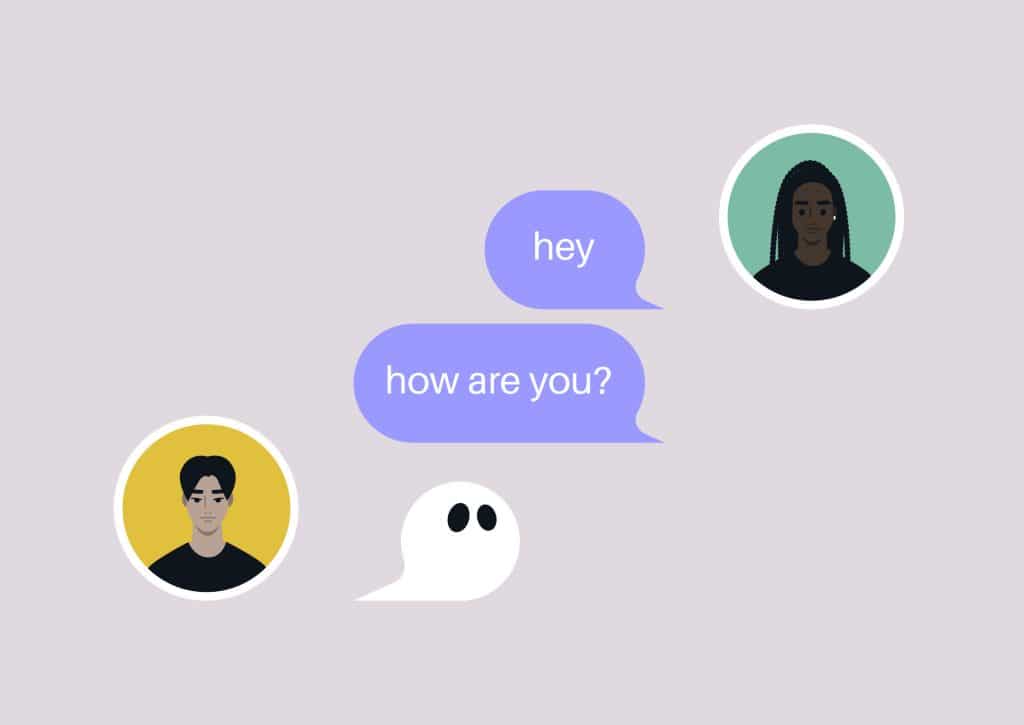
Breaking the Cycle
Breaking this cycle doesn’t require dramatic confrontation. It requires micro-closures: small, honest signals that a connection is ending. A single sentence can offer dignity, clarity, and relief. Texting someone after a date saying, “Thanks for dinner, but I don’t think this is going to work” isn’t cruel; it’s considerate. Each micro-closure fosters a habit of honesty and tolerance for the mild discomfort that accompanies it. Over time, that habit becomes a skill, and that skill becomes part of our social being.
This approach also makes space for genuine empathy. Rather than ghosting as a way to “protect” someone, honesty recognizes the other person’s capacity to handle the truth. It treats them as a peer, not a fragile object. In the long run, that kind of respect may do more to support mental health than endless ambiguity.
Realigning Values with Behavior
Gen Z has already influenced the way people discuss mental health, identity, and social justice online, demonstrating that digital norms can shift rapidly when a generation adopts new habits. The same influence could be applied to how relationships end. Rather than relying on silence, platforms and users alike could normalise brief, respectful closures, a simple message, a default option to decline, or community cues that treat honest rejection as the courteous choice. These shifts don’t have to be flashy trends; they can grow quietly out of everyday practice, just as “checking in” or “setting boundaries” have become mainstream language. By treating clarity as a form of respect rather than cruelty, young people could make straightforward communication the new default.
This is the deeper payoff. Gen Z’s reputation for emotional awareness is deserved, but without practice in complex conversations, awareness can turn into self-protective avoidance. Integrating honest endings into daily life aligns their professional values of empathy, inclusivity, and mental-health consciousness with their actual behavior. It also models something healthier for younger teens coming up behind them: that you can set boundaries without disappearing, and that vulnerability includes being willing to disappoint.
The courage to have awkward conversations is as essential as the vocabulary of self-care. Replacing silent exits with honest signals transforms empathy from avoidance into action, and it gives relationships a chance to end cleanly rather than corrode silently.
Ghosting once seemed edgy, even merciful. Today, it’s a reflection that leaves people more isolated. In a culture where everyone is trying not to hurt each other, silence has become the loudest word. If Gen Z wants deeper, kinder, more inclusive relationships, the answer may not be more sensitivity but rather more straightforwardness.
The most radical move in modern dating might be the simplest: telling someone, “This isn’t working,” and trusting both of you to handle the truth. That’s not just etiquette; it’s a practice for building the kind of resilient, emotionally literate community Gen Z says it wants.