
It was a Sunday night. I had just left the theatre rehearsal late in the evening, and I walked back to my college dorm alone.
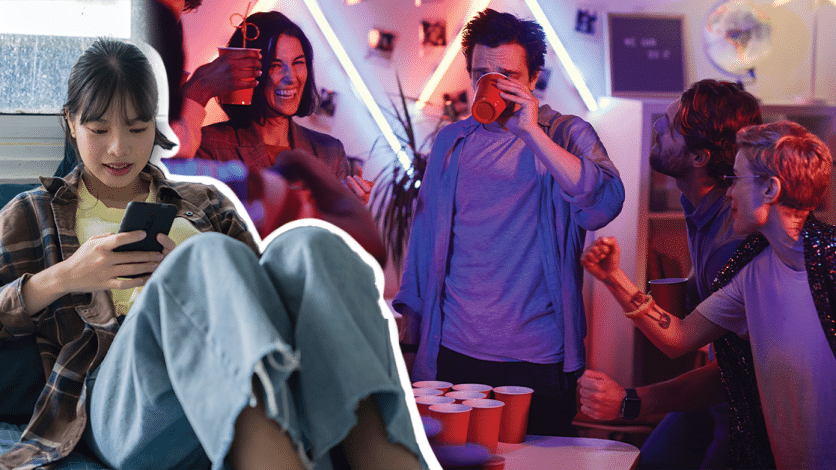
On my way back, I passed several groups of girls talking and laughing together, debriefing about a club that they danced at the other night. I watched two people who knew each other exclaim across the walkway, “Oh my god, it’s my favorite person!” and each raced toward the other to envelop them in a hug.
I was tired, and the familiar worry started to creep up on me that I wasn’t enough, that I was doing “college life” wrong. I’m not much of a partier. I only have a few friends, in contrast to the other people in my theatre group who seem to know everybody on our campus.
Near tears, I decided to FaceTime my parents for a distraction. I told them that I felt bad that other people were with their friends all the time, and I wasn’t. But my mom just asked me, “Well, do you want to be with people all the time?”
Then it hit me. I paused, slumping in my chair a bit. “No, I don’t think I do,” I said. And the more I thought about it, I realized that maybe being alone isn’t so bad.
A healthy social life isn’t necessarily what you think
Modern media and pop culture have built into us that social success equals an abundance of friends, social outings, and adventures. Often, people who like to spend most of their time at home are either looked down upon or assumed to be lonely and therefore pitiable.
A fulfilling social life is important to your happiness, but what that actually looks like is different for everyone. Something I’ve recently realized is that being alone doesn’t automatically mean you are lonely.
A lot of the upset I was feeling had more to do with my comparing myself to others rather than what was truly in my heart. The picture of “social life” I had been trying to live up to, by way of the internet and perhaps also lingering social politics from high school, is only a stereotype.

It’s only one facet of a much more vast and nuanced idea of what health actually looks like, and that particular facet doesn’t work for me.
Socializing as an introvert looks a little different
I’m sure you’ve heard the word introvert before. You may also have an idea of what that looks like: someone who is shy and quiet, and who prefers to spend most of their time alone. That may be true for some people, but being an introvert doesn’t automatically mean you are shy or awkward.
Instead, the label has to do with how you gain energy. Introverts recharge when they have time to themselves, whereas extroverts — the personality type at the other end of the spectrum — seek out other people to recharge their social battery.
A common misconception is that introverts aren’t social people. That isn’t necessarily true. Often, introverts prefer to socialize in smaller groups rather than large crowds. They also tend to have a few close friendships instead of many casual ones.
It’s not that introverts aren’t friendly or socially adept. They still enjoy being around people, just not too many at once.
The pitfalls of insecurity over truth
That Sunday night, I also felt confused. I’ve known that I am an introvert all my life, and I thought I had accepted that part of my identity. So why did I feel upset about it?
First, the social interactions I was having did not feel fulfilling to me, mostly because I was not honoring my need for rest and solitude. As a result, I didn’t have the energy to engage in my friend group because I was already emotionally drained from other social hangouts.
There was also the anxiety I got from comparing myself to other people, which everyone knows is the enemy of joy. Whether it was scrolling through Instagram posts or ruminating on how all the people I’m surrounded by seem to be adventuring with their friends all the time, I let my insecurities get the better of me.
That particular lifestyle, I realized, wasn’t what I wanted. It was how I thought I should be living my life. My feelings of inadequacy weren’t coming from myself, but from external pressure.
Further, I am unable to emotionally process things when I’m with other people. Socializing can sometimes provide a helpful distraction from my own emotions. However, sometimes I need space by myself for meaningful introspection, it will only worsen the emotional spiral down the line.
Why is it good to practice being alone
Spending time by yourself isn’t a bad thing. In fact, it’s actually a very healthy thing to practice.
One of the greatest benefits of spending some time alone is that it can give you a greater understanding of who you are. Knowing yourself, the things that you love and that you’re interested in, will help you build the confidence to navigate the rest of the opportunities life offers you.
Give yourself space to process the world, to form new things to say. Go on your own adventures, try out some new hobbies, and come back with stories to bring back to the friend group the next day.
But you also shouldn’t put pressure on yourself to always be doing something “productive” or “exciting.” If staying at home and reading a book, watching a movie, or cooking sounds like it would be better for your well-being, then do that.
Remember to listen to yourself
If you can relate to any of this, you’re not alone. And if you to find yourself feeling down when you spend time alone, try to dig deeper into why you feel that way.
If it’s a comparison to others, maybe take a break from social media and focus on an activity you know you enjoy. If you feel disconnected from the world, spend some time outside in nature. But if you’re missing your friends, then call them and schedule a time to hang out
The bottom line is to listen to yourself and find balance in your life. Figure out what is actually healthy for you instead of what the rest of the world thinks is healthy. Who cares what other people think? If you are doing what will ultimately bring you the most happiness, then their opinions shouldn’t matter.
Listen to what your heart wants (in the quiet, safe haven of alone time), and do what will bring you joy. It’s your journey, not anyone else’s.