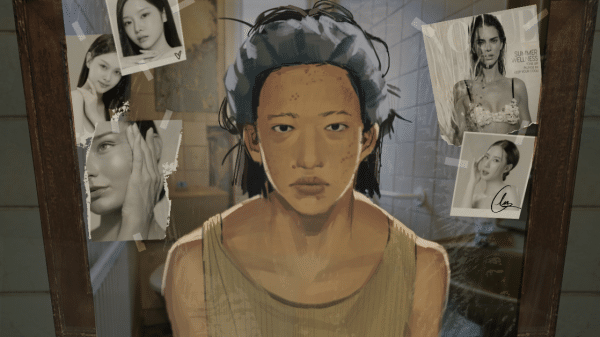
The crash
In October 2024, my insomnia caused me to stay awake for 12 days straight.
As you can imagine, last year was my biggest crash out – and I mean that literally.
For the first time in my adult life, I moved away from my hometown of Waikato, NZ. My belongings Jenga-stacked in the back of my dented Swift, I left behind everything familiar to me — friends, family, my bung-eyed cat — all in the hope of a fresh start.
Despite the shock of complete independence, the first few months in my new city were a breeze. Sure, I was homesick, but I was so filled with fresh love that the pain faded into the backdrop. My flatmates welcomed me, as did my new university cohort. I quickly made friends, joined clubs, and even secured a part-time gig at a local after-school care.
I find it incredibly strange that this was the moment insomnia crept up on me; the one short period in my life where I finally felt like things were falling into place.
It was a random night in April when, for seemingly no reason, I suddenly found myself unable to sleep. That following morning, I remember shrugging off the sleepless evening as a one-off, dismissing it as exam stress or some other petty university drama. Unfortunately, that night was the beginning of a brutal pattern.
It wasn’t a one-day event—it was my future.
Since then, I have yet to sleep through a whole night without sedation. On average, I typically run off 2-3 hours a night, but occasionally go without sleeping. October, in particular, was jam-packed with those stretches – the very worst of them. After almost a fortnight of wakefulness, I had begun to experience both auditory and visual hallucinations.

On the drive home from a shift one night, one of these delusions crept its way into my backseat. So focused on the figure in the rearview mirror, I failed to notice an upcoming roundabout, totaling my car into the back of a very expensive ute. Ouch.
The crash was a wake-up call in more ways than one.
Before it happened, I believed showing weakness was the same as admitting I couldn’t survive on my own. But afterward, I realised I no longer had the strength to continue this way; I had to get help.
It’s taken me a year of psychiatric appointments and sleep trials, but bit by bit, I’m starting to recover.
I’m learning how to live with a nightmare I never asked for.
The stereotypes of sleeplessness
While my sleep has been ever so slowly improving, the stigma towards insomnia seems to be doing the opposite.
Public perception of sleep disorders is dangerously misguided. I’ve lost count of the times someone’s told me that I’m “bringing this on myself,” or that I’m simply “not trying hard enough” to sleep. Even worse, they’ve said that my insomnia is an exaggeration, that it simply can’t be “that bad.”
I don’t believe people purposefully feign ignorance – I blame the online environment.
In our fast-paced, media-driven world, we gravitate toward the easy, black-and-white narratives we’re given – we simply don’t care enough to dig deeper. Hollywood horror and dramatic portrayals have shaped our understanding of insomnia, so when we’re presented with anything less extreme, we write it off as “quirky” behavior, like doomscrolling on TikTok or partying until dawn.
The truth is, the majority of people struggling with insomnia do not live loud or bold lives. They are not actors or celebrities; they’re the people you interact with every day, especially in university. They’re the student who sits quietly in the back of the lecture, or the barista making your coffee at the campus café. Insomnia rarely unfolds like a thriller.
It’s not a choice, nor is it a quirky hobby. Instead, it’s silent, seeping its way into the fabric of the everyday, creeping into the quiet moments between tasks.
Sharp to slipping: Insomnia’s effect on student life
I’m not the only university student crumbling under this pressure. A study by the CDC found that over 75% of college students report experiencing sleep disturbances, with an additional 15% suffering from poor sleep quality. From an outsider’s perspective, insomnia and academia might seem like a fantastic combination. “All the more time to study,” right?
Wrong.
In my first two years of university, I was a top student, recognized for academic achievement and community involvement. But since developing insomnia, my grades have taken a nosedive. I now struggle to meet even the most basic expectations, to hand in anything without receiving three extensions in the interim.
Each time I open my laptop, I struggle not to break down, knowing I’m in for another day of gruelling study that I just don’t have the mental capacity for.
The connection between sleep deprivation and reduced academic performance is undeniable, and unfortunately, I am not the only one fighting to pass her semester.
In 2019, a group of Norwegian students took part in a sleep study. Those with diagnosed insomnia were far more likely to fail exams and experience delayed academic progress. This example supports a growing pool of evidence that chronic insomnia doesn’t just affect one’s energy levels – it destroys cognition. If experienced over the long term, sleep deprivation can permanently alter the brain, decreasing attention span, episodic memory, and overall executive function.
I’ve experienced this decline firsthand, and honestly, it’s terrifying. Insomnia is not simply an inconvenience to a student, but a neurological threat. In a strange way, I am grateful for my insomnia, as it opened my eyes to the importance of dialogue and action.
It is so very important that we shift our perception of this disease, opening ourselves to conversations that are not led by judgment or stereotypes, but rather by compassion and active listening.
How you can support those living with insomnia
If you’re reading this, it’s likely you know someone who is battling this relentless illness. Or perhaps you’re living with it yourself, wondering what you can do to ease the crushing weight of sleeplessness.
Over the past year, I’ve found a few things to help me cope – and you can use these to help someone else in the same boat.
1) Offer help toward the smaller things — they’re not small anymore
When I was at my lowest, even feeding myself felt like an insurmountable task. The lack of sleep annihilated my appetite and dulled my energy so much that I couldn’t even cook the most basic of meals.
That’s when my fantastic friends and flatmates stepped in. Noticing my empty shelf, they made meals appear in my fridge and dropped baking off at my door.
Even though I couldn’t stomach much, the gesture itself meant everything to me; it reminded me that I mattered. Over time, my appetite increased thanks to their kindness, and with it, a glimmer of my old strength. With better nourishment, I started to experience better health, and, ever so slowly, better sleep.
2) Take them out of the house
Sleep deprivation is a catalyst for isolation. I didn’t have the energy for conversation, so I would spend my days slouched on the couch, cradling cups of lukewarm coffee. Trapped in my self-made prison, day and night began to blur into a cohesive stretch of silence, compounding my already heightened anxiety.
Just like with the meals, my support system worked to get me out of this cycle by visiting me. My close friend Ella would come to see me daily. At first, the forced interaction irritated me; I was desperate to be left alone in my pit of negativity.
Luckily, Ella’s not the type to take no for an answer. Despite my protests, she encouraged me to leave my house, coaxing me out with a café coffee, a drive to the supermarket, or a trip to the beach. The outings weren’t grand, but that’s what made them so special.
She met me where I was — removed me from the four walls I had begun to associate with hopelessness.
And those small changes? They helped me to crack open my door to the outside world again.
3) Lend an ear, not your opinion
One of the greatest gifts my friends gave me was the ability to rant without fear of criticism. They didn’t offer internet advice, tell me to change the subject, or to “lighten up;” instead, they listened with unyielding compassion, giving me permission to just be.
Insomnia is not simple. It isn’t a slow cooker you can turn off halfway through, and it can’t be solved by a list of ChatGPT health hacks or a warm glass of milk. No, true insomnia envelops you.
If someone in your life is struggling, believe them, sit with them. Most importantly, remind them they’re not alone and that there is always hope. Sometimes, the most powerful thing you can offer isn’t a solution, but company – a flicker of light in their endless night.