

Your 20s are some of the most tumultuous years of your life. When you’re out in the world, on your own for what might be the first time, there’s a huge amount of freedom. Space to make up a new identity for yourself three times in one month. To learn new things, become an artist, then a writer, then a performer.
So, what do you do when that freedom is suddenly capped? Agoraphobia is an anxiety disorder that manifests as a fear of being in a situation where you feel trapped or helpless. Typically, this means that you find a safe space (e.g., your home) and stay there, in fear of the anxiety you might feel if you leave.
I grew up in a small, remote town with very little going on. So moving out felt like discovering a whole new way of living. Finally, a cafe within walking distance, regular buses, dance classes, and art groups are no more than 10 minutes away. Becoming an adult and having the autonomy to learn, try new things, and completely experiment with my identity was so freeing,
For the first few years.
Small town sadness to big city freedom
Growing up, I wasn’t sure what life really had to offer. I found fun in whatever I could, hanging out with my friends in classrooms or parks. I never thought I could ever reach something more than that.
Going to Uni felt like unlocking a new part of myself; my environment had kept me locked away.
Then, after the most exciting, freeing four years, I graduated and found myself alone, living away from home in a huge town. I felt like I’d just been dropped off on Earth with no directions.
While in Uni, I felt completely bulletproof. Like I was immune to any problem life could throw at me. Mostly because everyone else felt like that, too. We spurred each other on, took risks just because, and laughed at the consequences together.

I decided to stay in my Uni’s town after graduating, while my friends had to move back home, so I lost that support network. And I quickly developed a fear of every possible negative scenario I’d managed to avoid so far.
What if the next time I leave the house will be the time that something terrible finally happens?
When did it all change?
Research suggests agoraphobia develops over time. It starts with mild anxiety, then builds up into a complete fear of leaving an environment you believe is “safe.”
I’ve always had a healthy dose of anxiety, but it was usually manageable. My list of ongoing worries had always been background noise I could swat away with laughter and club music. But after finishing Uni, my world seemed to go silent. And the worries were all I could hear.
I felt like my life was so good that I couldn’t risk ruining it. I was scared of getting a cold, of going out too late, of choking on a strepsil. After losing so much freedom, one day, randomly, I lost all my personality too. I stopped making art in the woods or going bat-watching at night or doing photoshoots dressed as a clown.
There were a series of things that contributed to that day. Not having my friends around, an onset of health anxiety, past parental protectiveness, etc. But at the time, my fears felt completely logical.
Absolutely everything seemed too risky
What if I go out past 9 PM and bump into an angry drunk?
What if I get the bus and someone just picks me to lash out at?
Eventually, it built up to the point where anything I did was a risk. I did have to leave the house sometimes for work and groceries, so I started dulling myself down to minimise the feeling of danger. It started with not wearing hoodies in case it came across as intimidating, and then I couldn’t wear anything bright that attracted attention. No accessories. Nothing too gay. Nothing too interesting. Nothing that could cause the wrong person to notice me in any way.
I completely lost myself. My anxiety, for the first time since it started, was unmanageable.
How to get comfortable with fear
The fear I experienced lasted months. I took a work-from-home job, ordered groceries to my house, and didn’t meet up with anyone. There were words I couldn’t say, things I couldn’t talk about, clothes I couldn’t wear. My life had become completely forbidden. The fear was unbearable.
But I was desperate to overcome it, and there were a lot of things I tried to get there.
1. Therapy
I’ve always found therapy helpful throughout my life. Sometimes even fun. Talking about myself to a stranger for an hour? Sign me up.
But therapy for OCD (which agoraphobia falls under) is completely different. I ended up trying eight therapists in the span of two months, feeling unheard, misunderstood, and hopeless. Unfortunately, treating OCD is not the same as treating other issues, and a lot of therapists don’t know what to do to help.
Here is the not-so-fun list of things I was told in therapy for agoraphobia:
THERAPIST #1
Therapist: How do you feel about leaving the office to get back home?
Me: I actually can’t think about it, or I won’t be able to leave.
Therapist: Ah, okay. So, how are you getting home?
Me: No, really, I can’t talk about it. I’ll worry it’s not safe and just won’t leave.
Therapist: Oh. Is it safe? How long will it take you to get home?
THERAPIST #2
Therapist: Gosh, that sounds horrible. We’ll definitely do our best to help you through this. Can you fill out this form?
The form is a short list of typical OCD behaviours that I don’t have.
Therapist: Well, you didn’t score any points on the form, so we can’t offer you help.
THERAPIST #3 (The best therapist I had)
Therapist: I’m inexperienced in OCD and cannot help you.
Therapy can definitely help, and I did have some slightly better interactions with others I went to, but a lot of unspecialised therapists don’t seem to know as much about OCD. The best therapy option here is an OCD specialist. I wish I had known that before.
2. Exposures
A common way of managing agoraphobia is setting yourself small exposures and allowing yourself to sit with the scariest thoughts you have without running away from them.
This can feel super overwhelming, so something I found helpful was setting a timer for how long you need to sit with the anxiety. Once the timer’s done, you can go back to avoiding all your fears and scary thoughts.
I started doing this with really small things. Hanging my legs off the sofa used to make me think about scary things for some reason, so I’d set a timer for one minute and sit in that position. It felt awful to suddenly face all these thoughts I’d been putting off, but doing it for just one minute every few days made me realise I was capable of facing those thoughts. From there, you’ll have the confidence to face the bigger things.
3. Changing your mindset
In this period, my agoraphobia led me to adopt a new motto: If I can think of a risk, it’s just not worth doing.
One of the most helpful things I did was to challenge this idea. Were these things really worth avoiding, or was I missing out on life?
The tipping point was probably when I stopped wearing hats.
Such a small thing, and yet it felt terrifying. The fear was that if I wore a hat, someone could clock that I was gay or trans, and maybe it would rub them the wrong way and put me in danger. I started to mourn the person I used to be. The pride I used to have in my identity.
If I could think of a risk for such a menial thing as wearing a hat, how far could this end up going?
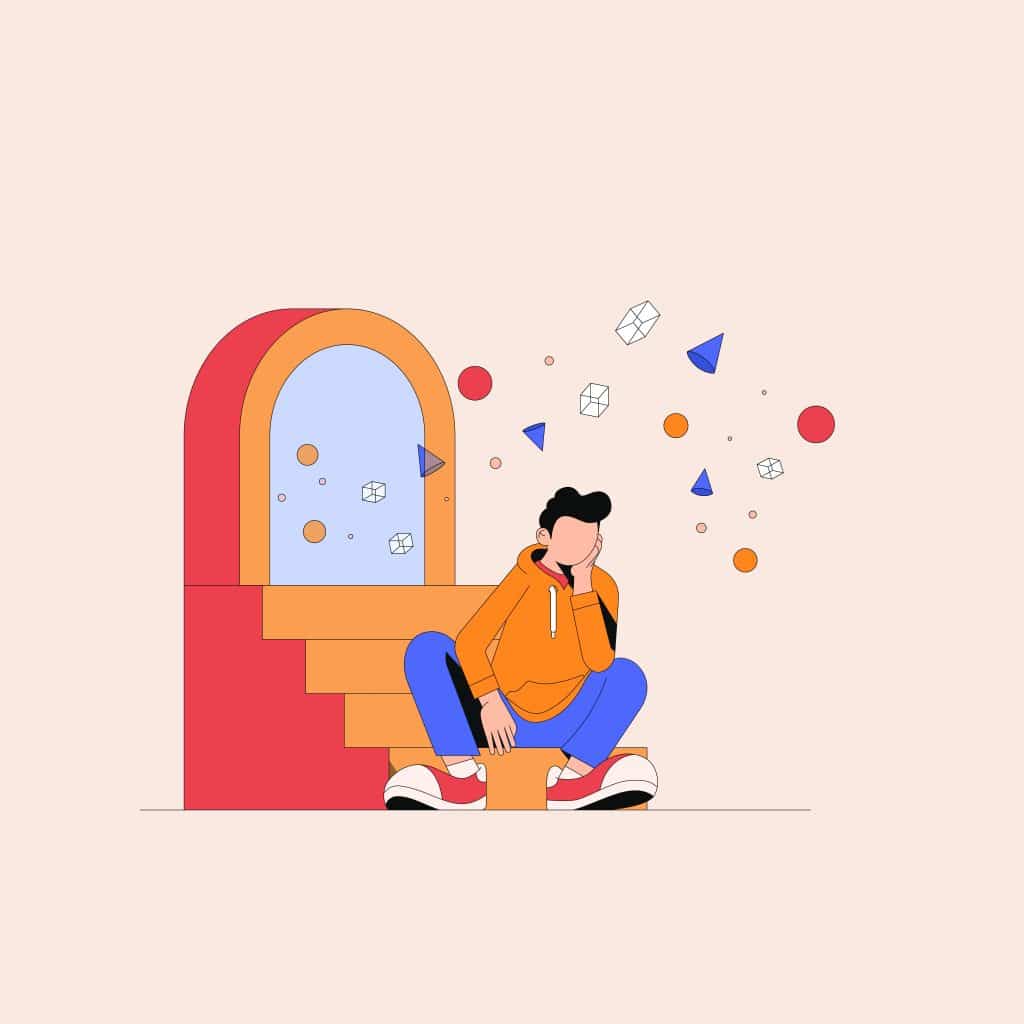
It’s really common for LGBTQIA+ people to have these kinds of fears. From years of being antagonised, denied, and ostracised, it can feel safer to hide yourself.
But it’s not a healthy way to live. I needed to bring myself back, and so I started to reconnect with myself. In small steps, I began showing the world who I was again, because I realised it’s worth the risk.
How can people help you?
It’s really hard to know how to help a friend with agoraphobia. Do you adapt to their anxieties or push them to do more? In my experience, what you do to help is less important. It’s how you act around them.
The energy I kept around me really influenced my recovery. I’ve always had to deal with overprotectiveness from my family, but with the added pressure of agoraphobia, it was too much to manage. I couldn’t handle their worries alongside my own, so for a while, as I reentered the human race, I blocked out their concerns and simply focused on the joy of being out in the world again.
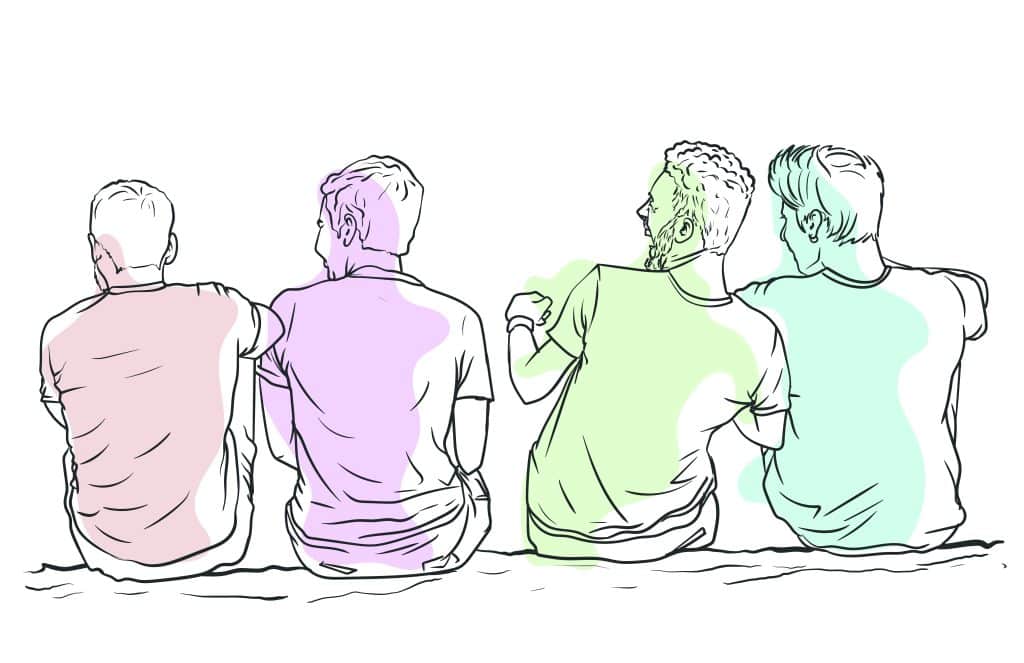
On the other hand, once I managed to get out of the house again, I joined a dance group, made new friends, and reconnected with some old ones. That was really important for me, and those connections supported my recovery a lot. Being around people who didn’t expect me to be anxious unconsciously pushed me to do things I was scared to do. It made me feel normal again.
If you know someone with agoraphobia, that’s the best thing I can suggest. Don’t push them, don’t appease them, but try your best to treat them like a normal person.
Coping with your condition
It may take a while to reach the point where you’re comfortable with living freely again, but you will get there. I know it’s frustrating. It can feel like your brain is completely betraying you, but you need to take the time to get past it. This isn’t something you can switch off in a day.
Enjoy the good moments, the times when you manage to break past the fear and feel invincible again, and simply accept the times you can’t.
I’ve been working through the worst of this for the past six months or so, and sometimes normal things still feel really scary, but that fear isn’t all-consuming anymore. I think life finally feels exciting again, and if you give yourself the time, I think you’ll feel that again, too.