
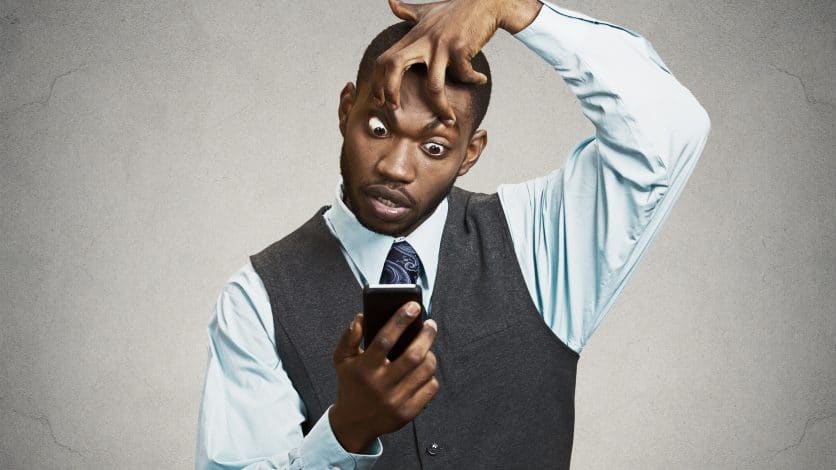
“You must’ve been on your phone.”
It’s a comment that appears with surprising frequency beneath discussions of television and film. Whether on TikTok, Reddit, or YouTube, viewers increasingly find themselves responding to confusion over plot points, character motivations, and themes with some variation of the same question: “Did we watch the same thing or what?”
The phrase is often used jokingly, but it points toward a growing concern among audiences. In an era of endless scrolling, streaming, and multitasking, many people no longer watch television and movies as their only form of entertainment. Instead, shows play in the background while most of us browse social media, message our friends, fold laundry, and put on our makeup. Some even consume entirely different forms of entertainment on a second screen—playing video games, for example. For many of us, this has become the natural way of engaging with media.
At the same time, discussions surrounding media literacy have increased online. Viewers are increasingly debating whether audiences misunderstand satire, misread character arcs, or fail to recognize themes that seem obvious to others. The term media literacy itself has become an internet buzzword, appearing everywhere from fandom spaces to even more political discussions. Yet these conversations often assume that interpretation is the problem.
However, what if the issue began even earlier?
After all, media literacy requires attention before it requires analysis. Before audiences can interpret symbolism, debate themes, or argue over a character’s motivations, they first have to absorb what the story is actually presenting. As streaming culture, second-screen viewing, and algorithm-driven content continue to reshape how people consume entertainment, the question may not simply be whether media literacy is declining, but whether audiences are engaging with stories differently than ever before.
The second-screen viewing epidemic
Television was not always treated as background noise.
While multitasking has long existed, the recent rise of streaming platforms has transformed how audiences engage with entertainment. Entire seasons are released at once to be binged, episodes autoplay automatically without intervention, and content is available at virtually any moment of the day. Entertainment now competes with text messages, social media feeds, mobile games, and countless other distractions. For many viewers, watching a show has become something that happens alongside another activity rather than the primary focus. No longer only an activity to be sat down and watched with undivided attention.

This shift is reflected in the growing popularity of second-screen viewing. Many audiences openly discuss scrolling through TikTok, replying to messages, folding laundry, or even playing video games while watching television. Certain shows have even earned the label of “background TV” or “comfort programs”: that can remain on in the room without demanding constant attention. While there is nothing inherently wrong with casual viewing, these habits raise an important question: how much of a story can be meaningfully interpreted if only part of it is absorbed?
Where did our attention go?
The attention economy has only intensified this phenomenon.
Modern platforms are designed to compete for every available moment of a user’s focus, encouraging constant engagement and rapid shifts between content forms. The popularity of TikTok split-screen videos illustrates this perfectly. Minecraft parkour clips, the infamous Subway Surfers gameplay, and other visually stimulating footage frequently accompany unrelated stories or commentary. The format assumes that a single source of entertainment is not enough to maintain engagement. Whether this reflects shrinking attention spans or simply changing viewing habits is still debated, but it signals a significant shift in how audiences take in information in any form.
This distinction matters because media literacy begins with comprehension. Before viewers can discuss symbolism, satire, themes, or character motivations, they must first notice them. You cannot analyze what you did not absorb. If audiences increasingly engage with stories while their attention is divided, the conversation surrounding media literacy may begin much earlier than interpretation itself.
Misreading media is not new
If online discussions are any indication, media literacy is in crisis.
Viewers regularly accuse one another of misunderstanding stories, missing obvious themes, or sympathizing with characters who were never intended to be role models. Yet these debates did not begin with TikTok, streaming services, or second-screen viewing. Audiences have been arguing over the meaning of stories for decades.
Few examples illustrate this better than Fight Club and American Psycho. Both films are frequently cited in discussions of media literacy because they feature protagonists who have become cultural icons despite serving as critiques of the very behaviors some viewers admire. Tyler Durden’s (unstable) anti-establishment allure and Patrick Bateman’s performative (and insecure) masculinity have inspired countless online imitators, memes, and aspirational edits. In both cases, critics and audiences have long questioned whether some viewers misunderstood the satire entirely.
What makes these examples particularly interesting is that the issue was not one of attention. Most viewers watched the films, understood their plots, and followed their narratives. The disagreement emerged afterward, during interpretation. Audiences were engaging with the same media and arriving at radically different conclusions about its meaning. This is the kind of media literacy debate that has existed for generations, long before anyone could blame a smartphone for the confusion.
The same debate lives on
The conversation surrounding The Boys demonstrates that these debates are far from new. Since its premiere, the series has built its reputation on sharp political satire and its willingness to critique power, celebrity culture, and modern institutions. Yet one of the most common discussions surrounding the show has not been about its storytelling, but about the audience’s reactions to it. And for some, even leading them to boycott the show entirely.
As the series progressed, many viewers expressed surprise when its political messaging became increasingly direct. Even if to many the political satire was glaringly obvious from the get-go. This led to a wave of online responses asking how anyone could have missed the show’s intentions in the first place. Comments questioning whether audiences had been paying attention became common, particularly as discussions surrounding Homelander intensified and the unmistakable parallels between him and certain current world leaders became evident.
The discourse surrounding Homelander feels remarkably similar to the conversations that have followed Tyler Durden and Patrick Bateman for years. Once again, audiences found themselves debating whether certain viewers were admiring the very character the narrative was critiquing. The medium changed, but the discussion did not. Misreading satire, sympathizing with what many would consider irredeemable villains, and projecting personal beliefs onto stories are not new phenomena.
When interpretation becomes polarization
If Fight Club, American Psycho, and The Boys demonstrate the persistence of media literacy debates, Obsession represents a fresh—nevertheless welcome—challenge. Unlike traditional discussions surrounding satire, much of the discourse surrounding the film centers on how viewers interpret relationships, morality, and the question of individual integrity.
What makes these conversations particularly stimulating is that, as viewers, we often arrive at radically different conclusions despite watching the same story. Personal experiences, political beliefs, cultural backgrounds, and online discourse all influence how viewers engage with media. Rather than debating a single theme or message, audiences frequently disagree on what the story is actually trying to tell us. Who is in the wrong? Is there even a villain at all? I strongly believe so, while many would disagree.
This is where Obsession differs from films such as Midsommar. While Midsommar has generated years of debate, those conversations often center on interpretation rather than comprehension. Viewers may disagree about whether Dani’s ending represents freedom, indoctrination, or something in between, but they are generally responding to the same sequence of events. These discussions revolve around the meaning.
With Obsession, the divide feels more fundamental. Viewers are not simply debating what the story means: they are debating what the story itself is presenting. In an increasingly polarized cultural environment, audiences bring their own assumptions to the viewing experience, creating conversations that can feel as if they’re about entirely different films.
So is media literacy actually declining?
The answer may be more complex than many of us online may think.
In recent years, “media literacy” has become something of a catch-all phrase. It is often used to explain everything from misunderstood satire to clashing opinions about character motivations. During these tumultuous times, the term has become so common that it risks losing its meaning altogether alongside many other words. Many have pointed out that accusations of poor media literacy are sometimes used to dismiss legitimate criticism or shut down polarizing discussions rather than engage with them. This closes off the openings that come with debate.
Perhaps a welcome distinction between interpretation and comprehension is needed.
Interpretation occurs after a viewer engages with a form of media. It involves analyzing themes, soaking in hidden details, and symbolism. Following character arcs and interpreting their true meaning. The debates surrounding Fight Club, American Psycho, The Boys, and Obsession largely function at this level. Audiences watch the same material, yet many find themselves thinking of something else.
Comprehension, however, must come first. It involves following the plot, understanding character motivations, and recognizing the information we take in from the story presented to us. This is where modern viewing practices may be creating new challenges that were not a problem for us before. When audiences consume media while scrolling through social media, chatting with friends on unrelated topics, or dividing their attention across multiple screens, they risk missing key points that are necessary for the beginnings of deeper analysis.
Media literacy cannot take place without attention first. Before viewers can interpret a story, they must give it their undivided attention.
Conclusion
So, have we been watching the same thing?
In many instances, yes. Audiences have always misunderstood stories, idolized villains, and argued over meaning and interpretations. The debates spanning from media like Fight Club to The Boys prove that media literacy discussions are hardly a modern dilemma.
What may be changing is not our ability to interpret stories, but the manner in which we interpret the media we consume. Streaming platforms, background listening, and algorithm-driven content have fundamentally altered how audiences engage with entertainment. Stories now compete for attention in ways that would have been difficult to predict only a few years ago.
Perchance, media literacy is not truly making its way out; perhaps attention is becoming the more insufficient skill. One that slowly fades into the past.
Before audiences can dissect themes, dispute endings, or argue over a character’s intentions, they first have to be aware and pay enough attention to engage with the story itself. In an era of endless doom-scrolling and many adopting short attention spans, many issues may be intertwining in this case: whether audiences can interpret media correctly, alongside whether they are giving it enough attention to be understood at all in the first place.