

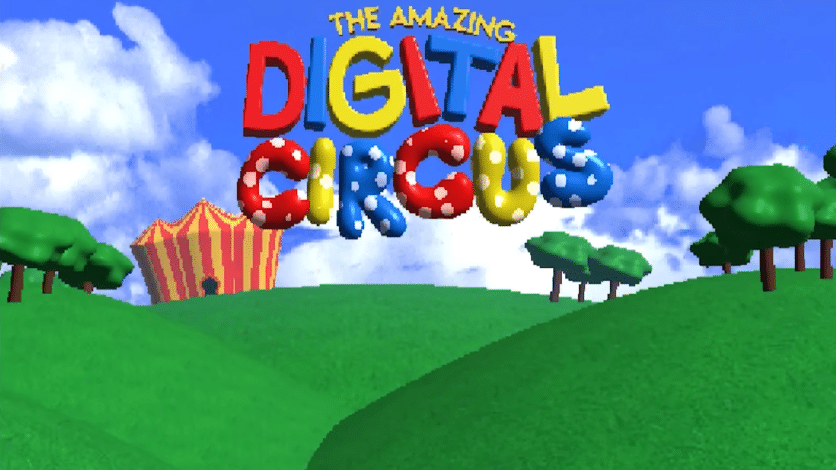
Since the beginning of The Amazing Digital Circus’ rollout, the series has enjoyed instant success. The characters, seemingly randomly selected to be part of this digital circus, embody psychologically existential themes that resonate with its primarily Gen Z audience.
It reflects the internal struggles that coincide with our digital age, specifically the side effects of a life dictated by social media. The increased surveillance and emphasis on online success turn us into full-time performers, seeking fulfillment from likes and engagement. Through the constant need to perform for an audience and the attachment of our value to data, we experience the same existential conflicts and search for meaning as the characters in this online digital circus, linking its popularity to its relatability.
Caution: Spoilers ahead.
Background
Animator Gooseworx and Glitch Productions created The Amazing Digital Circus entirely independently. Through discourse praising its bright visuals, recognizable characters, and complex themes, it immediately took off after its pilot debuted in October 2023. Its popularity has allowed the series to continue, spanning 8 episodes over the last 3 years, with a final 9th episode releasing in theaters this summer.
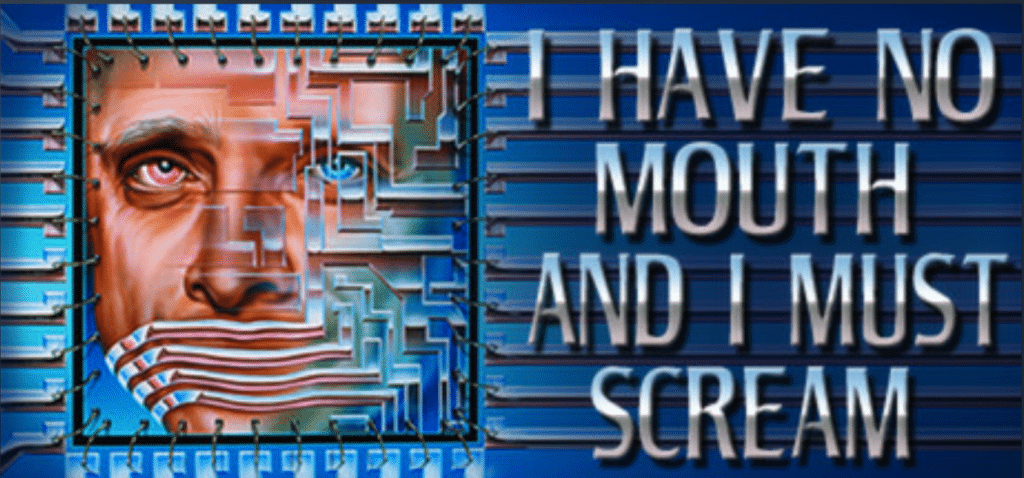
It is a psychological comedy in which digital avatars are forced to go on Adventures designed by their AI caretaker, Caine. The series draws heavy inspiration from the 1967 short story and its 1995 video game adaptation, I Have No Mouth, and I Must Scream, in which characters are similarly trapped in a digital world and psychologically tortured by their AI handler. The characters hate their lives in the digital circus, constantly reflecting on the internal struggles of confronting a meaningless experience.
Series introduction
The show begins with Pomni’s entrance into their digital world, as described in the introductory theme song. We learn that these characters originated as real, physical people who were sucked into the circus when they put on a virtual reality headset. They spawn with absolutely no recollection of their previous identity, forced to adjust to a new way of life without privacy, autonomy, or meaningful goals. They merely exist and must adhere to the constructs of their new world.
Each day, Caine creates different adventures for the avatars to go on. He fills their time to avoid them losing their mind and “abstracting.” Abstraction happens when a character’s mental state becomes too unstable, often stemming from the nihilism resulting from their harsh reality. After what can be compared to a panic attack, the avatar transforms into a glitched, monster-like entity, to be banished by Caine into the cellar.
An exit door continuously appears, giving the characters hope that they may escape, and fueling their desire to try. Caine claims that this exit door is merely an unfinished project of his and leads nowhere. However, the characters still search for a way out throughout the series, and new information gradually makes an escape seem more possible.

The characters’ mentalities as broader themes
Jax, obviously dictated by the nihilistic reality of his livelihood, rarely shows empathy for those around him. He believes that they will all eventually surrender to the simulation, diminishing his drive to feel or preserve their humanity. He tells Pomni, “Whether we like it or not, all we are now is a bunch of cartoon characters, so what’s the point of pretending we’re not?”
In episode 6, he says, “we all just end up falling into our archetypes,” dehumanizing his companions to labels and one-dimensionality. After listing each of their roles, in his eyes, he says, “I at least have the self-awareness to choose who I am,” falsely associating control with stability. He describes these archetypes as follows:
Caine – the algorithm
While separate from Jax’s discussion of archetypes, viewers often interpret Caine as a personification of our algorithm. He demands engagement with his endless simulation, purposefully built to distract the characters from their mental instability and minimize their discomfort. Through this constant control, he avoids any meaningful emotional understanding or connection. While the other characters are mentally human, we find out he is merely a programmed AI caretaker/administrator. He is incapable of understanding their human impulses.

Jax – the funny one
We learn in episode 5 that Jax was not always this sarcastic, emotionally detached narcissist, entertained by others’ discomfort. He does not adopt this worldview naturally, but rather to cope (resembling familiar internet troll personalities). He is afraid that by attaching meaning to his existence and building connections with others, he will inevitably get hurt. Jax acts narcissistically and bullies those around him because “he is not ready to face the emptiness of meaning after loss,” says Laskaaa in their piece, Jax, About Insult, Escape, and Irony. But, they continue, “the beauty of humanity lies in their efforts to search for meaning. We know that we will die, and that is why we live.” This circles him back to humanity.
Ragatha – the cheerful one
Ragatha is empathetic, emotionally supportive, and maternal. She avoids conflict, acting as a highly optimistic moral compass for the group. She suppresses her underlying emotional distress to help others, a self-sacrificial urge rooted in a deep fear of abandonment that she does not actively acknowledge. Ragatha is deliberately representative of a guilt complex that manifests as a people-pleaser.
Gangle – the sad one
Gangle is a direct illustration of emotional masking. She wears a comedy mask to appear okay and even happy. But that coping mechanism is repeatedly removed, revealing her internal depression and anxiety. We all create false personas online, whether intentional or not. We post how we wish to be perceived, and leave out the bad parts. She represents emotional suppression resulting from the pressure to perform for the public eye.
Kinger – the crazy one
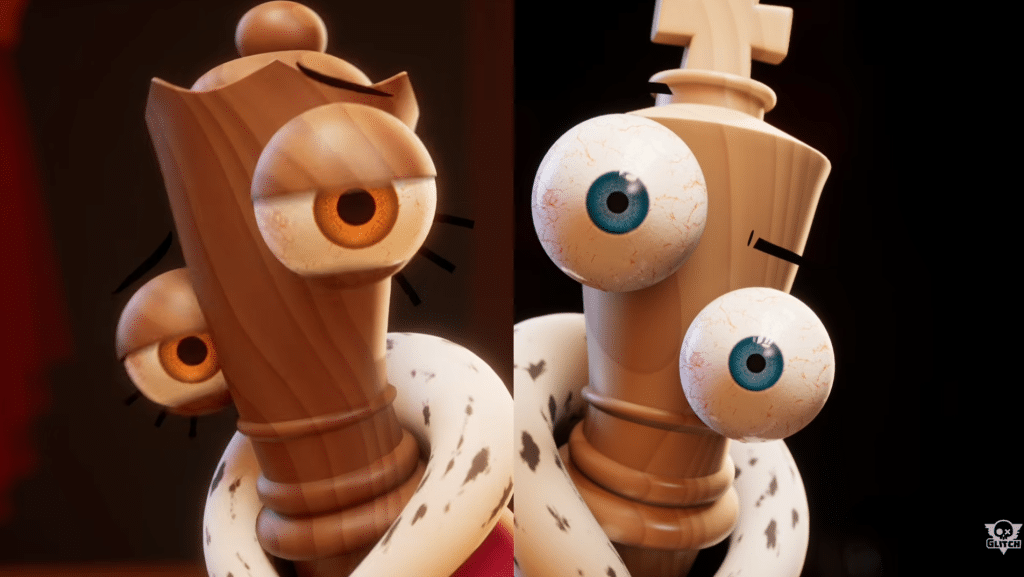
Kinger is crazy, or that’s how the show first characterizes him. We later learn that he has been psychologically traumatized from his 18 years of confinement, paired with the loss of his wife, Queenie. He suffers extreme memory loss and detachment, two confirmed side effects of screen time and its brain-rotting capabilities. He is an extreme example of the psychological effects of prolonged internet immersion and overstimulation. Kinger behaves like someone whose mind has been overloaded for years. He is distracted easily and constantly, unable to focus, confused with reality, and emotionally unstable regarding his fears. These all represent the modern repercussions of doomscrolling, constant notifications, overconsumption/oversocialization, attention deficit, and fear-mongering.
Zooble – the grumpy one
Zooble is burnt out, as many of us are from constant online stimulation. They have a low tolerance for Caine’s forced fun and appear to us as a fragmented selfhood/identity. Their state is perfectly illustrated through their character design being constantly rearrangeable. The character expresses frustration and dissatisfaction with themselves and their simulated life.
Zooble spent so long trying to figure themselves out, stating, “I don’t like… myself. I hate this body. I hate all these stupid removable pieces. I just want to find something that feels… good,” that they’ve given up. “It has nothing to do with the adventures. It’s more just… Ugh, forget it. You’re probably not even listening.” They might appear unbothered, but they’re really just experiencing digital fatigue.
Pomni – the one who hasn’t figured it out yet
Pomni is new to this world and its tensions, functioning similarly to the audience’s perspective. While overwhelmed and nervous, she is still more hopeful and determined than the others. She still reflects human anxiety and tendencies not yet corrupted by her new reality. Her jester avatar symbolizes the performance anxiety accompanying the new and intense awareness of being trapped within an online, performative system.
Jax finishes by asking her, “So who do you wanna be?” …A question certain to plague anyone with a human consciousness.
Its relatability for Gen Z
In the series, the idea of a digital circus reflects Gen Z’s current life in a primarily online social climate. Social media’s encroachment on our lives leaves us feeling constantly watched. We exist in a state of constant performance, whether we notice it or not.
Social media
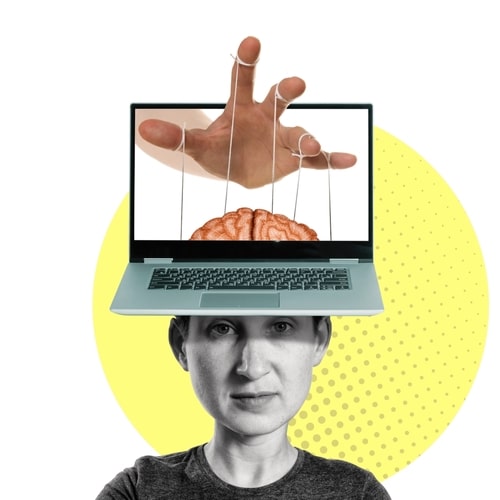
Social media platforms purposefully condition our dopamine receptors to seek likes and engagement as forms of validation. It fosters a desire to constantly entertain. This logic creeps into our internet culture and memes, as seen in concepts like the performative male, or “Pinterest-coded” personas/looks. In reality, it is much more than a label. When people dilute our carefully curated mental struggles into aesthetics or memes, they create a sense of meaninglessness and existential inner conflict. That prioritization of likes and followers turns us into jesters, like Pomni. We are constantly performing and allowing social media to dictate self-expression, which has intense ramifications.
Caine, as the algorithm, illustrates to us that our digital experiences are purely metric-driven, designed to maximize our engagement and obedience. Stanford Medicine released a report titled, Addictive potential of social media, ” explaining how social media exploits and rewires our brain’s reward system to simulate addiction. We are vulnerable to compulsive media overconsumption, and its harmful effects on our mental state stem from the fact that our brains are not equipped to process or manage such information overload. Just as Caine’s authority strips the characters of the nurture and autonomy it takes to be human, the oppressive dictation of our social media feeds, combined with their constant distraction and pressure to conform to the standards they present, undermines any personal sense of meaning. This places us, as well as the characters, in a state of existential unfulfillment. As with the abstraction in the show, we, too, reap mental consequences.
Effect on identity
None of our activities is private, and the pressure to conform to social norms and trends can feel like a loss of authentic identity. Constant data surveillance and the emphasized need to enforce inevitable nihilistic views. The characters, and we, are performing in this circus, but questioning the point of it all. We attach importance to our data and marketability as consumers, putting our mental autonomy under attack; without it, purpose becomes bleak.
As it is for Ragatha, our desire to curate and change ourselves to meet others’ standards is crippling. Like Zooble, we experience digital burnout and new pressure-related struggles with identity. Kinger shows us that these mental struggles are incredibly real and affect us more deeply than we can understand or even fix. And while we might try to mask these apprehensions and struggles like Gangle, or attempt to ignore them completely like Jax, they make themselves evident one way or another, through behavior or mental crises.
As lore has slowly been revealed through the episodes, check out this review from 2024, hinting at some of these themes.
Upcoming finale
The final, the 9th episode of The Amazing Digital Circus, is scheduled for theatrical release from June 4th to the 18th. It will later be available to stream on YouTube and Netflix on June 19th. In the most recent episode, the group hits their breaking point, constructing a plan where Kinger (who we learn had previously helped code their simulation) attempts to restrict Caine’s permissions and end his streak of torture. This plan backfires, and he fully deletes the AI from the server.
In the finale’s trailer, we hear Jax exclaim, “Now, we have nothing.” This has fans speculating that the ending will have much more to do with their internal struggles than with an action-packed escape operation. Carlee Elders, a blogger following the series and its theories, writes, “The narrative isn’t about the characters escaping the circus — it’s about them confronting and accepting themselves. Without wacky virtual adventures to distract them, the cast is left with only their thoughts and each other.” While a concrete solution for the characters we align with might ease our anxieties, such a solution is unrealistic. In reality, we have no way out but through.
Carlee continues, “So, two paths remain for our beloved cartoon cast: face their problems together and learn to cope with this reality, or emotionally shut down and abstract.”
We, too, have no choice but to confront our mental states and the obstacles that coincide. Gooseworx has hinted that the finale steers clear of a happy ending. It will be morally grey and without an easy solution. As outlined in this article, the characters will reconnect with reality. They have no choice but to reconcile with their humanity, which, to a relating audience, might be an immensely uncomfortable watch. While the series may mask itself as a lighthearted, children’s animation, it acts as a reality check for our generation, and its finale has the power to teach us something valuable.











Eli
June 3, 2026 at 4:48 am
The Amazing Digital Circus is not a “reality check” it is simply a short series that is not targeted towards gen z, and has a more childish vibe. The voice acting is mediocre at best and has the looks of a blender model made by a high schooler. The only real thing they can get right is the music. It can resemble a video game but that is just for the appeal of a younger audience. Overall its an overrated show targeted towards the younger population, I’d assume around 7-10. Another thing is the story writing. The characters are bland and have a one face basic personality. Anxiety isn’t even a personality. That’s all I have to say, whatever this article has to say, shouldn’t. The Amazing Digital Circus just isn’t that good.