It’s the kind of story that feels impossible until it happens on your own street. A mother knocks on her neighbor’s door to retrieve her child’s tablet, and within seconds, the woman inside shoots her dead through the metal door. That chilling moment in Ocala, Florida, is the heart of The Perfect Neighbor, Netflix’s 2025 true-crime documentary that has stunned audiences and sparked national reflection.
Directed by Emmy-winning filmmaker Geeta Gandbhir, the film pieces together police body-cam footage, 911 calls, and surveillance videos to reveal not only what happened but why it did. It explores how fear, race, and law collided in the most ordinary of American settings. What emerges is more than a portrait of one fatal encounter. It becomes an indictment of the quiet fractures running through modern neighborhoods and the systems that let them widen until it is too late.
When ordinary fear turns fatal
It began with something almost trivial: children playing outside on a summer evening in Ocala. But by night’s end on June 2, 2023, thirty-five-year-old mother of four Ajike “AJ” Owens lay dead, shot through the front door of her neighbor’s home. That neighbor, Susan Lorincz, later told police she was the “perfect neighbor,” terrified for her safety. Two years later, The Perfect Neighbor forces viewers to confront how ordinary frustrations and unchecked fear can combust into tragedy.
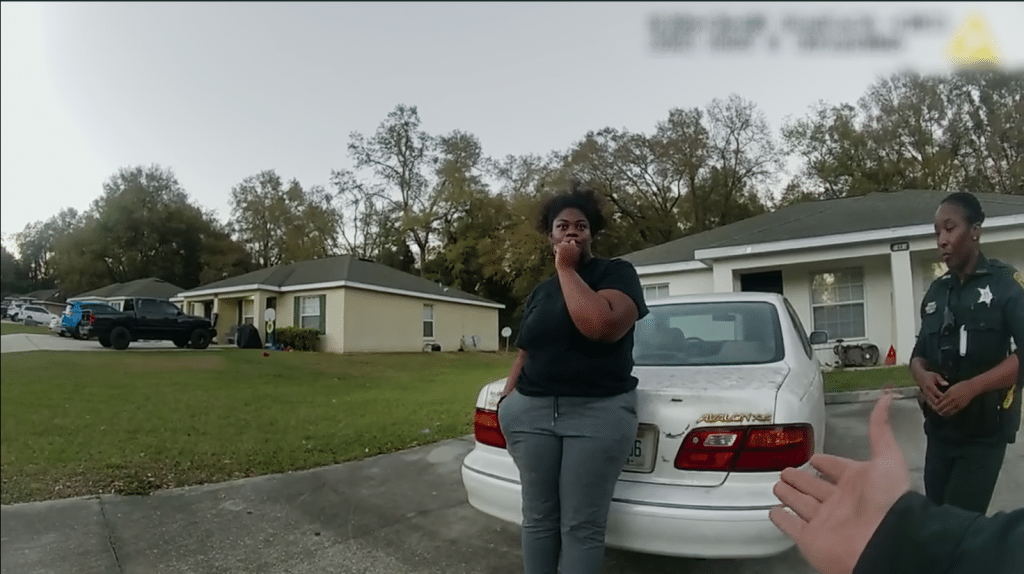
The documentary premiered on Netflix on October 17, 2025. It’s already been hailed as one of the most urgent true-crime releases in years. Using unflinching real footage and no narration, Gandbhir reconstructs the fatal chain of events with sharp, journalistic precision. The audience becomes a silent witness, trapped in the same claustrophobic tension that gripped the neighborhood long before the shot was fired.
The story behind the door
Owens and Lorincz were next-door neighbors whose relationship had deteriorated over months. Lorincz, a white woman in her fifties, often complained to authorities about the noise of neighborhood kids, most of them Black, playing nearby. According to police records shown in the documentary, she called 911 repeatedly, accusing the children of trespassing and vandalism. But nothing suggested danger. The situation escalated until one evening, after a dispute over a tablet, Lorincz allegedly threw, Owens approached her door. Moments later, Lorincz fired through it.
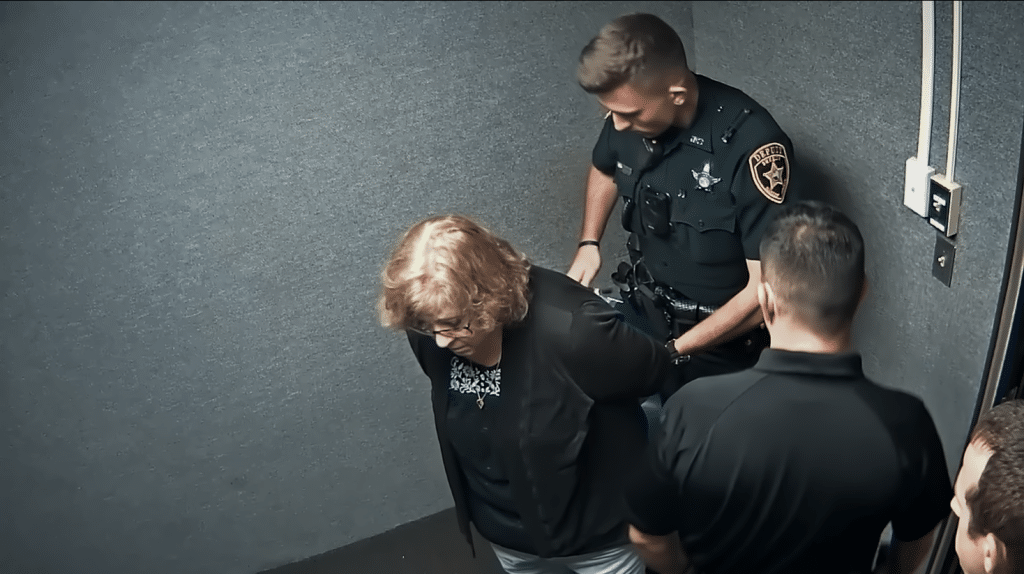
The aftermath plays out through haunting footage. On body-cam video, Lorincz repeats that she acted in self-defense, citing Florida’s “Stand Your Ground” law. Prosecutors disagreed. In 2024, she was convicted of manslaughter with a firearm and sentenced to 25 years in prison. It started as a small neighborhood dispute. It ended as a national reckoning over race, fear, and the uneasy calm of suburban life.
A documentary without a safety net
Rather than rely on interviews or expert analysis, Gandbhir lets the evidence speak. The film is built entirely from official recordings of 911 calls, surveillance clips, and police footage that unfold without commentary. The New Yorker called this approach “radically unmediated,” forcing viewers to process the story without the safety of a narrator’s guidance. We see and hear what investigators saw, feel the confusion of the responding officers, and sense how quickly rationality collapsed into violence.
That absence of narration also strips away bias. The viewer must face uncomfortable truths on their own terms. There’s the sound of Owens’s children crying outside the house, Lorincz’s mechanical explanations, and the uneasy silences between officers. Gandbhir’s restraint transforms The Perfect Neighbor into something more than true crime. It becomes a study of how fear spreads when empathy fades.

Race, law, and the fragile myth of suburbia
Beneath the film’s procedural rhythm runs an inescapable racial current. Owens was Black; Lorincz was white. Critics and the film show how racial bias shapes perceptions of threat, deciding whose fear counts and whose presence alarms. Florida’s “Stand Your Ground” law, allowing deadly force if one “reasonably” feels threatened, has repeatedly shown racial disparities in its application. Prosecutors cited the law not as a defense but as evidence of how easily people weaponize fear.
Gandbhir also challenges the suburban illusion of security. The film shows a neighborhood defined by separation, fenced yards, locked doors, and anxious glances. What should have been a community became a cluster of fortresses. Owens’s children appear briefly in the footage, their laughter turned to trauma, their innocence crushed by the same systems meant to protect them. Through this lens, The Perfect Neighbor exposes the rot beneath the façade of civility: isolation disguised as safety.
When the law protects and fails
Throughout the documentary, law enforcement becomes both observer and participant. Officers visited Lorincz’s home several times before the shooting, responding to her complaints but failing to de-escalate or recognize the pattern of harassment. Gandbhir’s inclusion of these earlier calls transforms bureaucratic procedure into a character of its own, slow, indifferent, and unable to imagine tragedy until it happens.
The film questions the effectiveness of self-defense laws and the institutions that enforce them. Lorincz’s repeated appeals to fear reveal how such laws can validate prejudice under the guise of protection. “We wanted to show how many opportunities there were to de-escalate, and how many were missed,” Gandbhir told Netflix’s Tudum. The result is an indictment not just of one woman’s actions, but of the social architecture that allowed her to believe those actions were justified.
A streaming sensation with a message
Beyond its social impact, The Perfect Neighbor has been a breakout success. According to Variety, the documentary drew 16.7 million views in its first week, becoming one of Netflix’s top-performing non-fiction titles of 2025. It surpassed several scripted hits, a rare feat for a documentary. That reach reflects a public hunger for stories that confront systemic injustice rather than simply dramatize it.
Critics attribute the success to Gandbhir’s journalistic clarity and emotional precision. The film premiered at Sundance, where it won the U.S. Documentary Directing Award, and its subsequent Netflix release ignited widespread discussion across social media. Threads on Reddit and TikTok are filled with viewers describing sleepless nights and emotional exhaustion, not from gore or shock, but from how real it all feels.
What the film leaves us with
The Perfect Neighbor offers no catharsis, only a quiet reckoning. The final moments linger on the voices of Owens’s children, a reminder that this story doesn’t end with a conviction or a documentary credit. It continues in the lives reshaped by violence, in the neighbors who still live behind closed doors, and in every uneasy glance exchanged across suburban driveways.
Gandbhir’s work forces audiences to reflect inward. What small conflicts are festering in our own communities? How often do we mistake vigilance for fear? In documenting one tragedy with surgical precision, The Perfect Neighbor lays bare the anatomy of countless others waiting to happen, all separated by little more than a wall, a misunderstanding, and a weapon.
The final knock
By the time the credits roll, the illusion of safety has collapsed. Gandbhir doesn’t just show how a neighborhood failed one family; she shows how fear can warp the meaning of home itself. The Perfect Neighbor is not merely a true-crime story; it’s a mirror held up to all of us. Because behind every door, in every quiet cul-de-sac, someone still believes they’re the “perfect neighbor.” And that might be the scariest part of all.