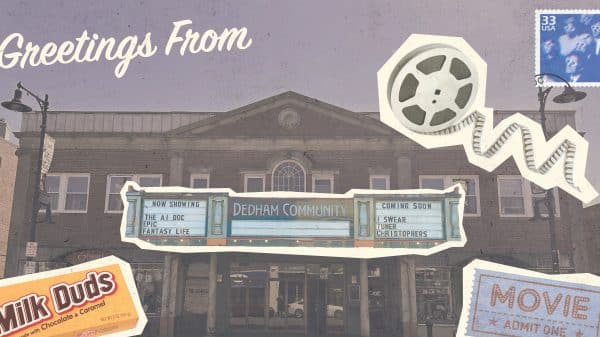


Movie theaters are dying, and streaming services are killing them. This has been the growing sentiment throughout the 2020’s. In a post covid world, movie theaters are becoming obsolete. Is there any way of saving them, or is your local theater destined for the same fate as the dinosaurs?
In a post-COVID world, there is no longer a need for movie theaters. Why would I use my precious gas to drive to the theater and spend money from my already-tight monthly budget to see a film that I will be able to watch in a month in the comfort of my own home without any annoying teenagers snickering in the seat behind me? This narrative floods every Reddit thread you will find on the subject. The unfortunate part is, all of this is true.
These aren’t just internet trolls watching with morbid excitement as each theater declares bankruptcy. In fact, my own relationship with film has followed this same trajectory.
In the beginning…
When I was growing up, going to the movie theater was not just a luxury; it was a necessity. It was the only way you could stay up to date on what was hot in the film world. The movie theater was the ultimate authority. Not only could it introduce a new franchise to the world, but it could reintroduce old films to an entirely new generation.
I recall going with my father to watch the re-release of Star Wars Episode 1: The Phantom Menace. The film debuted in 1999, four years before I was even born. It was released in 3D in 2012, which would be the first time I had ever even heard of it. To put it simply, this film changed my life. My nine-year-old self was so enamoured by the lightsabers, spaceships, and even Jar Jar Binks. My adolescent brain sat through all two hours and sixteen minutes. When it concluded, I begged my dad to take me to Walmart and buy a Darth Maul action figure. The following Monday, I talked all day about it with my friends. It wasn’t just content to mindlessly consume; it was an event.
This love for the movie theater and desire to share it with others continued into high school. In eighth grade, I rounded up my friends into my mom’s SUV to watch IT in theaters. As a freshman in high school, I went to see Avengers: Endgame not once, but twice (even after having Iron Man’s death spoiled on Twitter). If you weren’t going to the movie theater, you weren’t part of the culture.
COVID ruins everything
Fast-forward to March of 2020. COVID becomes a massive meteor hurdling toward the movie theater industry. When people are no longer able to go to the theaters, they turn toward streaming. We all collectively realize, “Hey, this is so much easier than getting off my couch and going out into the real world.” Nobody is missing out by not seeing a movie in theaters, because the culture has moved to online discussion.
Not only is going to the movie theater no longer a necessity, but it is actually an inconvenience. If you really want to be in the loop on the most popular films, you need to be able to watch them all the second it comes out. It isn’t to be enjoyed anymore; it is to be talked about and analyzed in the comments of some amateur film critics’ YouTube videos.

I fell victim to this as well. There was no longer a reason to schedule a day when all my friends could come see the newest Marvel movie. I could just watch some nerd’s 30-second review about it on TikTok. It is much faster and much more cost-efficient. If I decided it sounded like something I wanted to watch, I could just wait a month for it to be released on whatever streaming service I’m already paying for.
There wasn’t a single thing that killed movie theaters, but a perfect cosmic storm of COVID, streaming services, and social media made them obsolete.
Barbie (x2) saves an endangered species.
I don’t recall seeing another movie until 2023, when the Barbie movie was released. What moved me to break my theater-going abstinence for this film? I wasn’t exactly a lover of Barbie dolls as a kid. Barbie did something that most films were unable to do since 2020: they made going to the theater a cultural event. It seemed as though everybody was going out in their pink attire to see the Barbie movie. It even gave cultural attention to another film, Oppenheimer. The film geeks might kill me for saying it, but Oppenheimer would not have been nearly as successful if it hadn’t been for its relation to Barbie.
While Barbie may have boosted Oppenheimer, I can admit that Margot Robbie didn’t single-handedly revive the movie theater industry. However, the film was able to show that theaters still had a fighting chance; they just needed to evolve with the culture.
The year of Mattel’s Barbie also coincided with another major release for the imperial Barbie of the music industry: Taylor Swift. In the fall of 2023, Taylor Swift: The Eras Tour concert film was released to theaters. The theatrical success of this project was even more astounding. Who would have ever thought that people would buy tickets for a video of a live show from months ago? If you wanted to see the tour, you could easily scroll through TikTok to see every single song from the setlist. Something like this should never work, but it did.
People who couldn’t get tickets to the Eras Tour were lining up for the concert film. This was the closest they would get to experiencing the show in real life. However, even stranger, people who had seen the show live were still going to the theater to relive the experience and enjoy the film with fellow Swifties.
What is the movie theater experience?
Movie theaters won’t be saved by the flick of a switch. It won’t take one Jurassic Park scientist to bring the endangered theaters back to life. There is a solution, but it is more of a nebulous concept than some DNA and a test tube.
A similar evolution happened in music. The rise of streaming services and social media made concerts seem unnecessary. However, what makes live concerts a necessary part of music is the same thing that makes theaters a necessary part of film: community.
How to save movie theaters
Community-building can be achieved in a variety of ways. With the Barbie movie, we see it in the marketing. Simply getting people to come into the theater in pink built a culture around the theater-going experience.
Community can also be achieved through giving fans something that can only be experienced in theaters. Although it has lost its popularity over the years, an investment in 4DX could be something that brings people back to the theater. The re-release strategy could also be effective for studios. Putting cult classics back into theaters allows people of all generations to enjoy a film like it’s the first time.
50 years from now, we don’t have to be crossing our arms and shaking our heads as we tour rundown theaters as if they’re the ancient Mayan ruins. Movie theaters can still be a staple of our culture. With more care being placed into the marketing and execution of the theater as an experience, movie theaters can thrive.